
The Fielder Paradox: Decoding the Awards Ambiguity of ‘You Can See Everything’
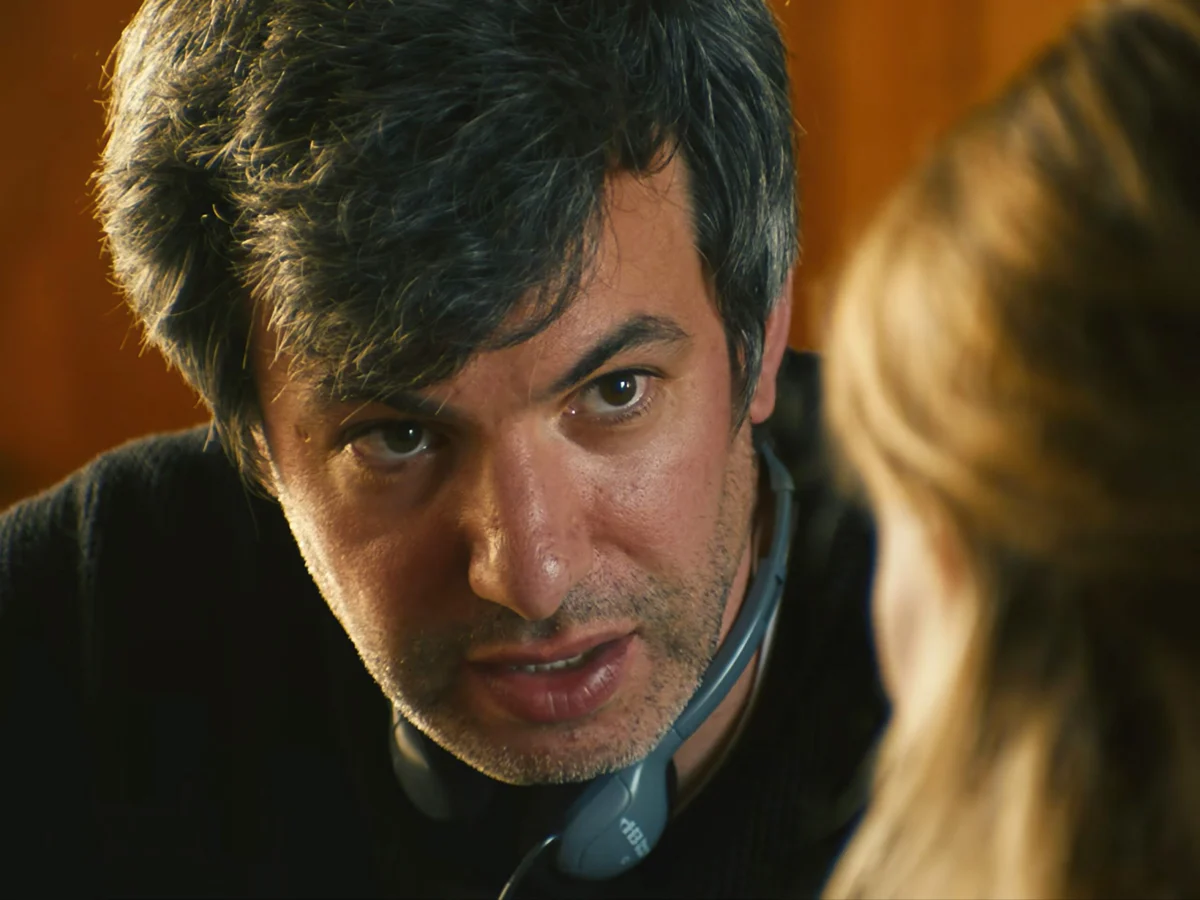
The A24 documentary You Can See Everything remains a project shrouded in deliberate, high-concept secrecy. Yet, for followers of co-director Nathan Fielder, the film’s fundamental nature—a disorienting, seamless blend of objective reality and performative fiction—comes as little surprise. As the trailer reveals, Fielder has not merely stepped behind the camera alongside co-director Lance Oppenheim; he has inserted himself into the narrative as a central participant, locking horns and sharing the frame with the film’s elusive subject, disgraced Theranos founder Elizabeth Holmes.
This creative choice reignites the perennial "Fielder Question": Is the man on screen the authentic Nathan, or is he a meticulously curated version of himself? As seen in his previous work, most notably the HBO opus The Rehearsal, Fielder exists in a liminal space where he is both. This ambiguity has now collided with the rigid, often antiquated machinery of the Hollywood awards circuit, sparking a debate over where, or if, a project like You Can See Everything belongs in the trophy race.
The Evolution of a Genre-Defier: From Comedy Central to A24
To understand the current confusion, one must look at the trajectory of Fielder’s career, which has consistently challenged the taxonomy of television and film. His breakout series, Nathan for You, was ostensibly a variety sketch show, yet it functioned as a sociological experiment. Fielder frequently utilized local news outlets to report on his absurd stunts—such as the "Dumb Starbucks" installation—effectively tricking reality into validating his fiction before the show even aired.
When he transitioned to scripted television with the Showtime series The Curse, co-created with Benny Safdie and starring Emma Stone, many anticipated a straightforward comedy. Instead, the series spiraled into a genre-bending examination of voyeurism, privilege, and performance. When Emmy season arrived, the show was submitted in the Drama Series categories—a bold maneuver that underscored the project’s refusal to be easily labeled.
This pattern reached a fever pitch with The Rehearsal. Shot with the aesthetic of a documentary, HBO nevertheless submitted the series in the Comedy categories. The campaign went a step further, with HBO submitting Fielder for the "Outstanding Lead Actor in a Comedy Series" category for his portrayal of "himself." It was a move that blurred the lines of authorship and acting, forcing voters to consider whether playing oneself constitutes a "performance" worthy of accolades.

A Chronology of Artistic Subversion
The development of You Can See Everything fits squarely within this lineage of meta-narrative complexity.
- Pre-Production and Stealth Filming: Much like his previous projects, the production of You Can See Everything was kept under a veil of intense secrecy. By the time word reached the industry, the project was already deep in the edit, with the central premise—a documentary interaction between Fielder and Elizabeth Holmes—already fully formed.
- The Festival Circuit and Public Unveiling: Following the film’s initial screenings, the industry began grappling with its tone. It was neither a traditional exposé nor a sympathetic portrait.
- The October 6, 2026 Screening: A high-profile LA screening, moderated by Bill Hader, signaled the beginning of the film’s public life. The presence of Hader, a master of comedic subversion, suggested that the project was being positioned for an audience that understands the nuance of performative documentary filmmaking.
- The Current Campaign: As of mid-autumn, A24 has begun its promotional push, yet the submission strategy remains a work in progress, caught between the film’s non-fiction classification and the "performance" at its core.
The Awards Architecture: Where Does ‘Reality’ End?
The primary challenge for You Can See Everything is that the major awards bodies operate on definitions of "documentary" and "narrative" that are decades out of step with contemporary filmmaking.
The Critics Choice Awards: A Flexible Approach
IndieWire has confirmed that an acting performance within a documentary is, in fact, eligible for acting categories at the Critics Choice Awards. This is a critical distinction; these bodies are often composed of journalists and critics who value creative innovation over the rigid, guild-based rules of the industry’s larger unions. They are more likely to reward the "meta-performance" that Fielder provides, viewing it as an evolution of the craft rather than a violation of genre boundaries.
The Golden Globes: The Institutional Roadblock
The Golden Globes present a significant hurdle. Their rulebook is explicit: documentaries—defined as non-fiction motion pictures intended to document reality—are entirely ineligible for any motion picture award categories. The rules further tighten the noose by stating that any project with more than 25 percent documentary footage is disqualified from being considered a "motion picture." For a film that relies on the "reality" of its subjects, this rule effectively shuts the door on the Golden Globes, unless it could somehow qualify for the rare "Best Cinematic and Box Office Achievement" award—a path that requires a massive, $100 million domestic and $150 million global box office haul, which remains a steep mountain for a documentary to climb.
The SAG-AFTRA Actor Awards: The Petition Path
The Screen Actors Guild presents a complex middle ground. Their rules explicitly bar documentaries from motion picture categories. However, the organization maintains a "petition process" governed by its Awards Committee. If Fielder and his team can prove that his role in the film constitutes a legitimate, scripted, or directed performance—rather than a passive capture of his persona—they could theoretically lobby for an exception. Such a move would be unprecedented but entirely in line with the "Fielderian" method of testing systems until they break.

Implications for the Academy Awards
The ultimate prize, of course, is the Oscars. The main challenge here is courting the Actors Branch, which is the largest branch in the Academy. For a documentary to be seen as a "Best Picture" contender, it must transcend the "Documentary Feature" ghetto.
If A24 chooses to submit Fielder in an acting category, it would be a strategic "additive" choice. By putting a face and a performance at the center of the campaign, they force the Actors Branch to engage with the film as a piece of dramatic craft rather than just a journalistic exercise. It is a gamble, but one that highlights the shifting sands of modern cinema.
The Philosophical Weight of the Project
Beyond the logistical headache of awards submissions, the project raises deeper questions about the nature of truth in the age of the "personal brand." By placing himself opposite Elizabeth Holmes—a figure whose entire public existence was a performance of "success"—Fielder is exploring the mirror image of his own career.
If Fielder plays a character, and Holmes plays a character (or a version of herself), the documentary becomes a hall of mirrors. The audience is left to wonder: Is Fielder’s presence meant to ground the film in reality, or is it meant to expose the inherent phoniness of the documentary format itself?
As the awards season progresses, the industry will be forced to provide an answer. If they choose to recognize You Can See Everything, they are effectively rewriting the definitions of acting and reality. If they reject it, they are confirming that their current structures are ill-equipped to handle the complexity of 21st-century storytelling.

Regardless of the outcome, the very existence of the debate is a testament to the influence of Nathan Fielder. He has once again succeeded in creating a project that is, by its very nature, a "rehearsal" for a new way of watching movies. Whether or not it takes home a gold statue, the film has already achieved the primary goal of the auteur: it has become an unavoidable conversation.
For now, the secrecy remains. But as the campaign accelerates, one thing is certain: the line between the man and the myth is thinner than it has ever been, and the awards bodies are running out of time to decide if that distinction still matters.
