Rewriting History in Orbit: Inside DNEG’s Groundbreaking Visual Effects for Apple TV+’s Star City
By Trevor Hogg October 20, 2026
Main Facts
Apple TV+’s alternative-history sci-fi drama StarCity reopens the Cold War space race, pivoting the narrative focus from the American milestones seen in For All Mankind to a bold, speculative timeline where the Soviet Union claims ultimate victory. At the heart of this counter-factual universe is the survival of visionary Soviet rocket engineer and spacecraft designer Sergei Korolev, who historically died during routine surgery in 1966. By allowing Korolev to live, the series charts a course where the USSR beats the United States to land the first human on the moon.
To bring this tense, paranoia-drenched vision to life, Production VisualEffects Supervisors Jay Redd and Todd Perry enlisted the global visual effects powerhouse DNEG (Mercy). Under the guidance of DNEG Visual Effects Supervisor Chris Keller, the studio was tasked with delivering 131 meticulously crafted visual effects shots spanning 21 complex sequences.
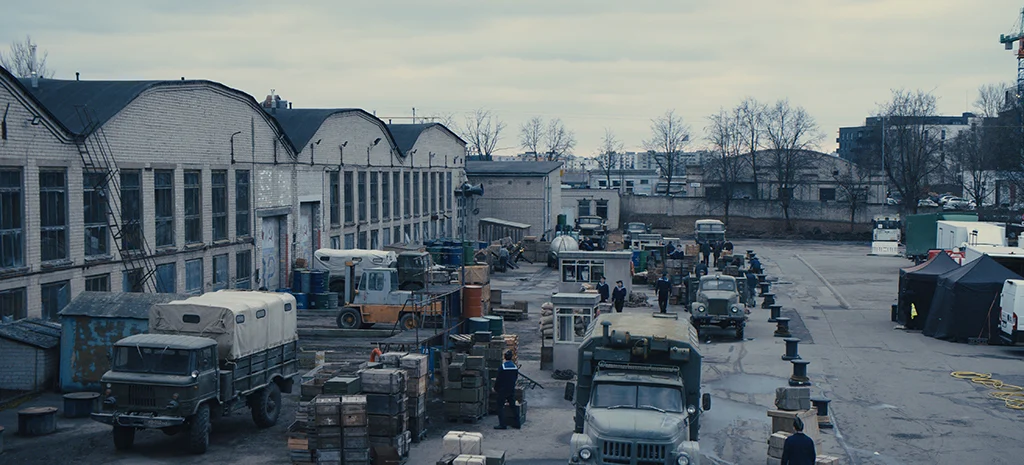
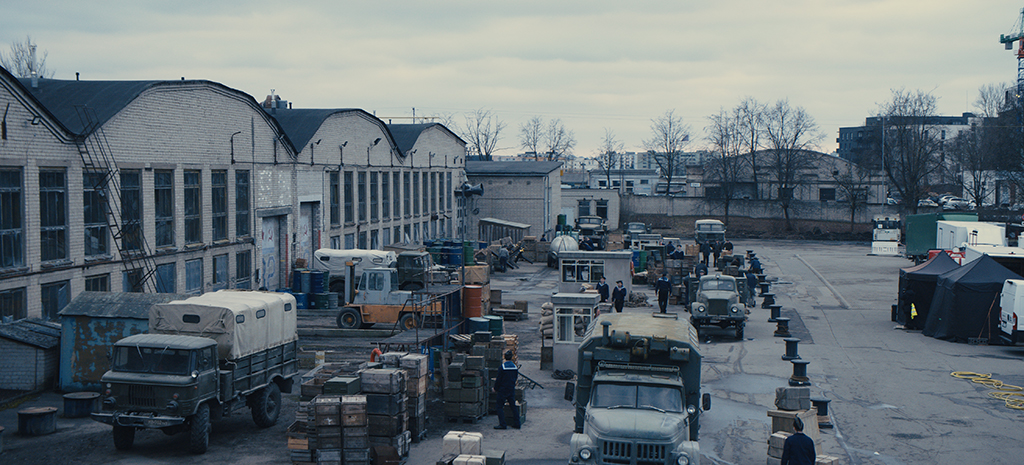
The scope of DNEG’s work was staggering, encompassing twin Soviet lunar landings featuring both male and female cosmonauts, high-stakes orbital dockings, a meticulously rendered CG nuclear submarine, a sweeping orbital view of Earth, and a heart-pounding action sequence involving two descending Soyuz spacecraft pursued and attacked by a MiG-21 fighter jet. Eschewing the clean, hyper-modern aesthetic common to many contemporary space epics, Star City leans heavily into the shadowy, grain-laden visual grammar of 1970s conspiracy thrillers and classic KGB spy dramas.
Chronology of the Production and Technical Execution
Recreating a lost history required an exhaustive, multi-phased production pipeline that bridged archival detective work with cutting-edge digital simulation.
Phase 1: Archival Recovery and Historical Foundation
Because the Soviet space program famously operated behind an iron curtain of secrecy, high-fidelity reference photography for iconic hardware like the Salyut-1 space station and the early Soyuz modules was exceedingly scarce. Keller and his team spent weeks combing through deep-web archives, NASA’s extensive Apollo imagery databases, and obscure historical documents.
Every physical asset had to be built from scratch with extreme fidelity. The DNEG team modeled realistic panel lines, minute welding seams, metallic rivets, and subtle layers of space-borne grime. These details were crucial because the harsh, unyielding, directional light of space brutally exposes artificial textures.
Phase 2: Expanding the Lunar Archive
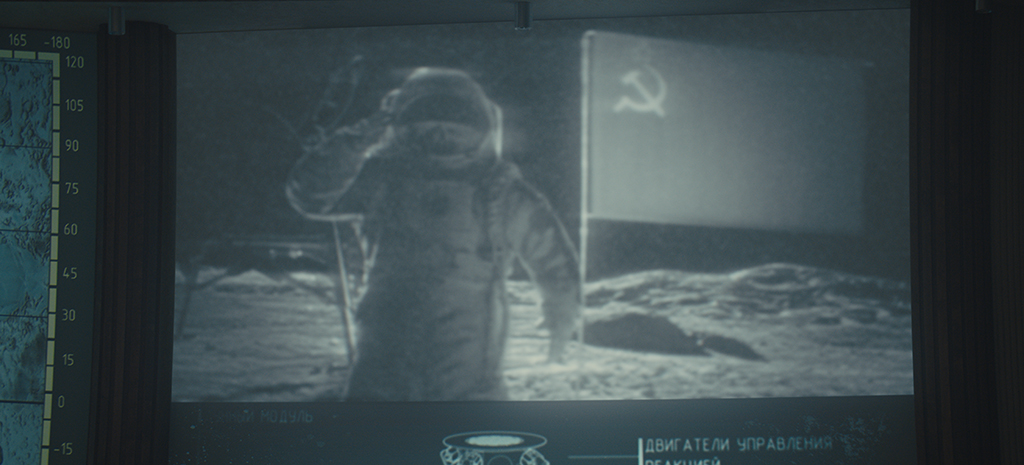
Star City visually revisits the historic first Soviet moon landing initially glimpsed in the inaugural season of For All Mankind. Because the original VFX source files from 2019 were no longer accessible, DNEG relied on surviving plate photography of the actors.
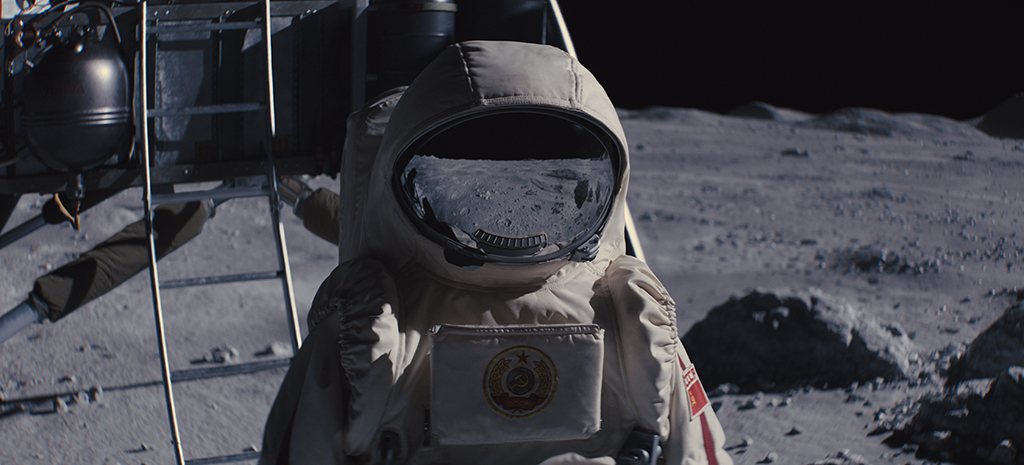
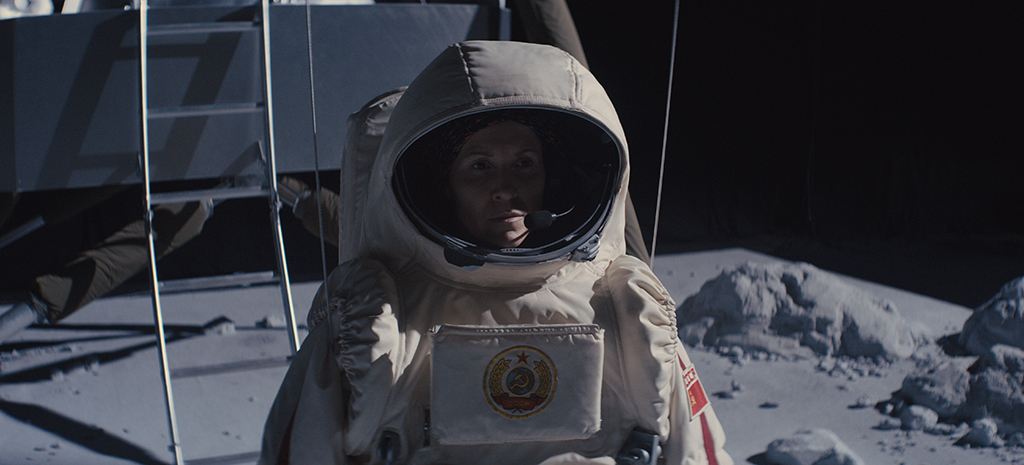
Using original performance plates of actor Alexei Leonov, artists rotomated the footage and reconstructed the entire lunar surface and lander in full CG from fresh angles. Drawing on public NASA data regarding the moon’s south pole—including regolith composition, sub-surface characteristics, and height maps—the team built a modular library of boulders, craters, and ridges. This allowed digital artists to custom-compose landscapes shot by shot while maintaining the harsh, stark lighting and bleak desolation required by the narrative.
Phase 3: The Visor Challenge
One of the most technically demanding hurdles involved the spacesuit helmet visors. Acting as convex mirror balls, the visors reflected the entire 360-degree surrounding environment in every close-up shot. To achieve this without distorting the actors’ facial performances, DNEG rendered full CG environments for every visor shot. The reflected horizons often had to be artificially shifted or faded out in post-production to prevent awkward visual overlaps—such as a horizon line cutting across an actor’s face like an unintended mustache or masking emotional nuance.
Phase 4: Simulating Atmospheric Re-Entry and Aerial Combat
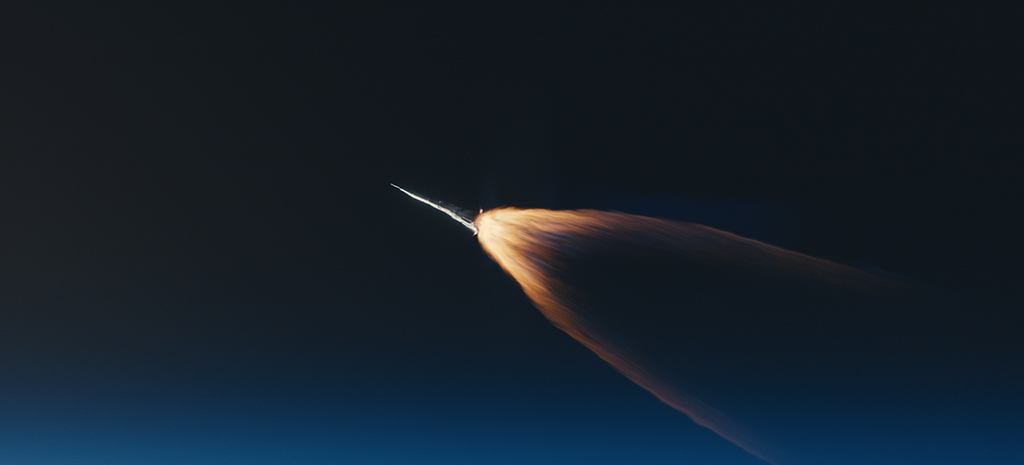
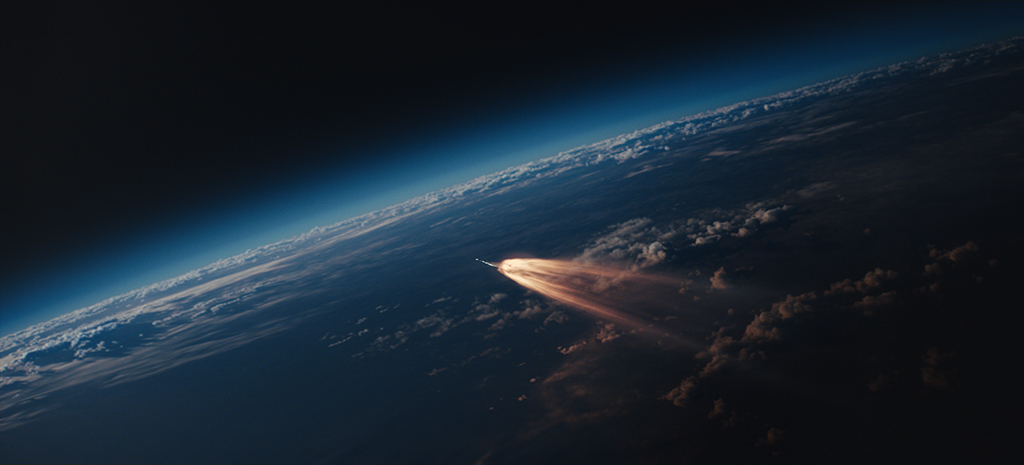
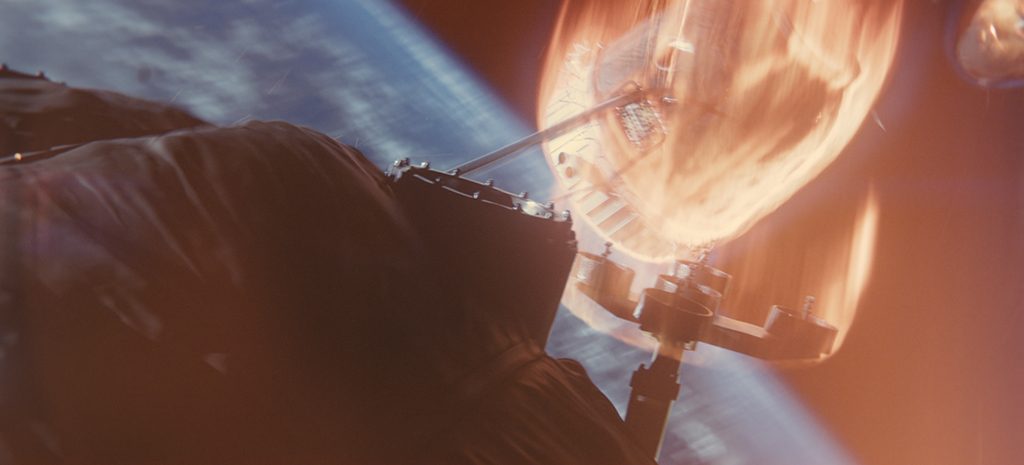
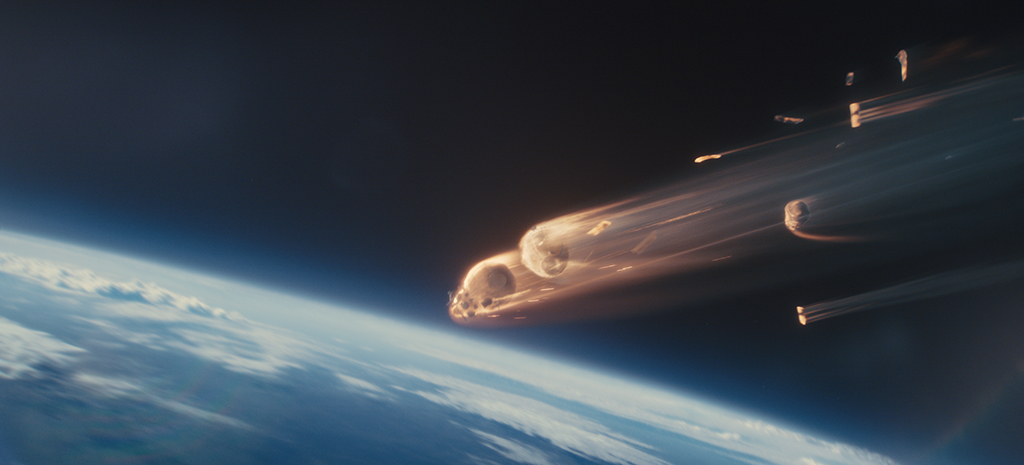
The production’s action set-pieces demanded complex fluid dynamics and destruction simulations. For the re-entry sequences, DNEG studied NASA-produced animatics to map out how a thermal heat sheath forms around a descent module.
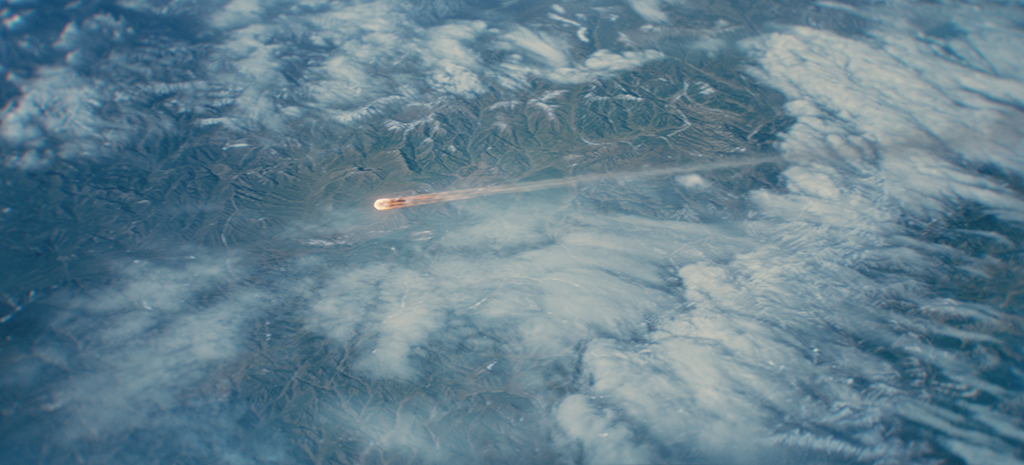
The resulting plasma effect was built as a multi-layered composite featuring leading-edge fire, cascading long and short sparks, and thick, billowing smoke. As the capsule plunges from the thin upper atmosphere into denser air layers, the simulation scales up dynamically until the vessel is completely engulfed in flames, eventually burning away protective Kevlar layers to reveal a charred, oxidized metal hull underneath.
In later episodes, this already perilous re-entry is complicated by the introduction of a CG MiG-21 fighter jet. Firing heat-seeking air-to-missile ordnance, the aircraft clips a descent module, sending it tumbling off course through a newly minted library of 3D volumetric clouds.
Supporting Data and Technical Innovations
DNEG’s work on Star City was defined by several custom technological pipelines designed to push the boundaries of television visual effects:
Vintage Lens Emulation: To match the production’s authentic 1970s Soviet glass cinematography, DNEG engineered a custom defocus node. This tool digitally replicated hyper-complex optical anomalies—including astigmatism, cat-eye bokeh distortions, "barn doors" shutter artifacts, vignetting, chromatic aberrations, and heavy lens flare integration.
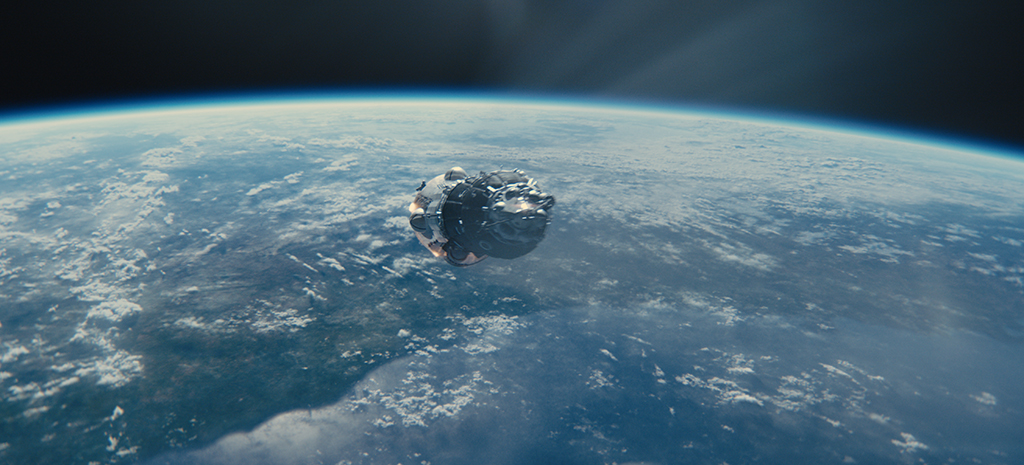
The Terragen Hybrid Earth Workflow: Rather than relying on traditional, flat matte paintings that often result in a disjointed "patchwork" aesthetic under varying orbital lighting conditions, DNEG established a novel hybrid pipeline. The team extracted large-scale cloud textures from actual weather systems and mapped them onto a 3D digital Earth. These textures drove a volumetric shader within Terragen, ensuring that global views—most notably the orbital docking sequence in Episode 107—shared uniform lighting, atmospheric depth, and peerless photorealistic fidelity.
Absence of Atmospheric Starfields: Demonstrating a strict commitment to real-world physics, DNEG artists deliberately stripped out traditional cinematic starfields in deep-space lunar sequences. By rendering the sky as a pitch-black, airless void illuminated only by stark backlighting, the team successfully captured the profound isolation and bleakness experienced by the cosmonauts.
Official Responses and Creative Insights
Reflecting on the challenges of expanding a pre-established television universe, DNEG Visual Effects Supervisor Chris Keller emphasized the importance of tonal consistency and period accuracy.
"In the For All Mankind universe—which Star City is a part of—it is all about being accurate to the period and building an alternative timeline that feels real despite being fake," Keller noted. "In the case of Star City, it oozes with this KGB spy drama; that started on the production, and they shot on vintage Soviet glass, so a lot of the lenses that we used were from that period and part of the world. We worked hard to match that aesthetic."
Addressing the monumental task of recreating Earth’s cloud systems for orbital shots, Keller pointed to the team’s custom Terragen workflow as a crowning achievement:
"We went with a novel hybrid approach, where we built a library of extracted cloud textures, like big weather systems, keyed off views of Earth. Instead of going into matte painting with those, we positioned the textures on the 3D Earth for each shot and then used them to drive a volumetric shader in Terragen… That is probably what I’m most proud of in the entire production: our views of Earth, especially in Episode 107, where we have the orbital docking sequence. If you look at the Earth there, the fidelity of the clouds and the photorealism is amazing."
Keller also highlighted the methodical pacing of the series’ quieter moments as a rewarding counterweight to its high-octane action beats:
"It’s very 2001: A Space Odyssey," Keller said of the Episode 107 Soyuz-Salyut docking sequence. "It’s a slow space ballet sequence. It has our Terragen Earth in the background with beautiful cloud formations. The camera is still and serene; the assets shine; you see all these little panel lines in the sun, and the RCS thrusters fire with smoke effects in space. It’s an uneventful scene of two spacecraft docking, but a lot of creative effort went into that."
Implications for the Industry
The release and technical reception of Star City signal several notable shifts in contemporary high-end television production:
The Maturation of Shared Streaming Universes: As platforms continue to expand successful intellectual properties into spin-offs and companion series, the technical demand for continuity—while simultaneously upscaling visual quality and evolving aesthetic tones—presents a new benchmark for VFX vendors. DNEG’s ability to weave newly shot material seamlessly with legacy assets from For All Mankind establishes a blueprint for multi-series franchise world-building.
Elevating Television VFX to Feature Film Standards: The level of granular research, custom optical artifact simulation, and complex fluid dynamics seen in Star City underscores the fading boundary between feature film budgets and premium streaming series. By refusing to cut corners on complex challenges like ray-traced visor reflections and volumetric atmospheric rendering, studios are raising audience expectations for visual fidelity on the small screen.
The Renaissance of Analog Aesthetics in Digital Spaces: In an era where digital tools make hyper-clean, sterile computer graphics easier to produce than ever, Star City proves that intentional imperfection is king. By dedicating significant research and development resources to emulating vintage lenses, optical aberrations, and 1970s espionage cinematography, DNEG has demonstrated that period-accurate grit is essential for grounding fantastical alternative histories in emotional and visual truth.