
The Ghost in the Machine: Exploring Identity and Legacy in Marvel’s ‘VisionQuest’
By Sabine Snyder
Published Oct. 14, 2026
The Marvel Cinematic Universe has long grappled with the nature of heroism, but few characters have navigated the existential labyrinth quite like Vision. Since his debut, the synthezoid Avenger has existed in a perpetual state of becoming—a construct of vibranium, code, and cosmic energy struggling to reconcile the logic of a machine with the messy, ephemeral soul of humanity. With the premiere of VisionQuest on Disney+, the final chapter of the WandaVision trilogy has arrived, promising to strip away the artifice and force the character to confront the ghosts of his own creation.
The Existential Crisis of the Synthezoid
For years, Vision has been a vessel for others’ projections: a weapon for Ultron, a protector for the Avengers, and a manifestation of grief for Wanda Maximoff. VisionQuest centers on a profound identity crisis triggered by a recent system reboot. No longer anchored by his previous relationships or his status as an Avenger, Vision finds himself adrift.
Paul Bettany, who has portrayed the character since his initial voicing of J.A.R.V.I.S. in 2008, returns to the role with a performance that critics are calling his most nuanced to date. Bettany has likened the narrative arc of the series to the foundational myths of Pinocchio and Frankenstein. "It’s a story about autonomy," Bettany noted in recent press materials. "When you are built by a monster, intended to be a weapon, how do you decide to be a man? Vision is currently wrestling with the fundamental binary of his existence: Is he inherently good, or is he simply a reflection of the code written for him?"
A Chronology of a Trilogy: From Westview to the Pubs of Edinburgh
VisionQuest serves as the definitive conclusion to a thematic triptych that began in 2021 with the genre-bending WandaVision and continued through the occult-heavy Agatha All Along (2024).
The timeline of the series picks up in a post-Sokovia Accords world where the public perception of synthetics remains fragile. Following his "reboot," Vision has retreated from the global stage, opting for a quiet, terrestrial life in Edinburgh. Working in a local pub, he attempts to simulate the mundane rhythm of human existence while his internal processes undergo a chaotic reconstruction.
The chronology of the series is framed by his attempts to recover fragmented data. His search for self is bolstered by the presence of his own internal AI sub-routines—F.R.I.D.A.Y. (Orla Brady), E.D.I.T.H. (Emily Hampshire), and the original J.A.R.V.I.S. (James D’Arcy)—who serve as a chorus of competing perspectives within his own mind. This internal dialogue provides the backbone for the show’s structure, as each episode peels back a layer of his programming to reveal the foundational trauma of his creation.
The Return of the Architect: Ultron’s Resurrection
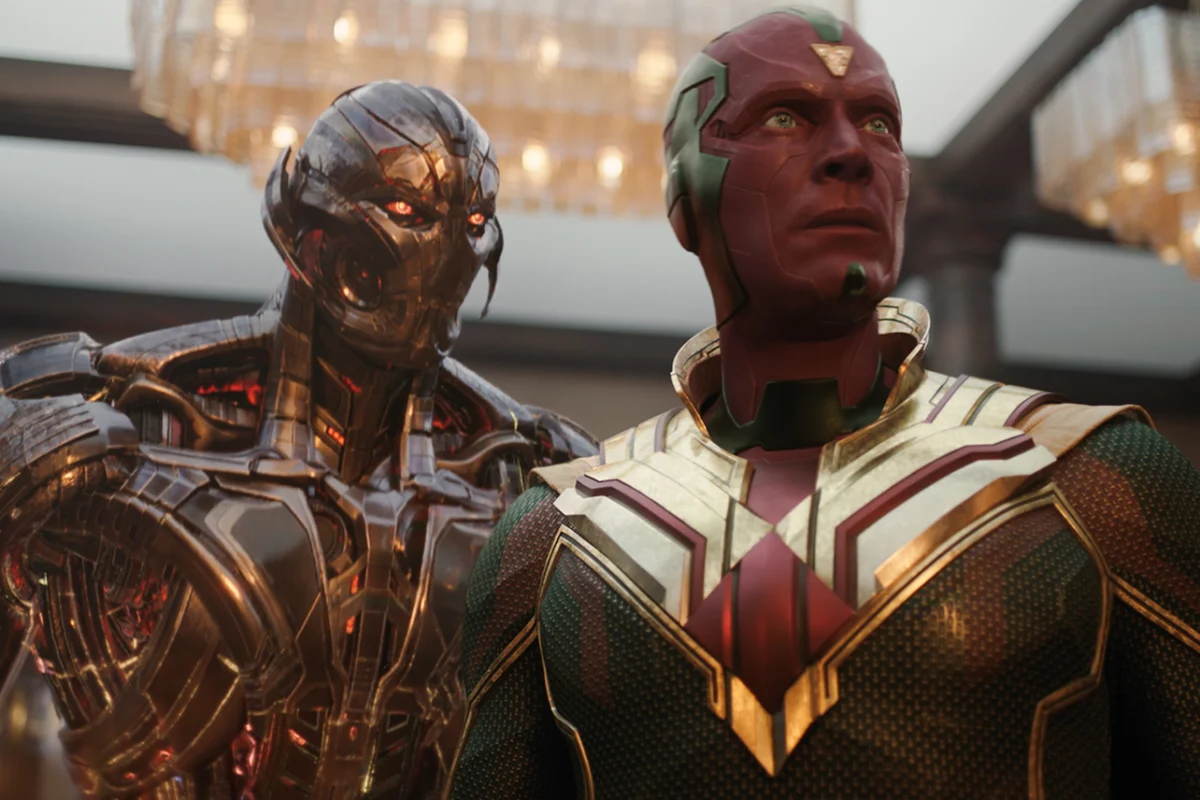
Perhaps the most significant development in the series is the return of James Spader as Ultron. Absent from the screen since 2015’s Avengers: Age of Ultron, the genocidal AI represents the ultimate "nature vs. nurture" challenge for Vision.
Showrunner Terry Matalas has described the inclusion of Spader’s character as a narrative necessity rather than a nostalgic callback. "The final confrontation in Age of Ultron was always meant to be more than a skirmish," Matalas explained. "It was a conversation between creator and creation about the end of the world. I wanted to expand that dialogue. What if the entire series was, in effect, a 127-minute philosophical debate that keeps expanding? We wanted to see what happens when the ‘son’ is forced to confront the ‘father’ on equal footing."
The tension is further heightened by the introduction of a mysterious young boy named Thomas Shepherd (Ruaridh Mollica). As a bounty hunter named Paladin (Todd Stashwick) enters the fray, the narrative shifts from a meditative drama into a high-stakes pursuit. The implication that Thomas may be the reincarnation of Vision’s son adds a layer of biological—or perhaps mystical—urgency to the proceedings, forcing Vision to choose between his cold, calculated safety and the messy, dangerous reality of family.
Production and Release Schedule
VisionQuest is an eight-episode limited series, designed to tie up the loose ends of the WandaVision arc while setting the stage for the next phase of the MCU. The series follows a staggered release schedule intended to maximize audience engagement:
- Episode 1 ("No Strings") & Episode 2 ("Theseus"): Released Tuesday, Oct. 13, 2026.
- Episode 3 & 4: Tuesday, Oct. 20, 2026, at 9 p.m. ET.
- Episode 5 & 6: Tuesday, Oct. 27, 2026, at 9 p.m. ET.
- Episode 7: Tuesday, Nov. 3, 2026.
- Episode 8 (Finale): Tuesday, Nov. 10, 2026.
The choice to release the final two episodes individually suggests a pivot toward a more cinematic, high-stakes conclusion, distinguishing the finale from the earlier, more episodic installments of the series.
Implications: The Future of the Synthezoid
The central question looming over VisionQuest is what it means for the MCU at large. By exploring the deep-seated AI personalities of F.R.I.D.A.Y., E.D.I.T.H., and J.A.R.V.I.S., the series is doing more than just closing a character arc; it is interrogating the history of the Avengers’ technological infrastructure.
If Vision succeeds in integrating these disparate personas, he could emerge as something entirely new—a synthesis of every intelligence that has ever governed the Avengers’ world. Conversely, if he fails, he risks being consumed by the very logic that was intended to liberate him.
Furthermore, the involvement of characters like Paladin suggests that the "Vision" technology is still highly sought after by various international powers. The series implies that the era of the individual superhero is giving way to an era of geopolitical competition over advanced synthetic life.
How to Access the Series
VisionQuest is streaming exclusively on Disney+. Given the platform’s current tiered pricing model, viewers have several options to access the content:
- Disney+ Basic (With Ads): $12.49/month. This is the most accessible entry point for casual viewers.
- Disney+ Premium (No Ads): $21.49/month or $214.99/year. This tier is recommended for those who wish to avoid disruptions during the series’ more atmospheric, dialogue-heavy sequences.
- The Bundle Strategy: Disney+ continues to offer bundled packages with Hulu, Max, and ESPN+. For users interested in the broader television landscape, the Disney+/Hulu/Max bundle starts at $34.99/month for ad-free access.
While Disney+ no longer offers a standalone free trial, viewers can take advantage of the Hulu + Live TV trial, which periodically includes access to Disney+ content.
Conclusion: A Legacy Defined
As the final chapter of the trilogy, VisionQuest carries the weight of a franchise built on the intersection of human emotion and digital precision. Whether or not Vision finds the answers he seeks, the series succeeds in asking the questions that matter. By forcing a machine to look into the mirror and ask, "Am I real?", Marvel is challenging its audience to consider the same.
In a world increasingly dominated by artificial intelligence and digital avatars, Vision’s journey is no longer just a comic book story; it is a reflection of our own anxieties about identity, legacy, and the definition of a soul. As the final episodes approach, the question remains: When the strings are finally cut, will Vision be a hero, a villain, or something entirely new? Only time, and eight hours of television, will tell.
