
Stripping Away the Studio Machine: How Kogonada Rediscovered His Indie Roots with the Hong Kong-Set Enigma zi
Main Facts
Following a high-profile foray into major studio filmmaking with the romantic fantasy A Big Bold Beautiful Journey, acclaimed auteur Kogonada has returned to the hyper-independent, deeply contemplative style that first defined his career. His latest secret project, zi, strips away complex studio logistics in favor of pure, instinct-driven moviemaking. Shot guerrilla-style on location in Hong Kong with a skeleton crew and a tight-knit circle of trusted collaborators, the film represents an artistic palate cleanser and a profound pivot inward.
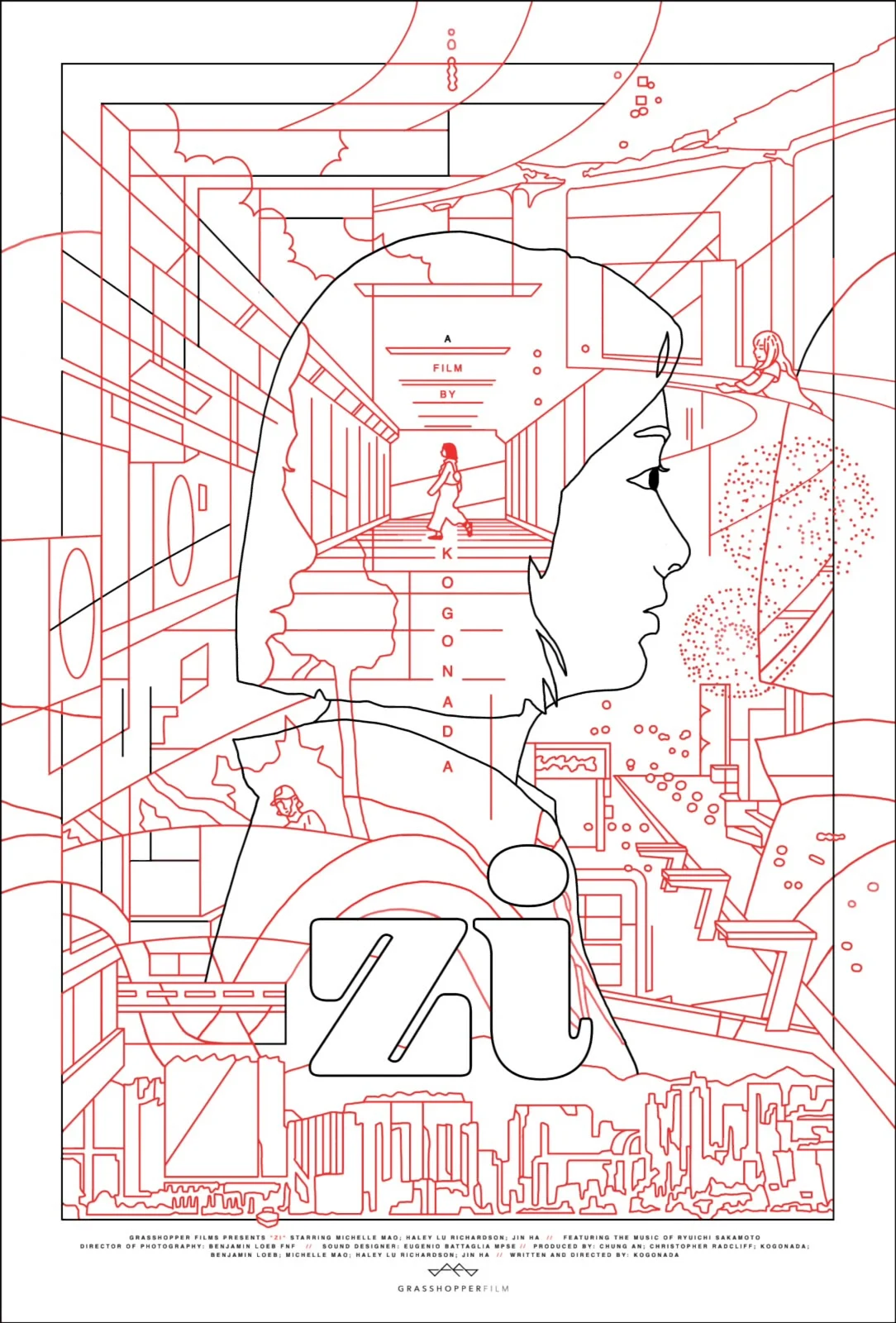
The film stars familiar faces from the director’s previous works, including Michelle Mao, Haley Lu Richardson, and Jin Ha, who seamlessly step back into Kogonada’s thematic universe of transitory misfits and existential yearning. Having made its celebrated world premiere at the Sundance Film Festival earlier this year, zi is now gearing up for a theatrical release. Distributed by Grasshopper Film, the movie is scheduled to open at New York’s prestigious Metrograph on November 6, accompanied by the official release of its atmospheric trailer and key art poster.
The narrative, brief in its official synopsis yet expansive in its emotional footprint, follows a young woman in Hong Kong who is persistently haunted by visions of her future self. Her trajectory shifts abruptly when she encounters a mysterious stranger, an interaction that alters the course of her night—and potentially the rest of her life. Blending elements of science fiction, the supernatural, and a classic city symphony, zi captures the director’s signature visual elegance while pushing into new territory defined by temporal fragmentation, personal memory, and unmooring existential anxiety.
Chronology
To understand the genesis of zi, one must trace the rapid and unexpected trajectory of Kogonada’s filmography over the past decade.
- 2017: Kogonada bursts onto the international cinematic scene with his feature directorial debut, Columbus. Premiering at the Sundance Film Festival, the architectural drama starring John Cho and Haley Lu Richardson is heralded as a masterclass in spatial framing, quiet melancholy, and emotional restraint. It establishes the director as a vital new voice in independent cinema.
- 2020: Kogonada returns to Sundance with After Yang, a haunting, tender science-fiction drama starring Colin Farrell. Adapted from a short story, the film expands the director’s visual lexicon while retaining the profound humanism and philosophical inquiry that marked his debut. It further cements his reputation as a visionary capable of blending high-concept ideas with intimate storytelling.
- 2023–2024: Seeking to test his boundaries on a broader canvas, Kogonada enters the realm of big-budget studio filmmaking with A Big Bold Beautiful Journey. However, the ambitious romantic fantasy proves to be a misguided detour. Burdened by the rigid logistics, interference, and compromises inherent to major studio systems, the film ultimately fails to connect with audiences or capture the spontaneous magic of his earlier work.
- Late 2024 / Early 2025: Feeling constrained by the studio apparatus, Kogonada makes a spontaneous decision. Packing light, he travels to Hong Kong accompanied by only a few of his closest collaborators. Operating completely off-the-grid and in strict secrecy, they shoot an entire feature film driven purely by intuition, instinct, and a desire to recapture the liberating spirit of true independence.
- Early 2025: The resulting project, titled simply zi, makes its surprise premiere at the Sundance Film Festival. Critics and audiences alike view the film as a fascinating stylistic divergence and a vital career reset.
- November 2025 (Upcoming): Following a successful festival run, Grasshopper Film prepares the movie for commercial distribution. zi is set to open at the Metrograph on November 6, bringing Kogonada’s clandestine Hong Kong experiment to general audiences alongside its newly unveiled trailer and poster.
Supporting Data
- Cast: Michelle Mao, Haley Lu Richardson, and Jin Ha. Richardson notably reunites with the director after anchoring his 2017 debut, Columbus.
- Production Style: Shot on location in Hong Kong using a minimalist, guerrilla-style approach with a micro-crew, consciously bypassing conventional studio green-lighting and logistics.
- Premiere Venue: World-premiered at the Sundance Film Festival, continuing a streak that includes Columbus (2017) and After Yang (2020).
- Distribution & Release: Distributed by Grasshopper Film; opens theatrically at the Metrograph in New York City on November 6.
- Core Themes: Temporal fragmentation, recursivity, future visions, existential anxiety, romantic misgiving, personal memory, and the intersection of the supernatural and urban daily life.
Official Responses and Critical Reception
The reception to zi has been heavily framed by the context of its creation—specifically, its positioning as a direct reaction to the creative constraints Kogonada faced during his brief studio tenure.
The official Sundance synopsis describes the film as a "sensitive cinematic poem" and a "stylish jaunt through the streets of Hong Kong." It highlights the director’s return to form through a "wavelike confidence that commits to recursivity as a mode and central theme." The festival text adds that the project invites viewers to surrender to an "indie world of temporal fragmentation" through the "igniting/smoldering embers of relationships lost/forming."
Critical appraisal has largely echoed this sentiment, viewing the film less as a conventional narrative exercise and more as an unbridled act of artistic liberation. In his review for The Film Stage, critic Jordan Raup categorized the film not merely as a return to form, but as "a diversion into purely instinct-based experimentation."
Raup noted:

"The resulting zi feels different from anything he’s made before, a free-flowing fount of passions and fears examining both the past slipping away and an uncertain future, while also doubling as a poetic city symphony. While not fully engaging on a narrative level, the project at least demonstrates Kogonada hasn’t lost his filmmaking mojo, crafting a movie that may seem more personal to him than most viewers."
The trailer itself, released ahead of the Metrograph premiere, reinforces these critical impressions. It showcases neon-drenched Hong Kong alleys, reflective surfaces, and quiet, lingering glances between the core trio of actors. The visual language heavily relies on the juxtaposition of urban isolation and fleeting human connection, underscored by an ambient, hypnotic soundscape that hints at the supernatural undercurrents of the narrative.
Implications
The sudden emergence and impending release of zi carry significant implications for both Kogonada’s career trajectory and the broader landscape of contemporary independent cinema.
1. The Perils and Lessons of Studio Filmmaking
Kogonada’s trajectory serves as a cautionary tale—and a hopeful corrective—regarding auteur-driven cinema within the modern Hollywood studio system. When directors known for distinct, highly personal aesthetics are thrust into high-budget productions like A Big Bold Beautiful Journey, the friction between artistic intuition and corporate logistics can dilute their voice. By swiftly retreating to the shadows to make zi on his own terms, Kogonada has demonstrated that creative autonomy is non-negotiable for true visionaries. The film proves that failure or misfire within a studio system does not signal a loss of talent, but rather a mismatch of medium.
2. The Power of Guerrilla Agility in the Digital Age
In an era where independent filmmaking is increasingly choked by skyrocketing budgets, union complexities, and risk-averse financiers, zi offers a masterclass in guerrilla agility. By packing a light kit, flying to an international metropolis with a skeleton crew, and shooting off-the-cuff, Kogonada bypassed the traditional, multi-year financing pipeline. This back-to-basics approach may well inspire other mid-career filmmakers to seek out independent, low-stakes environments to recharge their creative batteries away from the Hollywood machine.
3. Redefining the "City Symphony"
Cinematically, zi contributes to a rich tradition of foreign directors using iconic urban landscapes as emotional mirrors. By casting Hong Kong not merely as a backdrop, but as a living, breathing participant in a time-bending narrative, Kogonada updates the classic "city symphony" genre for the 21st century. The fusion of science-fiction tropes—such as visions of future selves—with the gritty, tactile reality of Hong Kong streets creates a unique hybrid genre that could influence how indie filmmakers approach speculative fiction without relying on expensive CGI.
Ultimately, zi stands as a testament to the resilience of independent art. As audiences prepare to experience Kogonada’s secret Hong Kong project at the Metrograph this November, the film will be judged not by the scale of its budget, but by the sincerity of its pulse—a reminder that sometimes, a filmmaker must get lost in a foreign city to find their way home.
