
Beyond the Clapperboard: Inside the Unpredictable Career of Filmmaker Miranda Sajdak
By [Author Name]
Published: October 24, 2023
Main Facts: Navigating the Non-Linear Path of Modern Cinema
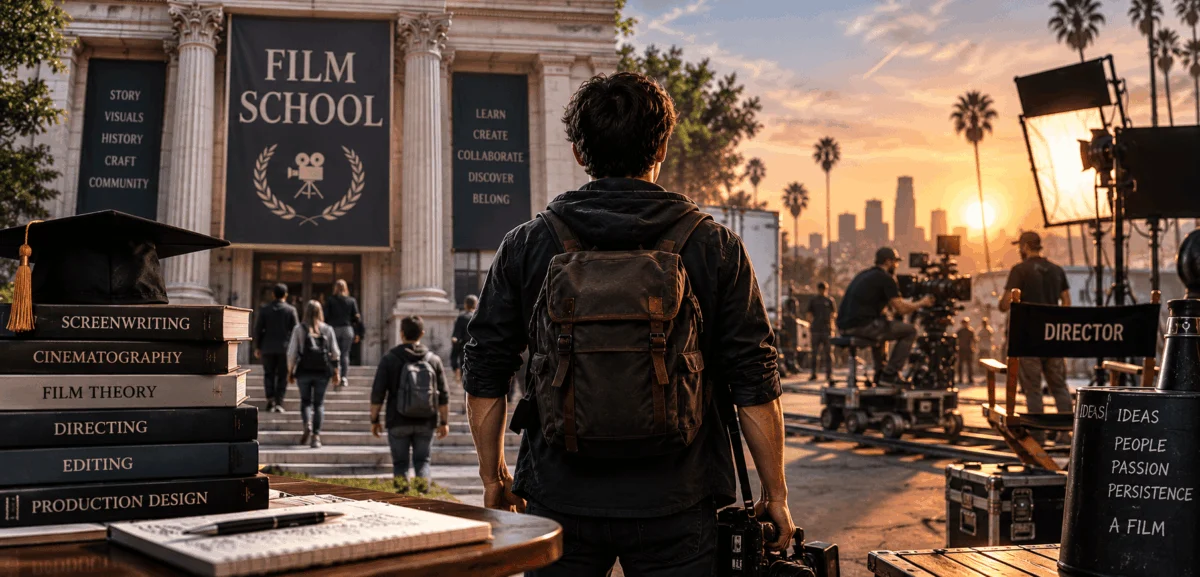
The question is as old as the medium itself, whispered in university orientation halls, late-night writers’ rooms, and indie coffee shops across the globe: Do I actually need film school?
For aspiring filmmakers, the entry points to the industry resemble a sprawling labyrinth rather than a straight highway. Some spend tens of thousands of dollars and four formative years dissecting the French New Wave in academia before ever stepping onto a professional soundstage. Others dive straight into the beautiful, chaotic trenches of a working set, learning the hard way by hauling heavy C-stands, fetching artisanal coffees, and absorbing the unspoken rhythms of production execution.
Few figures embody this duality quite like Miranda Sajdak. As a seasoned writer, producer, and director whose resume spans high-budget studio blockbusters, gritty independent features, television writers’ rooms, executive development, and her own entrepreneurial ventures, Sajdak has occupied nearly every vantage point the entertainment industry has to offer. Her journey proves a fundamental truth about modern Hollywood: there is no single, correct trajectory to a career in cinema. Instead, success demands a hybrid of formal education, relentless hustle, unyielding resourcefulness, and the courage to pivot when the industry shifts beneath your feet.
Chronology: From Childhood Epiphany to Creative Independence
The Spark: Finding Representation in Cinema
Miranda Sajdak’s fascination with filmmaking was not born out of an analytical appreciation for cinematography; it was an emotional awakening. As a young child, her mother took her to the theater to see Penny Marshall’s sports comedy-drama A League of Their Own. Watching an ensemble of complex, driven women anchor a major cinematic narrative struck a profound chord. As the credits rolled, Sajdak walked out of the auditorium with an unwavering conviction: she was going to spend her life making movies.
Academia and the Foundation of Set Etiquette
That childhood ambition eventually steered her toward Columbia University’s renowned film program. Far from being a mere collection of abstract textbooks and dusty lectures, film school served as an indispensable launchpad. It provided her with a crucial inner circle of fellow creatives, hands-on technical training on graduate student productions, a functional understanding of rigid set protocols, and seasoned mentors who helped distill the overwhelming universe of cinema into actionable, masterable craft.
The Studio Trenches: The Bourne Ultimatum and Cloverfield
Sajdak’s academic foundation quickly translated into battlefield experience. Armed with her Columbia pedigree and a tireless work ethic, she secured entry-level production assistant (PA) roles on major studio productions, including Paul Greengrass’s heart-pounding thriller The Bourne Ultimatum and Matt Reeves’s claustrophobic monster hit Cloverfield. These high-pressure environments demystified the inner workings of multi-million-dollar studio operations, instilling a level of operational discipline that would anchor the rest of her career.
The Television Grind and the Reality of Rewrites
Transitioning into television, Sajdak worked as an assistant on shows such as ABC Family’s Huge and Adult Swim’s animated comedy China, IL. This chapter offered a completely different kind of education. While writing is often perceived as a solitary, sacred act of artistic expression, television production is ruthlessly collaborative. Networks issue notes, studio executives demand structural changes, characters are abruptly written out, and entire sequences are overhauled overnight. Sajdak quickly learned that clinging too tightly to every written word is a recipe for professional extinction.
Entrepreneurship: Launching Script Chicks
Faced with the classic independent filmmaker’s dilemma—that passion projects rarely pay urban rent—Sajdak and fellow producer Sandra Leviton engineered a pragmatic solution. Leaving behind coordinator positions to strike out on their own, they founded Script Chicks. Leveraging their extensive development experience, the duo began selling professional screenplay coverage and consulting services. This entrepreneurial pivot provided a sustainable financial safety net, keeping the lights on and granting them the autonomy to continue writing, directing, and producing their own independent works.
Supporting Data: The Anatomy of Film Production
To understand Sajdak’s career trajectory is to understand the vast mechanical differences between the two primary ecosystems of American cinema: studio blockbusters and independent filmmaking.
| Production Metric | Studio Productions (e.g., The Bourne Ultimatum) | Independent / Indie Films |
|---|---|---|
| Department Scale | Specialized, highly segregated departments with dedicated personnel. | Lean, multi-hat crews where individuals frequently cross departmental lines. |
| Resource Allocation | Vast financial, technical, and legal resources; unions dictate strict protocols. | Scrappy, bootstrapped budgets requiring creative financial engineering. |
| Time Management | Extended shooting schedules allowing for meticulous coverage of individual shots. | Relentless pacing; every lost hour directly threatens the completion of the film. |
| Problem Solving | Delegated through a bureaucratic chain of command. | Handled directly by producers/directors on the fly. |
Case Study: The Crisis of the Uncooperative Equine
Perhaps the most telling piece of data regarding Sajdak’s resourcefulness comes not from a balance sheet, but from an upstate New York winter production.
While producing an indie feature, Sajdak faced a narrative climax that hinged on a specific, non-negotiable visual: a teenage girl assisting a horse during birth. The production had meticulously secured a location on a horse farm populated with pregnant mares, assuming nature would obediently adhere to the call sheet.
Nature, as it often does, had other plans. As the shooting schedule rapidly dwindled, the targeted horse showed zero signs of going into labor.
With no modern mobile internet or smartphones available to instantly query localized livestock databases in the field, Sajdak resorted to old-school, analog problem-solving. She tracked down a landline telephone, cracked open the physical Yellow Pages, and began systematically cold-calling every horse farm across the region. Within an hour, she had successfully identified two viable alternative locations, relocated the entire cast and crew, captured the sequence, and saved the film.
It remains a masterclass in independent producing: No production manual exists for when the animal in your climax refuses to cooperate. You simply solve the problem directly in front of you.
Official Responses and Industry Insights
Reflecting on the broader mechanics of Hollywood, Sajdak offers candid, hard-won insights into how careers are actually built, maintained, and occasionally rescued from stagnation.
On the Myth of the Single Path
Addressing the perennial film school debate, Sajdak maintains a pragmatic stance. While higher education provided her with invaluable scaffolding, she refuses to gatekeep the industry behind a diploma.
"Film school helped me, but that doesn’t mean everybody needs it," Sajdak notes. "Plenty of filmmakers learn cameras, film history, theory, and set protocol independently. Others simply begin working. What matters is understanding where you want to go and determining which path gives you the skills, relationships, and experience necessary to get there."
Redefining Networking
In an industry famously dominated by the maxim “it’s not what you know, it’s who you know,” Sajdak reframes networking away from transactional sleaziness. According to her, handing out business cards at industry mixers rarely yields sustainable employment.
"The most valuable networking happens when people know how you work," she explains. "Someone sees that you’re reliable, professional, and capable under pressure, and when another production needs somebody, your name enters the conversation."
The Necessity of Humility in Writing
Addressing aspiring scribes entering the television ecosystem, Sajdak emphasizes the psychological fortitude required to survive executive notes and room politics. Her mantra for writers is blunt:
“There will be rewrites. There will be a lot of rewrites.”
Implications: Reclaiming the Creative Core
After years spent navigating the bureaucratic demands of studio P.A. work, television writer’s room politics, script coverage businesses, and third-party producing ventures, Sajdak experienced a sobering realization. Despite working relentlessly within the entertainment industry, she had drifted away from the primary impulse that originally pushed her into a Columbia University lecture hall: directing.
Rather than waiting for an idealized moment of financial security or a greenlight from an institutional gatekeeper, she engineered her own return. She penned a short screenplay, curated a trusted circle of peer readers willing to deliver brutal, unvarnished script feedback, assembled a dedicated cast, and launched a crowdfunding campaign for an action-oriented project.
The Takeaway for the Next Generation of Filmmakers
Miranda Sajdak’s trajectory offers a blueprint for modern artistic survival. A sustainable career in cinema is rarely linear. It is an intricate mosaic of disparate jobs: pausing your own creative work to PA on a studio franchise; reading development scripts to pay rent; producing a peer’s project to build production muscle memory; or launching a complementary business to maintain creative independence.
Ultimately, the doorway you choose to enter the film industry—whether it is a prestigious MFA program, a local camera rental house, a production assistant gig, or a bedroom editing setup—matters far less than what you execute after walking through it. Master your craft, build genuine professional equity through reliability, accept editorial criticism without ego, cultivate radical resourcefulness, and above all, never lose sight of the initial spark that made you fall in love with moving images in the first place.
