
A Legacy in the Shadows and the Stars: Remembering Tom Skerritt (1933–2026)
The landscape of American cinema has lost one of its most reliable and versatile anchors. Tom Skerritt, the rough-hewn, salt-of-the-earth character actor whose career spanned over six decades and bridged the gap between gritty New Hollywood realism and iconic genre blockbusters, has died at the age of 93. His passing, confirmed by his family on Wednesday, marks the end of an era for a performer who could hold his own against the biggest stars in the industry while simultaneously lending gravitas to high-concept horror and science fiction.
From the irreverent military corridors of MASH to the claustrophobic, terrifying depths of the Nostromo in Alien, and finally to the suburban malaise of Picket Fences*, Skerritt’s filmography is a testament to the power of the "working actor"—a man who prioritized craft over ego, making every ensemble he touched feel more grounded, more human, and ultimately, more vulnerable.
The Man Behind the Roles: A Career Overview
Born in Detroit, Michigan, in 1933, Skerritt did not take the traditional path to stardom. He served in the United States Air Force before finding his calling in the arts, a background that likely informed the stoic, authoritative, yet deeply empathetic nature he brought to so many of his military and law enforcement roles.
The Rise of a Reliable Leading Man
Skerritt first broke into the cultural consciousness in the 1960s and 70s. His early work was defined by a rugged authenticity that made him the perfect fit for the cynical, anti-establishment cinema of the Vietnam War era. His role as Duke Forrest in Robert Altman’s MASH* (1970) established him as a master of the ensemble, a skill he would refine throughout his career. He was the kind of actor who didn’t need to be the loudest voice in the room; he was the one who kept the scene anchored.
As the 1980s approached, Skerritt’s profile shifted toward mainstream success. His performance as Viper in Tony Scott’s Top Gun (1986) provided the moral compass for Tom Cruise’s Maverick, showcasing Skerritt’s ability to portray mentorship and quiet strength. Yet, for many, it was his darker, more genre-focused work that cemented his legacy.
Genre Contributions: A Horror Icon
While Skerritt was a versatile actor, he held a special place in the hearts of horror and science fiction fans. He understood that for a supernatural or extraterrestrial threat to work, the human reactions to it had to be completely believable.

The Nostromo’s Captain
In Ridley Scott’s 1979 masterpiece Alien, Skerritt played A.J. Dallas, the captain of the Nostromo. It is a role that has aged remarkably well. Dallas was not a traditional action hero; he was a blue-collar worker in space, tired, pragmatic, and eventually, tragically overwhelmed. Skerritt’s performance infused the film with a sense of dread that transcended the creature effects. When Dallas disappeared into the air ducts, the audience didn’t just lose a character; they lost their leader, their sense of security, and their primary hope for survival.
Into the Supernatural: The Dead Zone and Poltergeist III
Skerritt’s transition into horror continued with his turn as Sheriff George Bannerman in David Cronenberg’s The Dead Zone (1983). Based on the Stephen King novel, the film required Skerritt to play a man of the law confronting the inexplicable. He balanced skepticism with a desperate, quiet desperation that helped sell the film’s high-concept premise.
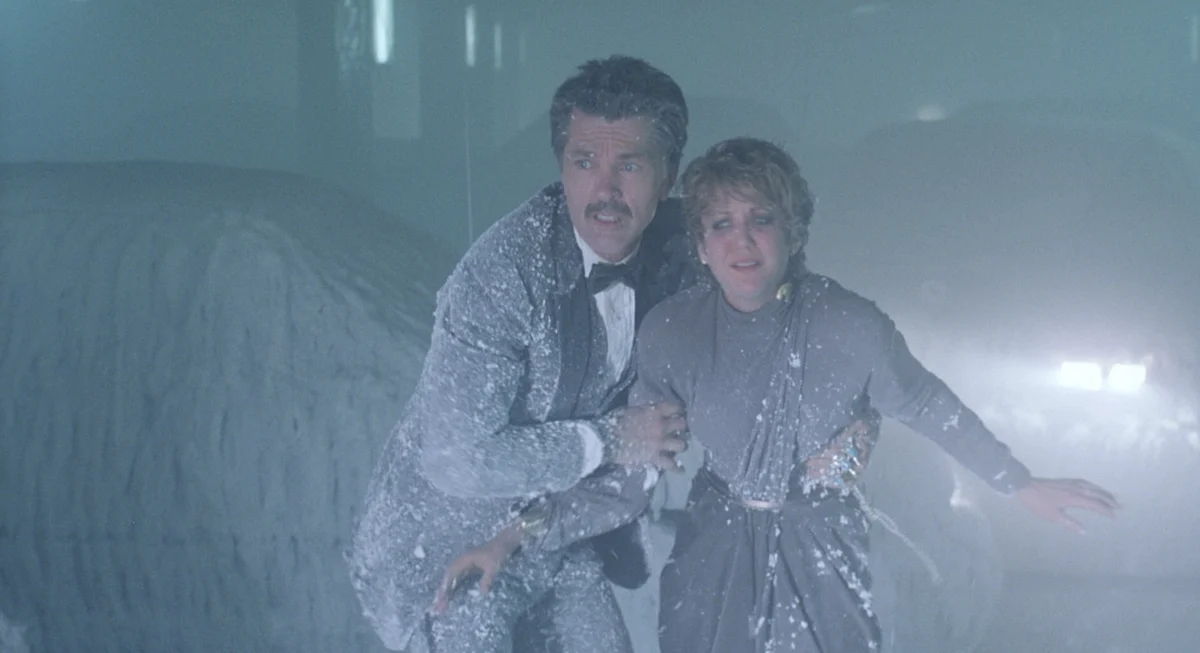
Perhaps most surprisingly, Skerritt remained a champion of the horror genre well into the late 80s, most notably in the much-debated Poltergeist III (1988). While often unfairly dismissed by critics of the time, the film remains a cult favorite for its ambitious practical effects and its shift in setting from the suburban home to the cold, glass-and-steel architecture of a Chicago high-rise. As Bruce Gardner, Skerritt provided the emotional stakes for the young Heather O’Rourke, grounding the supernatural chaos in a genuine, if strained, family dynamic.
Chronology of a Storied Life
- 1933: Born in Detroit, Michigan.
- 1950s: Served in the United States Air Force.
- 1962: Made his film debut in War Hunt.
- 1970: Gained widespread recognition as Duke Forrest in MASH*.
- 1979: Delivered a career-defining performance as Captain Dallas in Ridley Scott’s Alien.
- 1983: Starred in the critically acclaimed Stephen King adaptation The Dead Zone.
- 1986: Played the iconic role of Viper in the blockbuster Top Gun.
- 1988: Portrayed Bruce Gardner in Poltergeist III.
- 1992–1996: Won an Emmy Award for his lead role as Sheriff Jimmy Brock on the television series Picket Fences.
- 2026: Passed away at the age of 93, leaving behind an unparalleled legacy in film and television.
Official Responses and Personal Tributes
The loss of Skerritt has prompted an outpouring of grief from colleagues and fans alike. The family’s official statement, released shortly after his passing, highlighted the man behind the accolades:
"We are heartbroken by his loss. While the world knew Tom through his remarkable acting career, we knew him for his humor, curiosity, wisdom, generosity, and the love he brought into our lives. He cared deeply about imagination, creativity, storytelling, service, veterans, the natural world, and helping others find and share their own voices."
Industry figures have also taken to social media to mourn the loss of a mentor. Many highlighted his humility, noting that despite his legendary status, he was always the first person on set to offer guidance to younger actors or to acknowledge the hard work of the crew behind the camera.

Implications for Modern Cinema
The death of Tom Skerritt serves as a poignant reminder of the transition from the "Golden Age" of the 1970s and 80s to the modern cinematic landscape. Skerritt belonged to a generation of actors who were trained in the theater and the studio system, emphasizing the importance of character development over spectacle.
His success in Picket Fences—a show that dealt with complex moral, religious, and legal issues in a small town—showed that audiences were just as invested in character-driven narratives as they were in high-octane blockbusters. As we look at the current state of film, where CGI often takes center stage, Skerritt’s career stands as a masterclass in the necessity of the human element. Whether he was staring down a Xenomorph or investigating a local murder in a small town, his eyes always conveyed a sense of lived-in history that no digital effect could ever replicate.
A Lasting Legacy
As the film community begins to reflect on his vast body of work, it is clear that Tom Skerritt’s influence will persist. He was a bridge between genres, a steady hand in volatile productions, and a man who understood that acting was not about "becoming" someone else, but about revealing the truth of the human condition in the face of extraordinary circumstances.
For those of us who grew up watching his films—whether we were huddled in front of a TV screen for a Poltergeist marathon or marveling at the technical brilliance of Alien—Skerritt feels like a member of our own family. He was the sheriff we trusted, the captain we followed into the abyss, and the mentor we all wished we had.
Tom Skerritt is survived by his family, whose request for privacy during this difficult time is being respected by the industry. While he is no longer with us, his work remains—a permanent, flickering light in the darkness, reminding us of a time when stories were told with grit, heart, and an unwavering commitment to the truth. Rest in peace, Captain. Your watch is over.
