
A Night of Icons and Advocacy: Inside Chappell Roan’s ‘Super Graphic Spectacular’
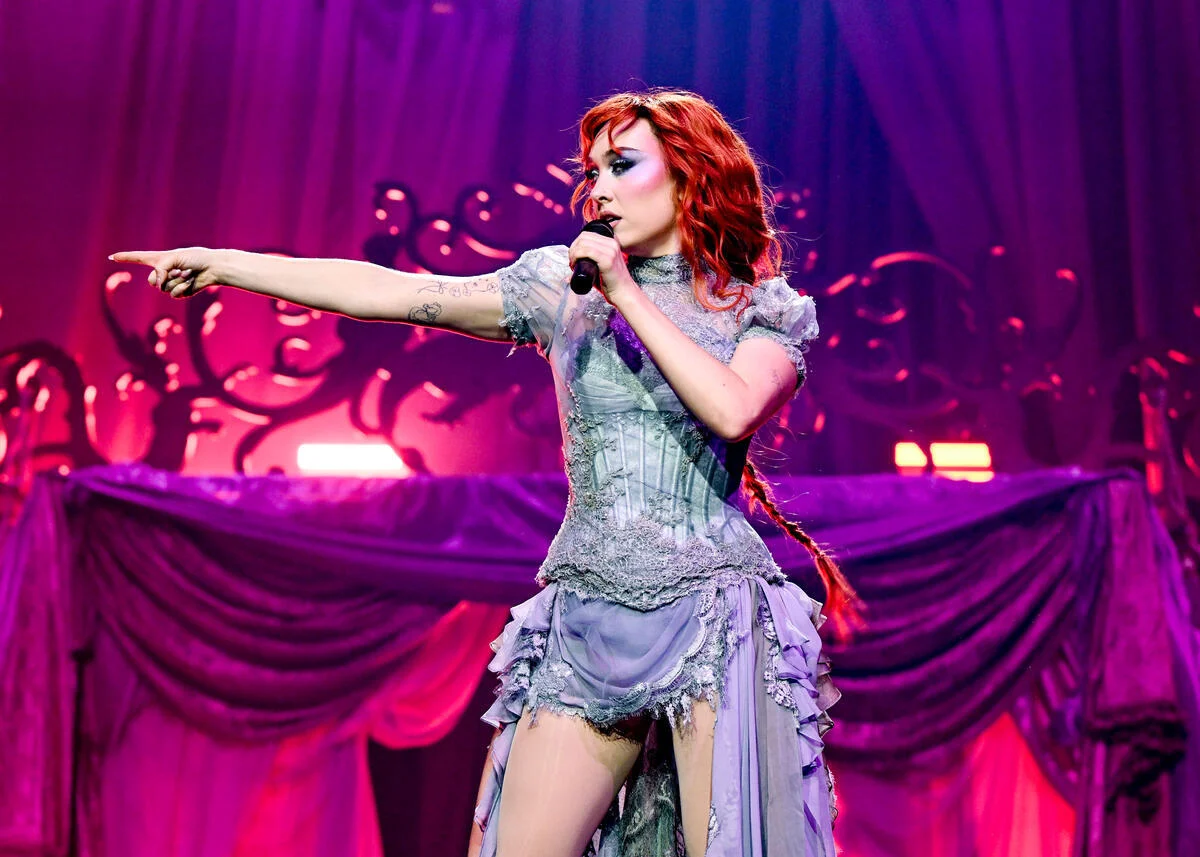
The landscape of modern pop music is rarely defined by a single debut, yet Chappell Roan’s The Rise and Fall of a Midwest Princess has managed to rewrite the rules of the genre. On Wednesday night at Los Angeles’ historic Shrine Auditorium, that cultural phenomenon reached a new, shimmering peak. As the headliner of the "Super Graphic Spectacular"—a two-night benefit event for her own Midwest Princess Project—Roan proved that her meteoric rise is no fluke. With a set that balanced raw emotional intimacy with the high-octane spectacle of a stadium-ready superstar, the evening served as a masterclass in how to weaponize artistic success for social good.
A Meeting of Generations: The "Coffee" Duet
It is difficult to pinpoint the "secret weapon" of an album where every track functions as a hit, but the ballad "Coffee" has long been a fan-favorite sleeper. On Wednesday, that song underwent a transformative metamorphosis. In a moment that stunned a capacity crowd, Roan invited pop royalty Christina Aguilera to the stage.
The pairing was a study in contrasts and connections. Here were two of the most potent vocalists of their respective eras—Aguilera, the generation-defining powerhouse of the early 2000s, and Roan, the queer-coded, avant-pop architect of the 2020s—coming together to perform a song defined by its profound restraint. "Coffee" is a track about the agonizing tentativeness of romantic tension, and in the hands of these two icons, it became a towering emotional centerpiece.
Roan, who has spent her career paying homage to the queer icons who paved the way, displayed a touching level of deference. Rather than overshadowing her mentor, she allowed the performance to breathe, proving that vocal bravado is most effective when tempered by discipline. The respect was mutual; later in the set, Roan ceded the stage to Aguilera for a solo performance of "Beautiful," ensuring that the audience recognized the sheer magnitude of the history unfolding before them.

Chronology of a Spectacular Evening
The "Super Graphic Spectacular" was billed as more than a standard concert; it was designed as a festival-like experience. The evening commenced with an outdoor street fair—dampened by the elements, yet undeterred in spirit—that set a communal tone for the night.
Inside the Shrine, the pacing was brisk. The event featured a rotation of brief, high-impact sets from supporting acts like Tinashe and Lola Young, all held together by the wit of comedian Caleb Hearon. The logistical efficiency was notable; in an industry prone to bloated set changes, this show functioned with clockwork precision. By 10:20 p.m., the main event had concluded, leaving the audience in a state of post-concert euphoria that felt far longer than its 75-minute duration.
Roan’s own set was a whirlwind of the high-octane and the deeply personal. She navigated the rock-infused aggression of "Karma" with the same ease as she led the crowd through the infectious, campy choreography of "Hot to Go!" Even when she stumbled—forgetting the lyrics to the deep-cut "Love Me Anyway"—the moment only served to endear her further to the audience, highlighting the professional, yet human, core of her performance.
Advocacy at the Forefront: The Midwest Princess Project
Beyond the melodies and the pageantry, the primary motivation for the event was the Midwest Princess Project. The charity, spearheaded by Roan, is dedicated to supporting LGBTQIA+ organizations across the United States, with a specific, urgent focus on providing resources and safety for trans youth.

The choice of Christina Aguilera as a guest was, in this context, entirely thematic. Aguilera has been a pillar of the LGBTQ+ community for decades, and her presence served to amplify the visibility of the causes Roan is fighting for. The "Super Graphic Spectacular" was a rare instance where the "spectacle" of pop music was successfully married to the grit of grassroots activism. By using her platform to foster a communal environment rather than a transactional one, Roan is establishing a new blueprint for how pop stars can engage with the social issues that affect their core demographics.
The Evolution of the "Midwest Princess" Aesthetic
Visually, the night was a testament to Roan’s commitment to world-building. Despite recent reports on social media suggesting a pivot toward a more understated, "cute" aesthetic, the stage design at the Shrine suggested that her "palatial" era is far from over.
The stage was draped in heavy, dramatic textiles, punctuated by chandeliers that recalled the opulence of Versailles. Roan herself was a focal point of this aesthetic, wearing a corset-heavy gown that, while structurally intricate, allowed her the freedom of movement necessary for her signature high kicks. Her choreography remains arguably the most underrated aspect of her performance. While many of her peers rely on heavy, pre-rehearsed group routines, Roan’s movement feels spontaneous and visceral—a physical embodiment of the songs themselves. Her brief, witty foray into line-dancing with her guitarists during "The Giver" was a perfect example of her ability to weave camp and musicianship into a single, cohesive narrative.
Implications for the Future of Pop
The success of the "Super Graphic Spectacular" raises significant questions about the current state of the industry. With a one-album catalog and a handful of superior non-album tracks, Roan has achieved what usually takes artists three or four cycles to master: a setlist where every song feels like a greatest hit.

The inclusion of "Expectations"—her recent collaboration with Olivia Rodrigo—served as a crucial bridge between these two musical worlds. By performing the song as a solo number, Roan successfully claimed the track as her own, demonstrating the "common DNA" shared by both artists through their mutual collaborator, Dan Nigro. It was a bold move that solidified her status as an artist who can thrive in the high-pressure environment of massive collaborations while maintaining her own distinct sonic identity.
As the curtain fell on the first night, the implications were clear: Chappell Roan is no longer just a "rising" star; she is a primary architect of the next decade of pop music. The brevity of the show—wrapping up well before the midnight hour—was a testament to the density and quality of her output. She doesn’t need to pad her sets with filler; her current repertoire is a lean, mean, emotional machine.
Looking Ahead: The Second Night and Beyond
As the production moves into its second night, featuring a fresh lineup including Caroline Polachek, Muna, and Fantasia Royale Gaga, the momentum shows no signs of slowing. The "Super Graphic Spectacular" has proven that the audience is hungry for exactly what Roan is offering: a mixture of high-concept performance art, genuine emotional vulnerability, and a fierce, unapologetic commitment to queer advocacy.
For those in the industry watching the Shrine Auditorium, the message is unequivocal. The "Midwest Princess" has built a cult of personality that is as durable as it is expansive. Whether she returns to the studio to record a follow-up or continues to focus on these high-profile, mission-driven events, the trajectory is clear. Chappell Roan has transformed from a promising newcomer into a cultural force, and if the "Super Graphic Spectacular" is any indication, she is only just beginning to grasp the scale of her own influence.

The night was not merely a concert; it was a rallying cry for a new generation of listeners—a reminder that pop music, at its best, can be both a sanctuary for the marginalized and the loudest party in the world. As the crowd spilled out onto the streets of Los Angeles, the buzz was not just about the surprise guests or the chandeliers; it was about the feeling that, for a few hours, the world had been made a little more inclusive, a little more artistic, and a whole lot more spectacular.
