
Sigma Expands Aizu Prime Cinema Lineup: Three New T1.3 Large-Format Optics Arrive
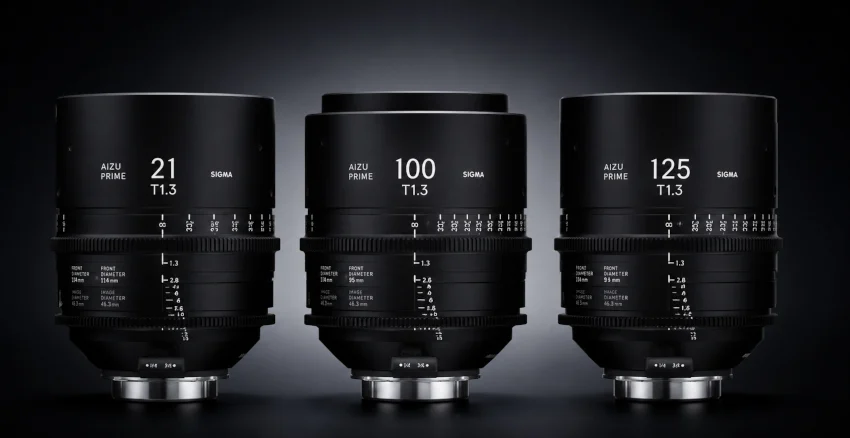
Sigma has officially expanded its prestigious Aizu Prime cinema lens system, introducing three high-performance, large-format optics: the 21mm T1.3 LF, the 100mm T1.3 LF, and the 125mm T1.3 LF. This strategic release marks a significant milestone in the development of the Aizu series, pushing the boundaries of what is possible in large-format cinematography by balancing extreme low-light capability with the rigorous mechanical demands of modern professional sets.
With these three additions, the Aizu Prime lineup now encompasses 11 distinct focal lengths. As Sigma moves toward its goal of a 12-lens ecosystem—ranging from 18mm to 125mm—the system is rapidly solidifying its reputation as a premier choice for high-end digital cinematography, bridging the gap between clinical sharpness and the organic, sought-after aesthetic of classic cinema glass.
The Evolution of a Cinema Standard: A Chronological Overview
The journey of the Aizu Prime system began in 2025, when Sigma first disrupted the market by announcing an ambitious eight-lens series. Designed from the ground up as dedicated cinema glass—rather than repurposed photography lenses—the Aizu Prime family was conceived to address the growing demand for large-format sensors like those found in the ARRI ALEXA LF, RED V-RAPTOR, and Sony VENICE 2.
The 2025 launch established the "Aizu Philosophy": a commitment to a constant T1.3 aperture across the entire range, a 46.3mm image circle capable of covering VistaVision and Open Gate formats, and a unified color science.
By mid-2026, the industry had begun to embrace the series for its unique ability to isolate subjects with a shallow depth of field while maintaining a distinct, natural rendering. The November 2026 announcement of the 21mm, 100mm, and 125mm focal lengths is the natural progression of this roadmap. With only the 18mm remaining to complete the series, Sigma has demonstrated a consistent, methodical approach to filling out the most critical focal lengths for cinematographers, moving from standard primes into the specialized wide and telephoto territory.
Technical Specifications and Optical Performance
The technical architecture of the new additions remains consistent with the existing Aizu Prime family, ensuring that productions can mix and match focal lengths without fearing "inter-cut" issues—the dreaded phenomenon where different lenses in a set display varying contrast, color, or flare characteristics.
The 21mm T1.3 LF: Wide-Angle Precision
The 21mm T1.3 LF is engineered for environments where space is at a premium but visual impact is paramount. With an image circle of 46.3mm, it provides expansive coverage without the barrel distortion typically associated with ultra-wide cinema glass. It features a minimum focusing distance of 0.35m and weighs 1.6kg in PL mount, making it surprisingly manageable for handheld or gimbal work.
The 100mm and 125mm T1.3 LF: Telephoto Isolation
At the longer end of the spectrum, the 100mm and 125mm T1.3 lenses serve as the "portraits" of the set. By combining a long focal length with a T1.3 aperture, these lenses provide an extreme level of subject-to-background separation. The 100mm offers a 1m minimum focus, while the 125mm sits at 1.25m. Both lenses weigh 2.2kg, creating a balanced, consistent experience for focus pullers who need to transition between the two without recalibrating their gear excessively.
Shared Optical Characteristics
Across all three lenses, Sigma has prioritized three specific optical traits:
- Controlled Focus Breathing: Essential for cinematic storytelling, the breathing is suppressed to ensure that focus pulls do not change the framing of the shot.
- Organic Rendering: Eschewing the "clinical" look of some modern optics, the Aizu series is tuned to provide a natural, cinematic texture that handles skin tones and highlights with grace.
- Color Consistency: Through advanced coating technology, Sigma ensures that the color shift between the 21mm and the 125mm is virtually non-existent, saving colorists countless hours in post-production.
Cinema-Focused Mechanics and Metadata Integration
Sigma’s commitment to the professional workflow is evident in the physical construction of these lenses. Recognizing that the life of a cinema lens is defined by the rigors of the set—dolly moves, drone shots, and handheld chaos—Sigma has incorporated robust mechanical features into the Aizu line.
The lenses feature a 270-degree focus rotation, providing the granularity necessary for precise, repeatable focus marks. The 70-degree iris rotation allows for smooth, stepless exposure adjustments. Furthermore, the inclusion of dedicated lens support feet (the SF-61 for the 21mm and the SF-71 for the telephotos) ensures that the lens mount is protected during heavy-duty rigging.
Perhaps most important for modern VFX-heavy productions is the inclusion of metadata support. The PL mount versions are fully compatible with Cooke /i and ZEISS eXtended Data protocols. For those utilizing the Sony E-mount versions, the lenses communicate directly with Sony camera bodies to transmit metadata. This data—which includes focus distance, iris position, and focal length—is invaluable for VFX artists matching CG elements to live-action plates, as well as for cinematographers logging their setups for continuity.
Implications for the Industry
The expansion of the Aizu Prime system arrives at a pivotal moment in the industry. As large-format sensors become the standard for both high-end streaming and feature film production, the need for lenses that can resolve these massive sensors while maintaining a distinct "look" is higher than ever.
The "Unified Package" Strategy
By offering a range from 18mm to 125mm with a consistent T1.3 stop, Sigma is positioning the Aizu Prime system as a "one-stop-shop" for rental houses and independent filmmakers. Traditionally, cinematographers might mix and match lenses from different manufacturers—a wide-angle from one brand, a portrait lens from another—to get the "perfect" set. Sigma is betting that the quality and consistency of the Aizu series will convince crews to standardize their entire production on the Aizu ecosystem.
Price and Availability
The global rollout begins in November 2026. With a US retail price of $9,799 per lens, the Aizu Primes occupy a "prosumer-to-professional" tier. They are positioned as a high-value alternative to the ultra-premium, ultra-expensive "hero" lenses from legacy cinema brands. For production companies looking to purchase a full set rather than rent, the Aizu series offers a return on investment that is difficult to match in the current market.
Final Reflections
The introduction of the 21mm, 100mm, and 125mm T1.3 lenses is more than just a product update; it is a signal of Sigma’s long-term commitment to the cinema industry. By systematically building out the Aizu Prime range, Sigma is effectively changing the landscape for independent and mid-budget productions that require large-format capabilities.
When the final 18mm lens arrives to complete the 12-lens set, the Aizu Prime system will arguably be the most comprehensive, modern, and accessible high-speed lens package available. For the cinematographer, this means more creative freedom, greater visual consistency, and a reliable toolkit that is built to survive the demands of the next decade of filmmaking. As the industry moves toward higher resolutions and more complex sensor formats, Sigma’s Aizu Prime series stands ready to capture the vision with unmatched technical precision.
Quick Reference: The Aizu Prime 11-Lens Lineup
- Existing (8): Various standard and wide-normal focal lengths.
- New (3): 21mm T1.3, 100mm T1.3, 125mm T1.3.
- Upcoming (1): 18mm T1.3 (Completion of the 12-lens system).
- Mount Options: PL and Sony E-mount.
- Key Feature: Full large-format/VistaVision coverage with constant T1.3 aperture.
