
The Rewilding of Memory: How ‘Over the Hedge’ Became an Unexpected Map for the Empty Nest
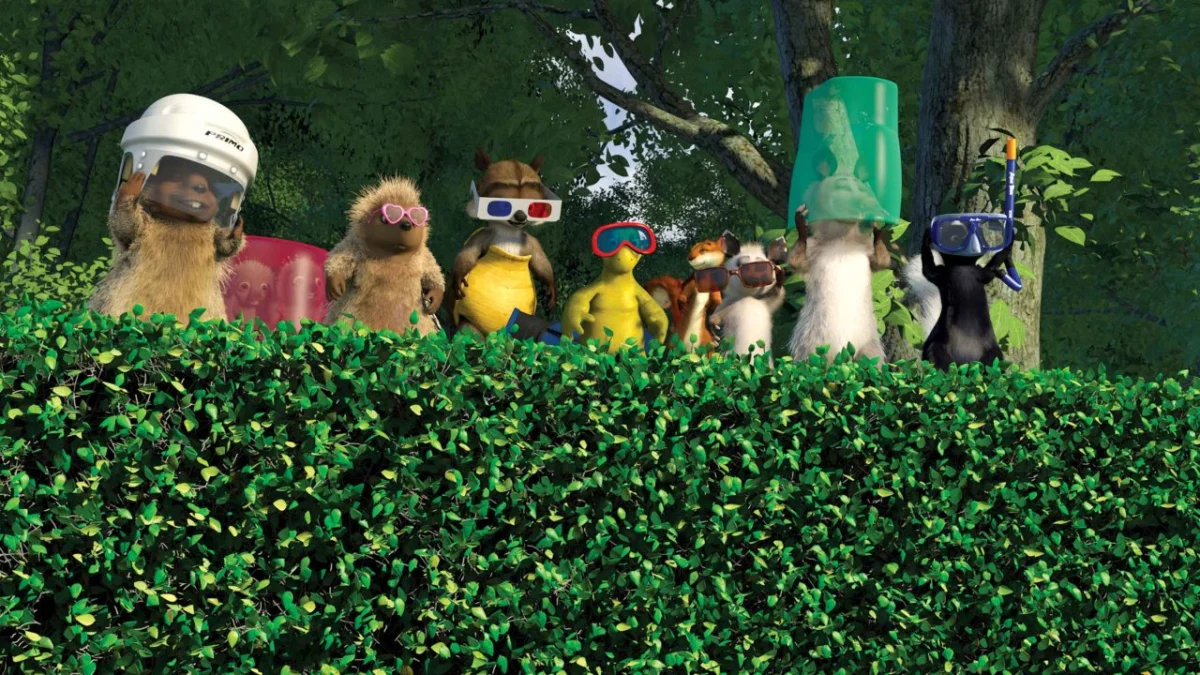
In the quiet hum of a 2026 living room, a father—long past the days of sticky fingerprints and middle-of-the-night feedings—finds himself returned to the animated chaos of 2006. The film is Over the Hedge, a DreamWorks production that, at the time of its release, was often overshadowed by the juggernaut that was Pixar’s Cars. Yet, for one family, this scruffy, feral tale of woodland creatures navigating the encroaching sprawl of suburbia became more than just a piece of entertainment. It became a liturgical text for the joys and terrors of raising children.
The Chronology of a Household Mythos
The story of this family’s relationship with the film begins not in a theater, but in the intimate, unscripted moments of domestic life. Years before the children had grown and relocated across oceans, the film served as a survival mechanism.
The timeline of this obsession is marked by milestones: the solemn, backyard funeral for a moth—a moment of profound, childhood gravity—and the high-stress, late-afternoon “triage” sessions where parents, exhausted by the relentless demands of child-rearing, found solace in the film’s quick-witted dialogue.
In one particularly vivid memory, a mother returns from a grueling shift to find her household in tatters. Bedroom doors are slammed, tears are flowing, and the atmosphere is thick with the friction of growing up. Her request to her husband is simple and desperate: "I need you to be funny. Right now." The father, drained of his own humor, turns to the only language they have left: the lines from Over the Hedge. A single phrase—“It never ends”—delivered to one door, followed by the punchline—“…it never ends that way too”—delivered to the other, acts as a psychic reset. The tears stop. The tension dissipates. The family, for a fleeting moment, is re-aligned.
Supporting Data: A Cult Classic in Context
Released in May 2006, Over the Hedge arrived during a pivotal era for animation. While it lacked the overwhelming merchandising machine of Cars, the film distinguished itself through its raw, frantic energy and its surprisingly subversive critique of modern over-consumption.
The film follows RJ (voiced by Bruce Willis), a raccoon who accidentally incurs a debt to a dangerous bear (Nick Nolte) and must plunder a suburban housing development to pay it off. He enlists a found family of hibernating animals—Hammy the squirrel (Steve Carrell), Verne the turtle (Gary Shandling), a skunk (Wanda Sykes), and an opossum family (William Shatner and Avril Lavigne)—to help him navigate the “weird, scary” human world.
From a critical perspective, the film is a masterclass in voice acting and pacing. Steve Carrell’s performance as Hammy is often cited as a standout, providing a frenetic, hyper-caffeinated counterpoint to the more anxious, grounded energy of Gary Shandling’s Verne. The human antagonists, played by Alison Janney and Thomas Haden Church, are rendered with a grotesque, cartoonish quality that highlights the film’s core thesis: in the face of human sprawl, nature must either adapt or be obliterated.
Official Perspectives: The Philosophy of the "Family of One"
The core conflict of Over the Hedge—the tension between RJ’s desire to remain a "family of one" and the group’s inherent need for community—mirrors the developmental arc of the family that watched it. As the children grew and the father transitioned into the role of an "empty-nester," the film’s themes took on a new, deeper resonance.

In recent conversations between the now-adult children and their father, the film has undergone a re-evaluation. What once was viewed as mere slapstick is now understood as a critique of suburbia. The younger daughter, now twenty, views the film through a lens of environmental and sociological awareness, noting that the movie addresses the very real, very frightening concept of biodiversity loss and the relentless expansion of the "trimmed hedge."
The father observes that this is a "retroactive continuity"—a way of folding the past into the present. He notes: "My memory doesn’t necessarily get worse, just strewn with continued past projection." By watching the film now, the family is not just re-watching a movie; they are engaging in a form of shared cognitive therapy, testing whether the bonds forged in the chaos of the early 2000s still hold up in the globalized, digital reality of 2026.
Implications: The Courage to Be Ridiculous
The most profound implication of this re-watch is the realization that the father—and by extension, parents everywhere—were granted a "superpower" during those years of early parenting: the courage to move forward despite the terrifying uncertainty of the future.
The film serves as a reminder that parenting is often about navigating "weird, scary things" that threaten to encroach upon the domestic sanctuary. The father notes that his current life, free of the daily, grueling demands of young children, is paradoxically more quiet and, in some ways, more hollow. The "empty nest" is not just a lack of presence; it is a lack of the constant, frantic, beautiful, and devastating momentum that once defined his existence.
The film suggests that the way to thwart the "deadening" effects of adulthood and the loss of one’s children is to strive to be ridiculous. Whether it’s eating chips in a closet or romping through an open field, the capacity for joy in the face of absurdity is the only defense against the inevitable melancholy of time passing.
Conclusion: A Blessing for the Vanishing Points
As the father reflects on the moth funeral, the goldfish, and the passing of pets and family members, he realizes that these moments are not just burdens of memory. They are the components of a life well-lived. He notes, "I have this small magic time collapse… in a delirious story that came before any grief."
Ultimately, the act of re-watching Over the Hedge in 2026 is an attempt to "rewild" his living space. It is an acknowledgment that while the children have grown and the "half the forest" of his past parenting life is gone, the laughter remains. The film provides a bridge between the exhausted, weeping father of 2006 and the reflective, empty-nester of 2026.
By reclaiming the joy of the final chase scene, where the animals rampage through the manicured lawns to reclaim their space, the father finds a sense of closure. He concludes that the loss does not have to be the part that lingers. Instead, the laughter, the squeals, and the reckless, pell-mell running toward the horizon are what remain. In the end, he is ready to offer the final, genuine blessing: for the creatures, for the children, and for the wild, beautiful, ridiculous time that continues to slip away.
