
The Blueprint of Self-Reliance: How Don Barris and Windy City Heat Rewrote the Rules of Independent Hollywood
HOLLYWOOD — For generations, the entertainment industry has sold a singular, romanticized mythology to aspiring filmmakers, writers, and performers: the narrative of the miraculous discovery. In this enduring Hollywood fairy tale, you meticulously craft the ultimate screenplay, slay a midnight set at an exclusive underground club, manage to cross paths with the right studio executive, and—in a cinematic climax—someone finally grants you the formal permission slip to launch a career.
Yet, veteran comedian, filmmaker, producer, and podcaster Don Barris built his multi-decade footprint on an entirely contradictory, radically pragmatic philosophy: If nobody is coming to save you, and nobody is coming to discover you, you must engineer something they simply cannot ignore.
As a fixture of the legendary Comedy Store and a foundational creative architect behind the cult classic comedy feature Windy City Heat, Barris’s trajectory serves as a masterclass in modern indie-media endurance. His career is a definitive case study in what happens when creators shed the paralyzing habit of waiting for institutional validation and instead take manufacturing their own opportunities into their own hands.
I. Main Facts: The Anatomy of a Guerrilla Career
Don Barris is not a traditional Hollywood success story. His resume reads like a Swiss Army knife of modern entertainment: stand-up comic, writer, underground filmmaker, pioneering podcaster, and ringleader of a chaotic comedic universe. Yet, his cultural footprint is perhaps most indelibly stamped by Windy City Heat, a feature-length comedy experiment that effortlessly blurs the lines between a traditional narrative movie, a mockumentary, a high-stakes hidden-camera prank, and raw performance art.
At its core, Barris’s career challenges the Hollywood gatekeeper model. Rather than pitching pilots to network executives who operate from a place of risk aversion, Barris leveraged the unpredictable elements of live performance—discovering eccentric personalities on the fringes of the stand-up scene and building custom vehicles for them.
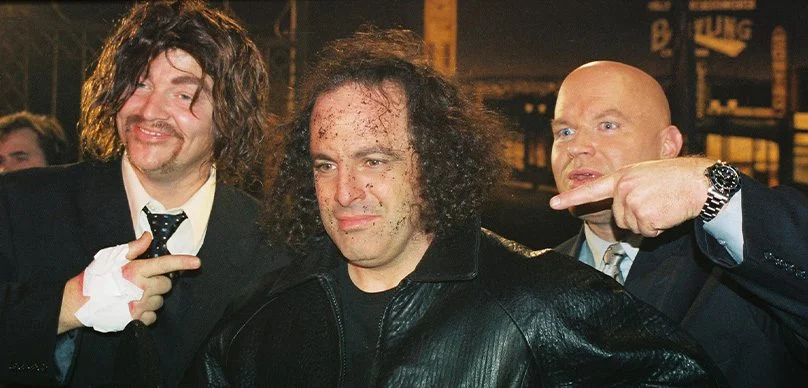
The strategy behind Windy City Heat turned traditional comedy upside down. While Andy Kaufman famously played elaborate tricks on entire audiences while remaining the sole orchestrator, Barris and his collaborators inverted the paradigm: an entire production crew and audience understood the joke, while a single unwitting participant—Perry Caravello—believed he was starring in a legitimate feature film.
This high-wire act of guerrilla filmmaking transformed Barris from a struggling stand-up into a blueprint for digital-age creators who understand that true creative freedom belongs to those who control their own means of production.
II. Chronology: From Car-Living Struggles to Cult Stardom
The path to realizing Windy City Heat was neither swift nor glamorous. It was forged in the crucible of rejection, financial instability, and unyielding persistence.
The Stand-Up Roots and Potluck Discoveries
Barris’s journey began humbly on the stage of West Hollywood’s iconic Comedy Store. While hosting the venue’s notorious potluck nights—where aspiring comics vied for stage time—Barris developed a keen anthropological eye for human behavior. He noticed a distinct pattern: the biggest, most visceral laughs from the room rarely came from slick, highly polished comedians running tight, predictable material. Instead, they erupted organically from unusual, highly eccentric personalities—unpredictable characters who marched to the beat of a completely different drum.
Recognizing lightning in a bottle, Barris began gathering these singular personalities into his own live shows, an embryonic project originally titled Simply Don. Instead of waiting for a Hollywood television producer to invent a vehicle tailored to his eccentric comedic sensibilities, Barris built the vehicle himself, road-testing the concept in front of live audiences for years before it ever caught the attention of mainstream tastemakers like Jimmy Kimmel.
The Eleven-Year Obstacle Course
Relocating from Michigan to California, Barris made a vow to himself: failure was not an option, and quitting was entirely off the table. This resolve was tested to its absolute limits. There were prolonged, brutal chapters where his career flatlined entirely. At one low point, Barris was actually ousted from the Comedy Store and endured stretches spanning more than six months living out of his car.
Despite the homelessness and career stagnation, he kept performing, kept writing, and kept refining the bizarre comedic ecosystem that would eventually morph into Windy City Heat.
Looking back, Barris notes that an astonishing 11 years elapsed from the very inception of that creative process until the film finally materialized on screen. It is this protracted, grueling incubation period that audiences and aspiring filmmakers rarely witness. Pop culture consumers see only the polished final product: the festival red carpet, the glowing reviews, the television appearances, or the distribution deal. They remain blissfully unaware of the decade-plus of silent experimentation, trial, error, and quiet desperation that preceded it.
The Jimmy Kimmel Intervention and Cult Explosion
Eventually, late-night host and producer Jimmy Kimmel recognized the subversive genius of what Barris had cultivated and stepped in to help finance and spearhead the transition into a feature film.
Upon its release, Windy City Heat did not become an overnight box office blockbuster. Instead, it embarked on a slow-burn ascent fueled by grassroots evangelism. Kimmel himself became an active apostle for the film, famously purchasing physical cases of the DVD and handing them out personally to industry peers, actors, and comedians whom he believed possessed the specific comedic palate required to appreciate it.
Word-of-mouth distribution slowly built a passionate, die-hard cult following. The film began circulating in underground filmmaker circles like digital contraband. Barris recalls surreal moments backstage at Jimmy Kimmel Live, where icons like Quentin Tarantino enthusiastically cornered him to dissect the movie’s finer points, subsequently introducing him to visionary director Eli Roth. Comedic heavyweights like Jack Black similarly stepped forward as vocal champions of Barris and his collaborative circle, affectionately known as "The Big Three."
III. Supporting Data & Production Realities: The Art of the Single Take
From a purely technical and logistical filmmaking perspective, Windy City Heat presented a staggering, almost unprecedented array of production challenges. Chief among them was a stark reality: many pivotal scenes effectively amounted to one-take wonders.
When executing an elaborate, feature-length prank where the central protagonist remains completely oblivious to the fact that he is the butt of the joke, standard cinematic luxuries dissolve. Directors cannot simply yell "cut," reset a complex sequence, and ask actors to run the blocking a second time without shattering the delicate illusion.
Barris vividly recalls high-tension sequences, such as the infamous snack-table confrontations, where the crew held its collective breath because nobody possessed a script for how Perry Caravello would organically react. Had Caravello suddenly connected the dots, sensed the deception, or flat out refused to cooperate further, the entire multi-million-dollar (in spirit, if not budget) house of cards would have collapsed instantly.
Rather than trying to micro-manage every single performance through traditional, heavy-handed directorial control, Barris and his team adopted a documentary-style ethos of chaos management:
- Environment Engineering: They meticulously built hyper-specific scenarios and loaded them with eccentric characters.
- Camera Positioning: They strategically mapped out coverage to capture the action naturally, leaning into the fact that secondary cameras could easily be explained away as "behind-the-scenes" or promotional EPK (Electronic Press Kit) footage.
- Yielding to Reality: Instead of forcing actors to hit predetermined marks, they established the rules of the world and simply allowed raw, unvarnished human reaction to dictate the narrative flow.
This approach transformed the production into a hybrid medium—sitting somewhere precariously between a scripted feature comedy, a guerrilla mockumentary, a hidden-camera social experiment, and real-time performance art.
IV. Official Perspectives & Industry Insights: Relationships as Production Value
As the media landscape evolved with the advent of high-speed internet and digital democratization, Barris was quick to adapt. Observing trailblazing creators like Adam Carolla and Joe Rogan bypass traditional studio gatekeepers entirely to forge direct, unfiltered relationships with global audiences, Barris recognized a paradigm shift.
To Barris, the internet offered something historical generations of filmmakers and performers desperately lacked: self-sustaining distribution and promotional infrastructure.
"Instead of shooting a pilot, handing it to a network executive, and praying they choose to greenlight it, creators can now build their own shows, podcasts, video channels, and digital empires from their living rooms," Barris observes. These grassroots projects attract dedicated audiences, and those self-generated audiences can subsequently be leveraged to finance and sustain much larger, independent cinematic endeavors. The underlying principle remains identical to the ethos that birthed Windy City Heat: never hitch your wagon to someone else’s willingness to say yes.
The Currency of Human Capital
This philosophy heavily informs Barris’s current enterprise: the development of an independent entertainment network designed to house everything from long-form podcasts and short-form digital sketches to scripted pilots and feature films.
Because of his decades-long tenure in the trenches of the Los Angeles comedy scene, Barris commands a vast network of relationships with top-tier performers and industry veterans. Many of these artists would normally command staggering appearance fees that would instantly bankrupt an independent production budget. Yet, because of mutual respect, shared history, and genuine personal connections forged over decades, they routinely show up for Barris’s projects.
This highlights a profound, frequently overlooked lesson for indie filmmakers: Independent production is not solely about raising financial capital; relationships are literal production value.
The colleagues you have collaborated with, supported through hard times, entertained, and built unshakeable trust with over a twenty-year career can grant a scrappy, micro-budget production access to elite talent and resources that no amount of venture capital could otherwise buy.
V. Implications: The New Independent Roadmap
The unorthodox career arc of Don Barris provides a vital counter-narrative to the conventional wisdom taught in film schools. He did not follow the standard, highly romanticized roadmap from a prestigious undergraduate cinematic arts program to a Hollywood writers’ room assistant gig, culminating in a lucrative studio assignment.
Instead, he dove headfirst into the chaotic waters of underground comedy, cultivated relationships with societal outliers, stewarded a bizarre concept for over a decade, partnered with late-night royalty, birthed a cult masterpiece, and continuously reinvented himself across podcasting, digital video, live performance, and network building.
For the modern generation of content creators, digital auteurs, and independent filmmakers navigating an increasingly fragmented media ecosystem, the overarching takeaway is both daunting and liberating:
- Make Your Own Opportunities: Stop waiting for a structural invitation that may never arrive.
- Build the Infrastructure: Shoot the short, record the podcast, launch the digital channel, and cultivate a direct-to-consumer audience.
- Play the Long Game: Keep producing work relentlessly, even during periods when the industry completely ignores you.
As Don Barris’s eleven-year journey with Windy City Heat powerfully demonstrates, the breakthrough project that finally shatters the industry’s doors open is almost always the labor of love you have been quietly, stubbornly constructing in the shadows when nobody else was watching.
