
The Sound of Survival: How Michael Giacchino Found the Soul of Society of the Snow
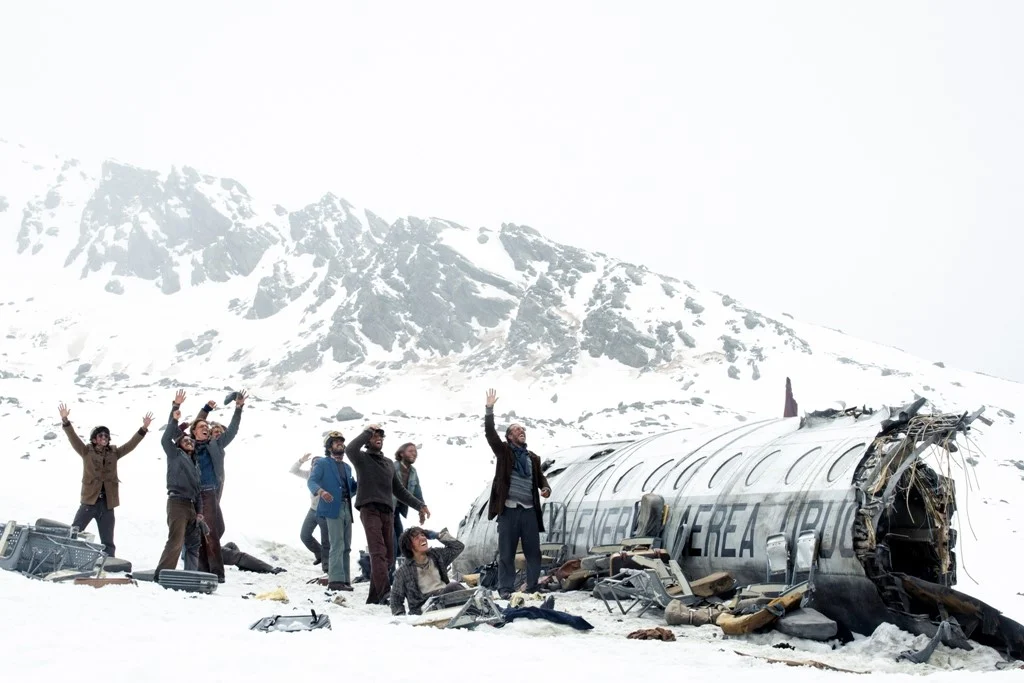
When director J. A. Bayona began the arduous process of bringing the 1972 Uruguayan flight disaster to the screen in Society of the Snow, he didn’t initially envision Michael Giacchino at the helm of the score. The two men, linked by a long-standing professional partnership and a deep personal friendship—having previously collaborated on Jurassic World: Fallen Kingdom—had a routine of sharing rough cuts. For Bayona, it was a chance to get an honest, expert perspective from a fellow filmmaker. For Giacchino, the Oscar-winning composer of Up, it was simply a chance to support a friend.
However, the experience of viewing Society of the Snow—a harrowing, visceral account of the Uruguayan rugby team’s plane crash in the Andes—would prove to be a transformative turning point for the composer. What began as a casual screening evolved into one of the most profound and emotionally taxing creative journeys of Giacchino’s career.
A Stumble into the Andes: The Genesis of a Score
The transformation from casual observer to lead composer was near-instantaneous. As the credits rolled on the rough cut, Giacchino was not thinking about film theory or industry standards; he was consumed by the stark, brutal humanity of the story on screen. The film, which serves as Spain’s international entry for the Academy Awards, had struck a nerve so deep that by the following morning, the composer had already begun sketching out the musical language for the project.
The initial dialogue between the director and the composer was brief but decisive. Conversations about the role of percussion and the texture of guitar strings began immediately, replacing the typical back-and-forth about pacing or thematic placement. Bayona, recognizing that Giacchino had tapped into the film’s beating heart, invited the composer to score the entirety of the project. For Giacchino, who was already deep into preparations to direct a horror remake of the 1954 classic Them!, this was a commitment that would demand an entirely different, more internal set of creative muscles.

The Philosophy of "Less is More"
The creative process for Society of the Snow was defined by a radical departure from the grand, sweeping orchestrations often associated with survival epics. In the high-altitude, oxygen-deprived isolation of the Andes, there was no room for the bombast of a full brass section. Instead, Giacchino leaned into a minimalist philosophy, recording a small, tight ensemble at the legendary Abbey Road Studios in London.
"Everything kept going ‘less is more, less is more,’" Giacchino explained in an interview with IndieWire. "I always treat the characters, animated or live action, as if they were real people, so that the music I write comes from putting myself into their mind and soul. For this film, I felt an enormous responsibility to be as honest as I could about this traumatic experience that wasn’t just about sadness and loss. It was about waking up in an alien environment, taking one step at an excruciating time, not knowing what the next moment would bring."
This "less is more" approach served a dual purpose: it allowed the audience to experience the claustrophobia of the crash site and provided space for the audience to process the silence of the mountains. By removing traditional melodic flourishes, the music became a manifestation of the characters’ internal struggle to survive.
Weaving the Cultural Fabric of the Andes
While the orchestration was sparse, the sonic palette was deeply rooted in the geography and the culture of the survivors. Giacchino and Bayona were adamant that the score should reflect the spirit of the Uruguayan victims and survivors without feeling like a tourist’s observation.

"I knew that the characters were very religious at the time—many of them came from Catholic upbringings—and that was a big part of their personalities," said Giacchino. "I wanted to acknowledge that in some way, but not in a completely overt way. That meant keeping it as simple and as internal as possible, which allowed those bigger moments to read better. It felt more like a turn of fate."
To ground the music in the specific setting of the Andes, Giacchino incorporated the charango, an Andean string instrument, and the tambores de candombe, traditional Uruguayan drums. Perhaps most moving was the use of vocals in Mapuche, an indigenous language of the region. The lyrics selected for the score translate to "Mother Earth" and "Nature," a deliberate choice to highlight the duality of the mountain range: a place that brought the survivors to the brink of death, yet also served as the crucible that demanded their endurance.
Respecting the Soundscape of Tragedy
A unique challenge for the composer was knowing when not to play. The film features scenes of catastrophic intensity—the initial plane crash and a subsequent, devastating avalanche—that were handled with such terrifying sonic precision by the sound design team that music would have been an intrusion.
"I didn’t score the crash or the avalanche because the sound team already had those brilliantly covered with their horrific soundscape," Giacchino noted. By ceding the floor to the raw, naturalistic sounds of the disaster, the music instead focuses on the aftermath and the psychological landscape of the survivors.

This intentionality extended to the emotional core of the film. Giacchino emphasized that his goal was not just to chronicle the survival of those who made it home, but to honor the memory of those who were lost in the snow. "The survivors had many years to tell that story of what happened to them," he said, "and I feel like this was a chance to tell the story of those who didn’t come down. They literally gave everything they had to offer."
The Weight of Truth: Final Reflections
The culmination of the project was a moment of profound vulnerability for the composer. After the film was completed, Giacchino had the opportunity to meet the survivors of the 1972 crash. Approaching the meeting with significant trepidation, he was met with relief and, ultimately, approval. The survivors confirmed that the film, and by extension its score, captured the essence of their struggle and the harsh, unforgiving nature of the environment they endured for 72 days.
"I was exhausted at the end of each day," Giacchino admitted, reflecting on the months spent in the studio. "Going a lot deeper philosophically in order to find ways to achieve a truthfulness—realizing that I could never quite reach it—but hoping that I made the best attempt to express this for them, the survivors and the dead."
Implications and Cinematic Legacy
The success of Society of the Snow as both a film and a sonic experience highlights a growing trend in prestige cinema: the return to minimalism as a tool for emotional authenticity. In an era often dominated by wall-to-wall synthetic scores, Giacchino’s work here stands as a testament to the power of silence, texture, and cultural specificity.

The film, which arrives on Netflix on January 4, 2024, following a limited theatrical release on December 22, is poised to be a significant player in the awards circuit. More importantly, however, it stands as a monument to a story that has been told before, but perhaps never with such a haunting, delicate, and deeply respectful musical accompaniment.
For Michael Giacchino, Society of the Snow represents a departure from the high-octane blockbusters that have defined much of his career. It serves as a reminder that the most powerful music is often that which refuses to shout, choosing instead to whisper the truths of the human condition—even when that condition is found in the freezing, isolated silence of the Andes.
