
Blue Diamond Seeks to Revitalize the Almond Milk Category with High-Protein Innovations and Star-Studded Marketing
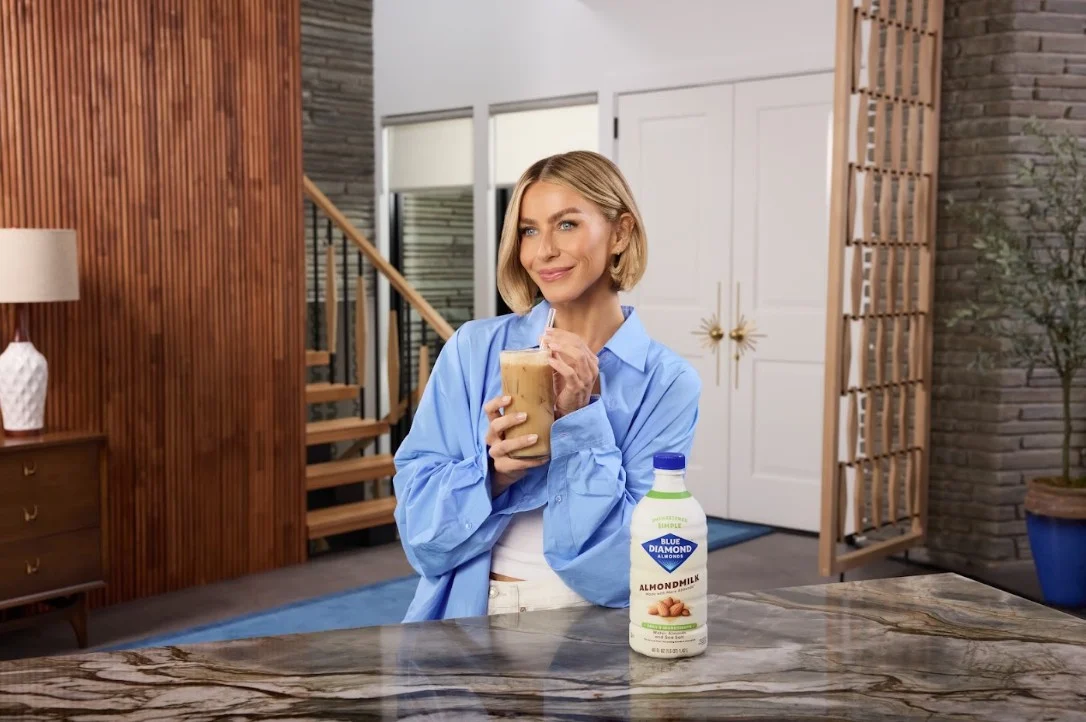
NEW YORK — In an aggressive move to reignite growth in a flat or declining plant-based beverage sector, agricultural cooperative and brand powerhouse Blue Diamond Growers is making a multi-million-dollar play for younger consumers. Following successful retail pilots, impressive early velocity metrics, and the launch of trend-focused product variations, the company has officially rolled out a high-profile brand awareness campaign featuring dancer, actress, and Dancing with the Stars alum Julianne Hough.
The initiative follows a meticulous, phased go-to-market strategy that prioritized securing in-store distribution and proving product-market fit before investing heavily in top-of-funnel media. Now, with key performance indicators (KPIs) met and new formulations resonating with shoppers, Blue Diamond is setting its sights on doubling brand awareness and onboarding the next generation of dairy alternative consumers.
Main Facts
Blue Diamond Growers, best known globally for its ubiquitous Almond Breeze product line, has executed a strategic pivot aimed at modernizing its portfolio and expanding the total addressable almond milk market. The core elements of this strategic push include:
- Targeted Product Innovation: To address contemporary consumer demands, Blue Diamond developed two distinct new products: Chocolate Protein (a high-protein chocolate-flavored almond milk designed for active lifestyles and fitness enthusiasts) and Unsweetened Simple (a clean-label formulation utilizing just three ingredients: almonds, water, and sea salt).
- High-Profile Partnerships: The brand has partnered with Dancing with the Stars alum Julianne Hough to anchor a national multi-channel marketing campaign. Hough was chosen for her active lifestyle, authentic alignment with plant-based diets, and strong social media reach among younger demographics.
- Demographic Shift: While Blue Diamond’s heritage consumer base historically skews toward Generation X, the new product innovations and the Hough campaign are explicitly engineered to capture the attention of Millennials and Generation Z.
- Stellar Retail Benchmarks: Before committing to broad awareness advertising, Blue Diamond achieved critical commercial milestones: hitting a 30% distribution footprint nationwide and realizing a robust 30% repeat purchase rate on the new product lines.
- Long-Term Execution Horizon: The campaign featuring Hough, alongside accompanying social media advertisements and targeted in-store demonstrations, is scheduled to run continuously through August 2027.
Chronology of a Product Launch: From R&D to Stardom
The path to Blue Diamond’s current marketing blitz was carefully mapped out over a multi-stage timeline, demonstrating a disciplined approach to fast-moving consumer goods (FMCG) brand management.
Phase 1: Product Development and Formulation (Late 2023 – Early 2024)
Recognizing that consumer habits were shifting toward functional benefits (like protein) and radical ingredient transparency (clean labels), Blue Diamond’s innovation teams went to work. Developing Chocolate Protein and Unsweetened Simple took approximately six to eight months. During this phase, food scientists and brand managers fine-tuned the flavor profiles, nutritional density, and supply chain viability to ensure the formulations could scale efficiently.
Phase 2: In-Store Soft Launch and Retail Momentum (Late 2024)
Roughly ten months prior to the national awareness campaign, the new SKUs (Stock Keeping Units) hit grocery store shelves. Eschewing expensive television or digital advertising out of the gate, Blue Diamond concentrated its resources at the point of sale. The brand implemented aggressive in-store strategies, including product sampling stations, high-visibility shelf signage, and localized couponing. This allowed the company to observe real-time shopper behavior where final purchasing decisions are made.
Phase 3: Metric Verification and Threshold Achievement (Early 2025)
Before spending marketing dollars to drive mass consumer traffic, Blue Diamond monitored two critical metrics: distribution breadth and repeat purchase rates. The company set a strict internal benchmark—requiring at least 30% distribution across retail partners and a 30% to 40% repeat purchase rate. Once these targets were safely secured, validating that consumers not only tried the product but genuinely liked it, green lights were given for the next phase.
Phase 4: National Awareness Campaign Launch (Mid-2025 – August 2027)
With foundational metrics achieved, Blue Diamond launched its major multimedia push featuring Julianne Hough. The campaign integrates digital video spots, social media activations, influencer marketing, and experiential in-store demos. Designed as an equity-building marathon rather than a short-term sprint, the campaign is scheduled to run through August 2027, maintaining sustained pressure to build long-term brand equity and category growth.
Supporting Data and Strategic Metrics
The decision to transition from grass-roots retail marketing to a celebrity-backed national campaign was grounded entirely in hard data. According to Maya Erwin, Vice President of Marketing and Innovation at Blue Diamond Growers, the brand operates under rigorous analytical frameworks to maximize return on investment (ROI).
| Strategic Metric / KPI | Target Threshold / Status | Strategic Purpose |
|---|---|---|
| Retail Distribution | 30% or higher | Ensures products are sufficiently stocked so that consumers inspired by ads can actually find them locally. |
| Repeat Purchase Rate | 30% to 40% | Validates product formulation, taste profile, and organic consumer satisfaction before driving mass trial. |
| Brand Awareness | Goal: Double current levels | Expands top-of-mind recall among younger demographics (Millennials and Gen Z). |
| Trial Generation | Double current trial rates | Converts passive observers into active category participants through targeted incentives. |
Erwin notes that while Blue Diamond as an individual corporate entity has enjoyed steady growth, the broader almond milk category has experienced stagnation. Consequently, the company views its primary responsibility not merely as stealing market share from competitors, but as expanding the entire category pie.
"The larger strategy is definitely to continue to try to bring more consumers into almond milk, to introduce almond milk to the younger generations, to try to grow the category and give more reasons to use almond milk, more occasions to use almond milk," Erwin explained. "The main strategy is to get almond milk as a category growing again."
Official Responses and Executive Insights
Speaking on the philosophy behind the campaign, Blue Diamond leadership emphasized the delicate balance between driving immediate sales conversions and building long-term brand equity.
"We’re hoping that it helps drive more trial," Erwin stated regarding the partnership with Julianne Hough. "Ultimately, that would drive more sales for both a retailer and for our organization. We’re really focused on trying to double our awareness, double our trial, and make people more aware of the new launch."
Choosing Julianne Hough was not a random endorsement decision; it was dictated by audience overlap and lifestyle credibility. Hough’s extensive professional dance background requires a rigorous, health-conscious dietary regimen, making her consumption of almond milk organic rather than forced. Furthermore, her digital follower demographic aligns precisely with the Millennial and Gen Z cohorts that Blue Diamond needs to capture to secure its future market share.
Addressing the timeline of campaign effectiveness, Erwin noted that results for new product innovations typically materialize faster than those for legacy items, often showing movement within four to six weeks of a major push. However, she remains pragmatic about the realities of modern consumer psychology.
"It’s much more about equity building," Erwin said. "It’s a slow, gradual build over time. As you can imagine, staying top-of-mind with consumers, it’s really challenging to break through and get them to remember you, put them on the list, and then also go in store and once in store to purchase us."
This cautious optimism underscores why Blue Diamond waited until its distribution metrics hit the critical 30% threshold. "We want to be able to make sure if we’re going to tell everybody to go out and try the products that they can find them at their local store," Erwin emphasized. "So we’re looking for critical distribution and then we’re looking for repeat levels 30% or higher. Some of our KPIs, we want distribution to be 30% or higher. Those are kind of some critical pieces for us."
Broader Industry Implications
Blue Diamond’s calculated pivot carries several important takeaways for the broader consumer packaged goods (CPG) and plant-based beverage industries:
1. The Death of the "Build It and They Will Come" Mentality
For years, emerging food and beverage brands relied heavily on flashy venture-backed marketing campaigns before securing adequate supply chains or retail slotting. Blue Diamond’s approach inverts this model. By prioritizing the in-store experience, securing a 30% repeat rate, and ensuring supply chain readiness before launching a national face like Julianne Hough, the cooperative has minimized wasted ad spend and protected retail relationships.
2. Functional and Minimalist Polarization
The plant-based dairy category is currently bifurcating into two distinct consumer desires: functional enhancement (protein, vitamins, gut health) and radical clean-label simplicity (fewer ingredients, no gums or thickeners). By simultaneously launching Chocolate Protein and Unsweetened Simple, Blue Diamond has hedged its bets across both dominant consumer trends with a single portfolio expansion.
3. Re-Engaging the Aging Demographic Base
Heritage brands that dominated the initial wave of plant-based adoption often find themselves aging alongside their original consumer base. Blue Diamond’s deliberate targeting of Gen Z and Millennials via influencer-driven social media, combined with a familiar face from pop culture, provides a masterclass in how legacy brands can successfully execute generational handoffs without alienating their core Gen X buyers.
As the campaign rolls out across digital, social, and retail environments through the middle of 2027, industry watchers will be closely monitoring whether Blue Diamond’s patient, data-backed methodology successfully reverses stagnation and ushers in a golden age for the broader almond milk category.
