
The Cinematic Echo Chamber: Why ‘Love Language’ Misses the Beat of Modern Romance
For years, cultural commentators have busied themselves dissecting the shifting landscape of Generation Z dating. We are told, with varying degrees of certainty, that this cohort is more socially progressive yet sexually conservative than their predecessors. They are digital natives who navigate the paradox of hyper-connectivity and profound loneliness. Yet, if one were to look for a reflection of these nuanced mating rituals on the silver screen, they would find little but a nostalgic mirage.
The latest entry into the romantic comedy canon, Love Language, directed by Joey Power, serves as a poignant case study in this disconnect. While it purports to be a story for the modern age, it is tethered to the stylistic and narrative anchors of the 1990s. From the obligatory "meet-cute" to the inclusion of the archetypal gay best friend and the climactic airport run, the film is a love letter to a genre template that has arguably outlived its structural utility.
The Premise: Ghostwriting the Heart
At the center of Love Language is Louisa, portrayed with a capable, if occasionally neurotic, charm by Chloë Grace Moretz. Louisa is a writer suffering from a terminal case of creative block—a malaise that stands in stark contrast to her burgeoning, unexpected side hustle: ghostwriting wedding vows for strangers.
The inciting incident is rooted in rejection. Recently jaded by a broken engagement, Louisa attends the bachelorette party of her best friend, Tilda (played by a vibrant Billie Lourd). In a moment of cynical practicality, Louisa repurposes the vows she once drafted for her own aborted nuptials to assist Tilda. The result is a surprise hit. The wedding guests, moved by the "Hallmark-meets-Rupi-Kaur" sentimentality of the prose, begin to approach her for their own commissions.
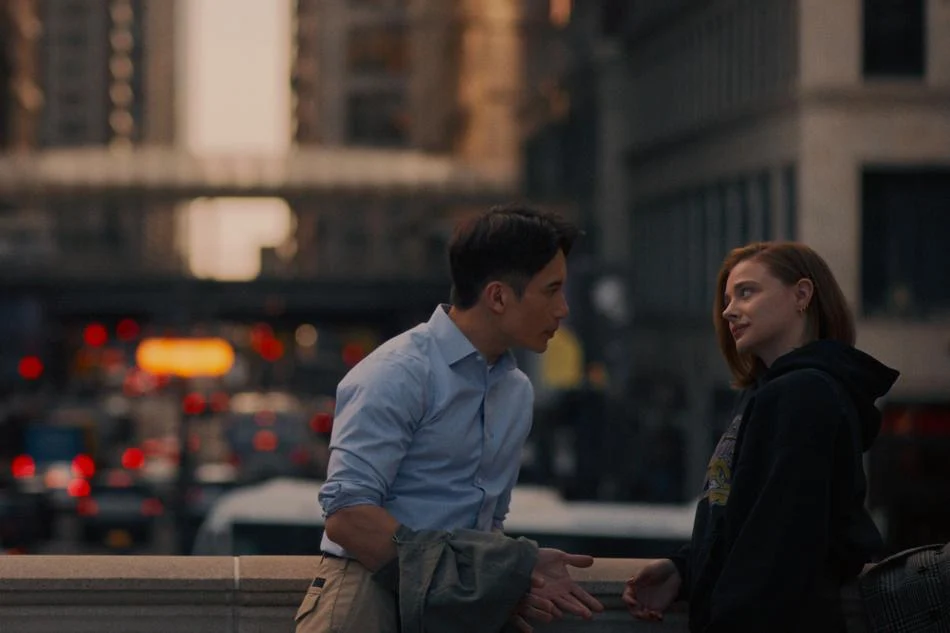
The film’s central conflict arises when Louisa is hired by the wealthy, enigmatic Olivia (Isabel May) to pen vows for her impending wedding to Warren (Manny Jacinto). The complication? Warren is not only a "dreamboat" public defender, but he is also a former college crush of Louisa’s. As she embeds herself in their lives to capture their "love story" for the ceremony, she finds herself caught in a romantic quadrangle that pits the nostalgia of a past crush against the potential of a new, albeit messy, reality with Tilda’s cousin, Dash (Anthony Ramos).
A Chronology of Artistic Stagnation
The trajectory of Love Language follows a predictable, well-worn path. It is a structure that has served the rom-com genre for decades, yet it feels increasingly thin when applied to the contemporary era.
- The Inciting Setup: Louisa’s transition from a blocked writer to a professional vow-ghostwriter creates a compelling hook. It suggests an exploration of how we commodify intimacy in the age of social media.
- The Complication: The introduction of Warren—the "one who got away"—forces a collision between Louisa’s professional obligations and her personal history.
- The Divergence: While she maneuvers around the wedding couple, she enters a casual, low-stakes arrangement with Dash. Here, the film attempts to inject a modern sensibility—the "situationship"—but fails to commit to the emotional weight that such arrangements carry in real life.
- The Stasis: The film spends an inordinate amount of time on the chemistry between Louisa and Warren, which, despite the actors’ best efforts, feels like a retread of every "best friend’s wedding" trope.
- The Resolution: The final act, predictably, hinges on whether Louisa can find her own voice—both as a writer and as a woman capable of choosing her own path—before the vows are finally spoken.
Supporting Data: Style Over Substance
While Love Language succeeds in being "palatable" and "attractively assembled," it largely neglects the "comic" half of the romantic comedy equation. Director Joey Power, who previously helmed 2018’s After Everything, demonstrates a keen eye for aesthetic but struggles with the script’s verbal acuity.
The film is visually striking, capturing Chicago in a "perma-autumnal" glow that makes it an easy, comforting watch. However, the lack of sharp, incisive dialogue is a glaring omission. The film relies on the audience’s inherent familiarity with the genre, acting as a "comfort watch" that demands little from the viewer.
The performances, while unevenly supported by the screenplay, offer a glimpse into what might have been. Anthony Ramos, in particular, elevates his role as Dash. While the character is conceptually two-dimensional—the "fuckboi with a nesting impulse"—Ramos injects a sincerity and a grounded, drawling energy that makes him the most compelling figure on screen. Conversely, the film’s failure to fully utilize Isabel May’s Olivia—a character who is far more interesting as an underestimated observer than as a mere plot device—highlights a recurring issue: the film prioritizes the most storied, and arguably least interesting, characters.
Official Critiques and Industry Implications
The critical reception of Love Language underscores a broader industry trend: the "re-packaging" of 90s sentimentality for a younger generation that is arguably craving something more substantial. By leaning on tropes like the "gay best friend" (here played by Lukas Gage as a brooding plot device) and failing to provide texture to the characters’ digital lives—their WFH setups, their specific generational anxieties, or the true complexity of their friendships—the film remains a "pleasant, undemanding" experience rather than a seminal one.
Critics have noted that the film is "genuinely sweet" but "lacks bite." The primary critique lies in the stakes. In the seminal My Best Friend’s Wedding, the protagonist is faced with truly difficult choices: the prospect of a moral failure or the permanence of her own isolation. In Love Language, the dilemma feels "overly protracted and low-stakes." Louisa’s indecision does not reflect the existential weight of modern romance; it reflects a lack of narrative urgency.
The Broader Cultural Implications
Why does this matter? For a generation that is constantly scrutinized for its changing habits, the cinematic absence of a truly "Gen-Z rom-com" suggests that Hollywood is still in the thrall of a previous decade’s comfort zone. We are seeing a cycle where movies about young people are being made by creators who view "youth" through the lens of their own formative years.
The implication is that the industry is playing it safe. Love Language is a film designed to be "liked" rather than felt. It is a product of an algorithmic era where comfort is prioritized over the discomfort of authentic, modern storytelling. When a film relies more on allusions to other movies and pop ephemera than on the texture of its own world, it creates an echo chamber.
As we look toward the future of the romantic comedy, one must ask: when will we see a film that captures the specific, messy, and often contradictory nature of modern intimacy without relying on the training wheels of the 1990s?
The success of Love Language as a "comfort watch" is undeniable. For many under-30s, it provides a warm, recognizable space. Yet, for those looking for a mirror to their own experiences—the complexities of queer marriage, the realities of digital-first dating, the anxiety of late-stage capitalism’s impact on personal lives—the film remains a beautiful but hollow shell. It is a reminder that while the aesthetic of romance can be updated with a fresh coat of paint and some contemporary references, the heart of the story remains stuck in a loop of its own making.
Ultimately, Love Language is a film about the struggle to find the right words. In a sense, the film itself is still searching for its own voice—a voice that is distinctly, unapologetically, and authentically of its time. Until that happens, we are left with the pleasant, fleeting, and ultimately forgettable echoes of a bygone era.
