
The Curious Case of Red Lights: Why This Supernatural Thriller Failed to Ignite

In the annals of mid-budget psychological thrillers, few films promised as much and delivered as little as Rodrigo Cortés’ 2012 production, Red Lights. Boasting a cast that reads like a dream team of acting royalty—Cillian Murphy, Robert De Niro, and Sigourney Weaver—the film was positioned as a sophisticated, high-concept exploration of faith, skepticism, and the paranormal. Yet, upon its release, the film landed with a resounding thud, failing to capture the zeitgeist and ultimately dissolving into obscurity.
Main Facts: A Clash of Ideologies
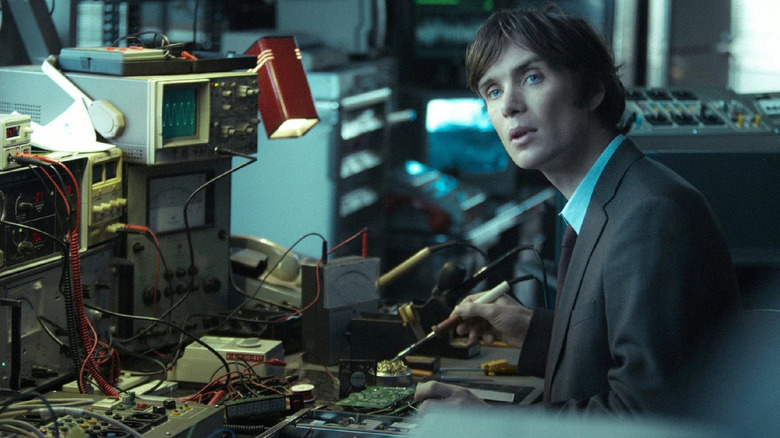
At its core, Red Lights is a battle of wills set within the dusty, hyper-intellectual corridors of academia. Cillian Murphy stars as Tom Buckley, an ambitious, obsessive physicist who works alongside the formidable Professor Margaret Matheson (Sigourney Weaver). Their shared life’s mission is the systematic, often aggressive debunking of the supernatural. For Buckley and Matheson, "psychics," faith healers, and mediums are not merely misguided individuals; they are dangerous predators exploiting the vulnerable.
The catalyst for the film’s central conflict is the re-emergence of Simon Silver (Robert De Niro), a legendary, blind television psychic who has been in self-imposed exile for decades. Silver’s return to the public eye triggers a visceral reaction from Buckley, who views the psychic as the ultimate fraud. The film attempts to elevate this premise into a high-stakes thriller, treating the verification of "real" supernatural powers as a scientific and moral imperative. Rounding out the cast is a young Elizabeth Olsen—years before her ascent to Marvel stardom—who plays Sally Owen, a graduate student entangled in the investigation.
The Chronology of a Production Gone Wrong
The trajectory of Red Lights is particularly fascinating when viewed through the lens of director Rodrigo Cortés’ career. Coming off the 2010 breakout hit Buried, which saw Ryan Reynolds trapped in a coffin for the duration of the film, Cortés was hailed as a visionary minimalist capable of generating immense tension with limited resources.

- 2010–2011 (Development and Hype): Following the success of Buried, industry expectations for Cortés’ next project were stratospheric. The acquisition of legends like De Niro and Weaver suggested a project of gravitas and prestige.
- 2012 (The Release): The film hit theaters with a muted marketing campaign, struggling to define its genre. Is it a cerebral drama? A jump-scare horror? A procedural? This lack of identity, combined with a lukewarm reception from festival circuits, spelled disaster.
- The Box Office Failure: With a production budget estimated in the tens of millions, the film struggled to find an audience, clawing its way to a mere $14 million in global box office returns. It was, by every metric, a commercial non-starter.
Supporting Data and Production Context
The failure of Red Lights was not necessarily due to a lack of talent, but rather a fundamental disconnect between the script’s ambitions and its execution. While the film purports to be a "thinking man’s thriller" about the ethics of skepticism, it relies heavily on tropes that feel borrowed from lower-tier genre fare.
The Skeptic’s Paradox
The film presents a universe where professional skeptics have access to significant university-level funding and state-of-the-art laboratory equipment. This sets up a "cat-and-mouse" dynamic that feels more like a spy thriller than an academic study. Critics have pointed out the inherent absurdity of the film’s premise: while figures like Harry Houdini, James "The Amazing Randi," and the duo Penn & Teller have indeed made careers out of exposing charlatans, Red Lights elevates this to a grand, almost religious crusade. The film suggests that there is a global, conspiratorial network of psychics who employ "thugs" to protect their turf—a leap in logic that pushed the audience’s suspension of disbelief to its breaking point.
Technical Shortcomings
Beyond the narrative, the film’s visual language faced heavy scrutiny. Cinematographer Xavi Giménez, who had previously created stunning visuals for films like The Machinist, was criticized for a aesthetic that many found disjointed. The film’s transition from a grounded, dimly lit academic office to high-octane "psychic exhibition" set pieces created a jarring tonal shift that failed to coalesce.
Critical Analysis: A "Colossal Fiasco"
The critical response to Red Lights was swift and largely unforgiving. It serves as a textbook example of how high-caliber acting can be undermined by a script that loses its way in the final act.

Roger Ebert’s Assessment
The late, legendary critic Roger Ebert gave the film two-and-a-half stars, capturing the sentiment of many who were initially intrigued. "I’d love to see a thriller that was about what Red Lights starts to be about," Ebert wrote. "For its first two acts, the movie had me in its grip. Then it comes apart." Ebert’s critique highlights the film’s fatal flaw: the compulsion to abandon its cerebral roots in favor of a bombastic, action-oriented climax that ignored the rules of the world it had spent two hours building.
The "Looneypants" Factor
Alonso Duralde, writing for The Wrap, was far more scathing. Duralde famously labeled the film one of the "silliest movies of the year," criticizing its "poe-faced earnestness" and describing the narrative as "overwrought, underwritten, and nonsensical." For Duralde, the film fell into the category of "high camp"—a movie so serious about its own absurdity that it becomes unintentionally hilarious. The consensus among the critical elite was that Red Lights was a "colossal fiasco," a project that suffered from an identity crisis it never managed to resolve.
Implications: The Death of the Mid-Budget Thriller
The failure of Red Lights has wider implications for the industry. It stands as a cautionary tale about the mid-budget studio film. During the early 2010s, studios were still attempting to produce original, non-franchise thrillers with A-list stars. The box office implosion of films like Red Lights likely contributed to the industry’s pivot toward safer, IP-driven content.
When a film featuring Robert De Niro and Cillian Murphy cannot break even, studio executives naturally shy away from similar scripts. The film’s failure signaled that audiences were no longer interested in "high-concept" thrillers that lacked the clarity of a franchise hook or the backing of a recognizable brand.
Conclusion: A Legacy of "What Could Have Been"
Ultimately, Red Lights remains a curious artifact. It is not an unwatchable movie, but it is one that suffers from a profound lack of focus. It wants to be a gritty, scientific procedural about the nature of truth, but it insists on being a supernatural thriller with cheap twists and aggressive set pieces.
The film’s final act, which effectively undoes the thematic work of the preceding hours, is the final nail in the coffin. It is a conclusion that leaves the viewer feeling cheated, not because of a clever subversion of expectations, but because the film simply stopped playing by the rules it established. For fans of the cast, Red Lights serves as a footnote in their respective filmographies—a project that looked like a masterclass on paper, but proved that even the greatest actors in the world cannot save a story that is, quite literally, dead on arrival.
