
The Defiant Evolution of Erika Alexander: How the "Living Single" Icon Claimed the Maverick Award at IndieWire Honors
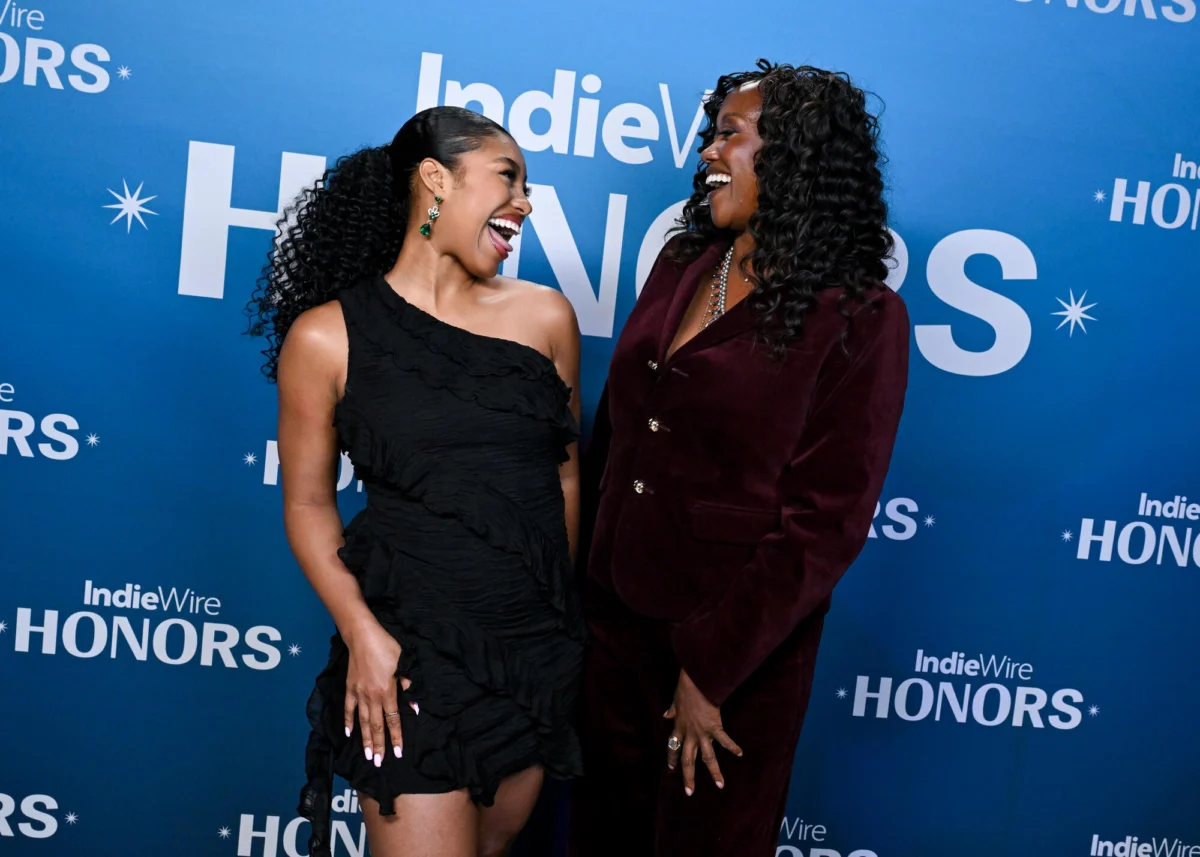
Main Facts: A Night of Recognition and Reflection
At the annual IndieWire Honors ceremony, held on Thursday, June 4, 2026, at the Nya Studios West in Los Angeles, industry veteran Erika Alexander was presented with the prestigious Maverick Award. The accolade, designed to celebrate artists who challenge Hollywood’s conventional boundaries, served as a formal validation of a career defined by self-determination, artistic versatility, and political advocacy.
Alexander, currently starring in the acclaimed series The Fall and Rise of Reggie Dinkins, accepted the award before an intimate audience of peers, collaborators, and industry executives. Her acceptance speech was less a traditional list of thank-yous and more a philosophical manifesto on identity, systemic limitations, and the necessity of creative rebellion.
The ceremony highlighted Alexander’s expansive footprint in contemporary media. Beyond her current television work, she is recognized as a multi-hyphenate creator: a director, producer, writer, comic book creator, vodcaster, and co-founder of the media company Color Farm Media. Her address connected her childhood aspirations to her iconic role as Maxine Shaw on the 1990s sitcom Living Single, illustrating a lifelong refusal to be confined by the industry’s historical biases.
Chronology: From "Alexander the Great" to Maxine Shaw
To understand the significance of Alexander’s Maverick Award is to trace a trajectory that began long before she entered a professional soundstage. During her acceptance speech, Alexander mapped out the evolution of her self-conception, beginning in her early childhood.
The Childhood Genesis of "The Great"
In the third grade, a young Erika Alexander began signing her homework as "Erika Alexander the Great." This was not merely childhood bravado, but an early, intuitive attempt to construct an identity independent of historical trauma.
"I thought I could actually be a kinfolk of the great Macedonian Greek conqueror," Alexander recalled. "I didn’t understand DNA and I knew nothing about the provenance of my last name, having no real meaning outside of my enslaved lineage. The name Alexander given to my father was a palimpsest of the past that I could not lay claim to, but Alexander the Great—perhaps his fortune, his fortitude, and fighting spirit would lay claim to me."

Navigating the Stereotypes of Early Hollywood
As a teenager, Alexander quickly secured her Screen Actors Guild (SAG) card, but the reality of the entertainment industry in the late 1980s and early 1990s presented immediate limitations. Her first three professional roles were highly typed and restrictive: a foster child, a prostitute, and an enslaved person.
Faced with a system that sought to compartmentalize Black talent, Alexander resolved to push past these boundaries. It was during this period of professional frustration that her self-styled "Maverick" persona was born. She decided to operate with an unapologetic boldness, demanding richer, more complex narratives for herself and other actors of color.
[3rd Grade] ----------------> [Teenage Actor] --------------> [1993–1998] --------------> [2026]
"Erika Alexander              First roles: Foster            "Max the Maverick"          Maverick Award
the Great" identity           child, prostitute,             on "Living Single"          IndieWire Honors
constructed                   and slave roles                solidifies legacy           recipient
The "Living Single" Breakthrough and Cultural Immortality
This defiant attitude caught the attention of Yvette Lee Bowser, the creator of the groundbreaking Fox sitcom Living Single (1993–1998). Impressed by Alexander’s fierce intellect and refusal to conform, Bowser integrated her real-life persona into her character, the sharp-tongued, independent defense attorney Maxine Shaw.
"I was so loud and proud that the creator of Living Single put it in the series," Alexander noted. The show immortalized her as "Max the Maverick," a character who became a cultural touchstone for a generation of young Black women pursuing careers in law, business, and media. Alexander observed that the power of television solidified this identity permanently: "Since TV is a rattlesnake, once the audience got bit, it was set. I was immortalized in the fiction as Max the Maverick. But the fact is I am the Maverick."
Supporting Data: The Multi-Hyphenate Empire of Color Farm Media
Alexander’s designation as a "maverick" is backed by decades of diversification across multiple storytelling mediums. Rather than relying solely on acting, she has systematically built a business infrastructure designed to bypass traditional Hollywood gatekeepers.
The Founding of Color Farm Media
To operationalize her vision of narrative equity, Alexander co-founded Color Farm Media alongside tech entrepreneur and producer Ben Arnon. The company operates at the intersection of entertainment, technology, and social impact, focusing on bringing diverse, marginalized voices to the forefront of global media. Through Color Farm, Alexander has produced award-winning documentaries, including John Lewis: Good Trouble, which chronicled the life of the legendary civil rights leader.

A Diverse Portfolio of Creative Work
Alexander’s contemporary career is characterized by an expansive array of creative outputs:
- Television & Film: Starring roles in prestige projects like The Fall and Rise of Reggie Dinkins, alongside Tracy Morgan, Tina Fey, Robert Carlock, and Daniel Radcliffe.
- Graphic Novels & Comics: Co-writing the sci-fi fantasy series Giles, expanding her storytelling footprint into speculative fiction.
- Audio and Vodcasting: Hosting and producing thought-provoking podcasts that explore politics, race, and culture in modern America.
- Directing & Writing: Spearheading independent film and theater projects, including collaborations on the upcoming production Nitty-Gritty, directed by Travis Johns.
Official Responses: Speeches, Collaborators, and Tributes
The IndieWire Honors ceremony served as a forum for Alexander to acknowledge the community of artists, executives, and family members who have supported her unconventional path.
Tributes to the Creative Cohort
Alexander used her platform to highlight her collaborators on The Fall and Rise of Reggie Dinkins, praising the creative leadership of showrunners Robert Carlock and Sam Means, as well as executive producer Tina Fey. She offered warm remarks for her co-stars, including Tracy Morgan, Daniel Radcliffe, Bobby Moynihan, Jalyn Hall, and Precious Way.
In a lighthearted moment, Alexander pointed out Precious Way in the audience, joking, "I love her. Precious is the full package. I love-hate her," highlighting the close, familial bond shared by the cast.
Key Collaborators Recognized by Erika Alexander:
┌──────────────────────────────┬──────────────────────────────┐
│ Production & Management      │ Acting Ensemble              │
├──────────────────────────────┼──────────────────────────────┤
│ • Robert Carlock (Showrunner)│ • Tracy Morgan               │
│ • Sam Means (Showrunner)     │ • Daniel Radcliffe           │
│ • Tina Fey (Exec. Producer)  │ • Bobby Moynihan             │
│ • Ben Arnon (Co-founder)     │ • Jalyn Hall                 │
│ • Jennifer Levine (Manager)  │ • Precious Way               │
└──────────────────────────────┴──────────────────────────────┘
An Emotional Dedication to Her Mother
The most poignant moment of the evening came when Alexander dedicated the award to her mother, Sammie Jeane. Describing her as her "north star," Alexander detailed her mother’s resilience as a woman who was twice orphaned and twice widowed.
"She was the first believer in the ‘Maverick’ who taught me that though it feels dangerous to live beyond the fence, I’d find my own way by laying claim to the possibilities that live just on the horizon," Alexander said, visible emotion touching her delivery.

Implications: Redefining the Boundaries of Black Storytelling
Alexander’s recognition at the IndieWire Honors comes at a critical juncture for the entertainment industry. As Hollywood grapples with shifting economic models, representation debates, and the consolidation of media platforms, her career offers a blueprint for survival and success outside traditional studio structures.
Breaking the "Fence" of Hollywood Stereotypes
In her concluding remarks, Alexander issued a direct challenge to the audience and the broader creative community. "To all the mavericks out there, the fence will not save you," she warned. "Break something and then fix it. Have the courage to meet your other self out there."
This call to action addresses the systemic limitations still faced by creators of color, women, and independent filmmakers. By advising artists to "break something and then fix it," Alexander advocates for a disruptive approach to content creation—encouraging creators to build their own distribution networks, production companies, and intellectual property rather than waiting for institutional permission.
The Power of Self-Actualization
Ultimately, Alexander’s journey from a third-grader claiming the legacy of Alexander the Great to an industry pioneer receiving the Maverick Award illustrates the power of self-definition. By refusing to let her lineage or early career limitations define her trajectory, she has created a unique space in American media.
As the industry moves forward, the legacy of "Max the Maverick" and the real-world operations of Color Farm Media stand as evidence that independence is not just a creative choice, but a sustainable business model. "Your future fact and fiction will find you," Alexander concluded. "I am proof. Ride the maverick."
