
The Approval That Mattered Most: Peter Farrelly on Bringing Sylvester Stallone’s Origin Story to Life in I Play Rocky
Main Facts
When director Peter Farrelly set out to helm I Play Rocky—Amazon MGM Studios’ compelling biographical drama chronicling the grueling, high-stakes journey of a young Sylvester Stallone fighting for the right to star in his own cinematic masterpiece—he knew he needed one critical element above all else: the blessing of the Hollywood icon himself.
During an intimate and revealing Q&A session following the film’s high-profile Los Angeles premiere at the historic TCL Chinese Theatre as part of the AFI Fest, Farrelly pulled back the curtain on the making of the picture. Speaking candidly to the audience, the acclaimed filmmaker admitted that securing Stallone’s personal approval superseded box office receipts, critical acclaim, or global adoration.
"Obviously, this doesn’t happen without Sylvester Stallone, and I don’t care what happens with this movie, who likes it. If the world loved it, but if Sylvester did," Farrelly stated, emphasizing the profound personal stake he had in honoring the legend’s legacy.
I Play Rocky stars Anthony Ippolito as a young, struggling, and fiercely determined Stallone during the mid-1970s. The film captures the intense creative friction and monumental obstacles Stallone faced while trying to convince studio executives to let him—an unknown, financially strapped actor with a distinct facial paralysis and a speech impediment—play the lead role in the 1976 boxing drama Rocky. That film went on to become an unprecedented cultural phenomenon, shattering box office records and earning Stallone rare Academy Award nominations for both Best Actor and Best Original Screenplay.

Chronology: From Script to Screen and the "Separation" Strategy
The genesis of I Play Rocky required a delicate dance between the production team and its living subject. Farrelly detailed the meticulous steps taken to ensure Stallone was respected every step of the way, beginning with the delivery of the screenplay written by Peter Gamble.
1. The Initial Pitch
Before any cameras rolled or casting was finalized, Farrelly and Gamble made it a point to hand the script directly to Stallone. They followed up with a face-to-face meeting to gauge his reaction.
"I met with him and I said, ‘I won’t do it unless you want us to.’ He said, ‘Do it,’" Farrelly recalled.
2. The Producer Conversation
As the project gained momentum, the question of Stallone’s formal involvement naturally arose. Interestingly, it was Farrelly who advised the action star to distance himself from a producer credit. Farrelly reasoned that if audiences saw Stallone’s name attached to the production side, they might cynically assume the narrative had been heavily sanitized or self-aggrandized.
"Personally, I think it’ll hurt you because you come across so well here, and if at the end we see ‘Produced by you,’ people are going to go, ‘Ah, that’s why he shaped it.’ And he agreed with me. I said, ‘I think you should separate from it,’" Farrelly explained.
3. The Public Disconnect
The strategy hit a funny snag roughly a week later when Stallone was ambushed by press inquiries regarding the unauthorized biographical film. Staying true to their strategic "separation," Stallone played coy.
"He goes, ‘I know nothing about it,’ and all of a sudden the internet went crazy," Farrelly remembered, laughing at the memory. A bewildered Farrelly quickly dialed the actor, only for Stallone to calmly throw their agreement back in his face. "He goes, ‘You told me to separate.’"

Supporting Data and Behind-the-Scenes Discoveries
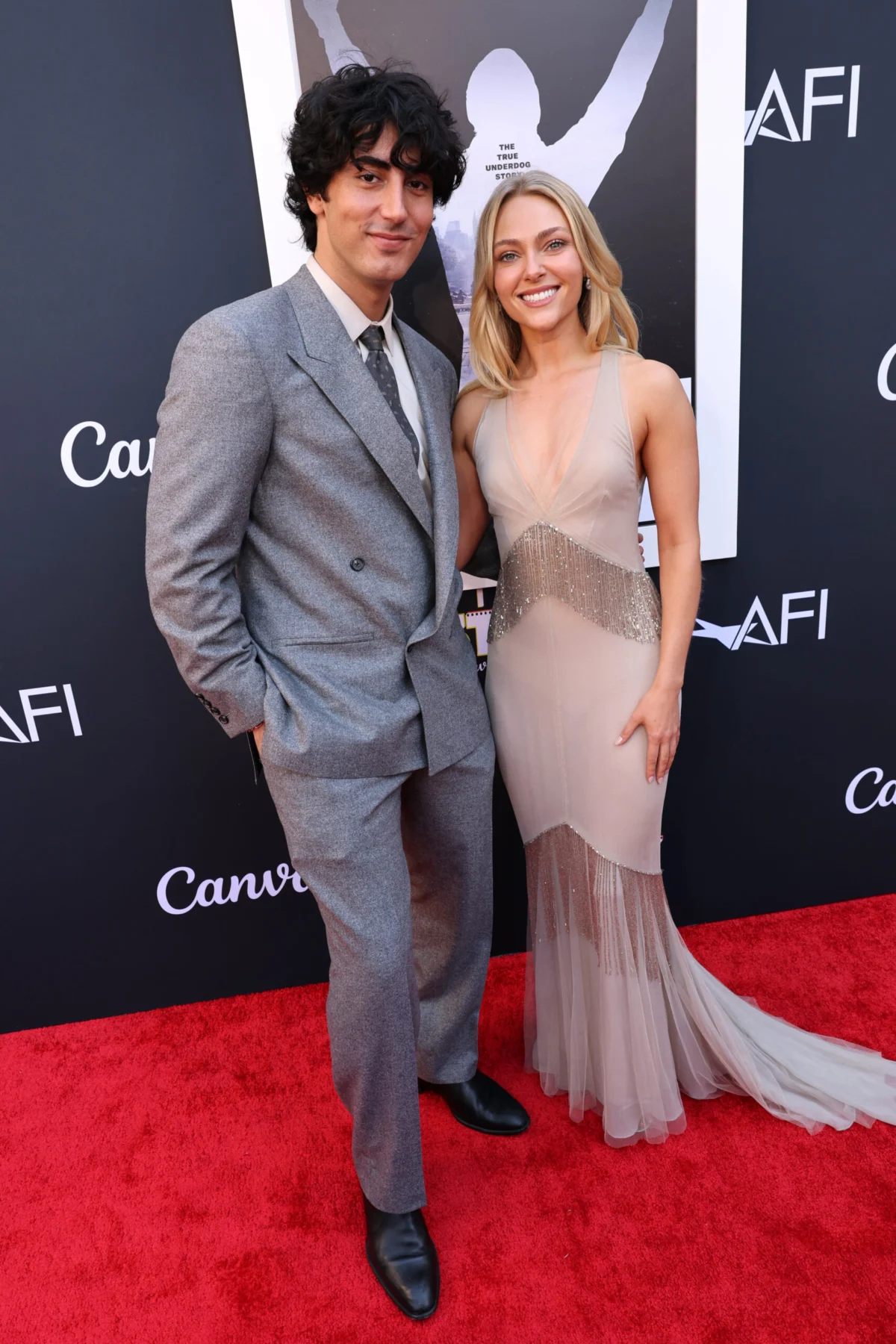
The red-carpet Saturday-night screening brought together a powerhouse creative team. Alongside Farrelly and Gamble, lead actor Anthony Ippolito was joined by supporting cast members AnnaSophia Robb, Stephan James, Kiki Seto, P.J. Byrne, Matt Dillon, Jay Duplass, and Tracy Letts.
Uncovering the Hidden Past
For screenwriter Peter Gamble, breathing life back into 1970s New York City required exhaustive historical excavation. The most startling details of Stallone’s pre-fame life did not come from public archives, but from deep-dive interviews with those who knew him when he was scraping by.
Gamble recounted a remarkable conversation with Stallone’s former college roommate:
"One day, I went down this one rabbit hole with his former roommate in college, talking about him living in a closet under the stairs, like Harry Potter. And all he had was room for this bed and recording poetry to work on his lisp. And I was like, you can’t make that up."
Matt Dillon’s Childhood Memory
Matt Dillon, who steps into the pivotal role of Sylvester’s father, Frank Stallone Sr., shared how the original film shaped his own artistic consciousness long before he dreamed of entering the industry.
"I remember seeing my mother’s black-and-white TV in the kitchen. I remember seeing this guy hitting the meat with a hand, and I was like, ‘What is this? Who is this?’ This feeling of authenticity of it," Dillon remarked, reminiscing about the visceral impact of Rocky Balboa’s iconic meat-punching training montage.

Anthony Ippolito’s Transformation
For Anthony Ippolito, embodying the Hollywood icon was a mountain of pressure. By the time he finally sat down to speak with Stallone, Ippolito had already spent a grueling year and a half researching the role, standing just a month away from principal photography.
"It was very built up at that point. And I was just so grateful that he was willing to take the time and share some of this stuff because it’s such a pivotal period of time in his life, and he was down and out and very isolated, and it’s a vulnerable thing," Ippolito noted. He added that Stallone’s ability to endure profound rejection ultimately became the emotional anchor for his performance: "Seeing what he was able to persevere through and his endurance is something that really stuck out to me and prevailed. Just seeing that shows you can do a lot more than you think sometimes."
Official Responses and Cast Insights
The collaborative energy among the cast and crew at the AFI Fest Q&A underscored a shared reverence for the subject matter. Rather than treating the film as a standard Hollywood biopic, the ensemble approached it as a study in stubborn resilience.
Stallone’s tacit approval—granted through private conversations rather than corporate boardrooms—served as the ultimate moral compass for the production. By stepping back and letting the filmmakers interpret his early struggles independently, Stallone allowed the project to retain an authentic edge that studio interference might have otherwise diluted.

Implications for Hollywood and Future Biopics
The cultural lineage of Rocky extends far beyond its own five sequels and the Creed franchise. Peter Farrelly was quick to point out that the trials Stallone endured in 1975 laid a strategic roadmap for subsequent generations of artists facing institutional gatekeepers.
Drawing a direct parallel, Farrelly highlighted the career-defining struggles of Matt Damon and Ben Affleck:
"Matt Damon and Ben Affleck, when they wrote Good Will Hunting, they got the same thing. And they had a mantra. They were saying, ‘Rocky, Rocky.’ Seriously, they talk about it. They really held out and if they hadn’t held out, they wouldn’t have had the careers they had."
By contextualizing I Play Rocky within a broader Hollywood tradition of underdog persistence, Farrelly elevates the film from a mere nostalgia piece into a meditation on creative ownership. As Amazon MGM Studios prepares to release the film to wider audiences, the ultimate victory has already been secured where it counts most: in the private, hard-won validation of Sylvester Stallone himself.
