
The Echo of Applause: Decoding the Marathon Ovations of Cannes and Venice
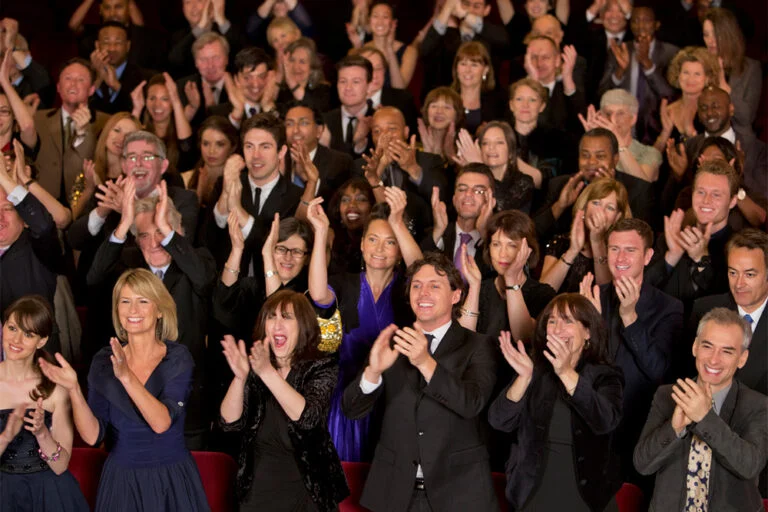
In the high-stakes ecosystem of international cinema, the journey from a film’s premiere to the Academy Awards stage is often paved with more than just critical reviews; it is paved with sound. Specifically, the rhythmic, thunderous, and increasingly prolonged sound of standing ovations. For industry prognosticators, the Cannes Film Festival in May and the Venice Film Festival in August serve as the opening salvos of the awards-season calendar. They provide an early, visceral temperature check on which films will dominate the cultural conversation for the better part of the following year.
As audiences in the Palais des Festivals et des Congrès or the Sala Grande funnel their appreciation through their hands, these long-standing ovations have evolved from simple expressions of gratitude into loaded, semiotic events. They are moments where the line between genuine artistic catharsis and performative industry posturing blurs, leaving observers to wonder: does a ten-minute applause equate to a masterpiece, or is it merely the byproduct of a captive audience in a tux-and-gown frenzy?
A Tale of Two Festivals: History and Rivalry
To understand the phenomenon of the "marathon ovation," one must first understand the deep-seated rivalry between Europe’s two cinematic titans.
The Venice Film Festival, the world’s oldest, was established in 1932 as part of the La Biennale di Venezia, an international arts exhibition. Its founding intent was noble—to celebrate global cinema and, as L’Officiel aptly described, to "cultivate freedom within the industry." However, history is rarely linear.
Cannes, by contrast, emerged in 1946 as a direct response to the perceived political failures of its Italian counterpart. Following the rise of fascism in the 1930s, organizers felt that the Venice festival had become heavily compromised by the influence of Mussolini’s regime. Cannes was designed to be a bastion of democratic, artistic expression, free from state-mandated propaganda.
While Berlin, Sundance, and Toronto now round out the "Big Five" of the festival circuit, Cannes and Venice remain the only venues where the ritual of the standing ovation has reached mythic proportions. It is here that the intersection of prestige, ego, and cinematic craft manifests in minutes-long displays of fervor that have become the primary currency of festival buzz.
The Chronology of Clapping: A Data-Driven Shift
While anecdotal accounts of lengthy applause date back decades, the meticulous documentation of these moments—often timed by trade publications with the precision of a stop-watch—has seen a notable uptick since 2019. It is important to note that a universal, standardized record of ovation lengths does not exist; trades often disagree by seconds or even minutes depending on when they start and stop their count. Nonetheless, the trend is undeniable: the ovations are getting longer, and the industry is paying closer attention.
Notable Marathon Ovations (Selected Chronology)
- 2026 Venice – Naza: 24.5 minutes. The current benchmark for endurance-based appreciation.
- 2026 Cannes – La Bola Negra: 20 minutes. A testament to the enduring power of the French Riviera’s crowd.
- 2025 Venice – The Voice of Hind Rajab: 22 minutes.
- 2025 Cannes – Sentimental Value: 19 minutes.
- 2024 Venice – I’m Still Here: 10.3 minutes.
- 2024 Cannes – Megalopolis: 7 minutes. Francis Ford Coppola’s polarizing epic proved that even a shorter ovation can carry heavy weight.
- 2019 Cannes – Joker: 8 minutes. A precursor to its massive commercial and critical success.
- 2016 Cannes – The Neon Demon: 17 minutes.
- 2015 Cannes – Carol: 10 minutes.
- 2012 Cannes – Mud: 19 minutes.
- 2011 Cannes – The Artist: 12 minutes. A harbinger of its eventual Best Picture win.
- 2006 Cannes – Pan’s Labyrinth: 20 minutes.
- 2004 Cannes – Fahrenheit 9/11: 20 minutes. Michael Moore’s Palme d’Or winner set a high bar for political cinema.
Analyzing the Correlation: Does Applause Predict Success?
There is a pervasive myth in Hollywood that the longer the audience stays on their feet, the more likely the film is to win a trophy. However, the data suggests a more nuanced reality. While films like The Artist and Fahrenheit 9/11 saw their massive ovations correlate with significant awards success, others—like the 17-minute standing ovation for The Neon Demon—resulted in a film that, while stylistically praised, was largely ignored by the Academy.
The correlation between a long ovation and box office success is even weaker. The applause is often a reflection of the "festival bubble," a temporary ecosystem where elite distributors, critics, and stars share a confined space. This atmosphere of exclusivity often inflates the reaction, creating a feedback loop where the audience feels obligated to honor the filmmaker, regardless of the film’s objective quality.
Official Responses and Industry Skepticism
The recent trend of measuring applause has not gone unnoticed by the industry, and it has drawn significant criticism. The Los Angeles Times and other outlets have questioned whether these numbers are "news" or merely marketing tactics.
Many veteran directors have expressed discomfort with the practice. In private, some filmmakers admit that being forced to stand on stage while an audience claps for twenty minutes is an awkward, even harrowing experience. It forces the talent into a state of frozen humility, creating a "performance of gratitude" that can feel as staged as a movie set.
Furthermore, publicists often monitor these times as a key performance indicator. If a film receives a "lukewarm" five-minute ovation, it is often framed as a failure, whereas a ten-minute ovation is treated as a triumph. This has led to accusations that festival attendees are being subtly pressured to keep clapping to ensure the film’s marketability.
The Implications: Is the Ritual Sustainable?
As we look toward the future of film festivals, the "ovation culture" presents a sustainability issue. Are we witnessing the genuine evolution of artistic appreciation, or are we witnessing the commodification of the applause itself?
The Psychology of the Crowd
The phenomenon is rooted in group dynamics. When a high-profile film concludes, the room is filled with industry power players. To sit down first is to potentially signal a lack of support for the project or the director. Therefore, the ovation becomes a defensive social action. As long as one person is standing, the rest of the room feels the social weight to continue.
The Impact on Awards Season
For awards prognosticators, these numbers are increasingly treated as "noise" rather than "signal." As the disparity between long ovations and actual quality becomes more apparent, the industry is beginning to discount these metrics. The long-term implication is that the meaning of a standing ovation is being eroded. If every controversial film receives a fifteen-minute ovation, then the gesture ceases to be an indicator of excellence and becomes merely a routine part of the gala premiere process.
Conclusion: Beyond the Clatter
The traditions of Cannes and Venice are the bedrock of global cinema, fostering an environment where art is treated with the reverence it deserves. The standing ovation, at its core, is a beautiful, primal human reaction to the communal experience of storytelling.
However, as the ritual becomes increasingly quantified and publicized, it risks losing its authenticity. Whether a film receives a two-minute round of polite applause or a twenty-minute, tear-streaked standing ovation, the true test of a film’s legacy remains the same: how it lingers in the minds of audiences long after the lights in the theater have dimmed and the sound of the applause has faded into silence.
The marathon ovations of the last few years serve as a fascinating case study in modern media. They highlight our obsession with metrics, our love for spectacle, and our constant desire to predict the future. Yet, in the final analysis, they remind us that in the world of film, nothing beats the power of the work itself. Whether the applause lasts for seven minutes or twenty, the only thing that truly matters is the vision on the screen.
