
From Page to Pixel: Epsilon Film Expands Global Reach with ‘Apple Cadabra’ Animation
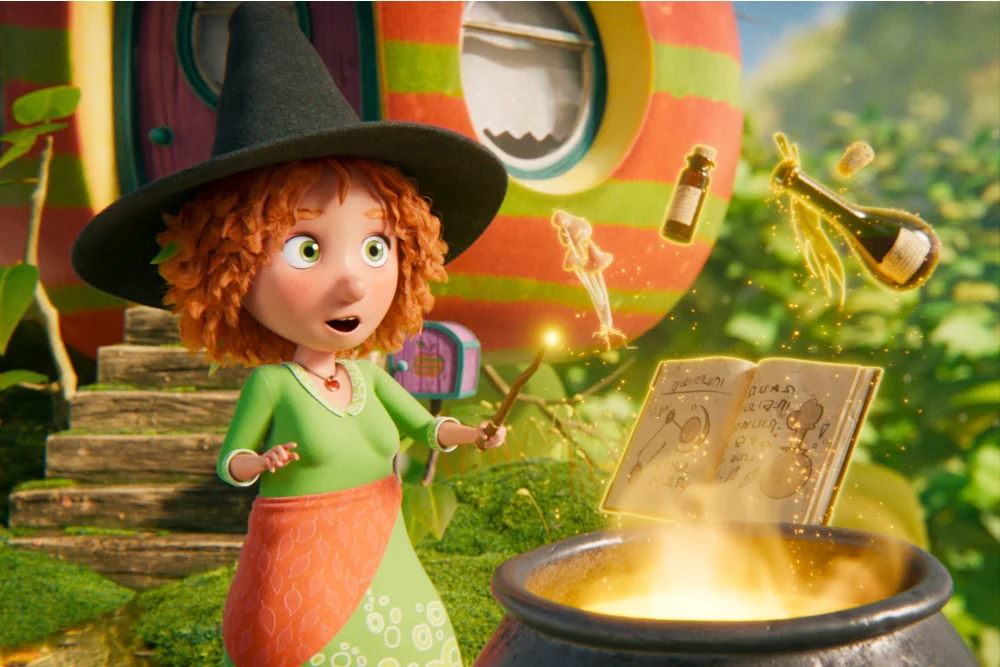
The global animation market is bracing for a fresh dose of enchantment as Epsilon Film, a prominent player in international distribution, has officially acquired the worldwide rights to Apple Cadabra – I Shrunk Myself. This highly anticipated animated family feature is poised to transition one of Germany’s most successful literary phenomena, the Petronella Applesauce series, onto the global big screen.
The announcement, which comes on the heels of significant industry shifts toward high-quality, character-driven European animation, signals a strategic expansion for Epsilon Film. The company is set to launch international sales for the project at this year’s American Film Market (AFM), held in Los Angeles from November 10–15. With the industry’s eyes fixed on the Fairmont Century Plaza Hotel, the film is expected to be a centerpiece of the market, offering buyers an exclusive first look at the production’s vibrant, miniature-scale world.
The Genesis of a Literary Powerhouse
The Petronella Applesauce book series, authored by Sabine Städing, has been a cornerstone of German children’s literature for years. The series follows the adventures of a diminutive, magical apple witch who lives in an apple in an enchanting garden. Its transition to film has been long-awaited by fans of the books, which are celebrated for their whimsy, humor, and underlying messages about environmental stewardship and empathy.
The film adaptation, titled Apple Cadabra – I Shrunk Myself, centers on two children who find themselves magically transformed to the size of insects, thrusting them into the hidden, perilous, and magical world of Petronella’s garden. This premise—a staple of classic storytelling—is being reimagined through the lens of modern, high-end 3D animation, promising a visual experience that rivals major Hollywood studios.
Chronology of Development and Production
The journey of Apple Cadabra from concept to screen is a testament to the robust infrastructure of the European animation industry. Produced by the prolific team at Akkord Film—the same creative powerhouses behind international successes The Elfkins and Rabbit Academy—the project has been carefully cultivated to ensure both cultural authenticity and broad, global appeal.
- Development Phase: Akkord Film, led by producers Dirk Beinhold and Valentin Greulich, initiated the project with the aim of capturing the "magical realism" of the Petronella books.
- The Creative Team: In a move to ensure continuity and quality, the producers tapped Ute von Münchow-Pohl—the director behind the commercially successful The Elfkins and Rabbit Academy—to helm the project. She is joined by co-director Felix Schichl.
- Screenplay Construction: The narrative architecture was entrusted to the writing team of Claudio Winter and Seraina Nyikos. Their previous work on the aforementioned hits provided a proven blueprint for balancing slapstick comedy with emotional depth.
- Visual Identity: The aesthetic of the world, specifically the "miniature perspective" that defines the film’s core, was developed by character designer Oliver Kurth. Kurth, known for his work on Monster Family 2, has focused on creating a world that feels both grounded in nature and bursting with fantasy.
The Production Ecosystem: A Pan-European Collaboration
The production of Apple Cadabra represents a significant collaborative effort across the European animation landscape. While Akkord Film serves as the lead producer, the project has enlisted a cadre of specialized partners:
- Seru Animation (My Fairy Troublemaker): Contributing technical expertise in character animation.
- PFX (The Whalesinger): Handling complex visual effects and rendering.
- VAST and JewelLabs Pictures: Providing support in creative development and production infrastructure.
This multi-studio approach is increasingly common in European animation, allowing for a pooling of resources that enables independent studios to compete on a global scale. Tobis Film, a major German distributor, has already secured the rights for a wide theatrical release in Germany, signaling strong domestic confidence in the film’s commercial potential.
Official Statements and Strategic Vision
In an official statement regarding the acquisition, Epsilon Film emphasized the unique positioning of the film within the competitive family entertainment landscape. "Blending fantasy, humor, suspense, and adventure with an emotional story about empathy and overcoming prejudice, Apple Cadabra – I Shrunk Myself brings the beloved literary franchise to the big screen in a magical family adventure with international appeal," the company stated.
Alice von Einem, Managing Director of Epsilon Film, elaborated on why the project stood out in a saturated market: "What immediately captured our imagination was the idea of two children suddenly finding themselves shrunk into Petronella’s enchanted garden and experiencing an entirely new world from a tiny perspective. The film combines a highly commercial adventure premise with universal themes of friendship, courage, and belonging, making it a wonderful family event for audiences around the world."
The focus on "empathy" and "overcoming prejudice" is a calculated narrative choice. By grounding the magical premise in these universal social themes, the producers aim to transcend language barriers and resonate with families across diverse cultures, from North America to Asia.
Implications for the Animation Market
The acquisition by Epsilon Film and the presentation at AFM mark a critical turning point for European-produced animation. Historically, non-Hollywood animated films faced significant hurdles in breaking into the mainstream US and international markets. However, the success of The Elfkins and Rabbit Academy has proven that international audiences are hungry for high-quality, non-studio-system animation.
1. The "Miniature" Trend
The sub-genre of "shrinking" films has been a successful narrative device in cinema history (e.g., Honey, I Shrunk the Kids). By leveraging this familiar trope, Apple Cadabra lowers the barrier for entry for global audiences who may not be familiar with the original Petronella Applesauce books, while offering a fresh, European aesthetic.
2. Commercial Viability
The involvement of seasoned producers like Beinhold and Greulich, who have a track record of delivering profitable films, provides a layer of security for international buyers at AFM. For exhibitors, the film represents a reliable, family-friendly option that fills the gaps between major Hollywood studio blockbusters.
3. The Role of Literary Adaptations
This acquisition further highlights the industry’s reliance on established literary franchises. As competition for attention spans grows, having a pre-existing fanbase—even one localized to Europe—provides a significant marketing advantage. Epsilon Film’s strategy is clear: acquire high-quality, pre-vetted intellectual property (IP) and use the prestige of the international festival circuit to build momentum.
Future Outlook
As the American Film Market convenes, all eyes will be on Epsilon Film’s suite (No. 334) at the Fairmont Century Plaza. The footage shown to buyers will be the litmus test for the film’s international distribution potential. If the early reactions to the character designs and the animation quality are positive, Apple Cadabra could easily become one of the most widely distributed European animated films of the coming year.
The film is not merely an adaptation; it is a strategic maneuver by Epsilon Film to solidify its position as a global leader in the distribution of high-end family animation. By combining the proven success of its production team with a universally understood narrative of transformation and discovery, the film is well-positioned to bridge the gap between niche literary success and global cinematic triumph.
As production nears completion, the industry awaits further news on the film’s global release schedule. If Apple Cadabra – I Shrunk Myself manages to replicate the success of its predecessors, it will underscore a vital lesson for the animation industry: that stories rooted in regional culture, when told with universal themes and high technical standards, can find a home in every corner of the world.
