
Fujifilm Announces the instax mini Evo 2: A Larger Sensor, 4.5-Inch Touchscreen, and Wider Lens Come to the Hybrid Instant Camera Line
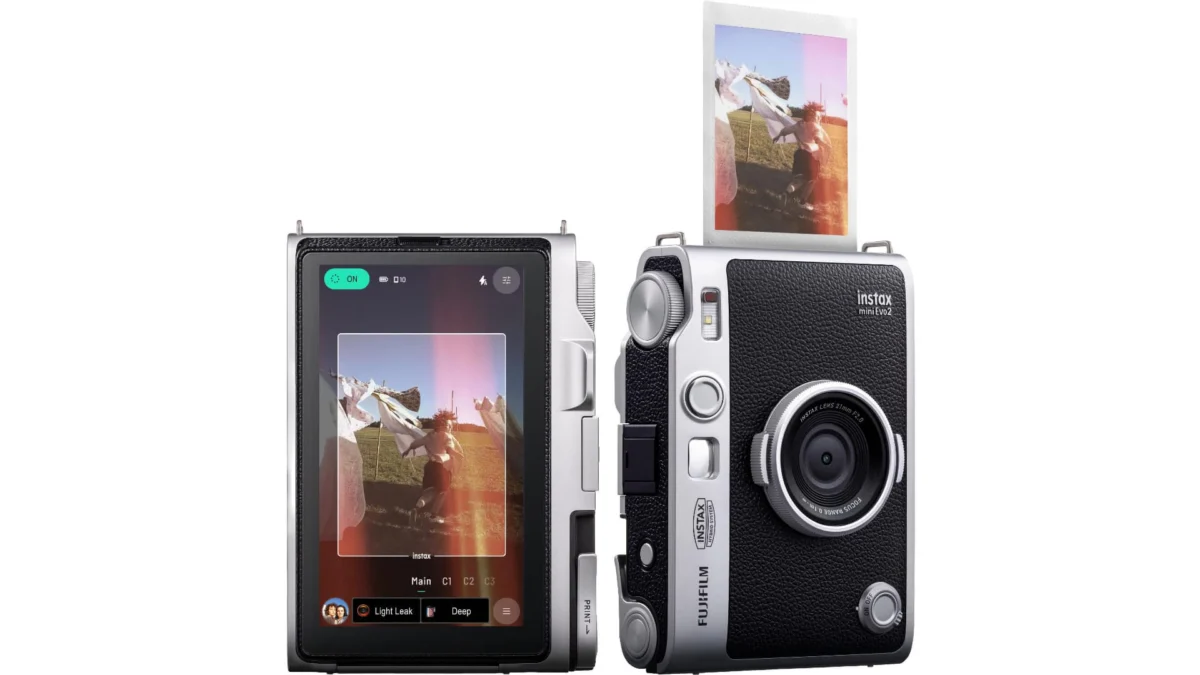
TOKYO — Fujifilm has officially taken the wraps off its latest flagship hybrid instant camera, the instax mini Evo 2, alongside an updated companion smartphone app. Building upon the runaway commercial success of the original 2021 model—which has consistently driven massive profits for the company’s iconic instax division—the new iteration introduces significant hardware overhauls.
Chief among the updates are a larger physical sensor, a notably wider 21mm equivalent lens, a sprawling 4.5-inch touchscreen display, and a novel "Immersive Movie" video-capture function. Scheduled to hit store shelves in late November at a suggested retail price of $289, the mini Evo 2 arrives with a 45% price bump over its predecessor’s $199 launch tag, signaling Fujifilm’s confidence that its heavy-hitting upgrades easily justify the shift into a higher market tier.
Main Facts: What’s New in the instax mini Evo 2?
The core architecture of the instax mini Evo 2 bridges the gap between digital convenience and analog charm, retaining the built-in printer functionality that made the original a crowd-pleaser while injecting modern imaging hardware.
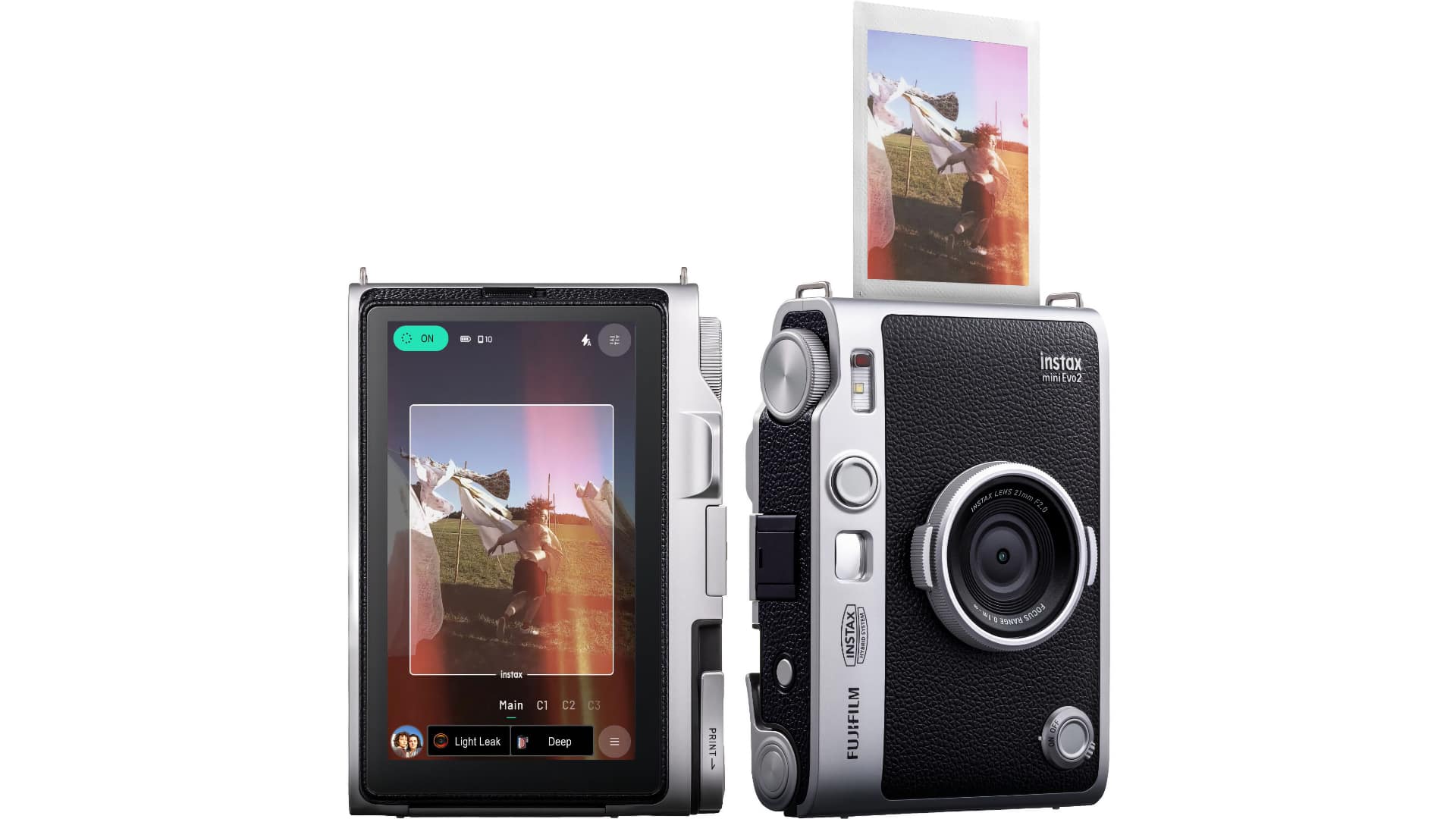
- Optics and Sensor: The camera replaces the original 28mm equivalent lens with a wider, brighter 21mm equivalent f/2.0 lens. It is paired with a larger 1/2.77-inch sensor, delivering a native still-image resolution of 2144 x 2860 (6.1 MP), or up to 3100 x 4128 (12.8 MP) when using a microSD card with the "Expanded View" mode disabled.
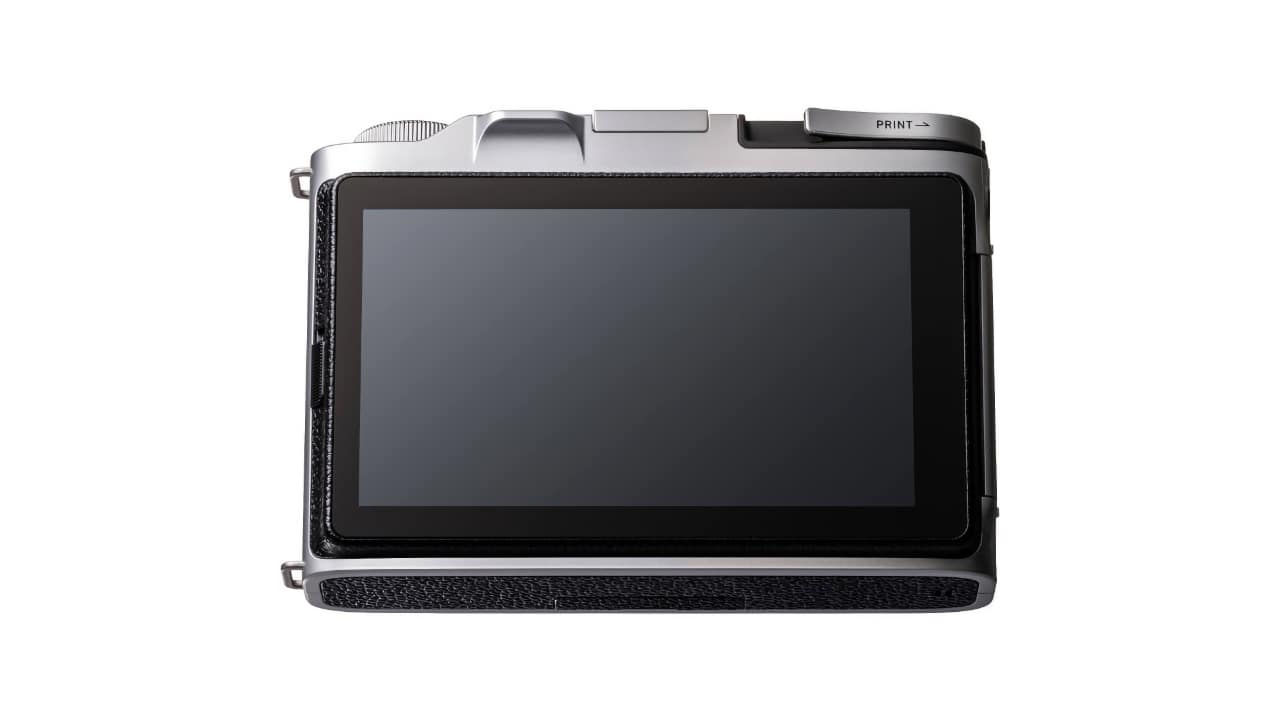
- Display Overhaul: Gone is the modest 3.0-inch, 460,000-dot screen of the past. The Evo 2 boasts a massive 4.5-inch LCD 1.23-million-dot touchscreen, radically improving live-view monitoring, menu navigation, and playback.
- Expanded View Framing: Utilizing the wider lens and expansive screen, the camera features an Expanded View mode. This gives users a wider field of view than the traditional 46 x 62 mm shooting area, complete with an on-screen framing guide to assist with complex compositions.
- instax Immersive Movie: Drawing inspiration from the tech developed for the instax mini Evo Cinema, the Evo 2 introduces short-form video capture. When a microSD card is inserted, the camera can record a four-second MP4 video clip (560 x 992 resolution at 24 fps) that captures the moments leading up to a still photograph.
- Performance Metrics: The built-in printer operates slightly faster, producing physical 2" x 3" instax mini prints in roughly 14 seconds (down from 16 seconds on the original). Battery life yields approximately 90 prints per charge, a slight dip from the original’s 100 prints due to the power demands of the larger screen and sensor. Internal memory accommodates about 45 shots before requiring offloading or a microSD card.
- Pricing and Availability: The instax mini Evo 2 is slated for release in late November, priced at $289. Film is sold separately.
Chronology: The Evolution of Fujifilm’s Hybrid Line
To understand the strategic importance of the instax mini Evo 2, it is helpful to trace the timeline of Fujifilm’s hybrid instant photography ecosystem:
- December 2021: Fujifilm launches the original instax mini Evo at an accessible $199 price point. The camera becomes an overnight viral sensation, blending digital sensor capture with a physical print lever and retro aesthetics, effectively creating a cash-cow product line for the company.
- Mid-2020s: As smartphone photography continues to dominate casual imaging, demand for tactile, physical media surges. Fujifilm expands its hybrid ecosystem, introducing specialized firmware updates and complementary mobile apps to bridge physical prints with digital photo libraries.
- Recent Developments (Pre-Evo 2): Fujifilm introduces the instax mini Evo Cinema, pioneering the concept of embedding short video clips into the instax experience—allowing users to embed QR codes that link to moving memories.
- Late November 2026: Fujifilm formally announces and schedules the global rollout of the instax mini Evo 2 at $289, integrating the video-capture lineage of the Evo Cinema with a dramatically redesigned hardware body, wider optics, and a larger display.
Supporting Data & Hardware Comparison
While the original instax mini Evo prioritized pocketability and an accessible entry price, the Evo 2 embraces a slightly more robust physical footprint to accommodate its upgraded components.
Physical Dimensions and Specifications
| Feature | Original instax mini Evo (2021) | instax mini Evo 2 (2026) |
|---|---|---|
| Launch Price | $199 | $289 (+45%) |
| Sensor Size | Standard digital sensor | 1/2.77-inch sensor |
| Lens | 28mm equivalent | 21mm equivalent f/2.0 |
| Screen | 3.0-inch, 460k-dot LCD | 4.5-inch, 1.23M-dot Touchscreen |
| Dimensions | 87 x 122.9 x 36 mm (3.4 x 4.8 x 1.4 in) | 87.5 x 125.3 x 43.7 mm (3.4 x 4.9 x 1.7 in) |
| Weight | 285 g (10.1 oz) | 330 g (11.6 oz) |
| Print Speed | ~16 seconds | ~14 seconds |
| Battery Life | ~100 prints per charge | ~90 prints per charge |
| Internal Memory | ~45 shots | ~45 shots (plus microSD support) |
Retained Fan-Favorite Features
Fujifilm adopted an "if it ain’t broke, don’t fix it" philosophy for the camera’s creative engine. The mini Evo 2 retains the popular dual-dial customization system, offering:
- 10 Lens Effects
- 10 Film Effects
- Calculation: Combining these yields 100 distinct ways to customize content directly on the device.
- Analog Controls: Adjustable exposure, white balance, flash settings, a dedicated macro mode, and a built-in selfie mirror.
- Print Quality: Maintains a crisp 600 dpi print resolution, with user-selectable profiles for instax-Rich Mode or instax-Natural Mode.
- Connectivity: Retains a microSD slot, USB Type-C charging, and seamless integration with the free instax mini Evo smartphone app for remote shooting and smartphone-to-printer capabilities.
Official Responses and Strategic Positioning
Fujifilm executives have noted that the instax division remains one of the corporation’s most reliable financial engines. By positioning the mini Evo 2 at a higher price point ($289), the company is pivoting slightly away from pure budget-friendly novelty toward a more premium, enthusiast-leaning hybrid camera market.
In promotional materials, Fujifilm emphasizes that the inclusion of the 4.5-inch touchscreen and the wider 21mm lens directly addresses user feedback from the first-generation model. Creators had long requested better framing tools, a wider field of view for group and environmental shots, and a more responsive, modern display interface. By integrating the instax Immersive Movie feature—allowing users to capture four seconds of 24 fps video leading up to a frame—Fujifilm is positioning the camera not just as a printer, but as a bridge between motion and static storytelling.
Implications: What the Evo 2 Means for the Instant Photography Market
The launch of the instax mini Evo 2 carries several broader implications for the photography industry:
- The Normalization of Higher Price Points in Instant Film: A 45% price increase over a predecessor is a steep jump that may alienate casual buyers or younger consumers looking for an impulse purchase. However, if the market absorbs the $289 price tag, it proves that consumers are willing to pay smartphone-tier prices for dedicated, tactile analog experiences backed by premium digital hardware.
- The Blurring Lines Between Video and Print: Features like Immersive Movie point toward a future where static instant film is augmented by augmented reality (AR) or digital playback elements via QR codes. This hybrid approach keeps instant photography relevant in an era dominated by short-form video platforms like TikTok and Instagram Reels.
- Ergonomic and Practical Trade-offs: The addition of a larger screen and sensor naturally adds weight (330g) and thickness (43.7mm). Users will have to decide whether the vastly improved framing experience and wider 21mm focal length outweigh the slightly reduced pocketability and battery longevity.
As the instax mini Evo 2 rolls out globally in late November 2026, it will test whether nostalgia combined with modern touchscreen ergonomics can successfully command a near-$300 entry fee in the burgeoning instant photography renaissance.
