
The Reality Architect: Why Nathan Fielder’s ‘You Can See Everything’ is Breaking the Awards Season Mold
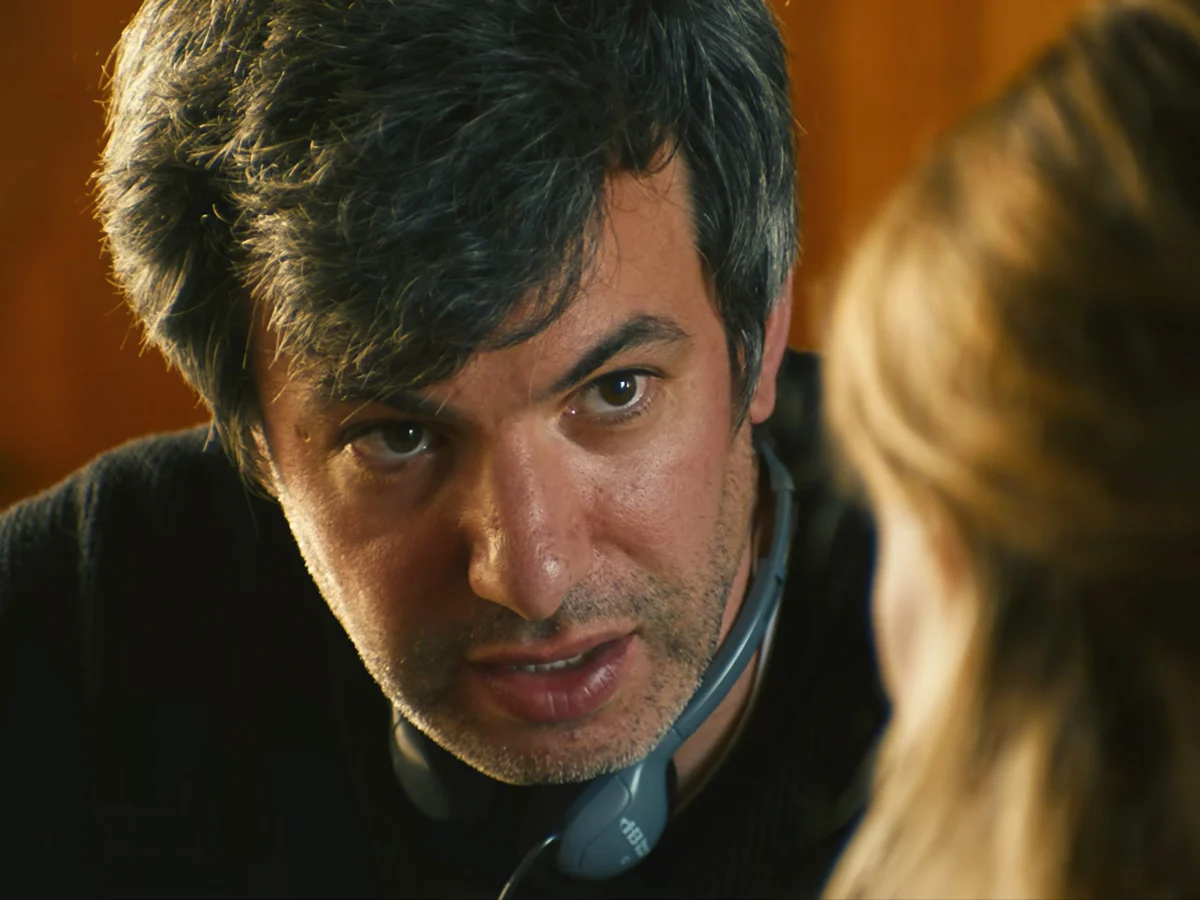
In the landscape of modern cinema, few figures command the same blend of fascination and confusion as Nathan Fielder. As A24 prepares for the release of the highly anticipated documentary You Can See Everything—a project co-directed by Fielder and Lance Oppenheim—the industry is once again grappling with the elusive nature of the creator’s persona. The film, which centers on the polarizing figure of Elizabeth Holmes, promises to be more than a standard non-fiction study; it is a performance piece that blurs the lines between documentarian and subject.
As the trailer suggests, Fielder is not merely behind the camera. He is an active participant, maneuvering through the world of the disgraced Theranos founder with a presence that begs a familiar, persistent question: Is this the "real" Nathan, or is this the carefully constructed, socially anxious character that has become his professional trademark?
The Evolution of the Fielder Persona: From ‘Nathan for You’ to ‘The Curse’
To understand the stakes of You Can See Everything, one must look at the trajectory of Fielder’s career. His breakout Comedy Central series, Nathan for You, operated in a liminal space. While it was categorized as a "variety sketch series," it utilized real-life, unscripted scenarios to expose the absurdity of late-stage capitalism. Who could forget the "Dumb Starbucks" stunt—a project so convincing that local news outlets reported on it as a legitimate business before the cameras were even revealed?
This pattern of blurring the lines continued with HBO’s The Rehearsal. In that series, Fielder constructed elaborate, expensive simulations to help people prepare for life’s most difficult conversations. Here, the "character" of Nathan became both the puppet master and the subject, subjecting himself to the same rigorous, often humiliating, scrutiny he applied to his participants.
When Fielder transitioned into scripted television with Showtime’s The Curse, co-created with Benny Safdie and starring Emma Stone, many expected a traditional comedy. Instead, the audience was met with a jarring, uncomfortable, and deeply surreal exploration of gentrification and performative morality. The project’s genre-defying nature was so pronounced that for the Emmy Awards, the team submitted the show in the Drama Series categories—a move that signaled Fielder’s refusal to be confined by standard industry labels.

The Awards Season Conundrum: Can a Documentary Be an Acting Showcase?
The central tension surrounding You Can See Everything lies in its eligibility for major industry accolades. If, as the trailer implies, Fielder is effectively "performing" within the documentary, how do the various voting bodies classify his work?
The debate is rooted in the rigidity of award categories. Historically, acting performances within documentaries have been largely overlooked by the major guilds, primarily because the Academy and other bodies maintain a firm distinction between "scripted performance" and "documentary participation."
The Critics’ Perspective
On the awards front, critics’ groups often serve as the first line of defense for experimental cinema. IndieWire has confirmed that acting performances within a documentary are, in fact, eligible in the acting categories at the Critics Choice Awards. Because these organizations operate via committee, they are often more inclined to embrace "inspired choices" that push the boundaries of how we define a performance. For Fielder, this represents a viable path to recognition—one that relies on critics who are willing to reward the subversion of documentary norms.
The Golden Globe Barrier
Conversely, the Golden Globes present a significant hurdle. The organization’s rules are explicit: documentaries are ineligible for motion picture categories. Their bylaws define a documentary as a "non-fiction motion picture intended to document reality in a factual manner." Even more restrictive, the rules state that any project with over 25 percent documentary footage is disqualified from the traditional film categories. Unless You Can See Everything generates an improbable $100 million domestic and $150 million global box office, it is effectively barred from the Globes’ "Cinematic and Box Office Achievement" exception.
The SAG-AFTRA Petition Process: A Possible Workaround?
While the Screen Actors Guild (SAG-AFTRA) also maintains that documentaries are ineligible for motion picture awards, they offer a unique bureaucratic mechanism: the petition.

The SAG-AFTRA Awards Committee oversees a process wherein a production can submit a formal request to challenge eligibility rules. The petitioner must detail the basis for the request, providing facts that support why an performance—even one embedded in a documentary—deserves consideration. While the final judgment of the committee is "final and non-reviewable," the existence of this channel suggests that the industry is aware that the documentary form is changing.
If Fielder were to petition, he would be arguing that his role in You Can See Everything constitutes a performance that transcends the traditional "subject" label, effectively making him an actor in a, if not scripted, then highly directed, narrative environment.
The Academy’s Long Game: Courting the Actors Branch
The ultimate prize for any A24 project is the Academy Awards. The primary obstacle for You Can See Everything is the perception that it is a "documentary" first and a "film" second. To secure a Best Picture nod, the film needs the support of the Actors Branch—the largest and arguably most influential branch of the Academy.
By submitting Fielder for an acting category—similar to his Emmy submission for The Rehearsal—the film’s campaign team could potentially force the Academy to view the project through a lens of performance rather than just reportage. This is an additive strategy; by positioning Fielder’s presence as a deliberate, crafted performance, the producers hope to bridge the gap between documentary storytelling and the prestige of narrative acting.
Implications for the Future of Non-Fiction
The uncertainty surrounding You Can See Everything highlights a larger shift in the film industry. We are living in an era where the "documentary" label is becoming increasingly porous. Filmmakers like Fielder, Oppenheim, and their contemporaries are intentionally eroding the wall between truth and artifice.

If this film succeeds in securing an acting nomination, it will likely force a reckoning within the major awards bodies. It will ask them to define what a "performance" is in an age where the subject of a documentary is often as much of a character as a protagonist in a scripted drama.
Why This Matters for 2026
As we move further into the 2026 awards cycle, the industry is watching closely. If the A24 campaign decides to move forward with an acting push for Fielder, it will be one of the most unconventional, risky, and fascinating campaigns in recent memory.
The strategy is clear: if you cannot change the rules of the game, you change the way the game perceives your work. By refusing to let You Can See Everything be categorized simply as a documentary about Elizabeth Holmes, Fielder is challenging the industry to acknowledge the meta-narrative he has spent his entire career perfecting. Whether or not the awards bodies bite remains to be seen, but one thing is certain: Nathan Fielder has once again ensured that the audience will not just be watching his work—they will be questioning it, debating it, and, above all, struggling to define it.
The true "curse" of his work, perhaps, is that we may never truly know where the performance ends and the man begins. But as the buzz around You Can See Everything continues to grow, it is clear that for the Academy and the critics alike, the performance is exactly what they are being forced to watch.
