
Beyond the Myth and the Megalith: Why Martin Scorsese’s ‘The Departed’ Remains Matt Damon’s Masterpiece
In the landscape of modern cinema, few transformations have captured the public imagination quite like Matt Damon’s recent turn as Odysseus in Christopher Nolan’s blockbuster epic The Odyssey. Earning massive global praise and dominating the international box office, the film has inevitably prompted critics and moviegoers alike to reexamine Damon’s extensive and diverse filmography. From the mathematical genius of Good Will Hunting to the hyper-trained lethality of the Jason Bourne franchise, Damon has spent decades crafting an image as one of Hollywood’s most reliable and compelling cinematic heroes.
Yet, for those looking to witness the actor operating at the absolute peak of his dramatic powers, one must look backward to 2006. Martin Scorsese’s labyrinthine American tragedy, The Departed, remains a benchmark of contemporary crime cinema. Co-starring Leonardo DiCaprio, Jack Nicholson, and an elite ensemble, the film not only redefined the Boston-set crime thriller but also extracted from Damon a nervous, deeply unsettling performance that shattered his conventional heroic mold.
Main Facts: The Anatomy of a Modern Crime Classic
Released on October 6, 2006, by Warner Bros., The Departed stands as a watershed moment in American filmmaking. Directed by legendary filmmaker Martin Scorsese and written by William Monahan, the 151-minute epic is an adaptation of Alan Mak and Felix Chong’s acclaimed 2002 Hong Kong crime thriller, Infernal Affairs.
The narrative relocates the high-stakes game of cat-and-mouse from the neon-drenched skylines of Hong Kong to the gritty, parochial neighborhoods of Boston, Massachusetts. At its core, the film explores the parallel, mirroring lives of two men operating on opposite sides of the law, both carrying dangerous secrets:
- Billy Costigan Jr. (Leonardo DiCaprio): A young, working-class Massachusetts State Police cadet with deep familial ties to organized crime. He is pulled from the academy early and sent deep undercover to infiltrate the inner circle of ruthless South Boston mob boss Frank Costello.
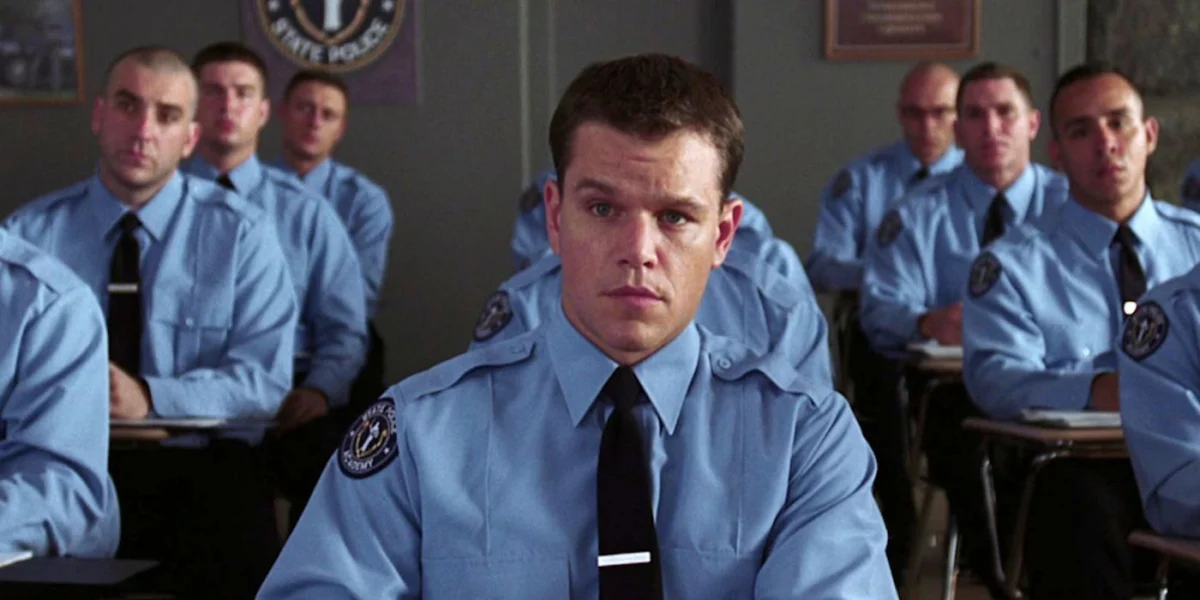
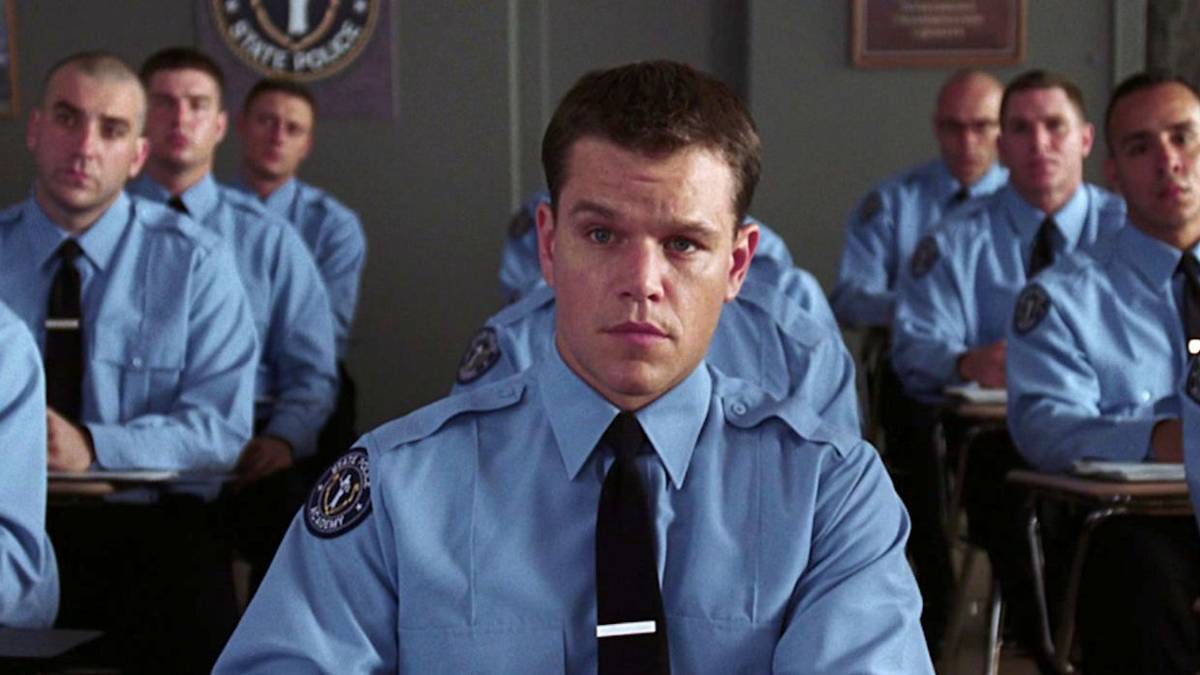
- Colin Sullivan (Matt Damon): A sharp, ambitious street-level criminal who is secretly groomed by Costello from childhood to infiltrate the Massachusetts State Police department. Sullivan rises through the ranks to become a high-level investigator, feeding crucial law enforcement intelligence directly back to his mob handler.
As both organizations slowly realize there is a mole in their ranks, a frantic, paranoid race begins. Costigan and Sullivan must unmask one another before their true identities are discovered, leading to a bitter, bloody, and emotionally devastating collision course.
Chronology: From Hong Kong Streets to Boston Harbors
The journey of The Departed to the screen is a fascinating timeline of international adaptation, collaborative studio efforts, and long-overdue Hollywood recognition.
The Origins and Adaptation (2002–2005)
- December 2002: The original Hong Kong thriller Infernal Affairs (Mou Gaan Dou), directed by Andrew Lau and Alan Mak, premieres to massive critical and commercial success across Asia, quickly achieving the status of a modern masterpiece.
- 2003: Warner Bros. acquires the remake rights. Screenwriter William Monahan is tasked with transposing the Buddhist philosophical underpinnings of the original text into the distinct sociopolitical, cultural, and Catholic-inflected landscape of Boston.
- Late 2004 / Early 2005: Martin Scorsese, alongside producers Brad Grey, Brad Pitt, and Graham King, formally boards the project. Leonardo DiCaprio, having previously collaborated with Scorsese on Gangs of New York (2002) and The Aviator (2004), signs on, quickly followed by Matt Damon and Jack Nicholson.
Production and Theatrical Release (2005–2006)
- Spring 2005: Principal photography begins on location in New York City, Boston, and various Massachusetts suburbs. Scorsese infuses the production with his signature directorial rhythm, utilizing kinetic editing, sweeping tracking shots, and an eclectic, anachronistic soundtrack.
- October 6, 2006: The Departed opens in theaters across North America to widespread critical acclaim. Audiences respond enthusiastically to its breakneck pacing, dark humor, and relentless tension.
Awards Season Triumph (2007)
- January 2007: The film collects numerous accolades during the precursor awards season, including multiple Golden Globe nominations.
- February 2007: At the 79th Academy Awards, The Departed receives five nominations, ultimately winning four: Best Picture, Best Director for Martin Scorsese, Best Adapted Screenplay for William Monahan, and Best Film Editing for Thelma Schoonmaker.
Supporting Data: Box Office, Critical Reception, and Accolades
Beyond its cultural footprint, The Departed was a formidable commercial and critical success. Operating on an estimated production budget of roughly $90 million, the film grossed over $291.5 million worldwide, proving that gritty, R-rated adult dramas could still command massive global box office returns.
On the critical front, the film achieved near-universal praise. Review aggregators place it among the finest films of the 21st century:
- Rotten Tomatoes: Holds a certified fresh rating of 91%, with the critical consensus praising Scorsese’s "energetic, blood-soaked masterclass" and its exceptional ensemble cast.
- Metacritic: Maintains a score of 85 out of 100, indicating "universal acclaim."
The film’s technical and artistic execution earned widespread recognition across major guild and academy bodies:
| Award Body | Category | Result |
|---|---|---|
| Academy Awards (2007) | Best Picture | Won |
| Academy Awards (2007) | Best Director (Martin Scorsese) | Won |
| Academy Awards (2007) | Best Adapted Screenplay (William Monahan) | Won |
| Academy Awards (2007) | Best Film Editing (Thelma Schoonmaker) | Won |
| Academy Awards (2007) | Best Supporting Actor (Mark Wahlberg) | Nominated |
| Golden Globe Awards (2007) | Best Motion Picture – Drama | Nominated |
| Golden Globe Awards (2007) | Best Director (Martin Scorsese) | Won |
| BAFTA Awards (2007) | Best Screenplay – Adapted | Won |
Official Responses and Reflections: The Breaking of the Oscar Curse
For decades, the most glaring narrative in Hollywood history was the Academy’s persistent oversight of Martin Scorsese. Despite helming some of the most influential American films ever made—including Taxi Driver (1976), Raging Bull (1980), Goodfellas (1990), and The Aviator (2004)—Scorsese had been nominated for Best Director five times without a single win.
When The Departed finally broke the streak, the moment carried profound symbolic weight. In a historic presentation, Scorsese was handed the Best Director statuette by three of his legendary peers and close friends: Steven Spielberg, George Lucas, and Francis Ford Coppola.
Stepping up to the microphone, Scorsese famously leaned into the moment with characteristic dry wit, joking to the audience:

"Could you double-check the envelope?"
There was, of course, no mistake. The win was a long-overdue institutional acknowledgment of a master craftsman who had shaped the vocabulary of modern cinema. Reflecting on the elusive nature of awards during a retrospective red carpet interview years later, Scorsese offered a philosophical perspective on his career:
"Over the years, I learned that my films weren’t going to be getting Oscars… but at least I got to make them."
Matt Damon, too, has frequently pointed back to The Departed as a turning point in how directors viewed his range. In various press tours following the film’s release, Damon noted that working opposite titans like Jack Nicholson and under the exacting eye of Scorsese forced him to abandon any reliance on traditional leading-man charisma.
Implications: A Masterclass in Moral Ambiguity and Subverted Stardom
The enduring legacy of The Departed lies not merely in its high body count or its quotable dialogue, but in how it deconstructs the nature of identity and morality.
The Anti-Hero Paradigm Shift for Matt Damon
Prior to 2006, Matt Damon’s cinematic persona was heavily anchored in righteousness. Whether playing the brilliant, emotionally wounded janitor in Good Will Hunting, the hyper-competent and sympathetic black-ops agent in the Bourne series, or the vulnerable private in Saving Private Ryan, audiences rooted for Damon because he embodied intelligence, integrity, and physical endurance.
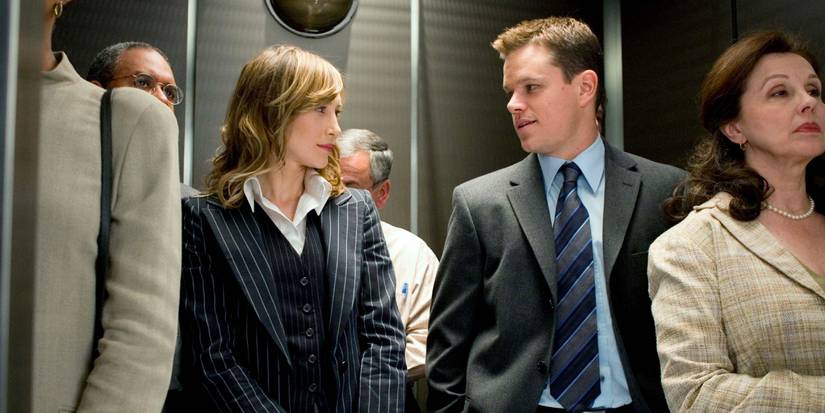
In The Departed, Scorsese subverts this entire baseline. As Sergeant Colin Sullivan, Damon plays a character who wears the pristine uniform of the state police while harboring the soul of a rat. Sullivan is articulate, well-groomed, and outwardly charming, but beneath the polished exterior lies an insidious core of cowardice, entitlement, and deep-seated panic.
Damon’s performance derives its brilliance from its quiet interiority. While Jack Nicholson chews the scenery with operatic theatricality as Frank Costello, and Leonardo DiCaprio radiates blistering, wire-tight desperation as Billy Costigan, Damon plays Sullivan with an underlying, trembling anxiousness. Sullivan desperately wants the audience—and the people around him—to feel pity for him, yet he remains the story’s least sympathetic figure. His insecure outbursts and hidden terror make him profoundly human, proving that Damon could excel not by commanding the screen with heroic muscle, but by shrinking into the pathetic, moral decay of a compromised soul.
Redefining the Crime Genre for the 21st Century
The Departed also arrived at a crucial crossroads for Hollywood crime dramas. By successfully bridging the gap between intricate Asian narrative structures and American gritty realism, the film proved that studio pictures could handle complex, morally grey, multi-protagonist narratives without sanitizing their edges for mainstream palates. It cemented Boston as a cinematic epicenter of paranoia and tribalism, while offering a masterclass in pacing, editing, and atmospheric world-building—from Costello’s iconic silhouette entrance soundtracked by The Rolling Stones’ "Gimme Shelter" to the frenetic energy of DiCaprio’s prison sequences accompanied by the Dropkick Murphys.
Conclusion: A Legacy That Endures
As modern audiences rediscover Matt Damon via grand epics like The Odyssey, a journey back to the rain-slicked, blood-stained streets of The Departed offers a vital reminder of the actor’s true depth. It is a cinematic symphony where every collaborator—from Scorsese and Monahan to DiCaprio, Nicholson, and Damon—operated at the absolute height of their powers. Nearly two decades later, The Departed remains not only a high-water mark of modern American cinema, but the definitive proof that Damon’s greatest cinematic achievements happen when he dares to step completely away from the hero’s path.
