
Box Office Breakdown: How Michael Showalter’s ‘Verity’ Is Navigating a Divided Theatrical and PVOD Landscape

By Rohan Naahar | Published October 27, 2026
Main Facts: The Current Box Office Standing of Verity
As October 2026 draws to a close, the psychological thriller Verity—directed by Michael Showalter and anchored by an A-list cast featuring Anne Hathaway, Dakota Johnson, and Josh Hartnett—is officially winding down its primary theatrical run. Having recently shed a significant chunk of its domestic screen count, dropping from a high of approximately 3,500 theaters down to 2,400, the Amazon MGM Studios release pulled in a modest $3 million during its third weekend.
This latest domestic sum pushes the film’s cumulative domestic box office past the crucial $70 million milestone. Globally, Verity has managed to generate an impressive $160 million worldwide against a reported production budget of $40 million. While these figures comfortably secure a profitable theatrical run, the film’s commercial trajectory has sparked industry-wide debates.
Despite being adapted from a massive literary bestseller with an intensely dedicated built-in audience, Verity has dramatically underperformed relative to recent runaway book-to-screen successes. Titles such as It Ends with Us ($350 million worldwide) and The Housemaid ($400 million worldwide) set a stratospheric bar for contemporary page-to-screen adaptations. Even David Fincher’s masterclass in psychological suspense, Gone Girl, cleared more than twice Verity‘s global haul during its theatrical run.
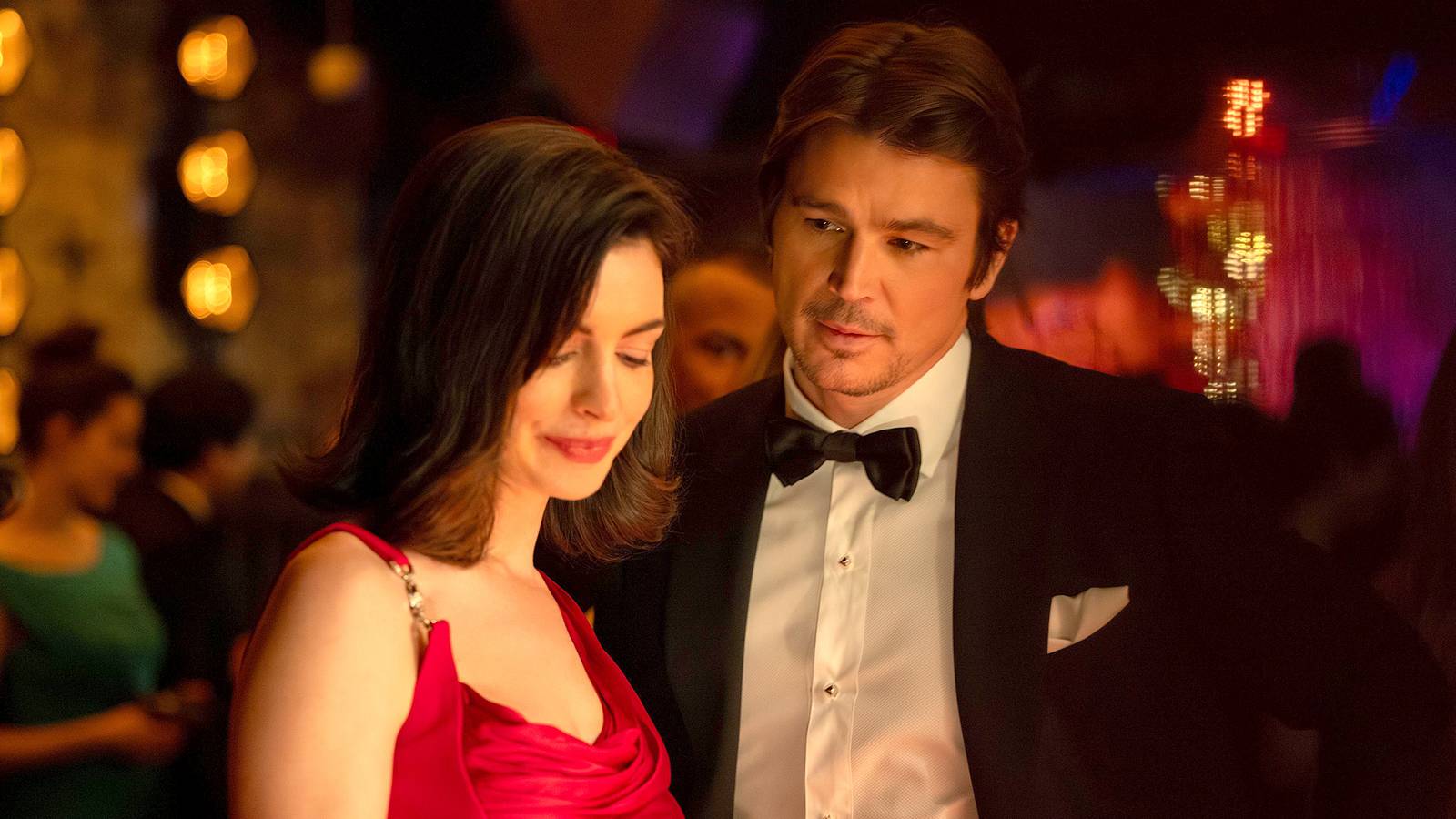
Compounding the box-office discourse is the film’s reception. Unlike Hathaway’s stellar 2026 box office triumphs—which include Christopher Nolan’s The Odyssey and the comedy sequel The Devil Wears Prada 2 (two projects that combined for a staggering $2.5 billion worldwide)—Verity has faced a critical mauling. The film currently sits at a dismal 31% approval rating on the review aggregator Rotten Tomatoes, marking a stark contrast to the cultural phenomenon and favorable sentiment enjoyed by other recent female-led literary adaptations.
Chronology: From Page to Screen to PVOD
To understand where Verity stands today, it is essential to trace the chronology of its development, release, and subsequent distribution pivot:
- The Literary Phenomenon: Long before Hollywood caught wind of the project, the source material—penned by bestselling author Colleen Hoover—dominated reading lists globally, cultivating a fierce, highly engaged fanbase that practically guaranteed opening-weekend traction.
- Pre-Production and Casting: Amazon MGM Studios assembled a heavy-hitting creative team. Michael Showalter signed on to direct, while Nick Antosca and Hoover collaborated on the narrative framework. The casting announcements galvanized cinephiles, securing Anne Hathaway, Dakota Johnson, and Josh Hartnett to bring the twisted central dynamic to life.
- The Theatrical Debut (October 2, 2026): Verity opened wide across roughly 3,500 domestic theaters. Backed by strong early marketing and the star power of its cast, it secured a solid opening weekend, anchoring itself among mid-tier fall box office competitors.
- The Critical Backlash and Theatrical Bleed: As word-of-mouth spread, polarized audience reactions collided with poor critical reviews. The Rotten Tomatoes score settled at 31%, leading to a predictable tapering of momentum and a contraction in screen count.
- The PVOD Transition (October 27, 2026): Entering its fourth week, the film’s theater count dropped to 2,400. Capitalizing on residual brand awareness and home-viewing demand, Amazon MGM Studios officially released Verity onto Premium Video-on-Demand (PVOD) platforms on October 27, initiating its second life in the home entertainment market.
Supporting Data: Comparative Performance Metrics
When evaluating Verity‘s financial health, raw numbers tell only part of the story. Contextualizing its performance against its budget, competing literary adaptations, and star-vehicle benchmarks provides a clearer picture of its theatrical lifecycle:
| Metric Category | Verity Data | Comparative Benchmark |
|---|---|---|
| Production Budget | ~$40 million | The End of Oak Street (~$80 million) |
| Domestic Gross (To Date) | >$70 million | Where the Crawdads Sing / The Girl on the Train tier |
| Global Box Office | $160 million | It Ends with Us ($350M) / The Housemaid ($400M) |
| Rotten Tomatoes Score | 31% | Significantly lower than genre peers |
| Theater Count Trajectory | Dropped from 3,500 to 2,400 | Typical aggressive mid-run contraction for front-loaded thrillers |
While a $160 million global return on a $40 million budget represents a clear financial win for a mid-budget studio film, the comparison to other Colleen Hoover or thriller adaptations reveals missed upside potential. The film’s placement aligns it more closely with mid-tier literary adaptations like Where the Crawdads Sing and The Girl on the Train rather than historic blockbuster breakouts.

Official Responses and Creative Lineup
Behind the scenes, Verity boasts a powerhouse roster of producers and creatives who have championed the project through its bumpy public reception.
Directed by Michael Showalter from a script adapted by Nick Antosca and Colleen Hoover, the film’s production credits feature a heavy-hitting ensemble. Alex Hedlund, Anne Hathaway, Colleen Hoover, Jordana Mollick, Michael Showalter, Nick Antosca, and Stacey Sher all served as producers, investing deeply in the commercial viability of the intellectual property.
While studio executives have remained largely tight-lipped regarding the film’s polarizing critical reception, the swift pivot to PVOD indicates a strategic agility on the part of Amazon MGM Studios. Recognizing that word-of-mouth toxicity could stifle further theatrical growth, migrating the title to digital storefronts allows the studio to capitalize on the massive curiosity factor driven by Hathaway, Johnson, Hartnett, and Hoover’s combined fan bases.
Implications: What Verity‘s Run Means for the Future of Literary Thrillers
The box-office lifecycle of Verity carries several broader implications for Hollywood’s ongoing obsession with literary adaptations and mid-budget adult thrillers:

1. The Ceiling of Bad Reviews on Built-In Audiences
For years, Hollywood operated under the assumption that a massive, pre-existing literary fanbase could insulate a film from critical pans. While Verity proved this theory partially true by securing a profitable $160 million global haul despite a 31% Rotten Tomatoes score, the drop-off compared to It Ends with Us proves that toxicity matters. When critical consensus and audience sentiment align negatively, a movie misses out on the lucrative multi-week legs that turn hits into global phenomena.
2. The Shifting Window to PVOD
The decision by Amazon MGM Studios to shunt Verity to PVOD while it was still clearing $3 million in its third weekend highlights the compressed theatrical windows of the mid-2020s. Studios are increasingly unwilling to bleed marketing dollars trying to sustain screens for polarizing titles. Instead, they cut theater counts, trim exhibition costs, and let home audiences take over—a strategy that often maximizes profit for high-concept thrillers.
3. Star Power vs. Narrative Execution
Anne Hathaway is having an extraordinary year. With massive global hits like The Odyssey and The Devil Wears Prada 2 collectively crossing $2.5 billion, alongside the sci-fi thriller The End of Oak Street generating $120 million globally, her box office viability remains unquestioned. However, Verity serves as a cautionary tale: even elite star power and powerhouse co-stars like Dakota Johnson and Josh Hartnett cannot entirely override a screenplay and critical reception that fail to connect with audiences on a deeper emotional or narrative level.
As Verity continues its journey on digital rental and purchase platforms, its ultimate legacy will likely be defined by how well it monetizes its remaining curiosity-driven audience at home. Stay tuned to Collider for further box office updates and deep dives into the shifting cinematic landscape.
