Unveiling the Final Gate: Inside the Visual Effects Masterclass of Stranger Things Season 5
Main Facts
The conclusion of the cultural phenomenon that is Netflix’s StrangerThings represents a monumental achievement in television production. In a recent fxpodcast feature, lead visualeffects supervisor Betsy Paterson pulled back the curtain on the arduous, three-year journey required to bring the Duffer brothers’ landmark series to its epic conclusion. Spanning an expansive canvas, Season 5 breaks new ground for television VFX, tackling monumental tasks including the complete digital recreation of a young Will Byers, an extensively redesigned digital Vecna, hordes of refined Demogorgons, and massive otherworldly battles.
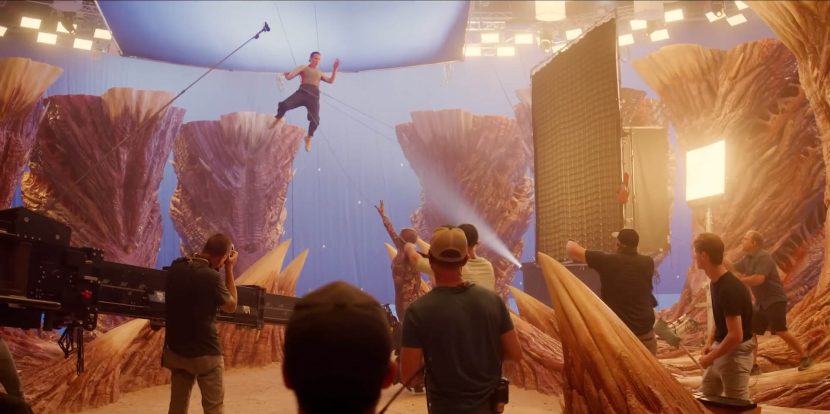
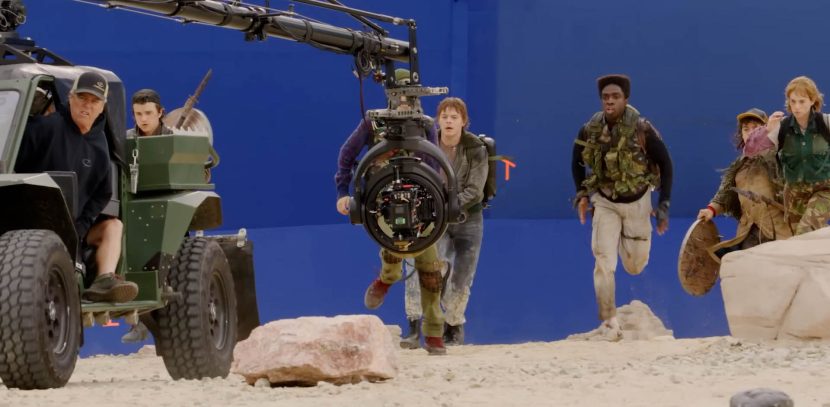
However, the core triumph of Season 5 does not merely lie in raw computing power. Instead, it rests on a philosophy of seamless integration. Rather than operating in a post-production vacuum, Paterson’s visual effects department was integrated into the production pipeline from the very first script arrivals. Spending an entire year in pre-production, the production focused on establishing a symbiotic relationship between practical on-set elements—such as stunt wires, physical interactions, practical lighting, and specialized set design—and state-of-the-art computer-generated imagery handled by top-tier houses like Wētá FX and Industrial Light & Magic (ILM).
Chronology of Production: From Scripts to the Final Grade
The creation of Stranger Things Season 5 followed a meticulously mapped chronology, structured to ensure that digital and practical elements functioned as a unified entity.
Phase 1: Inception and Pre-Production (The First Year)
Immediately upon receiving the early scripts, Betsy Paterson joined the production. Recognizing the immense scope of the final season, the team utilized a full year of pre-production. During this window, previz became the universal language across all departments. The production team mapped out complex action beats, creature scales, and physical blocking, leaving ample room for actors to improvise during rehearsals while locking in the crucial spatial geography needed for future digital integration.
Phase 2: Principal Photography and Practical-Digital Handoffs
When shooting commenced, the philosophy was simple: capture as much physical reality as possible. Whether it was a stunt performer pulled on wires, practical sand bursts marking a monster’s footsteps via augmented-reality iPad setups, or tilt-adjustable glass walls in laboratories, the cast was consistently given physical resistance, eyelines, and tactile feedback.
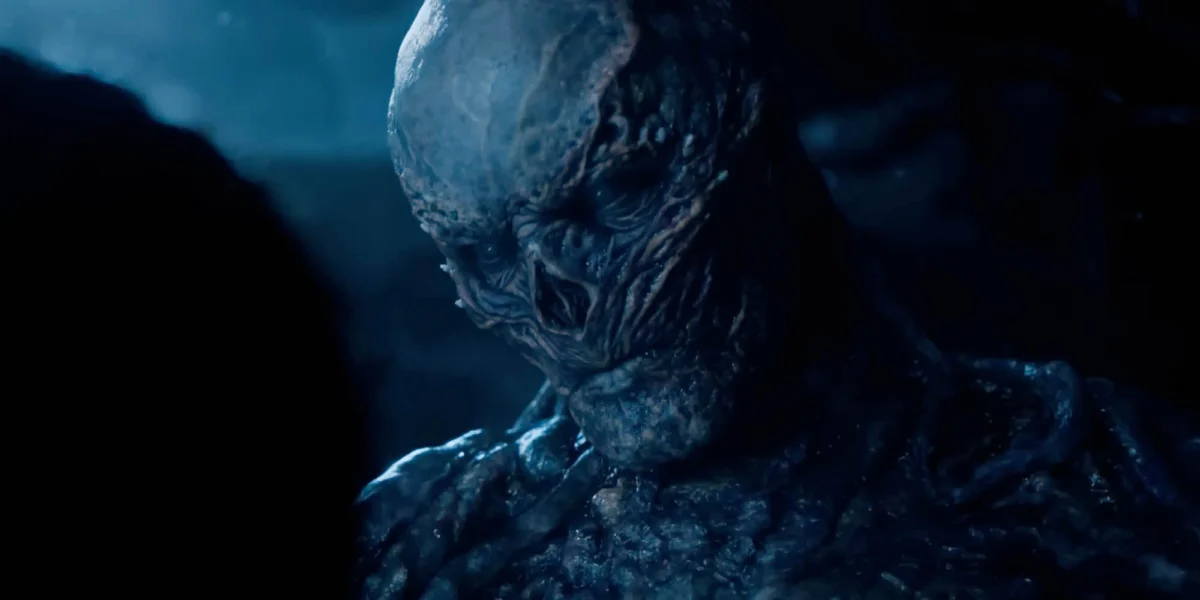
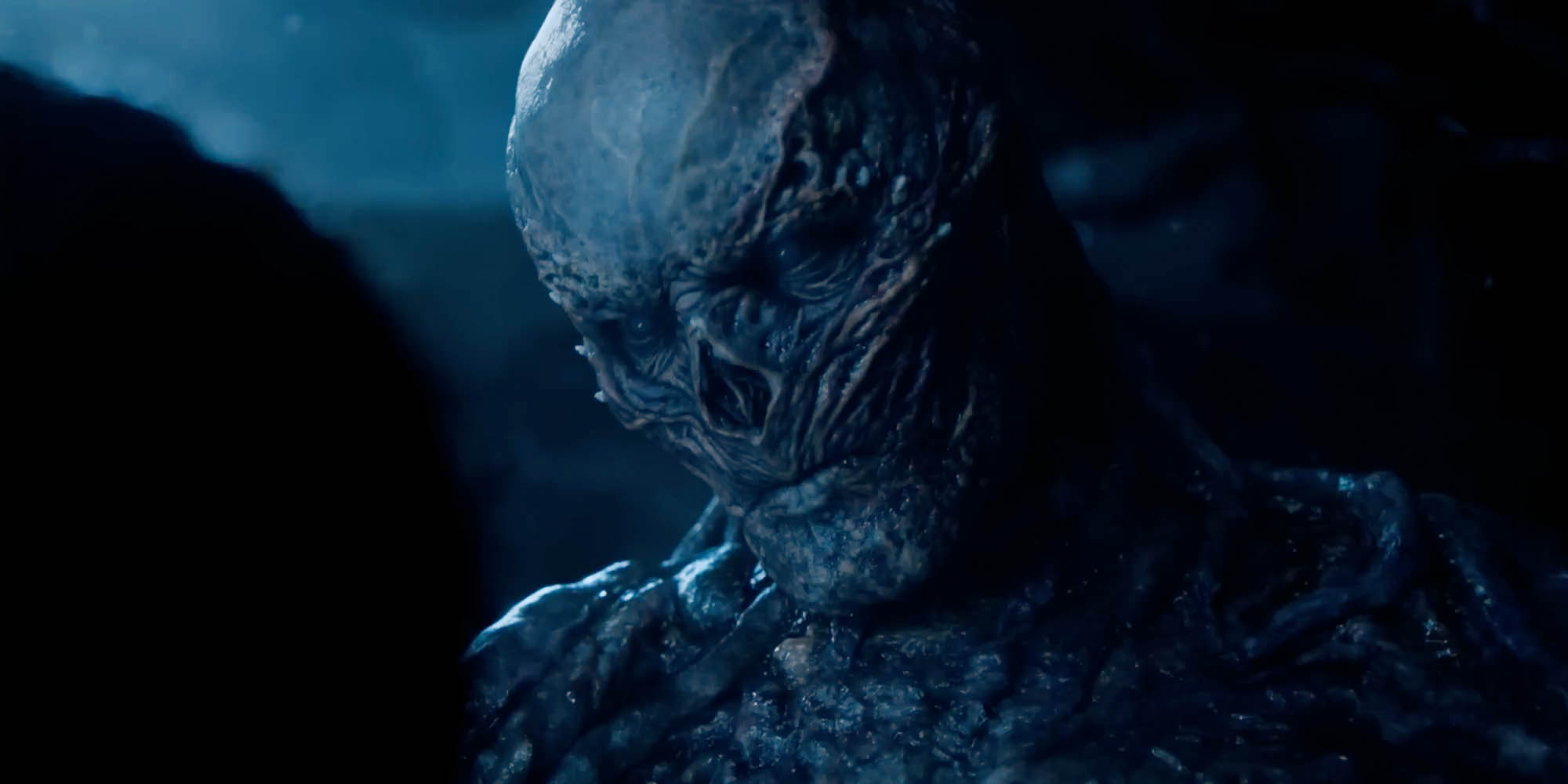
For Vecna, actor Jamie Campbell Bower maintained a physical presence on set for nearly every shot. Clad in a tracking-marker suit rather than a full performance-capture rig, Bower delivered his frightening performance live, augmented by digital body and facial enhancements handled by Wētá FX.
Phase 3: Post-Production Rendering, Vendor Coordination, and DI
The post-production phase required immense organizational scale. Reviewing up to 300 shots a day, Paterson coordinated multiple heavy-hitting vendors—including Wētá FX, ILM, Eyeline, Rodeo FX, BigHug FX, and BOT VFX. Because vendor pipelines frequently intersected—with one studio relying on another’s environmental renders or fire simulations—strict pipeline choreography was enforced. Simultaneously, colourists worked in close proximity to the VFX teams, integrating look-up tables (LUTs) early in the process to prevent costly mismatches between heavily styled lighting and digital asset integrations.
Supporting Data and Technical Breakdown
The sheer scale of Season 5 is reflected in its technical complexity and the division of labor among the world’s leading visual effects houses:
Vendor Distribution:
Wētá FX: Spearheaded major creature work (Vecna, Demogorgons, Demodogs), the digital facial replacement of young Will, Vecna’s lair, and the massive Abyss battle featuring the Mind Flayer.
ILM: Focused heavily on environmental devastation within the Upside Down, the fleshy walls, and the complex vine constrictions gripping Jim Hopper, alongside additional Demogorgon work.
Supporting Studios: Eyeline, Rodeo FX, BigHug FX, and BOT VFX contributed crucial sequence work, backed by a lean, highly efficient in-house unit.
The Young Will Digital Face Challenge: The opening sequence required approximately 40 facial shots of a young Will Byers. To achieve this without relying solely on less-controllable machine learning models, the production cast a lookalike actor (Luke) whose proportions mirrored Noah Schnapp in Season 1. Supported by a comprehensive capture package—including witness cameras on and off the main rig, historical footage spanning past seasons, outtakes, and publicity interviews—Wētá FX crafted a fully CG face atop the young actor’s physical performance.
Vecna’s Hybrid Pipeline: Moving away from the grueling 8-to-9-hour makeup chairs of Season 4, Season 5 utilized a balanced approach: roughly two hours of practical makeup to anchor facial presence, paired with targeted digital enhancement. Furthermore, Bower specifically requested shoulder and underarm padding to counteract the slim profile of the tracking suit, allowing him to embody Vecna’s imposing silhouette naturally.
Official Responses and Industry Insights
The discourse surrounding modern visual effects often suffers from a public insistence that "everything was done in camera," a myth that major science-fiction television series can rarely afford. Speaking on the fxpodcast, Paterson addressed the necessary reality of modern filmmaking:
"We need to do as much real as possible, and the line becomes when it is just not possible anymore," Paterson explained. "Yes, the Demogorgon is fully CG, but we work really hard to make sure the stuff it interacts with is real."
This sentiment was echoed regarding the preservation of actor performances. By keeping Jamie Campbell Bower physically present in scenes rather than exiling him to a remote motion-capture stage, the production preserved the psychological terror of the antagonist.
"It was really important to everyone that it is Jamie’s performance," Paterson noted. "The fear was that people would not have taken him as seriously, or he would not have felt as comfortable getting into character. It just would not have been as scary."
Furthermore, Paterson emphasized that even when every pixel of a character is ultimately replaced, starting with a physical actor on set anchors the shot with organic creative choices from directors, cinematographers, and crew members that cannot easily be synthesized from scratch.
Implications for the Future of Television Production
The methodologies deployed on _Stranger Things*_ Season 5 offer a blueprint for the future of high-end streaming television. As audiences grow increasingly discerning, the historical friction between practical filmmaking and digital effects is giving way to a collaborative hybrid model.
By refusing to treat visual effects as a mere "fix-it-in-post" safety net, the Duffer brothers’ production team demonstrated that digital assets achieve true weight and terror only when they respect physical reality. Simple, tangible choices—such as a scuba mouthpiece for a child actor simulating a monster’s tendril, gimballed glass panels reflecting real set lighting, or a physical sandbag for an actor to stagger against—pay dividends in the final composite.
As television production budgets continue to balloon and visual effects pipelines are strained by compressed timelines, the Stranger Things model proves that early cross-departmental communication, meticulous pre-planning, and a profound respect for actor-driven performance remain the ultimate standard for cinematic storytelling on the small screen.
For the full, in-depth conversation on the visual effects of Season 5, listeners can tune into the complete fxpodcast episode featuring Betsy Paterson.