
Striking the Right Chord: How Sound Design and K-Pop Production Collided to Shape the Sonic World of Kpop Demon Hunters
Introduction: Flying Too Close to the Sun
In the high-stakes realm of modern animated filmmaking, sound design carries a notoriously delicate burden. Like Icarus flying too close to the sun, a film’s audioscape risks melting into an overwhelming mess of sonic clutter the moment too many layers are crammed into a single frame. For the creative team behind Netflix’s animated sensation Kpop Demon Hunters—including directors Chris Appelhans and Maggie Kang—avoiding this auditory pitfall required an unconventional and remarkably early collaboration.
Long before the first frames of animation were rendered, the filmmakers teamed up with supervising sound editor and re-recording mixer Michael Babcock. Their shared mission was twofold: craft catchy, chart-topping musical numbers that could stand on their own as legitimate pop bops, and weave those exact musical sensibilities into the very fabric of the movie’s sound effects, dialogue processing, and action sequences.
The result is a meticulously engineered audio landscape where the sleek, high-gloss production values of contemporary K-pop bleed seamlessly into a supernatural action-comedy. By treating sound effects as musical instruments and aligning every punch, swing, and roar to a strict rhythmic beat, Babcock and his team achieved a rare cinematic harmony—proving that animation sound design can be both fiercely experimental and deeply emotional.
Main Facts: The Anatomy of a Musical Soundscape
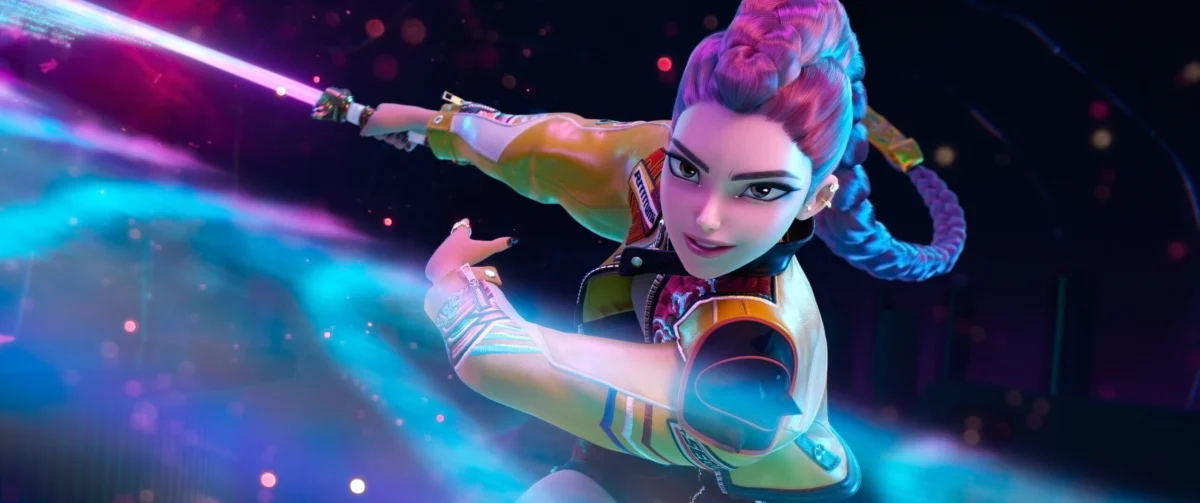
At its core, Kpop Demon Hunters follows the secret dual lives of HUNTR/X, a superstar girl group balancing sold-out stadium tours with high-octane supernatural warfare. Their primary adversaries are the Saja Boys, an irresistibly charming rival boy band hiding a dark, demonic secret.
The production’s approach to audio was defined by several foundational elements:

- Early Integration: Sound design began before animation commenced, allowing audio cues to heavily influence visual timing.
- The K-Pop Blueprint: Supervising sound editor Michael Babcock studied the complex production techniques of the K-pop industry—focusing on vocal layering, pitch correction, reverbs, and harmonies—to establish the sonic signature of both heroes and villains.
- Organic Sound Manipulation: Rather than relying entirely on digital presets, Babcock utilized physical objects, such as Amazon-purchased tuning forks, to give weapons like swords a resonant, organic genesis.
- Rhythmic Action: Sound effects in action sequences were strictly locked to the musical beats of the film’s soundtrack.
- The Challenge of Cuteness: Crafting the vocalizations and audio identity for the film’s comedy relief spirit-animal sidekicks proved more difficult than designing demonic voices.
Chronology: From Concept to Final Mix
To understand how Kpop Demon Hunters achieved its seamless audio-visual synthesis, one must trace the timeline of its production pipeline.
Phase 1: Pre-Animation Sonic Blueprinting
Unlike standard animated features where sound design is slapped onto completed or near-completed picture locks, Kpop Demon Hunters integrated Babcock into the creative process from day one. Working alongside directors Chris Appelhans and Maggie Kang, Babcock began analyzing the linguistic and emotional needs of the characters before the animators drew a single line.
This pre-animation phase focused heavily on vocal identity. The team needed to determine how lead singer Rumi (voiced by Arden Cho) would vocalize under intense stress, and what the evil Saja Boys would sound like when their demonic nature bled through their polished idol façades. Drawing from a musician’s background, Babcock dove deep into pop and K-pop production styles, analyzing tracks by modern icons like Billie Eilish and Imogen Heap to study how modern vocal processors manipulate human emotion.
Phase 2: Building the World Through Beats
Once the musical themes and vocal treatments were established, the workflow transitioned into weaponizing rhythm. As the animation began taking shape, every action sequence was cross-referenced with the film’s musical arrangements. If a fight scene featured a heavy downbeat, the resulting impact sounds—punches, blocks, and magical blasts—had to land precisely on that beat.
This phase also involved Foley artistry and inventive sound creation. To keep the supernatural weaponry feeling grounded rather than purely synthetic, Babcock turned to everyday items. By experimenting with tuning forks acquired online, his team captured unique resonant frequencies that could be manipulated to give HUNTR/X’s blades an otherworldly yet organic ring.

Phase 3: The Climax and Final Mix
The culmination of this chronological effort arrived in the film’s explosive third act. Spanning from the Saja Boys’ performance of the track "My Idol" straight through to the grand finale, the final mix required an extraordinary balancing act. Babcock has openly described this sequence as one of the most intensely fun, creatively fulfilling, and emotionally resonant experiences of his professional career, successfully smuggling an immense volume of complex sound design into the mix without muddying the integrity of the standalone songs.
Supporting Data: Techniques, Inspirations, and Technical Breakdown
Achieving the distinct sonic flavor of Kpop Demon Hunters required an arsenal of specialized production techniques and unexpected creative choices.
Vocal Processing and K-Pop Production Tricks
K-pop is universally recognized for its pristine production value, complex vocal stacking, and intricate harmonies. Babcock utilized these exact structural pillars to build the film’s soundscape:
- Harmonic Layering: Because harmony is a major thematic element woven throughout the film’s narrative, vocal tracks for key characters were multiplied and pitch-shifted.
- Reverbs and Delays: The demonic voices feature a signature blend of spatial reverbs and chorus-type effects, directly mimicking production tricks found in top-tier K-pop mixing studios.
- Computer-Aided Emotive Shifts: To give characters like Rumi and the Saja Boys shifting personas, vocal processors were used to alter timbre without sacrificing emotional clarity.
The Weaponry: Tuning Forks and Organic Genesis
Maintaining a tactile feel in an animated fantasy film can be difficult. To avoid overly digitized sword clashes, Babcock’s workflow included:
- Acoustic Experimentation: Sourcing physical tuning forks to generate clean, sustained metallic frequencies.
- Layered Processing: Blending those raw tuning fork vibrations with traditional metal-on-metal impacts to create a heightened reality that still registers as physically grounded to the viewer’s ear.
The Animal Spirit Messengers
One of the most technically demanding tasks was designing the audio for Ji-noo’s spirit animal messengers—a tiger and a magpie inspired by traditional Korean folklore representing nobles and commoners. Affectionately nicknamed "Derpy" and "Sussie" by the crew, these creatures walked a fine line between cute and supernatural.

- The Cuteness Paradox: According to Babcock, making something sound cute in animation is consistently more difficult than making it sound scary. Audiences naturally accept monster roars, but endearing, non-verbal animal vocalizations require precise emotional mapping.
- The Recipe for Derpy: The final audio signature for the tiger-magpie hybrid was achieved by combining real animal recordings with heavily manipulated human vocalizations performed by Babcock himself, allowing the creature to emote clearly across various comedic and dramatic beats.
Official Responses and Creative Insights
Reflecting on the challenges of blending high-energy pop music with narrative sound effects, Michael Babcock spoke candidly with IndieWire about the philosophy that drove the project:
"K-pop music is very intricate and has a certain polished sound to it," Babcock noted. "So it really gave me the excuse to listen to a bunch of different K-pop music and pop music… I took a lot of treatments, the jumping off points they use — everything from reverbs to how they layer voices, how they all do the harmony because, I mean, harmony is a big theme in the whole movie."
Discussing the mechanical integration of sound effects into musical numbers, Babcock emphasized the importance of precision and restraint:
"They’re in the beat. If there are any kind of hits, anywhere in any of the songs, they’re to the beat. So that’s a lot of fun. But also finding an organic way to do that and not take away from those great songs… There’s actually more sound design than I thought we’d get away with, and it doesn’t sound different than how you’d hear the songs on the album. It’s a combination of being exactly precise and, frankly, tasteful, between the music and anything else going on."
Directors Chris Appelhans and Maggie Kang also praised the early-integration workflow, noting that treating sound design as a co-equal narrative partner from the pre-production phase allowed the film’s musical identity to inform the physical world rather than simply sitting on top of it as a secondary layer.

Implications: Setting a New Standard for Animated Musicals
The success of the sound design pipeline on Kpop Demon Hunters carries significant implications for the future of animated feature films, particularly those intersecting with popular music genres.
For years, animated musicals have often separated their departments: songwriters and music producers craft the tracks in one corner of the industry, while sound effects editors and Foley artists construct the environmental audioscape in another, frequently leading to a jarring disconnect where songs feel pasted over the action. By breaking down these silos and bringing a supervising sound editor into the conversation before animation even begins, Kpop Demon Hunters offers a masterclass in holistic audio-visual world-building.
Furthermore, the project demonstrates how non-Western musical traditions—in this case, the highly polished, meticulously arranged world of K-pop—can actively inform western animation aesthetics. By respecting the intricacies of the genre, studying its technical production methods, and repurposing those tricks for supernatural sound design, the film bridges cultural and stylistic gaps.
Ultimately, Kpop Demon Hunters proves that when music, sound design, and animation pull in the exact same rhythmic direction, the audience is treated to an immersive cinematic experience that feels both thrillingly alive and harmoniously complete.
