
A Belly Full of Ambition: Why Brian Duffield’s ‘Whalefall’ Fails to Breach the Surface
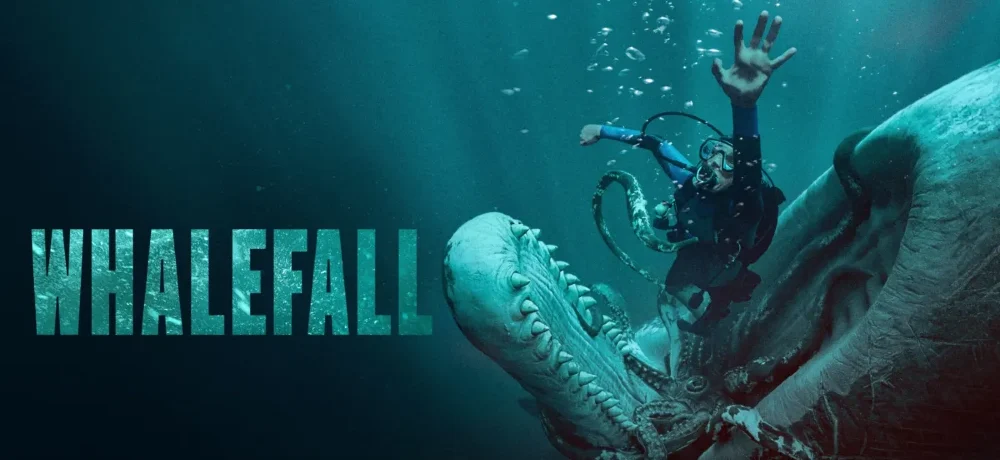
In the landscape of modern genre cinema, few filmmakers possess the singular, idiosyncratic vision of Brian Duffield. Having previously carved a niche for himself with the hyper-kinetic Spontaneous and the minimalist, dialogue-free intensity of No One Will Save You, Duffield seemed the perfect candidate to helm the adaptation of Daniel Kraus’s cult-hit novel, Whalefall. The premise alone—a high-stakes survival thriller centered on a man swallowed by a sperm whale—is a masterclass in "high concept" storytelling. However, as the film makes its way into theaters, it serves as a sobering reminder that even the most ambitious technical experiments can falter under the weight of their own thematic baggage.
The Core Premise: A Descent into the Abyss
Whalefall tells the story of Jay Gardiner (Austin Abrams), a young man grappling with the heavy, unresolved grief of losing his father, Mitt (Josh Brolin). The film positions Jay not merely as a victim of a biological anomaly, but as a man seeking redemption. His objective is clear: recover his father’s body, which was lost to the ocean’s depths during a deep-sea diving accident.
The inciting incident is as visceral as it is preposterous. While scouring the ocean floor, Jay is caught in a feeding frenzy and promptly swallowed by a massive sperm whale. What follows is a race against time. Trapped in the dark, acidic, and increasingly claustrophobic confines of the leviathan’s digestive tract, Jay must utilize every scrap of survival knowledge passed down to him by his cold, demanding father. It is a premise that promises a blend of Cast Away survivalism and The Revenant-style grit.
Chronology of the Struggle: From Hope to Delirium
The narrative progression of Whalefall is a study in diminishing returns. The first act is arguably the film’s strongest, leaning into the terrifying wonder of its setting. Duffield’s production team deserves immense credit for the world-building; the visual language of the whale’s interior—a landscape of reactive muscle, shifting tissue, and corrosive bile—is hauntingly realized.
The Survival Phase
In the initial stages, the film hums with the energy of a classic survival thriller. We see Jay navigating the anatomical chambers of the beast, attempting to MacGyver tools from whatever is available in the whale’s stomach, including the remains of its previous meal. This section introduces a touch of whimsy, most notably in a sequence where Jay forms an unlikely, Wilson-esque bond with a jellyfish. It is here that the film feels most alive, successfully balancing the absurdity of the situation with the grounded terror of drowning in darkness.
The Flashback Fatigue
As the film crosses the one-hour mark, however, the momentum begins to stall. Duffield attempts to weave in deep-seated psychological trauma, utilizing frequent, jarring flashbacks to reveal the volatile relationship between Jay and his father. While the intent is to add "heft" to the action, the execution feels intrusive. The constant oscillation between the frantic, immediate danger of the whale’s belly and the long-winded, often repetitive explorations of their domestic strife acts as a structural anchor, dragging the pacing down to a crawl. By the time the film reaches its third act, the audience is no longer watching a survival story; they are watching a lecture on parental resentment.
Supporting Data: Performance and Technical Execution
Austin Abrams, a performer known for his nuanced portrayals of vulnerable outsiders, is tasked with an almost impossible challenge. For the vast majority of the film, he is muzzled by a diving apparatus—a wetsuit, oxygen tank, and mask. While Abrams excels at conveying panic through his eyes and frantic physical movements, the script limits his range. He is, by necessity, a "contained" actor, and the claustrophobia of the set often leaves him without the room to deliver the kind of dynamic, character-driven performance that defined his work in Resident Evil or Euphoria.
Furthermore, the technical inconsistencies begin to mount as the narrative deepens. While the creature design is top-tier, other elements of the film’s reality are glossed over. The most glaring issue is the lighting; in a biological cavity miles beneath the surface, the film frequently abandons internal logic, providing light sources that remain unexplained, which momentarily pulls the audience out of the experience.
Official Responses and Industry Context
The film has generated a polarized response within the industry. Critics have largely lauded Duffield’s audacity, noting that Whalefall represents a rare, mid-budget "swing" in an era dominated by established intellectual property.
"Duffield is a marksman," noted one industry analyst, "but he has miscalculated the distance between the audience’s willingness to suspend disbelief and their patience for heavy-handed melodrama."
Production insiders have suggested that the studio was hesitant to lean too far into the body-horror aspects of the book, fearing a more restricted rating. This compromise may explain why the "guts and gusto" of the premise occasionally feel sanitized. By attempting to bridge the gap between a high-concept monster movie and a prestige drama about familial trauma, Whalefall ultimately sits in an uncomfortable middle ground, failing to fully satisfy the requirements of either genre.
Thematic Implications: The Burden of "Deep" Storytelling
The failure of Whalefall to resonate fully offers a valuable lesson in narrative structure. The film attempts to utilize the "Trojan Horse" method—hiding a sensitive, emotionally complex story about grief inside a bizarre, high-concept survival thriller.
However, the film’s reliance on Nitrogen Narcosis as a narrative crutch illustrates a fundamental flaw. By using the whale’s internal environment to trigger hallucinations, the film excuses its own lack of focus. When the narrative hits a wall, the protagonist begins to see and hear his father, allowing the film to rehash the same arguments for the third or fourth time. This recursive structure turns what should have been a taut, lean thriller into an exhausting, two-hour ordeal.
Moreover, the film’s conclusion leaves much to be desired. While the director clearly intended to provide a cathartic release, the final payoff feels unearned, overshadowed by the absurdity of the preceding events. It is a testament to the fact that trauma is not a "flavor" that can simply be added to any genre; it requires a structural integration that Whalefall never quite masters.
Conclusion: A Beautiful Failure
Whalefall is not a film that lacks heart or effort. On the contrary, it is filled with an abundance of both. Brian Duffield has crafted a work of immense ambition, proving that he is a filmmaker capable of constructing breathtaking, alien environments. Yet, the movie serves as a cautionary tale for genre filmmakers: high concepts demand high focus.
By prioritizing the "daddy issues" over the mechanics of the survival horror, the film loses its tether to the audience. It is an experience that is certainly "unique"—a word often used as a euphemism for "unbalanced." While there are individual scenes of brilliance, particularly in the production design and the visceral nature of the setting, the film ultimately sinks under the weight of its own earnestness.
For those seeking an adrenaline-fueled ride, the film’s constant pauses for introspection will prove frustrating. For those seeking a deep, emotional character study, the absurdity of a man living inside a whale will feel like an unnecessary distraction. Whalefall is a film that wants to be everything at once, and in doing so, it forgets to be the one thing it needed to be: a lean, mean, survival machine.
Despite its shortcomings, the film is worth a watch for the sheer audacity of its premise. It is a flawed experiment, but one that underscores the necessity of taking risks in Hollywood. If more filmmakers are to attempt such "batshit" concepts, they must ensure that their emotional arcs are as finely tuned as their creature effects. Whalefall will likely be remembered as a noble experiment—a visually stunning, conceptually brave film that simply couldn’t quite keep its head above water.
Final Verdict: 2.5/5 Stars
