
Dissecting the Anomaly: Inside the Visual Effects and Filmmaking Choices of David Robert Mitchell’s The End of Oak Street
Main Facts
In the ever-evolving landscape of speculative fiction cinema, few filmmakers command auteur-driven concepts quite like David Robert Mitchell. Best known for his chilling breakout It Follows and the neo-noir puzzle Under the Silver Lake, Mitchell returned with an ambitious new feature: The End of Oak Street. Anchored by high-profile lead performances from Academy Award winner Anne Hathaway and Ewan McGregor, the film presents a disorienting premise.
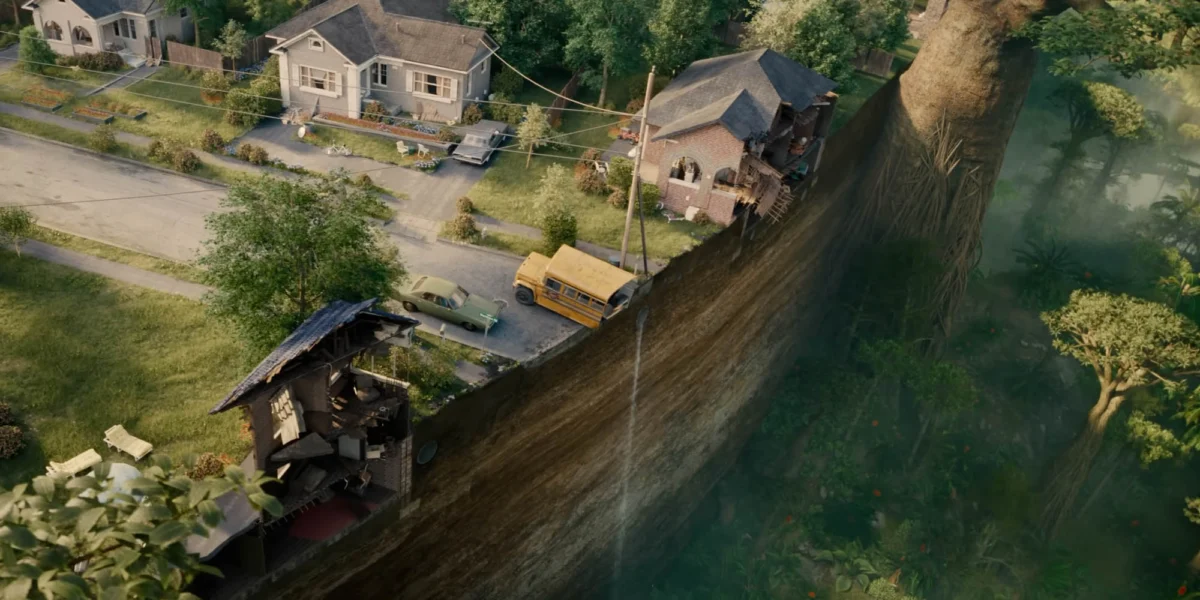
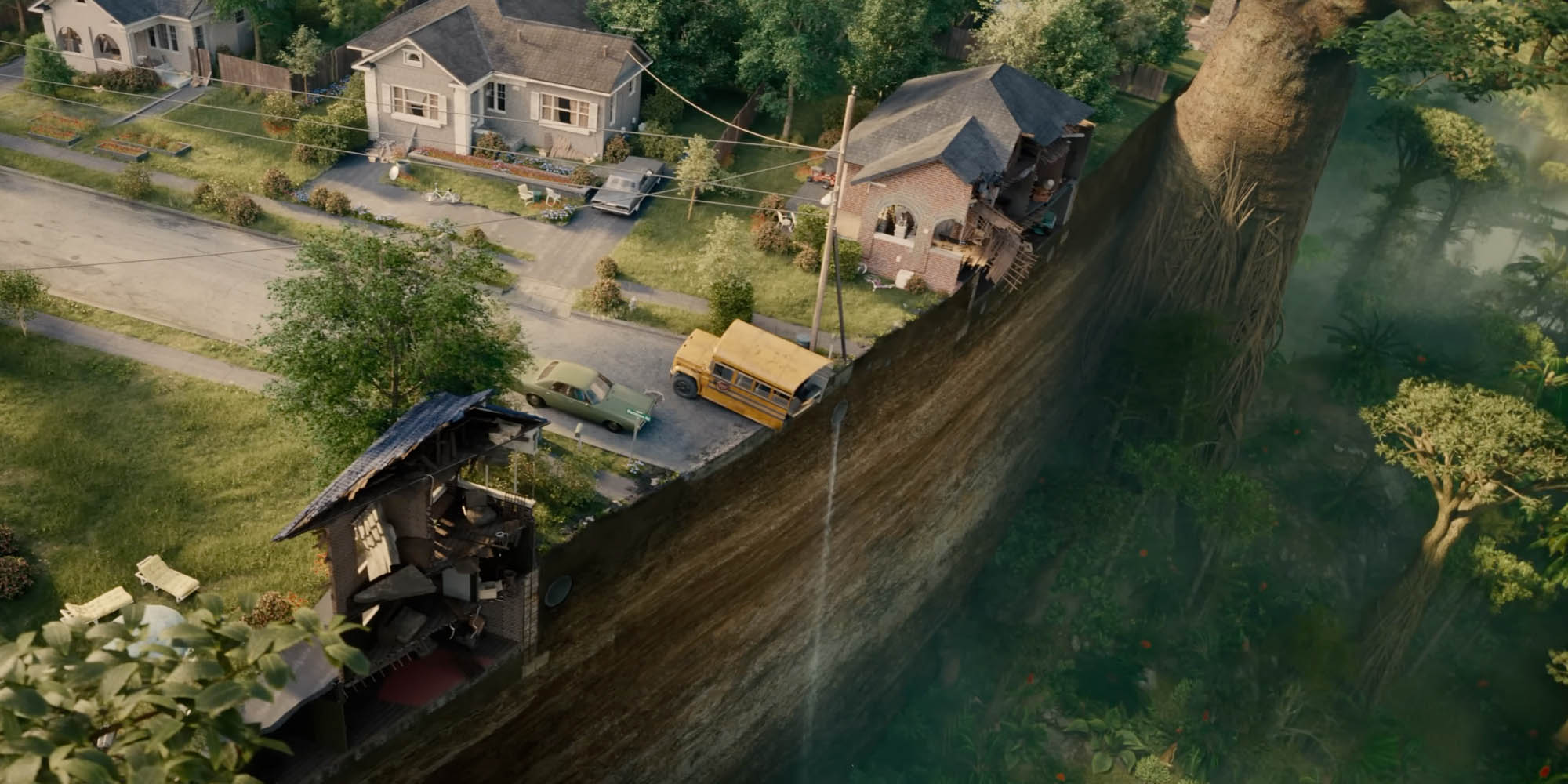
The narrative centers on the Platt family, whose idyllic suburban existence is violently upended by a mysterious, paradigm-shifting anomaly. Following a localized catastrophic event, their entire neighborhood is plucked from its familiar timeline and geography, transported across space and backward through time into an utterly unknown wilderness. As the Platts and their neighbors struggle to comprehend their displacement, the film transforms into a high-stakes study of domestic survival, temporal displacement, and psychological fracturing.
However, the sheer conceptual weight of The End of Oak Street relies heavily on its execution—specifically, its seamless integration of visual effects, production design, and cinematography to sell the impossible premise of a suburban cul-de-sac stranded in a prehistoric or alternate epoch.
To unpack the cinematic architecture behind the movie, the latest episode of The VFX Show (Episode 309) turned its analytical lens toward Mitchell’s project. Featuring an expert panel comprising Matt Wallin, Jason Diamond, and Mike Seymour, the podcast offers a deep-dive critique into the practical and digital filmmaking choices that brought the world of The End of Oak Street to life. Through rigorous debate, the panel weighed the triumphs of the film’s world-building against its narrative friction, providing cinephiles and industry professionals alike with a masterclass in modern film analysis.
Chronology of the Production and Analytical Discourse
The journey of The End of Oak Street from concept to screen, followed by its immediate dissection by industry critics, spans several distinct phases of creative development and public engagement:
- Pre-Production and Conceptualization: Director David Robert Mitchell conceptualized the project as a blend of suburban realism and surrealist sci-fi, enlisting heavyweight stars Anne Hathaway and Ewan McGregor to ground the high-concept premise in authentic emotional stakes.
- Principal Photography and VFX Integration: The production required intricate planning to merge practical suburban sets with massive digital environments. The core challenge involved establishing the stark visual contrast between comfortable, mid-century or contemporary American domesticity and the raw, untamed, unknown expanse of the displacement zone.
- Theatrical Release and Audience Reception: Upon entering theaters and streaming ecosystems, the film polarized audiences and critics alike, drawing praise for its atmospheric dread and ambition while sparking debate regarding its pacing and third-act resolution.
- Release of The VFX Show Episode 309: Capitalizing on the film’s visual talking points, the editorial team at fxguide recorded and published Episode 309. Directed toward industry insiders and passionate film fans, the episode broke down the technical pipelines, virtual production techniques, and editorial decisions that shaped the final cut.
- Ongoing Public and Critical Discourse: Following the podcast’s release, listeners and cinephiles engaged in cross-platform discussions (via Mastodon, Letterboxd, and direct correspondence) to challenge or validate the panel’s assertions on what truly worked within the film’s visual framework.
Supporting Data and Technical Breakdown
To fully appreciate the discourse generated by The VFX Show panel, one must examine the metrics and methodologies that define modern visual effects critique. The End of Oak Street represents a pinnacle of hybrid filmmaking, where physical builds collide with photorealistic digital extensions.
Visual Effects Metrics & Environment Design
- Scale of Digital Replacement: A significant percentage of the neighborhood exterior shots required digital matte painting and extension to completely erase the horizon of the modern world, substituting it with alien topography and shifting temporal weather patterns.
- Resolution and Delivery Formats: Distributed widely in high-definition formats—including 4K digital packages and IMAX variants—the film’s visual fidelity heavily scrutinized the work of compositors. As highlighted on the podcast, every error in edge-blending or lighting integration becomes glaringly apparent on large-format screens.
- The Panel’s Technical Roster:
- Matt Wallin: Visual effects artist and educator providing technical insights into compositing and pipeline efficiency (reachable via
www.mattwallin.comand@mattwallin). - Jason Diamond: Creative director and filmmaker representing The Diamond Bros (
www.thediamondbros.com), offering perspectives on narrative pacing and commercial aesthetic integration. - Mike Seymour: Co-founder of fxguide (
www.mikeseymour.com), anchoring the technical debate with deep academic and industry knowledge regarding digital human integration and virtual cinematography. - Jim Shen: Editorial and production lead responsible for shaping the final audio ecosystem of the podcast episode.
- Matt Wallin: Visual effects artist and educator providing technical insights into compositing and pipeline efficiency (reachable via
Official Responses and Panel Insights
The core of the analysis on The VFX Show centered on a rigorous "under-the-microscope" review of David Robert Mitchell’s directorial choices. The panel did not offer uniform praise, instead engaging in a spirited debate regarding the delicate balance between stylistic ambition and narrative clarity.
The Successes: Grounding the Impossible
According to Mike Seymour, the primary triumph of The End of Oak Street lies in its ability to maintain psychological realism within an inherently absurd sci-fi scenario. "When you displace a suburban street, the audience’s immediate suspension of disbelief hangs entirely on how the grass meets the dirt, how the streetlights cast shadows against an alien sky," Seymour noted during the broadcast.
The panel praised the physical production design—the manicured lawns contrasted against wild, untamed horizons—as a masterclass in environmental storytelling. Anne Hathaway and Ewan McGregor received high marks from the panel for anchoring the digital madness with grounded, panicked performances that never let the audience forget the human cost of the anomaly. The visual effects team successfully utilized subtle lighting shifts to signify the temporal distortion, avoiding the trap of overly bombastic, cartoonish sci-fi tropes.
The Missteps: Pacing and Scale Friction
Conversely, Jason Diamond steered the conversation toward structural critique, questioning whether the visual scope occasionally overshadowed the intimacy of the Platt family’s struggle. "There are moments where the film strains under the weight of its own world-building," Diamond argued. He pointed to specific sequences where the transition between intimate domestic squabbles and vast, wide-angle establishing shots of the unknown wilderness created an tonal dissonance.
Matt Wallin added technical context to this debate, analyzing how certain compositing choices in the second act created a flat depth of field. Wallin suggested that while individual visual effects assets—such as the atmospheric particulate matter and dynamic cloud scapes—were rendered with technical brilliance, their integration into the live-action plates occasionally lacked the necessary atmospheric haze to sell the true scale of the temporal rift.
Implications for Modern Filmmaking and Visual Effects
The discourse surrounding The End of Oak Street and its subsequent dissection on The VFX Show highlights broader shifts within contemporary Hollywood production pipelines.
1. The Death of Practical-Digital Divides
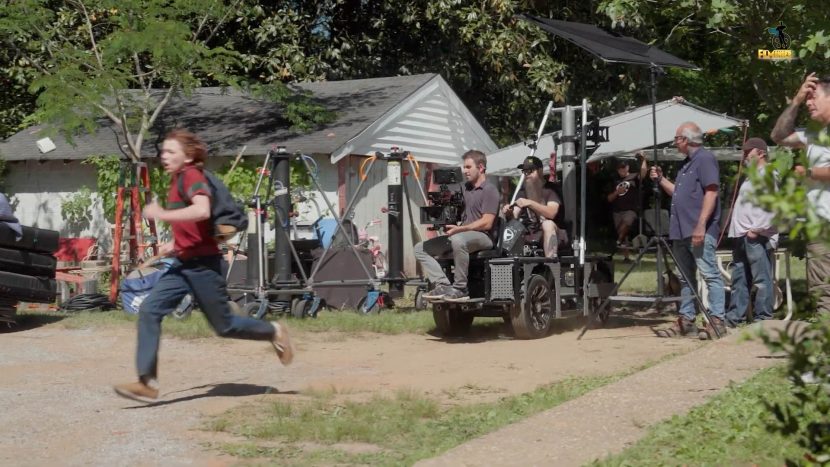
As demonstrated by Mitchell’s film, modern audiences are increasingly sophisticated. The success of a high-concept sci-fi drama no longer relies on hiding the CGI, but on how symbiotically the physical set extensions merge with virtual environments. The debates hosted by Wallin, Diamond, and Seymour emphasize that industry professionals are scrutinizing not just if a shot looks real, but why a particular lens choice or digital grade was chosen to evoke emotional displacement.
2. The Rise of Deep-Dive Analytical Media
The appetite for granular filmmaking breakdowns—as evidenced by the longevity and popularity of outlets like fxguide—proves that modern cinephiles consume media on multiple tiers. Viewers are no longer satisfied with passive consumption; they want to peer behind the curtain, evaluate compositing layers, and debate directorial choices on platforms ranging from Apple Podcasts and Spotify to Letterboxd and Mastodon.
3. Auteur-Driven Sci-Fi in a Franchise Market
Finally, The End of Oak Street proves that original, high-concept speculative fiction can still command major talent (Hathaway and McGregor) and substantial visual effects budgets. However, as the panel’s critique suggests, these artistic swings carry inherent risks. When directors like David Robert Mitchell blend genre tropes with deeply personal or surrealist themes, the margin for error narrows. The visual effects must not only look stunning; they must actively serve the psychological architecture of the characters.
As the debate continues across digital channels—with the podcast team actively inviting listener feedback via their dedicated contact channels—The End of Oak Street remains a vital case study in the triumphs and tribulations of 21st-century filmmaking. Whether the film’s bold choices ultimately worked for every viewer remains open to interpretation, but its impact on the conversation surrounding modern visual effects is undeniable.
