Breaking Boundaries and Bridging Cultures: The Rise of Animator Alissar Kobeissi and the Evolution of Global Animation
By Trevor Hogg
The globalanimation landscape is undergoing a profound metamorphosis. For decades, the medium was frequently pigeonholed as children’s entertainment, tightly bound to predictable traditional or standard 3D studio formulas. Today, however, animation is celebrated as a borderless, versatile medium capable of tackling complex, real-world social issues, mature storytelling, and daring aesthetic hybridizations.
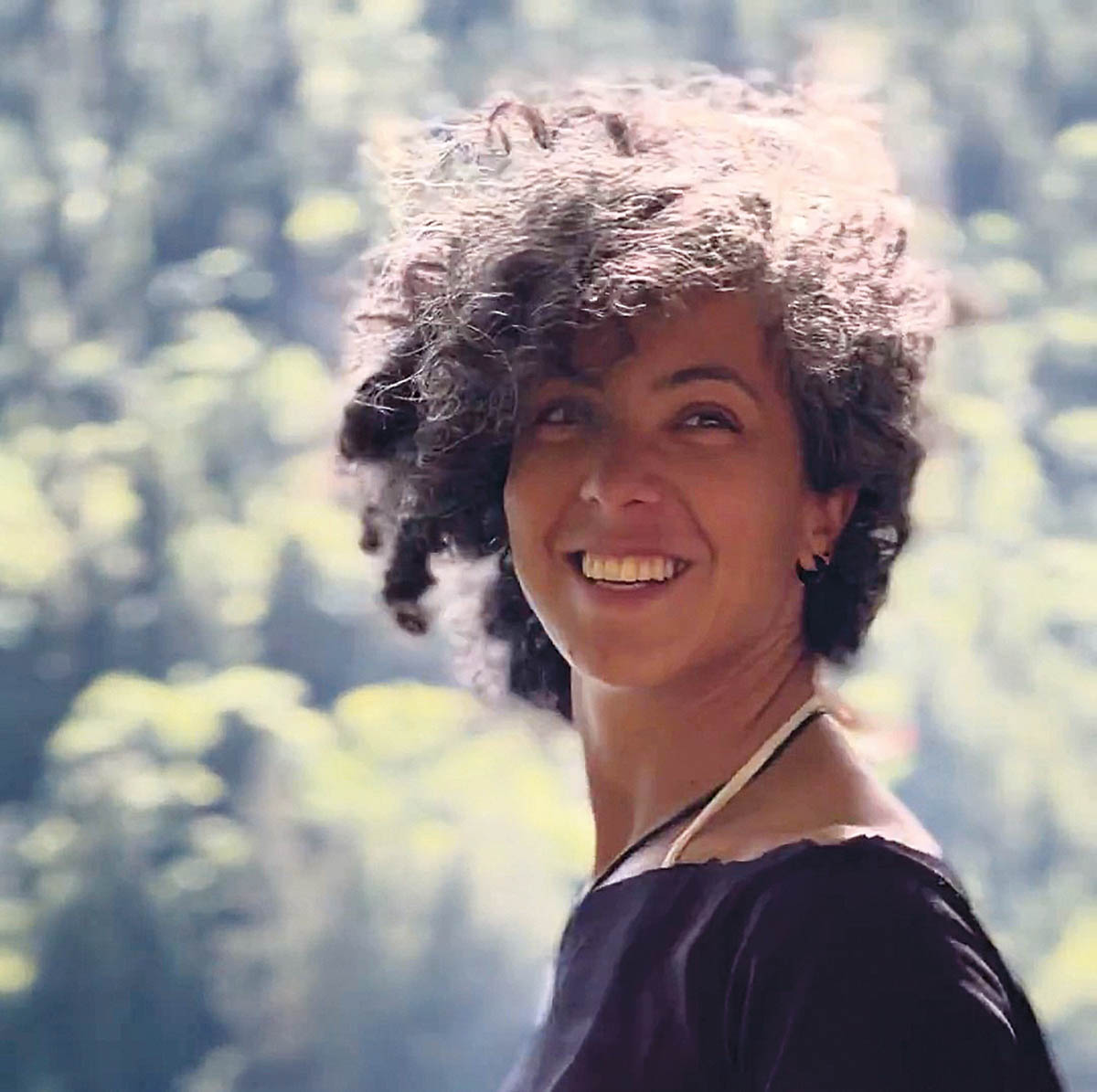
At the vanguard of this artistic revolution is Palestinian-Lebanese multimedia animatorAlissarKobeissi. Currently a Senior Animator at Sony Pictures Imageworks, Kobeissi’s career trajectory spans continents, major animation powerhouses, and technical breakthroughs. Her journey offers a unique lens through which to examine the rapidly shifting paradigms of contemporary animation, the decentralization of the global talent pool, and the ongoing fusion of 2D and 3D visual storytelling.
Main Facts: A Career Forged Across Industry Titans
Alissar Kobeissi has established herself as a vital creative force within modern feature animation. Having contributed to projects produced by top-tier studios including Sony Pictures Imageworks, Illumination, Skydance Animation, and Walt Disney Animation Studios, she sits at the intersection of technical pipeline innovation and performance-driven character animation.
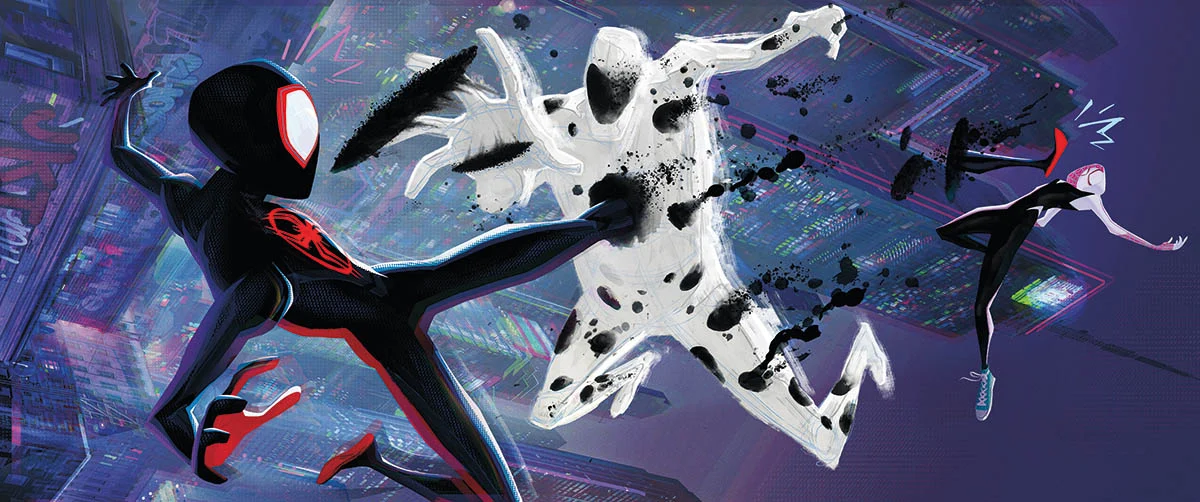
Her notable credits include heavy-hitting feature films and shorts such as Smallfoot, Sing 2, Spider-Man: Across the Spider-Verse, Netflix’s In Your Dreams, and the VR short Reimagined Volume III: Young Thang. Recently, Kobeissi has expanded her impact beyond production, returning to her academic roots as an educator for The Gnomon Workshop to mentor the next generation of global animators and collaborating with regional initiatives like Beirut Animation Nights.
Chronology: From Pan-Arab Television to Hollywood’s Premier Studios
Early Inspirations and Academic Foundations
Kobeissi’s fascination with animation began in her childhood in the United Arab Emirates, where she watched Pokémon, Nobody’s Boy: Remi, and Romeo’s Blue Skies dubbed in Arabic on the Pan-Arab television channel Spacetoon, alongside repeated viewings of Disney and Pixar classics on VHS.
"I remember getting Mulan for my birthday, and I was totally obsessed with it," Kobeissi recalls. "Mulan had everything: culture, real-world issues on gender, humor, and creativity. It was cinematically beautiful. I would like to make a movie like that one day."
This early passion propelled her to the Académie Libanaise des Beaux-Arts in Beirut, where she earned a Bachelor’s degree in Computer Graphics & Interactive Media. Her undergraduate studies exposed her to gouache painting, JavaScript, art history, and typography. A pivotal moment occurred when she witnessed a digital donkey rotate in LightWave 3D—a technical marvel that inspired her to enroll in an online 3D character animation course via AnimSchool.
The Breakthrough and Studio Circuit
Opportunities in the animation sector were scarce in the UAE during Kobeissi’s formative years, prompting her decision to relocate abroad to seek out diverse cultural experiences and studio environments.
Her big industry break arrived when a character shot she had painstakingly polished went viral online. The animation caught the attention of Kevin Webb (then head animator at Sony Pictures Imageworks) and Patrick Delage at Illumination.
2018: Kobeissi joined Sony Pictures Imageworks to work on Smallfoot.
Subsequent Years: She transitioned to Illumination to work on Sing 2, embarking on a career path that would see her collaborate across multiple major Hollywood studios.
A full-circle moment occurred a decade after her initial studies when Kobeissi returned to education as a freelance instructor. For The Gnomon Workshop, she hosted a four-hour masterclass titled Animating Characters for Feature Films, breaking down the mechanics of natural performances, character specificity, and entertainment value.
Supporting Data: Pipeline Innovations and Stylistic Convergence
Adapting Production Pipelines
Working across major studios has given Kobeissi a comprehensive view of how different pipelines operate. While foundational workflows share similarities, studios constantly customize their tools to suit specific narrative demands.
At Sony Pictures Imageworks, for example, the sheer complexity of the visual styles seen in the Spider-Verse franchise necessitated systemic structural changes.
"A new department was created to bridge layout and animation because, in the previous Spider-Verse, we as animators ended up doing a lot of layout in our shots," Kobeissi explains. "This was to take some of that load off and bring layout into animation, but still not have animators do it in production."
The visual vocabulary of modern animation has grown increasingly sophisticated through the blending of two-dimensional and three-dimensional techniques. Kobeissi points to a global cross-pollination of styles:
The comic-book aesthetic birthed Spider-Man: Into the Spider-Verse.
The video game aesthetic inspired series like Arcane.
Anime and modern cinematic styles have heavily influenced projects like KPop Demon Hunters and Forgotten Island, which experiment with hand-drawn 2D styling layered over 3D models.
"I have never thought of anime being directly part of the influence towards those new animation styles," Kobeissi notes. "It definitely has a role to play because animation is connected across the world. You see where things are growing or where people are getting excited… We have yet to uncover its full potential."
Technical Craft: Reference Footage and Effects-Driven Challenges
According to Kobeissi, human imagination alone is rarely sufficient to capture the subtle nuances of real-world movement.
"We are not capable of imagining these nuances and creating them from scratch," she observes. "There’s so much detail in the real world that can inspire us. I am one to learn from real life, stylizing it in animation and using artistic knowledge to pick and choose what you want to keep and how to shape it."
Utilizing digital tools like Wacom tablets, Kobeissi relies on thumbnail sketches and draws directly over animation references to push stylization, lines of action, and expressive shapes.
Technical hurdles intensify when dealing with complex, effects-driven characters. While working on the VR short Reimagined Volume III: Young Thang, Kobeissi animated a character composed entirely of water.
"Every single acting choice came with a different way that water moved, and it all had to match the emotion and energy of the character," she states.
Ensuring that silhouette and pose data translate accurately from animation to the effects department requires rigorous cross-departmental communication—such as factoring in wind dynamics to visually emphasize emotional tension between characters.
Official Perspectives: Shifting Audiences and the De-Monopolization of Animation
Animation as a Medium, Not a Genre
Kobeissi emphasizes that the most exciting aspect of today’s animation landscape is the expansion of demographics. As older audiences increasingly embrace the medium, storytellers are given unprecedented freedom to explore mature themes.
"The understanding of animation is broadening, and people are realizing it’s not a genre but a medium," Kobeissi remarks. "Both of these factors, maturing together, allow for more content and greater diversity in stories. Flee is a great example. There is also The Breadwinner. I love it when animation styles are created to serve the story."
The Decentralization of Global Talent
Historically concentrated in North America, Japan, and Western Europe, the animation industry is experiencing rapid decentralization. Streaming platforms have played a critical role in expanding both storytelling horizons and global distribution networks.
"We are seeing the de-monopolizing of animation. More countries can be players in the animation world," Kobeissi states. "Netflix, for example, invests heavily in diverse stories, and skills across different countries are rising. Especially around the time of Arcane, smaller studios found ways of making beautiful 3D animation that also utilizes the artistic hand-drawn skill."
Kobeissi actively monitors this regional growth, participating in events like Beirut Animation Nights, a festival highlighting short films made by Lebanese artists. She notes that the combination of openness to diverse cultures and a strong regional identity is unlocking immense potential across the Middle East.
Implications: The Road Ahead for Global Storytelling
As the animation industry looks to the future, professionals like Alissar Kobeissi are pushing against traditional creative boundaries. The success of daring, culturally rich projects proves that audiences are hungry for authentic perspectives that do not shy away from real-world issues.
However, Kobeissi identifies ongoing challenges within the corporate studio structure that require intentional reform:
"Something I’m thinking about at this stage of my career is how we can bridge the gap between the artist and the story in these big studios a little bit more. As artists, we somehow get disconnected from the big creative decisions made on a movie as well as the story. Breaking out of the animation role into something more creative feels challenging, but there’s something for everyone to benefit from by making some of these barriers more fluid."
Ultimately, Kobeissi’s journey from watching dubbed cartoons in the Middle East to animating on Hollywood blockbusters illustrates the transformative power of a truly globalized artistic community. By combining rigorous classical techniques with technological innovation and unyielding narrative ambition, animators are redefining what the medium can achieve—proving that when culture and creativity intersect, the possibilities are boundless.