
Beyond Mythology: How ‘All Wishes Come True!’ Redefined Chinese Animation
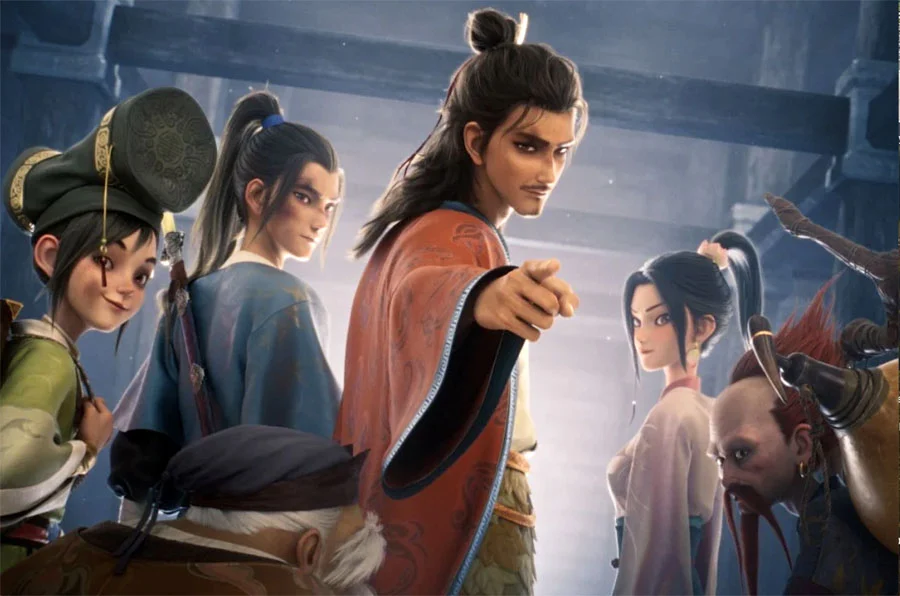
In the rapidly evolving landscape of global cinema, few projects have managed to bridge the gap between ancient folklore and modern blockbuster sensibilities as effectively as All Wishes Come True!. Written and directed by Mu Zhengyang, the animated feature has become a cultural phenomenon in mainland China, shattering box office records with a staggering 1.5 billion yuan (approximately US$222 million) in revenue since its debut on July 18, 2026. As the film expands its reach into international markets, including a strategic US rollout that began in August, industry analysts are pointing to the project as a definitive turning point for the Chinese animation industry.
A Mythic Foundation with a Modern Edge
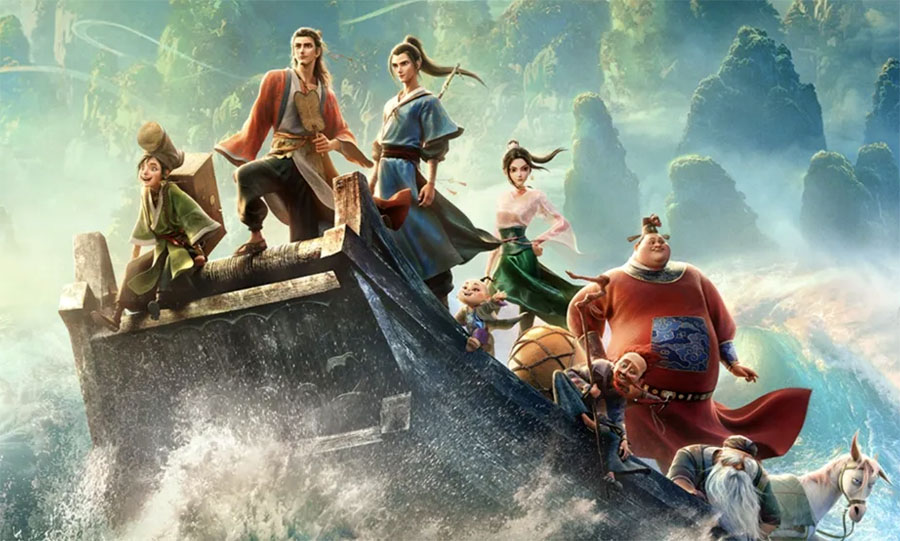
At its core, All Wishes Come True! draws from the deep well of Chinese history, specifically the legend of the Eight Taoist Immortals. While these figures—each wielding a distinct magical implement—have been staples of literature, mural art, and martial arts practice since the Ming Dynasty (1368–1644), Zhengyang’s interpretation offers a radical departure from traditional depictions.
By reimagining these legendary figures as flawed, human crooks, the film creates a dynamic narrative structure that feels surprisingly contemporary. Director Zhengyang describes the creative process as an attempt to "humanize the divine," likening the character archetypes to the ragtag, anti-hero ensembles found in Western animation, such as DreamWorks’ The Bad Guys. This creative choice, however, is not merely for comedic effect; it is a calculated effort to make centuries-old mythology accessible to a generation raised on high-octane, character-driven storytelling.
Chronology of a Cultural Phenomenon
The journey of All Wishes Come True! from a concept to a record-breaking theatrical event reflects the growing maturity of the Chinese production ecosystem.
- Development Phase: Director Mu Zhengyang began the project by stripping away the rigid, deified layers of the Eight Immortals. Recognizing that the legends had survived for centuries precisely because they were constantly evolving, he focused on "inclusivity"—adding ordinary, relatable human traits to these larger-than-life figures.
- Production: Executive Producer Catherine Yin, CEO of Pearl Studio (the powerhouse behind Kung Fu Panda 3 and Abominable), greenlit the project based on the strength of the initial script treatment. The production utilized a highly industrialized, three-dimensional CG pipeline, moving away from the traditional 2D workflows that have become increasingly rare in the region.
- The July 2026 Release: The film premiered in mainland China on July 18, 2026, and immediately dominated the box office. Its success was marked not just by its financial intake, but by its sustained performance, signaling high repeat viewership and strong word-of-mouth.
- International Expansion: Following its domestic success, the film secured a US distribution deal, hitting North American theaters in August 2026. This move represents a broader trend of high-budget Chinese animation seeking a global footprint.
The 140-Minute Mandate: Defying Industry Standards
Perhaps the most striking aspect of All Wishes Come True! is its duration. At over 140 minutes, it defies the conventional wisdom of Western animation, which typically adheres to a 90-minute runtime to maximize daily screenings.
During an interview in Century City, both Zhengyang and Yin addressed the shifting expectations of Chinese audiences. According to Yin, the distinction between "animated" and "live-action" is rapidly dissolving in the minds of moviegoers. "In China, audiences and the market have been treating animated movies more like live-action movies," Yin explained. "There is no real criteria that an animated film must fit a specific time."
This shift is largely attributed to the changing consumption habits of modern audiences, who are accustomed to long-form, immersive digital content. Yin argues that in the era of short-form mobile media, viewers feel "unsatisfied" with truncated, 90-minute narratives. By providing a two-and-a-half-hour experience, All Wishes Come True! offers a sense of value that resonates with modern ticket buyers, proving that if the story is compelling, the runtime becomes a secondary consideration.
Character Dynamics: Balancing the Rogue and the Sage
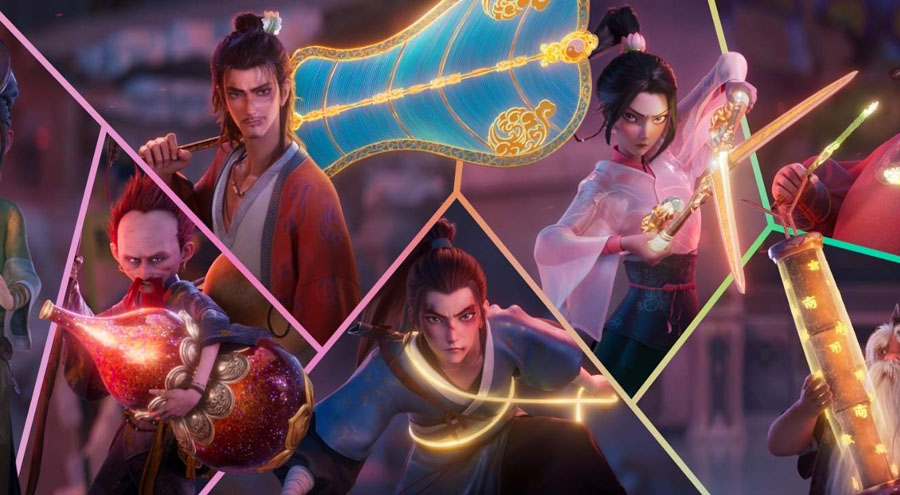
The film’s emotional weight rests on the interplay between its two leads: the roguish Zhongli Quan and the stoic, noble Lu Dong-bin. In traditional lore, the relationship between these two is one of master and disciple, but in Zhengyang’s film, the dynamic is modernized to create a psychological balance.
"Zhongli Quan carries the comedic elements for the first part of the movie, acting as the ‘thug’ of the group," Zhengyang noted. "Lu Dong-bin, conversely, can seem cold or dull if portrayed too purely. By putting them together, they make each other more complete."
This push-pull dynamic serves as the engine for the film’s narrative. The director insisted that even the high-flying, magical action sequences be grounded in the physicality of "ordinary people." By utilizing traditional Kung Fu motions, the animation team achieved a sense of weight and elegance that sets the film apart from the hyper-kinetic, weightless combat often found in Western superhero films.
Industrial Implications: The Future of 2D and 3D
The production of All Wishes Come True! highlights a significant shift in the technical capabilities of the Chinese animation industry. While the film is a masterclass in 3D computer graphics, the director’s insistence on a brief, one-minute 2D sequence at the beginning of the film serves as a poignant nod to the medium’s history.
"In China, there are not a lot of people who are still working on 2D films," Zhengyang admitted. The scarcity of 2D talent, combined with the industry’s shift toward industrial-scale 3D production, has created a unique dilemma. Catherine Yin noted that for a studio executive, finding high-quality 2D artists is becoming increasingly difficult, sometimes necessitating collaborations with international talent from countries like Japan, where the 2D tradition remains more robust.
However, the team’s willingness to push the boundaries of 3D to match the fluidity and beauty of 2D—especially in their choreography and camera movements—suggests a new synthesis. The goal, according to the director, was never to imitate 2D, but to leverage the "mature, industrialized" nature of 3D to tell a story that feels as rich and human as the legends that inspired it.
Conclusion: A New Benchmark for Global Animation
All Wishes Come True! is more than just a box-office hit; it is a declaration of intent. By rejecting the arbitrary time constraints of the genre and grounding ancient myths in the gritty, complex reality of human imperfection, Mu Zhengyang and Pearl Studio have set a new benchmark.
As the film continues to find its audience globally, it poses a challenge to the international animation community: Are audiences ready for longer, more complex, and mythologically rooted stories? If the success of this film is any indication, the answer is a resounding "yes." The success of All Wishes Come True! suggests that the future of animation lies not in adhering to rigid, international templates, but in the fearless, modern interpretation of local cultural heritage. Whether through its innovative approach to character archetypes or its refusal to compromise on runtime, the film has firmly established itself as a landmark achievement in modern cinematic history.
