
The Mirror and the Fraud: Decoding Amanda Seyfried’s Meta-Performance in ‘You Can See Everything’
Warning: This article contains major spoilers for the documentary You Can See Everything. If you have not yet experienced the film, turn back now.
In the landscape of modern documentary filmmaking, few projects have managed to shatter the fourth wall with the visceral, disorienting intensity of Nathan Fielder and Lance Oppenheim’s You Can See Everything. Released under the A24 banner, the film—which chronicles the life and legal downfall of Elizabeth Holmes, the disgraced founder of the blood-testing startup Theranos—initially presents itself as a standard investigative deep dive. However, it quickly devolves into a labyrinthine meta-commentary on truth, celebrity, and the ethics of representation.
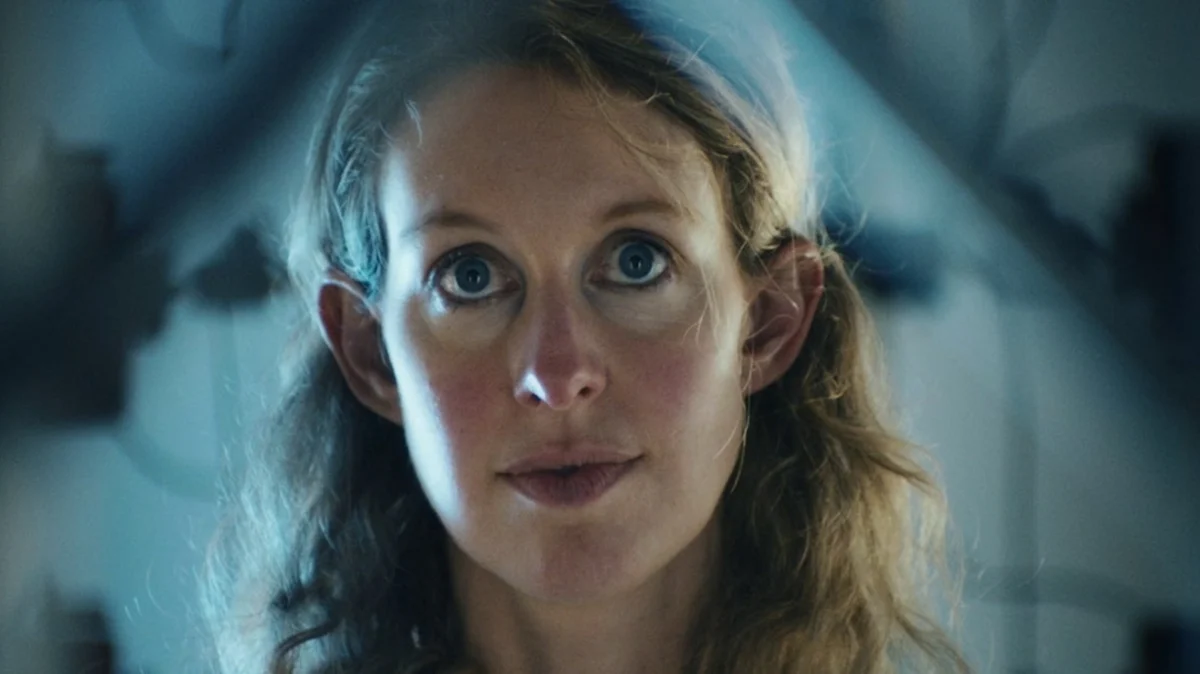
The most jarring element of this descent is the late-stage arrival of Amanda Seyfried, who famously portrayed Holmes in the acclaimed Hulu limited series The Dropout. Her presence is not merely a cameo; it is a structural earthquake that redefines the audience’s understanding of the entire project.
The Chronology of a Surreal Collaboration
To understand the impact of Seyfried’s involvement, one must first map the documentary’s unconventional timeline. You Can See Everything begins with the standard beats of the Holmes saga: the meteoric rise of Theranos, the subsequent exposure of its fraudulent blood-testing technology, and the inevitable legal collapse that saw Holmes sentenced to 11 years in federal prison.
As the film tracks Holmes’ final days of freedom before her surrender on May 30, 2023, the narrative structure begins to fray. Halfway through the runtime, after the real-life Holmes has begun her incarceration in a Texas federal facility, the film takes an impossible turn. Amanda Seyfried, the actress who won an Emmy for embodying the persona of the Theranos founder, enters the frame.
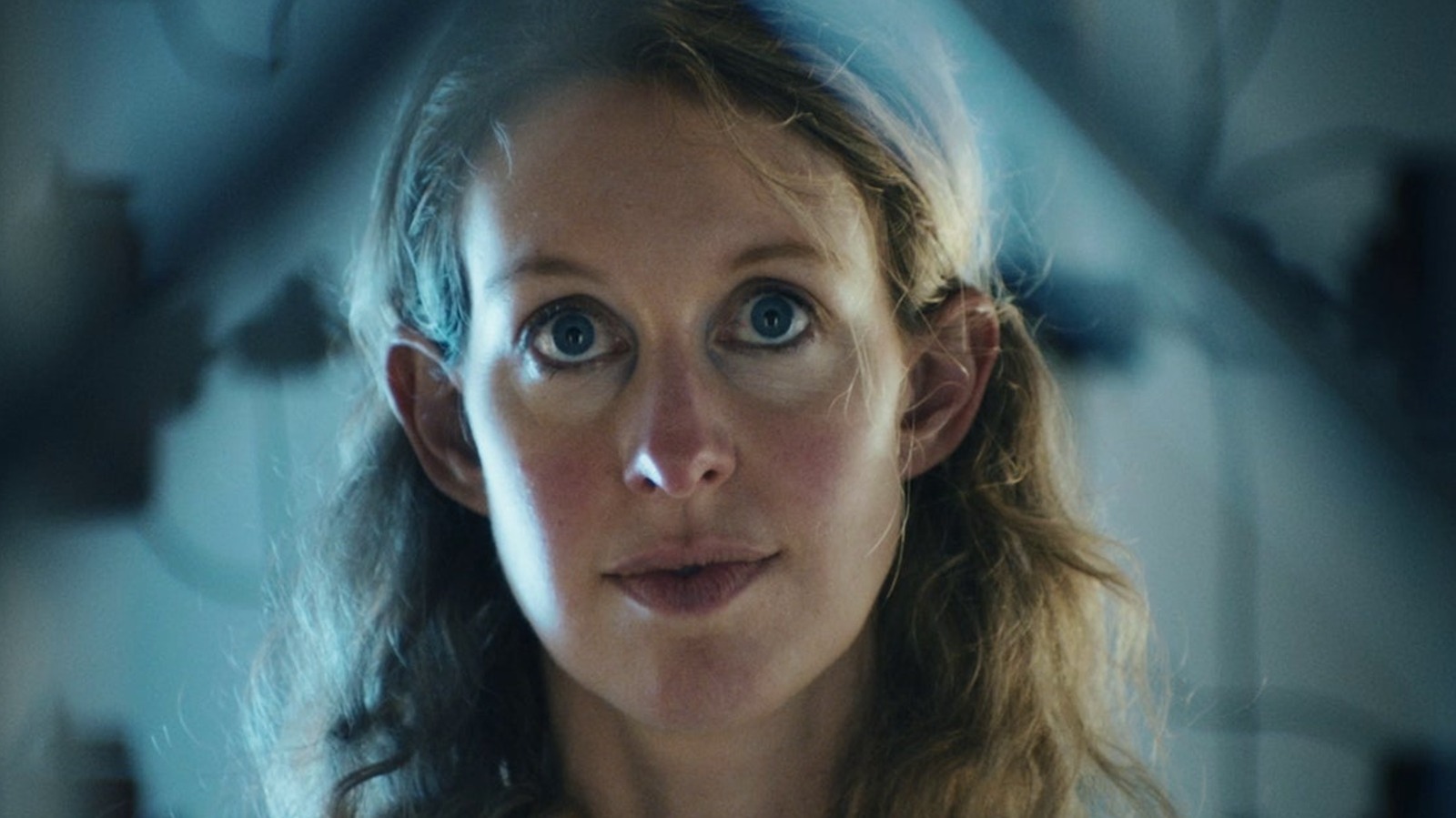
The transition is seamless yet jarring. Seyfried begins by reviewing raw footage with Nathan Fielder, who serves as an active, sometimes intrusive participant in the documentary’s production. From there, the film shifts into a series of highly stylized reenactments. These segments are designed to illustrate private moments between Holmes and her partner, Billy Evans—moments that occurred before legal waivers were signed or cameras were permitted to roll. By stepping back into the turtleneck, Seyfried creates a bridge between the dramatized world of The Dropout and the cold, unvarnished reality of the documentary.
A Cast of Mirrors: The Role of Christopher Abbott
The complexity of these reenactments is amplified by the presence of actor Christopher Abbott, known for his work in The Testament of Ann Lee. In You Can See Everything, Abbott portrays Billy Evans, the figure often cited as the architect of the toxic dynamic surrounding the latter stages of Holmes’ public life.
The inclusion of Abbott serves a dual purpose. It provides a foil to Seyfried’s Holmes, creating a dynamic of "re-enacted intimacy" that feels both voyeuristic and deeply clinical. In one of the film’s most tense sequences, Abbott’s version of Evans attempts to extort Fielder, Oppenheim, and the A24 executives, demanding a cut of the film’s potential box office revenue. This moment forces the viewer to confront the ethical integrity of the documentary itself: is the film documenting reality, or is it being manipulated by the very subjects it claims to expose?
Implications: The Erosion of Truth
The brilliance—and the terror—of You Can See Everything lies in its refusal to offer the audience a moral anchor. By the final act, the lines between the "real" Elizabeth Holmes, the "fictionalized" Holmes of The Dropout, and the "reenacted" Holmes of this documentary have blurred into a single, inscrutable entity.
The Conflict of Reputational Damage
A recurring theme throughout the latter half of the film is the resentment felt by both Holmes and Evans toward Seyfried’s performance in The Dropout. They argue that the series cemented a version of Holmes in the public consciousness that is unfairly villainous.
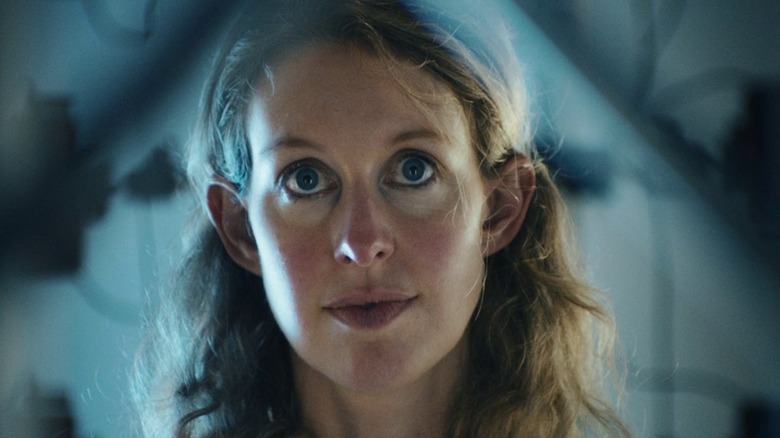
In a particularly uncomfortable scene, Fielder sits with Holmes and Evans as they watch excerpts of the Hulu series. Holmes’ visible distress—culminating in an emotional breakdown—serves as a catalyst for a broader debate: Does an actor’s portrayal of a real-life figure constitute an act of violence against their reputation? Seyfried, forced to confront the subjects of her past work, appears visibly conflicted, moving the film into a meta-narrative space where the actor becomes a character in the story of the subject they once portrayed.
The Delusion vs. Manipulation Paradox
Fielder’s interrogation of Holmes centers on a fundamental question: Is she a woman suffering from a profound, pathological delusion, or is she the most sophisticated manipulator of the 21st century?
Throughout the film, Holmes maintains that her Theranos device worked, a claim that contradicts years of empirical evidence and federal court findings. At times, she appears genuinely confused by the hostility of the world, suggesting a level of self-deception that borders on the clinical. Yet, in other moments—specifically when Seyfried notices that Fielder has altered a script to make Holmes appear more sympathetic—the mask seems to slip. The tension between the "innocent victim" narrative she projects and the cold reality of her actions creates an atmosphere of constant, suffocating uncertainty.
Supporting Data and Ethical Boundaries
The production of You Can See Everything pushes the boundaries of journalistic ethics in ways that have already sparked industry debate. By having the subjects (or their surrogates) participate in the shaping of the narrative, the filmmakers are engaging in a dangerous game.
- The Extortion Element: The demand for compensation by the "Evans" character (portrayed by Abbott) serves as a stark reminder that even within the confines of a documentary, the power dynamic is constantly shifting.
- The Script Manipulation: Seyfried’s observation regarding the changing of a single word in the script highlights the subjectivity of the entire endeavor. If the filmmaker is willing to edit the reality of a conversation to favor a specific narrative, can the audience trust anything they are seeing?
- The "Never Lied" Claim: When Holmes tells Fielder that she has "never lied once in her life," Fielder’s breaking of his stoic demeanor to exclaim, "Liz, what?!" serves as the film’s emotional climax. It is the moment where the documentary’s attempt at objective neutrality finally collapses.
Official Perspectives and Critical Reception
While A24 has kept most production details under wraps to preserve the "brain-breaking" experience of the film, industry insiders suggest that Seyfried’s involvement was a collaborative, almost improvisational process. Her willingness to subject herself to the scrutiny of the very person she portrayed is being hailed as one of the most daring career moves in recent memory.

Critics have noted that the film does not provide a definitive answer regarding Holmes’ culpability. Instead, it provides a mirror. By the time the credits roll, the audience is left with the uncomfortable realization that the "truth" about Elizabeth Holmes is inaccessible, perhaps even to herself.
Conclusion: A Masterclass in Meta-Documentary
You Can See Everything is more than a documentary about a fallen tech mogul; it is a profound exploration of how we construct narratives around people we have decided are "monsters." By inviting Amanda Seyfried into the frame, Nathan Fielder and Lance Oppenheim have created a piece of art that challenges the viewer to question the validity of their own perception.
Is the film a triumph of investigative journalism, or is it a descent into the same level of manipulation that characterized the rise of Theranos? The film provides no easy answers. As Seyfried and Fielder grapple with the impossibility of pinning down the "real" Elizabeth Holmes, the audience is left with a final, lingering question: In a world of carefully curated images and scripted performances, how much of what we see is actually there?
You Can See Everything is currently in theaters. It is a haunting, brilliant, and deeply unsettling experiment that demands to be seen—and then immediately discussed. Whether you view it as a journalistic achievement or a psychological puzzle, one thing is certain: you will leave the theater with more questions than you arrived with, and your brain will likely take a few days to recover.
