
A Hollow Thriller: Why ‘Verity’ (2026) Fails to Capture the Suspense of Its Source Material
Introduction: A Cinematic Misstep
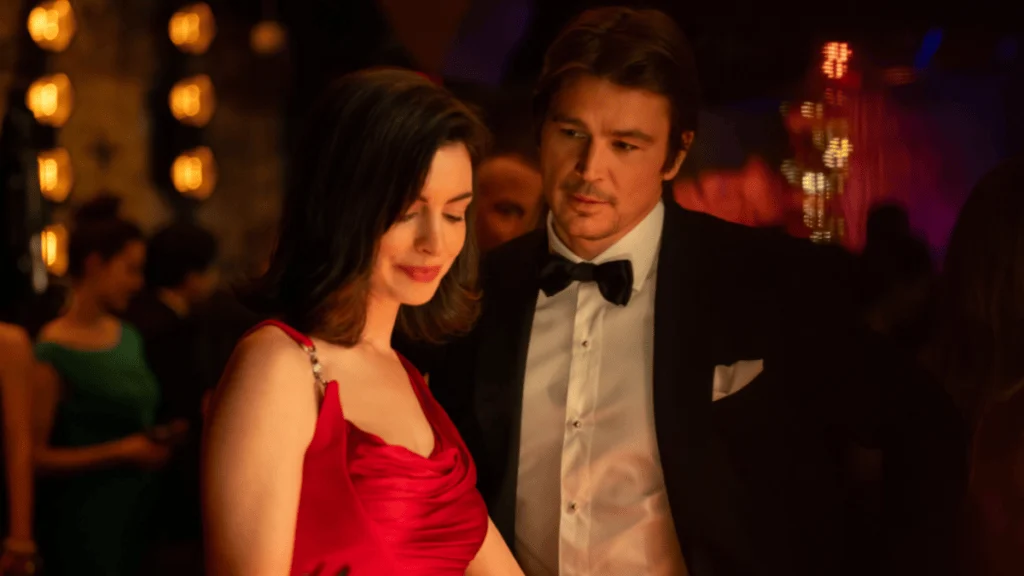
In the landscape of 2026’s cinematic offerings, director Michael Showalter’s Verity arrives with significant anticipation, backed by a high-profile cast and a premise rooted in the viral success of Colleen Hoover’s literary work. However, despite its polished technical veneer and A-list talent, the film ultimately functions as a cautionary tale of how an adaptation can lose its narrative pulse. Verity is a stark example of a "flat" thriller—a project that, despite its attempts to weave a web of psychological dread, fails to coalesce into a compelling dramatic experience.
While the film manages to maintain a baseline of visual competence, it lacks the essential ingredients required to elevate it from a mundane B-movie aesthetic to a high-stakes psychological drama. With a lukewarm critical reception and a narrative that leans heavily into the implausible, Verity struggles to find its footing, ultimately resulting in a 5/10 rating that reflects a missed opportunity for all involved.
The Production Landscape
Directed by Michael Showalter, Verity features a screenplay penned by Nick Antosca and Colleen Hoover. The production boasts an ensemble cast led by Dakota Johnson, Anne Hathaway, and Josh Hartnett, supported by Brady Wagner, Ismael Cruz Córdova, Irina Dvorovenko, and a wide array of character actors including Sienna Kulovitz, K.K. Moggie, and Tom Galantich.
From a technical standpoint, the film is undeniably handsome. The cinematography and production design suggest a high-budget endeavor, yet the script fails to provide the necessary depth to match the aesthetic polish. The film serves as a notable departure for Showalter, whose previous work has often found strength in character-driven narratives rather than the rigid, formulaic constraints of the thriller genre.
Chronology of the Narrative: A Descent into Implausibility
The film’s narrative arc begins with Lowen Ashleigh (Dakota Johnson), a struggling novelist living in the city. The audience is introduced to her during a dismal book signing, establishing her as an artist on the brink of professional failure. This initial setup is standard, but the film quickly descends into a series of plot developments that defy logical consistency.
The Inciting Incident
Lowen is offered a life-changing opportunity: to ghostwrite the remaining books for the famously successful, yet now "disabled," novelist Verity Crawford (Anne Hathaway). The initial rejection of the offer by Lowen is short-lived; a suggestion from her agent to leverage the demand for more money turns the "gig of a lifetime" into a financial inevitability.
The Meeting of Characters
The film’s commitment to narrative convenience continues when Lowen, after being splattered with blood following a street accident involving a cyclist, is assisted by a mysterious, helpful stranger. In a development that feels less like a narrative surprise and more like a screenwriting shortcut, the stranger is revealed to be Jeremy (Josh Hartnett), Verity’s husband.
Following this encounter, the film moves into its primary setting: the expansive, isolated Crawford residence. Lowen is tasked with living in the home to complete the manuscript, a setup that ostensibly aims to build tension but instead feels like a recycled trope of the Gothic thriller genre.
Supporting Data and Performance Analysis
The performances within Verity are a study in contrasts, though none are sufficient to save the film from its script-level shortcomings.
The Lead Performances
Dakota Johnson, who has previously demonstrated significant range in projects like The Peanut Butter Falcon and Cha Cha Real Smooth, delivers one of her most uninspired performances to date. Her portrayal of Lowen lacks the nuance required to ground the film’s increasingly bizarre plot twists.
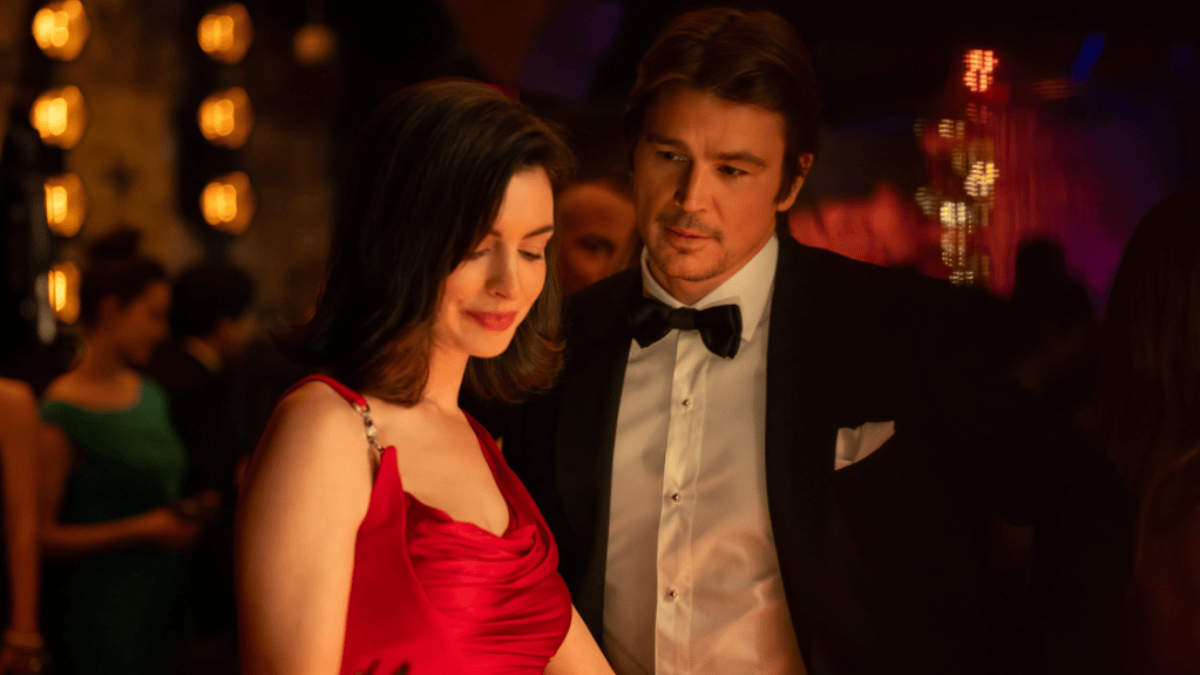
Anne Hathaway, cast as the enigmatic, wheelchair-bound Verity, attempts to inject the film with a sense of wicked humor. During flashback sequences, Hathaway is clearly having fun, portraying the character with a charisma that is entirely absent in the "present-day" timeline where she is effectively reduced to a mute, background presence. Her performance in these moments is a rare highlight, yet it cannot compensate for the static nature of her character for the majority of the runtime.
Josh Hartnett faces an uphill battle as Jeremy. From his introduction, his character is positioned in a way that feels inherently unlikable and transparent. The film attempts to cast him as a romantic lead or an enigmatic protector, but his presence on-screen fails to elicit the ambiguity required to keep the audience guessing about his true intentions.
The "Crew" and the Tone
A particularly jarring element of the film is the handling of the Crawford child, Crew (Brady Wagner). Scenes involving physical harm—such as the incident where the child cuts his tongue—are executed with a lack of narrative weight. Furthermore, the subplot involving the neglect of the children is handled in a manner that feels gratuitous and in poor taste, undermining any potential for the audience to connect with the stakes of the story.
Official Responses and Industry Context
While there has been no official "damage control" from the studio, the reception of Verity highlights a growing trend of "studio bombs" that rely on the popularity of a source material rather than the quality of the adaptation. The film serves as a reminder that a well-known title is not a substitute for a coherent, well-paced script.
Critics have noted that the film’s reliance on "obligatory" scenes—such as the standard nude bathtub sequence—feels disconnected from the actual plot. These scenes serve as filler, signaling to the audience that the filmmakers were more concerned with checking off genre boxes than with developing a cohesive, suspenseful narrative.
Implications for the Genre
The failure of Verity raises questions about the future of the thriller genre in major studio productions.
- The Trap of Predictability: The film leans into plot twists that feel inadequately addressed by the time the credits roll. By the end, the viewer is left with a sense of frustration rather than surprise, as the film refuses to provide a satisfying resolution to the questions it poses regarding Verity’s condition or Jeremy’s past.
- Director-Genre Mismatch: Michael Showalter’s struggle to translate the source material into an effective thriller highlights the importance of the director-genre synergy. While Showalter is a capable filmmaker, his lack of experience in building sustained dread is apparent throughout the film.
- The Importance of Pacing: A thriller requires a delicate balance of pacing, where each scene builds upon the last. Verity oscillates between long, stagnant stretches in the house and abrupt, forced plot points, leading to a viewing experience that feels simultaneously rushed and interminable.
Conclusion: A Missed Opportunity
Verity is not the worst film of the year—it maintains a high level of technical proficiency and features actors who are clearly capable of better work. However, it is a profoundly mundane experience. It lacks the "heart" necessary to make the audience care about the outcome, and it lacks the structural integrity to make the twists feel earned.
For fans of the source material, the film may serve as a curiosity, but for the average moviegoer, Verity is a lesson in how to take a gripping, high-concept premise and strip it of its vitality. As it stands, the film earns a 5/10, serving as a reminder that a thriller, above all else, must actually thrill. The film is a handsome, empty vessel—a testament to the fact that, in Hollywood, even the most promising ingredients can fall flat when the recipe is fundamentally flawed.
