
Main Facts: The Improbable Ascent of an Epic Amateur Screenplay
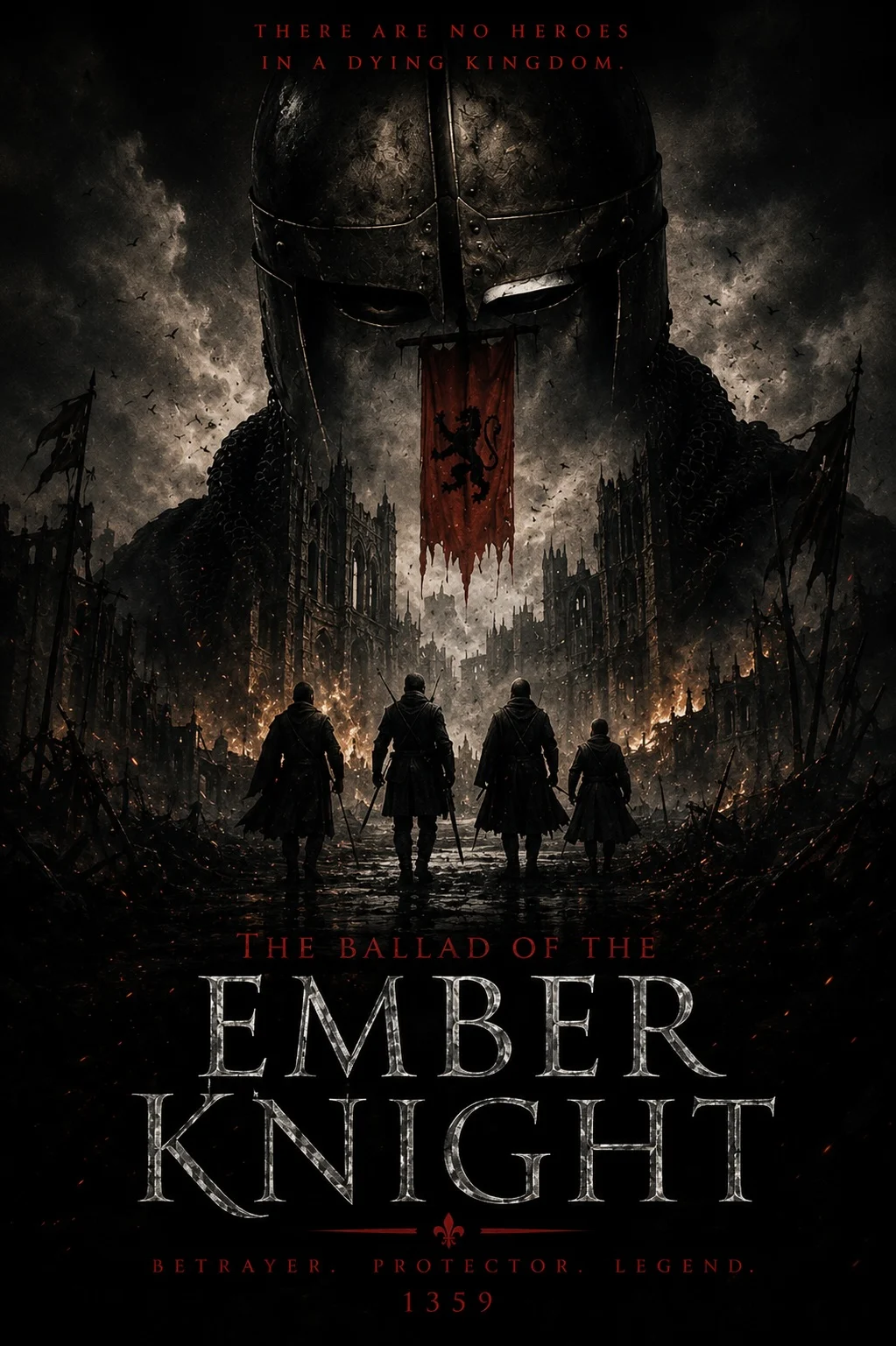
In an industry famously dominated by algorithmic risk-aversion, recognized Intellectual Property (IP), and rigid formatting conventions, a massive outlier has broken through the gates. Written by sibling duo Kieran and Brennan O’Dea, an epic 186-page period adventure script titled The Ballad of the Ember Knight has successfully defied standard Hollywood physics.
Traditionally, the unwritten laws of screenwriting dictate that a feature-length script should hover tightly around 110 pages. When an amateur writer submits a project approaching the 200-page mark, industry readers usually reject it outright—not merely due to the sheer time commitment, but because excessive length is frequently viewed as a symptom of undisciplined storytelling. Yet, The Ballad of the Ember Knight has achieved the seemingly impossible, crashing past the slush pile and earning a coveted spot in the elite "Top 25 Screenplay" roster.
Set against the harrowing, disease-ridden backdrop of 14th-century France during the Hundred Years’ War, the narrative follows a disgraced legendary knight on the run who accidentally alters the geopolitical fate of a fracturing nation. The script’s unexpected triumph offers a masterclass in modern screenwriting, proving that foundational narrative execution, high-stakes conflict, and compelling character design can override even the most formidable structural biases.
Chronology of the Project: From the Slush Pile to the Critical Spotlight
The journey of The Ballad of the Ember Knight from a quiet draft to a celebrated critical darling highlights the arduous, unpredictable nature of independent screenwriting:
- The Initial Struggle: Kieran and Brennan O’Dea spent months attempting to pitch their oversized, 186-page period epic through traditional, unrepresented channels. Predictably, they encountered a wall of silence from attention-deficit Hollywood executives unwilling to gamble on an unproduced writer’s marathon manuscript.
- The "Hail Mary" Consultation: Facing total stagnation, the O’Dea brothers submitted the script for a professional critique, utilizing a per-page paid review model specifically designed to handle oversized manuscripts.
- The Reviewer’s Turnaround: Reviewers bracing for an exhausting, convoluted medieval history lesson were instead met with immediate narrative propulsion. Rather than collapsing under its own weight, the script maintained relentless momentum through expertly woven dramatic tension.
- The Critical Endorsement: Following a rigorous editorial read, the review restrictions were lifted, and the script was publicly canonized among the top tier of unproduced screenplays, sparking immediate industry chatter regarding its adaptation potential for prestige streaming platforms.
Supporting Data and Structural Anatomy
To understand why The Ballad of the Ember Knight succeeds where countless other bloated period pieces fail, one must examine its mechanics. The story operates on a sprawling canvas that mirrors classic 1980s and 90s foundational adventure arcs, deliberately invoking the spatial momentum found in foundational odysseys like Star Wars and The Lord of the Rings.
The Setup and the Catalyst
The year is 1359. France is a lawless wasteland ravaged by invading English forces, opportunistic warlords, and systemic corruption. The protagonist, initially introduced merely as "The Prisoner," is an embittered, ragged vagrant desperately trying to slip unnoticed across the border.
The inciting incident occurs at a roadside inn where The Prisoner overhears a brutal royal, Sir Jean Devar, casually informing the innkeeper’s daughter, Marie, of his intention to assault her that evening, promising financial compensation to her employer as recompense. When the crime occurs, The Prisoner experiences a moral breaking point: he intervenes, brutally beating Devar to death.
Complications and Disguise
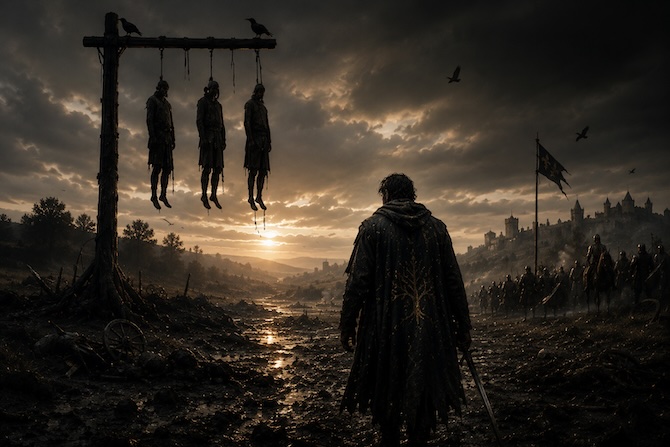
Fleeing the scene requires a desperate tactical pivot. The Prisoner steals the dead royal’s uniform to bypass military checkpoints, only to discover a massive narrative twist: he is actually Roland Chandos, the legendary "Ember Knight" and the king’s most trusted confidant. Roland is rumored to have orchestrated the massacre of the royal family, leaving the nation leaderless and ripe for English conquest.
Simultaneously, a young monk traveling the countryside is revealed to be the surviving Prince Charles, protected by an older loyalist named Bernard. When assassins hunt the prince down, Roland single-handedly annihilates them. Bernard hires Roland to escort the young royal to Avignon to claim the throne, setting up an ironclad road-trip structure where the protector is secretly the very man accused of regicide.
Official Responses and Industry Implications
While major Hollywood studios remain hesitant to gamble theatrical real estate on unproven historical epics of this length, industry analysts suggest the project finds its natural home within the streaming ecosystem—specifically with platforms like Netflix. Because streaming algorithms and business models are not beholden to the rigid showtimes of traditional box-office exhibition, they can readily accommodate longer runtimes for original, high-concept storytelling.
Furthermore, script analysis experts have highlighted several key takeaways from the O’Dea brothers’ success:
- Weaponizing Character Choice: True heroism in screenwriting must come at a tangible cost. By having Roland risk his entire escape plan—and potentially his life—to save Marie, the writers force the reader to fall "ride or die" for the protagonist early on. Every subsequent action carries heavy narrative weight.
- The Double-Edged Sword of Plot Devices: Giving a protagonist a disguise (such as royal garments) is a standard writing trope. However, the O’Deas elevate the device by turning it into a liability; because Roland is disguised as one of the most hated, vile men in France, his clever disguise continuously lands him in violent confrontations.
- Milking the Dramatic Moment: Countering the conventional screenwriting advice to rush through scenes as quickly as possible, the script demonstrates the power of lingering on high-tension sequences. By letting the buildup to the inn rescue breathe, the writers maximize emotional texture and audience investment.
Implications for the Future of Speculative Screenwriting
The meteoric rise of The Ballad of the Ember Knight serves as an encouraging counter-narrative for writers operating outside the mainstream studio system. In an era where cinema has largely abandoned the sweeping, geographically vast, character-driven adventure format in favor of stationary franchise installments and IP-driven sequels, this script fills a glaring vacuum.
It proves that adult audiences hungry for gritty, high-stakes storytelling do not require familiar historical shorthand to remain engaged. If the project successfully makes the leap from page to screen, it could signal a broader tolerance among producers for sprawling, risk-taking narratives that prioritize narrative craftsmanship over arbitrary page-count limits. For now, Kieran and Brennan O’Dea have accomplished what few writers ever manage: they have taken a 186-page gamble and forced the industry to pay attention.
