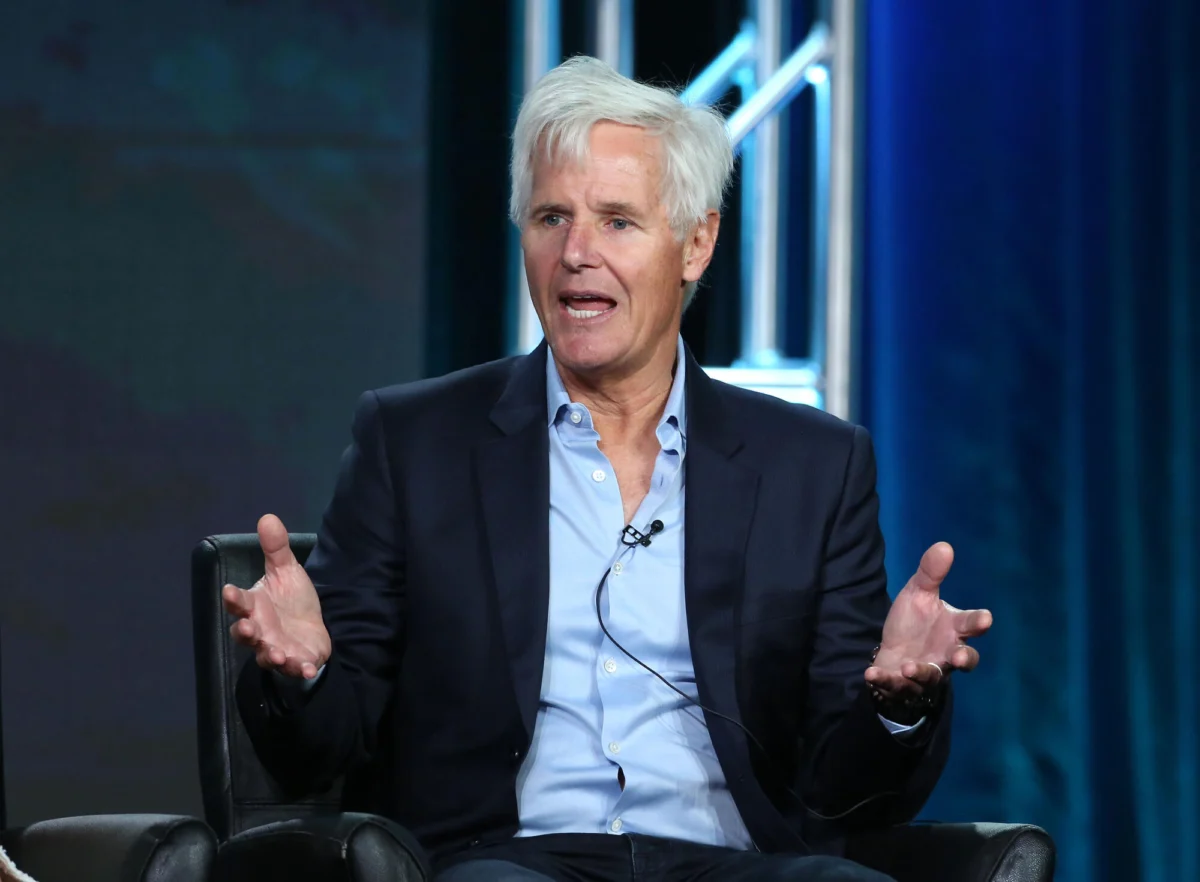
Chris Carter Steps Beyond The X-Files with Queens for a Day, a Politically Charged Horror Fable
For over three decades, the name ChrisCarter has been synonymous with paranormal investigations, government conspiracies, and iconic sci-fi television. As the creative mastermind behind The X-Files, Carter terrorized and enthralled generations of viewers with monsters-of-the-week and the overarching mythology of extraterrestrial cover-ups. Now, for the first time in his celebrated feature filmmaking career, Carter is releasing a project that does not carry The X-Files moniker.
Titled Queens for a Day, Carter’s new independently financed feature shifts away from FBI agents Mulder and Scully, diving instead into a bizarre, politically urgent "horrorfable." Following a recent screening and Q&A session at the Laemmle Royal Theatre in Los Angeles—moderated by The X-Files cast member Annabeth Gish—Carter opened up about the decades-long journey of bringing the film to life, its heavy political undertones, and how the classic sensibilities of his television roots still bleed into this new venture.
Main Facts: A Garage Find Reimagined for the Modern Political Moment
At its core, Queens for a Day is a surreal, time-bending nightmare inspired loosely by Charles Dickens’ classic holiday ghost story, A Christmas Carol. The narrative centers on Judge Jerri, a right-wing television newscaster whose mannerisms and career path bear an undeniable resemblance to Fox News host-turned-Trump ally Jeanine Pirro.
Following a freak accident in which she hits her head, Judge Jerri is thrust backward in time to the 1950s. There, she is forced to inhabit the life and physical body of her own mother in Queens, New York—culminating in the surreal paradox of having to "give birth to herself."
Despite its high-concept sci-fi and horror elements, the project has deep personal roots for the director. The screenplay was actually written 30 years ago by Carter’s wife, Dori Carter. Long buried and forgotten, the script was recently rediscovered by the filmmaker while he was cleaning out their garage. Recognizing the timelessness of the narrative, Dori adapted the screenplay to fit the current political climate—specifically targeting Donald Trump’s second administration—while keeping the foundational plot intact.
Chronology: From a 1990s Spec Script to a 32-Day Canadian Shoot
The timeline of Queens for a Day spans three decades of creative evolution, culminating in a fast-paced, independent production run:
30 Years Ago: Dori Carter writes the original spec script, drawing inspiration from Charles Dickens while exploring surreal familial dynamics. The script sits dormant for decades.
Recent Years: While cleaning out his garage, Chris Carter rediscovers the manuscript. Recognizing its enduring relevance, Dori updates the text to mirror contemporary political anxieties.
Spring 2024–2026: The project moves into active development and editing. Because the film incorporates live archival clips of Donald Trump, the editing room becomes a moving target. Carter notes that as Trump continued to make headlines throughout the editing process, new material had to be continuously integrated, pending rigorous legal and approval processes.
Principal Photography: The independently financed feature is shot over a grueling 32-day production window in British Columbia, utilizing an almost entirely Canadian cast and crew.
Post-Production & Festival Circuit: Following completion, the film enters the festival circuit, eventually landing a screening at the Laemmle Royal Theatre in Los Angeles, where critics and fans gather for its premiere Q&A.
Supporting Data and Production Insights
The production of Queens for a Day relied on nimble indie filmmaking tactics, traditional casting methods, and a carefully curated artistic vision that prioritized atmospheric dread over cheap punchlines.
Casting Lead Actress Erin Boyes
Finding the anchor for the film proved to be a critical hurdle. Initially, the production toyed with the idea of casting an actress in her 60s and utilizing expensive digital or practical aging techniques to move her backward through time. Recognizing the prohibitive costs, the creative team abandoned the idea.
Instead, they found their lead in Erin Boyes, an acting teacher and seasoned performer who had originally auditioned for several other parts in the film. Stepping into the shoes of Judge Jerri on short notice after another actress dropped out, Boyes delivered a performance that earned high praise from the director.
"She’s an acting teacher, so she’s an actor through and through," Carter remarked. "She had very little time to prepare… but she was completely a dream to work with. I didn’t have to instruct her and wedge her into any moments. When you work with a really gifted actress or actor, you’re working with an artist."
Carter also highlighted the production’s commitment to old-school Hollywood casting methods, choosing to bring actors in for in-person auditions rather than relying strictly on digital self-tapes.
Technical Craft and Direction
Aside from its director of photography, Craig Wrobleski—a master of the B-camera whose stylistic choices in color, texture, and lens selection heavily shaped the film’s aesthetic—the entire crew was sourced from British Columbia.
Musically, Carter turned to composer Tracie Turnbull to establish the psychological framework of the film. Though Queens for a Day is technically a dark comedy, Carter strictly avoided playing the material for laughs.
"My direction to everyone was, ‘Do not play the comedy. Let’s play the horror,’" Carter explained. "It is her nightmare to have to live her mother’s life. So, for me, it is more of a horror movie. The score was also very important, and we lucked out and found the perfect person to score it, Tracie Turnbull."
Official Responses: Chris Carter on Politics, Art, and Reclaiming the Soul
During the Los Angeles Q&A, Carter was candid about the aggressive political stance of the film, explaining that it serves as both an artistic endeavor and an act of civic defiance.
"We did not want to hit people over the head with it, but that is really the reason we wanted to make this movie. It is not just to tell a good tale, but to raise our fist in the air. We are angry, and we are living in a world we do not want to live in. This is our response to that."
Addressing the bleakness of the contemporary landscape, Carter acknowledged that some viewers have questioned why a film shouldn’t focus purely on uniting audiences rather than dividing them. His response points directly to the redemptive arc of Judge Jerri:
"By the time the movie is over, we have a character who has found her soul. That is what I am looking for in the world—a little more soul."
Carter also touched on the logistical hurdles of financing a politically charged project in the United States, noting that self-financing was practically a necessity: "It would have been hard to make this in the United States. It probably never would have been made if we had not self-financed it. People would have objected because of the politics. Everyone is scared right now. I am scared, too."
Reflecting on the unique creative partnership with his wife, Carter noted that the grueling journey of writing, shooting, and editing the film side-by-side ultimately strengthened their relationship.
Implications: Navigating the Indie Distribution Landscape
As Queens for a Day finishes its festival rounds and looks toward commercial distribution, its release represents a fascinating pivot for a creator long anchored by major network television deals.
By bypassing traditional studio gatekeepers through self-financing, Carter has carved out a path of complete creative freedom—allowing him to deliver unfiltered social commentary wrapped in genre tropes. However, landing a home for an independent film in the current media ecosystem requires a different kind of monster-hunting.
Carter remains optimistic about the power of grass-roots marketing and digital word-of-mouth. "We are trying to get the movie distributed, and it is a dance," he admitted to the audience. "It is a business and a courtship, and I am learning it as we go… I do think social media can be a superpower. If you land properly somewhere, it takes a spark, and that can create a blaze. I am excited about independent film right now."
Whether diehard fans of The X-Files are ready to follow Chris Carter down this new, politically charged rabbit hole remains to be seen. Yet, with its blend of psychological terror, time-travel mechanics, and signature dark wit, Queens for a Day proves that the creator’s distinct creative signature is as potent—and as restless—as ever.
Related posts:
Beyond the Swagger: Re-Examining Mick Jagger’s Cinematic Footprint at 80