
From Epic Ambitions to a Seven-Minute Webisode: How Elon Musk’s AI-Generated ‘The Odyssey’ Captured the Razzies’ Attention
Main Facts
The intersection of artificial intelligence, high-stakes Hollywood filmmaking, and satirical award ceremonies has produced one of the most eccentric pop-culture controversies of the year. When tech mogul Elon Musk promised a "historically accurate," full-length cinematic adaptation of Homer’s The Odyssey utilizing his company’s Grok Imagine AI generator, it triggered an immediate and vocal reaction from the creative community—most notably from the organizers of the Golden Raspberry Awards, better known as the Razzies.
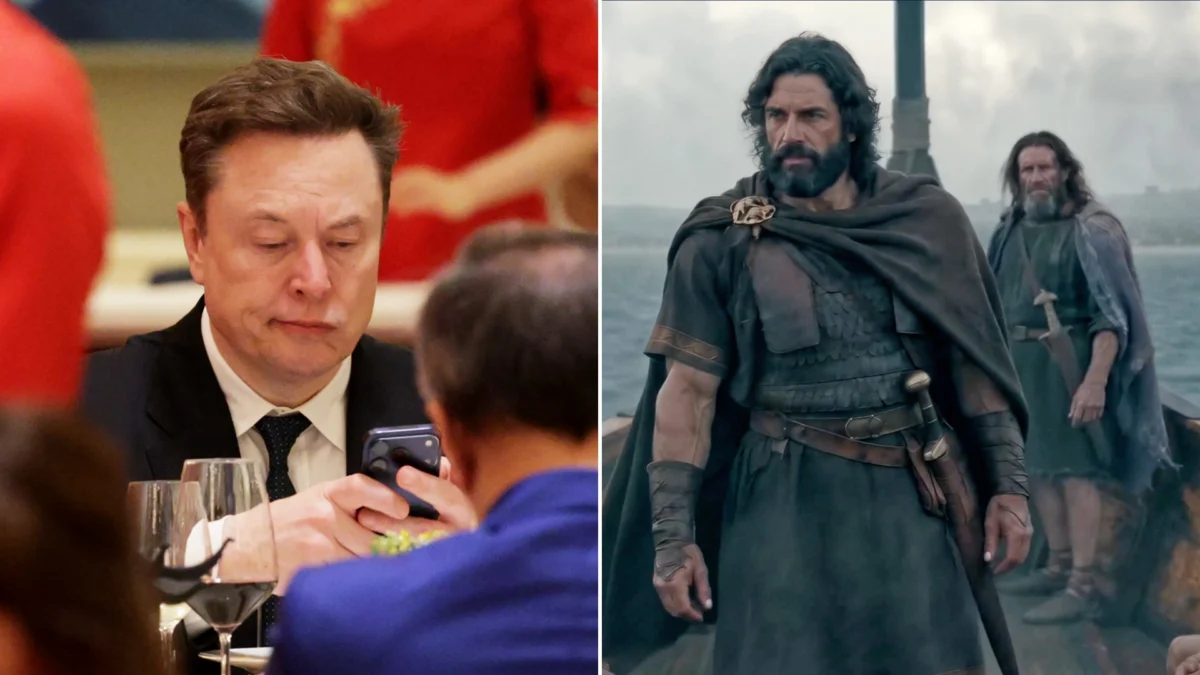
However, reality ultimately fell short of Musk’s sweeping grandiosity. Rather than delivering a feature-length motion picture by the end of the year, the highly publicized project debuted quietly on October 23 as a meager seven-minute webisode titled "Episode 1." Produced with the assistance of WonderStudiosX and director Dev Walker, the AI-driven short has left audiences and critics in the dark regarding if—or when—future installments will ever see the light of day.
Despite its diminutive runtime, the project has firmly placed Musk on the radar of the Razzies, who view fully automated, AI-generated entertainment as an existential threat to genuine cinematic artistry. Maureen "Mo" Murphy, co-founder of the Golden Raspberry Awards, wryly noted that Musk appears to be "creating a new category—which he’ll dominate, of course."
While the Razzies do not currently feature a dedicated category for "Worst Short Film," Musk’s truncated epic is widely considered eligible for several notorious dishonors, including Worst Director, Worst Screenplay, and Worst Remake, Rip-Off, or Sequel. The controversy underscores a broader, high-stakes culture war over casting, historical fidelity, artistic labor, and the rapid encroachment of generative artificial intelligence into the traditional entertainment landscape.

Chronology of an AI Experiment
The Genesis of a Grievance
The saga began in mid-July when the multi-trillionaire X owner publicly took aim at acclaimed director Christopher Nolan’s heavily anticipated, high-budget cinematic adaptation of The Odyssey. Musk expressed sharp dissatisfaction with what he characterized as "woke" casting choices, specifically targeting the selection of Lupita Nyong’o as Helen of Troy and Elliot Page as a Greek warrior.
Rooted in his perspective that historical accuracy should strictly dictate casting in period-specific epics set in ancient Greece, Musk—who was born in South Africa—decided to bypass Hollywood’s studio system entirely. On July 21, he took to social media to promise his followers an alternative: a definitive, "historically accurate," full-length movie version of Homer’s foundational epic poem, brought to life entirely through Grok’s AI video generation suite.
The Razzies Smell Blood
The promise did not go unnoticed by the guardians of cinematic infamy. Speaking to entertainment analysts at the time, Razzies co-founder Maureen "Mo" Murphy expressed palpable excitement over the billionaire’s cinematic venture, remarking that Musk was poised to contribute "quite a bit of fodder for our awards season."
Murphy highlighted that the intent behind storytelling—regardless of the technological tools deployed to tell it—remains a central focus for the satirical awards body. "Elon’s South African roots are very apparent," Murphy observed in July, noting that while AI tools are an inevitable technological evolution, fully artificial projects weaponized to bypass human creative talent or churn out uninspired narratives are ripe for critical scrutiny.

The October Reality Check
By late October, the grand vision of a sweeping, multi-hour theatrical motion picture had dissolved into a web-based experiment. Released on October 23, the project was revealed to be a fleeting seven-minute clip bearing the designation "Episode 1." Developed alongside WonderStudiosX and director Dev Walker, the debut episode offered a glimpse into Grok Imagine’s capability to render ancient Greek mythological scenes, but raised more questions than answers regarding its structural integrity and future trajectory.
Crucially, the release of Musk’s AI short coincided with the staggering global triumph of Christopher Nolan’s actual The Odyssey. Completely unphased by online criticisms, Nolan’s version smashed box-office records, hauling in an astonishing $1.79 billion worldwide and cementing its status as the definitive front-runner for Best Picture at the upcoming Academy Awards. In the wake of Nolan’s monumental commercial and critical success, Musk maintained absolute silence regarding the box-office juggernaut, quietly letting his seven-minute digital experiment speak for itself—a project roughly 165 minutes shorter than the film it sought to rival.
Supporting Data: Box Office Titans and Critical Casualties
While Musk’s digital venture represents a novel intersection of AI and infamy, the upcoming Razzies eligibility window is crowded with several other high-profile cinematic misfires, vanity projects, and box-office disasters that have caught the organization’s attention.
- The Blockbuster Giant: Christopher Nolan’s The Odyssey stands as a monumental success story, pulling in $1.79 billion globally and positioning itself as the Oscar front-runner for Best Picture at the 2027 Academy Awards. In stark contrast, Musk’s AI-assisted alternative stands at a mere seven minutes.
- The Documentary Circuit: Alex Gibney’s biographical documentary Musk has similarly entered the conversation for Razzie consideration. Murphy wryly suggested that the four-hour feature could position its subject for the "Worst Actor" contest, declaring Musk to be "indeed a bad actor on the world stage."
- The Historic Box-Office Flop: Tom Cruise’s high-profile cinematic misfire Digger is currently tracking catastrophic losses, projected to drop an estimated $250 million at the box office. Murphy has signaled that Digger is a prime contender for the coveted Barry L. Bumstead Award—a dishonor historically reserved for high-budget, high-loss ventures such as United Passions (2015), Misconduct (2016), CHiPs (2017), and Billionaire Boys Club (2018).
- Political Documentaries: Continuing a tradition of evaluating non-fiction media, the Razzies have confirmed they are actively monitoring the biographical documentary focusing on former First Lady Melania Trump. Murphy noted that documentaries have historically competed—and occasionally "won"—the Worst Picture category, pointing to past victors like Dinesh D’Souza’s Hillary’s America: The Secret History of the Democratic Party (2016) and Mike Lindell’s Absolute Proof (2020).
Official Responses and Industry Reactions
The intersection of artificial intelligence and traditional filmmaking has ignited fierce debates across the entertainment landscape. For the Razzies, the emergence of AI-generated content represents a dangerous precedent that devalues human labor.

"While AI is not going away," Murphy emphasized during discussions regarding the technological shift, fully artificial projects like Musk’s The Odyssey demand rigorous critical pushback. In the eyes of the Razzie organizers, these automated ventures are frequently deployed as cost-cutting measures designed to "cheat creative filmmakers out of work"—producing narratives that are derivative, mechanically sterile, and intellectually indefensible.
Furthermore, the ideological undertones of Musk’s project have drawn sharp commentary from cultural observers. The billionaire’s decision to self-finance and generate a competing adaptation of a classical text as a direct reaction against inclusive casting choices highlights an ongoing cultural friction between traditionalist gatekeepers and a rapidly diversifying Hollywood ecosystem. By attempting to use a text prompt to enforce historical homogeneity, Musk’s experiment became less about artistic exploration and more about making a public, ideological statement—one that was ultimately eclipsed by the historic, billion-dollar triumph of Nolan’s human-crafted epic.
Implications for the Future of Cinema and AI
As the entertainment industry navigates the uncharted waters of generative artificial intelligence, the saga of Musk’s The Odyssey serves as both a cautionary tale and a harbinger of changing cultural fault lines.
- The Limits of Generative Tech: The transformation of a promised "full-length feature film" into a fleeting seven-minute webisode demonstrates the severe structural, narrative, and technical limitations facing current text-to-video AI platforms. While tools like Grok Imagine can render striking individual frames or short visual sequences, sustaining complex, character-driven storytelling across a feature-length runtime remains an insurmountable hurdle for pure automation.
- The Weaponization of Satire: Awards bodies like the Razzies are expanding their purview to address technological disruption. By signaling a willingness to evaluate AI-generated media and political vanity projects, satirical organizations are positioning themselves as cultural watchdogs against the devaluing of human artistic expression.
- The Economics of Scale: The stark financial contrast between Musk’s zero-budget AI experiment, Nolan’s $1.79 billion blockbuster, and Tom Cruise’s $250 million loss-leader Digger highlights the volatile nature of modern cinematic investments. As studios grapple with shifting audience expectations and ballooning budgets, the temptation to utilize AI as a cheap shortcut will only grow—making accountability measures, whether from trade unions or satirical critics, all the more vital.
Ultimately, while Elon Musk’s digital foray into ancient Greece failed to dethrone Hollywood’s elite or capture the cinematic gravitas he envisioned, it successfully secured a permanent footnote in the history of cinematic controversy. Whether future episodes of his Odyssey materialize or vanish into the digital ether, the project has already earned its place in the annals of pop-culture infamy.
