
Beyond the Shore: The Decades-Long Battle for Identity in Itab Azzam and Jack MacInnes’s One in a Million
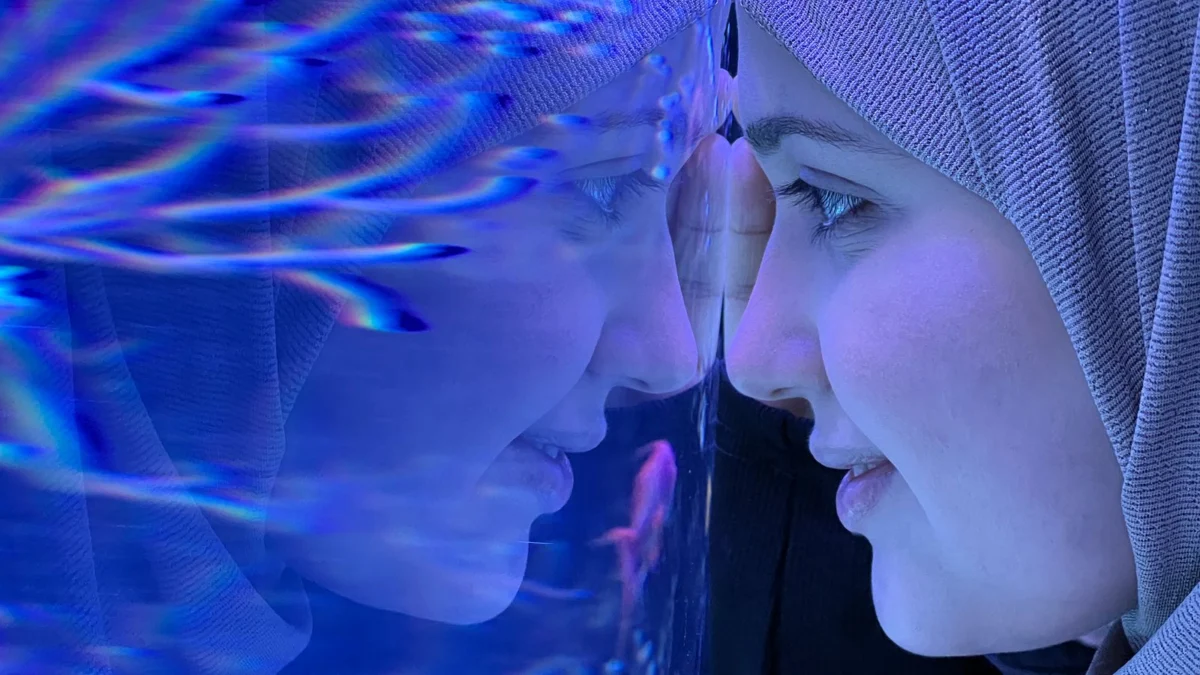
Originally reviewed as part of the 2026 Sundance Film Festival coverage ahead of its October 21 theatrical release, this expansive documentary redefines the cinematic discourse surrounding displacement, trauma, and the complex mechanics of European integration.
Main Facts: A Decade-Long Epic of Displacement
"War is not the hardest thing a person can go through. It’s not as hard as what comes after."
These sobering, prophetic words set the emotional and thematic baseline for One in a Million, a sweeping, intimate documentary feature directed by Itab Azzam and Jack MacInnes. Following a Syrian family across a transformative ten-year period, the film chronicles their harrowing maritime escape from the ruins of their homeland in 2015 to the daunting bureaucratic and cultural landscape of Germany. At its center is Israa, introduced to audiences as an eleven-year-old child navigating the unimaginable horrors of conflict, only to grow into a young woman grappling with the intersecting pressures of parental control, cultural preservation, and Western assimilation.
Running just under 100 minutes, the film is an ambitious structural achievement. Rather than treating the refugee experience as a singular, terminal crisis resolved upon receiving asylum, Azzam and MacInnes argue that physical safety is merely the starting line. True liberation—psychological, personal, and familial—requires an arduous internal restructuring that tests the bedrock of traditional family values.
The documentary has already turned heads on the festival circuit, earning critical acclaim following its world premiere at the 2026 Sundance Film Festival. Its commercial rollout is slated for an October 21 theatrical release, positioning the film as a timely, essential entry in contemporary socio-political cinema.
Chronology: From the Rubble of Syria to the Suburbs of Germany
To understand the scope of One in a Million, one must trace the decade-long evolution of its subjects. The chronology of the film is marked not just by calendar years, but by tectonic shifts in the psychological state of the family unit.
Phase I: The Flight (2015)
The documentary opens in the crucible of the Syrian civil war. The audience is immediately confronted with raw, unfiltered reality: young children calmly acknowledging that they are not afraid to die, and toddlers being zipped into bulky, fluorescent orange life vests before boarding precarious dinghies.
The voyage across the Mediterranean to Greece is marked by tragedy. Two young children succumb to the biting cold, an event that acts as a psychological fracture point for eleven-year-old Israa. Known prior for her bubbly, effusive personality, Israa retreats inward, her childhood abruptly terminated by the sight of death at sea. The family’s subsequent overland trek across multiple borders functions as a breathless race for survival, culminating in their arrival in Germany—a milestone that occupies less than a third of the film’s runtime.
Phase II: The Emotional Geography of Assimilation (2016–2022)
Once settled in Germany, the physical journey ends, but the emotional odyssey accelerates. The filmmakers utilize an episodic structure, checking in every few years through a blend of verité footage and staged, reflective interviews. This passage of time reveals a widening generational and cultural gap.
As Israa transitions into her teens, the documentary broadens its perspective, incorporating the distinct viewpoints of her father, Tarek, and her mother, Nisreen. The conflicts that emerge are deeply human: Tarek and Nisreen attempt to anchor their children in traditional Syrian customs, while Israa and her siblings are inevitably pulled toward German pop culture, secular freedoms, and modern romantic ideals. The home transforms into a microcosm of cultural friction, where old-world patriarchal expectations collide with the liberating individualism of Western society.
Phase III: The Reckoning (2023–2025)
In the latter half of the decade, the primary conflict shifts from external survival to internal autonomy. Israa’s battle is no longer about finding food or shelter; it is about forging a unique identity free from her father’s rigid oversight. This domestic struggle plays out against the backdrop of an evolving political climate in Europe, bringing the family face-to-face with the paradoxes of their adopted home.
Supporting Data and Context: The Cinematic Mechanics of Intimacy
The success of One in a Million hinges on access and trust. Azzam and MacInnes establish a palpable intimacy with the family, capturing moments of profound vulnerability that rarely make it to news broadcasts or conventional issue-driven documentaries.
The Architecture of the Interview
The filmmakers employ a longitudinal approach, utilizing recurring check-ins that function like a cinematic time-lapse of human emotion. Because the camera is present across multiple phases of growth, viewers witness the subtle erosion of defense mechanisms. When Israa expresses frustration with her father, or when Tarek struggles to articulate his fear of irrelevance, the transparency is startling.
However, this expansive temporal canvas presents distinct narrative challenges. At under 100 minutes, the film must compress vast epochs of emotional development. Consequently, certain time jumps feel abrupt, leaving some character arcs feeling patchwork. Yet, the emotional dots are easily connected, driven by a pulsating score and sharp, empathetic editing.
The Sociopolitical Paradox
One of the most striking narrative threads in the latter half of the film involves the external political pressures facing the family. Tarek, having fled systemic oppression and violence in Syria, finds himself confronting a different kind of hostility in Germany: the rise of the far-right Alternative for Germany (AfD) party, which openly campaigns for the mass deportation of immigrants.
In a sequence rich with dark irony, Tarek observes far-right protestors demonstrating on German streets. Yet, unlike in Assad’s Syria, where public dissent or minority status meant immediate imprisonment or death, Tarek is able to witness—and even stand near—these demonstrations protected by the very democratic framework that allows the dissent to exist in the first place. This moment encapsulates the film’s core thesis: no corner of the world is a utopia, and institutional safety does not automatically translate to a welcoming social fabric.
Official Responses and Critical Reception
Since its unveiling at the 2026 Sundance Film Festival, One in a Million has generated robust discussions among human rights advocates, immigration experts, and film critics alike.
Human rights organizations have praised the documentary for shifting the cultural narrative surrounding refugees. For years, media coverage has been dominated by imagery of border crises, refugee camps, and immediate humanitarian relief. One in a Million fills a critical blind spot by focusing on the "second wave" of displacement trauma: the psychological toll of integration, identity renegotiation, and domestic power struggles.
Cultural critics have similarly lauded Azzam and MacInnes for refusing to sanitize their subjects. Tarek is not depicted as a one-dimensional patriarch, nor is he excused for the emotional torment he inflicts on his wife and children. Instead, the filmmakers contextualize his rigidity, framing it as a trauma response—a desperate attempt to maintain control over a world that has stripped him of his homeland, his profession, and his status.
Film festival programmers have highlighted the movie as a masterclass in patience and ethical documentary filmmaking. By committing a decade to a single family, the production team bypassed the transactional nature of parachute journalism, earning a level of access that transforms a standard immigrant story into a universal coming-of-age epic.
Implications: Redefining Freedom in Modern Europe
The broader implications of One in a Million extend far beyond the specific experiences of Israa and her family. As European nations grapple with ongoing migration patterns, integration policies, and the political resurgence of nationalist movements, the film offers a sobering diagnostic of the modern civic condition.
1. Asylum is Not the Finish Line
Governments and humanitarian agencies often measure the success of refugee programs through administrative metrics: housing placement, language course completion, and employment rates. One in a Million challenges this bureaucratic complacency. The film argues that systemic integration is hollow if the private sphere remains fractured by unresolved trauma and cultural alienation. True assimilation requires addressing the mental health and internal dynamics of displaced families.
2. The Clash of Autonomy and Tradition
The film acts as a mirror for contemporary multicultural societies, illustrating the friction between collective cultural heritage and individual rights. Tarek’s desire to preserve Syrian traditions within his household clashes directly with the foundational ethos of Western liberal democracies: personal autonomy. This tension raises difficult questions for social policymakers: How can host nations support immigrant communities in maintaining their cultural heritage while simultaneously protecting the human rights and self-determination of vulnerable family members, particularly women and children, within those households?
3. The Fragility of Sanctuary
Through Tarek’s observations of far-right political movements in Germany, One in a Million acknowledges an uncomfortable truth: physical refuge does not inoculate marginalized populations against xenophobia. The film suggests that the promise of liberal democracy is an ongoing project—one that requires constant defense not just from lawmakers, but from the citizens who inhabit it.
Conclusion
As One in a Million prepares for its theatrical rollout on October 21, it stands as a towering achievement in documentary filmmaking. By wedding epic historical scope with microscopic domestic drama, Itab Azzam and Jack MacInnes have crafted a timeless meditation on what it means to rebuild a life when the foundation has been blown away.
Ultimately, the film delivers a message that is both haunting and hopeful: a person can cross oceans, survive war, and secure legal asylum, but a complete sense of freedom will only ever arrive when personal independence is fully realized.
