
Echoes of Humanity: How a Forgotten Whistle Became a Beacon of Hope in Animation
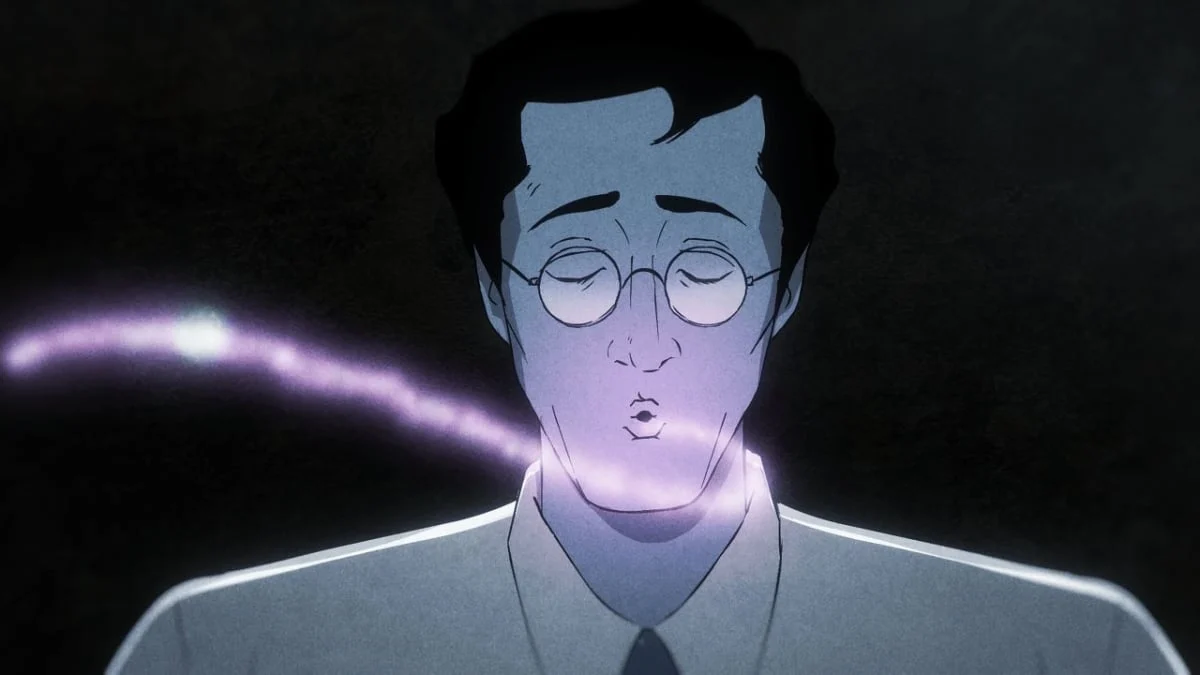
The Holocaust remains the darkest chapter in human history, a systematic industrialization of death that claimed the lives of six million European Jews. While the sheer scale of the atrocity is well-documented, history is also punctuated by smaller, intimate acts of defiance—moments where the moral courage of a single individual pierced the suffocating gloom of authoritarianism. A new 2D animated short film, The Whistle, brings one such forgotten story to light, illustrating how a simple melody once served as the bridge between a prisoner’s despair and his ultimate salvation.
Produced by Six Point Harness and Solis Animation, The Whistle is a non-verbal narrative that explores the power of empathy and the enduring legacy of hope. It is a film that transcends its historical context to speak to the universal human capacity for kindness, even in the face of absolute evil.
The Genesis of a Forgotten Hero
The story of the film began not in a studio, but in the quiet, personal history of a family. The subject of the film is an anonymous Jewish doctor residing in Cologne, Germany, in 1938. As the Nazi regime began to tighten its stranglehold on German society, it enacted discriminatory laws designed to systematically isolate and dehumanize the Jewish population. Among these was a decree that strictly prohibited Jewish physicians from providing medical care to non-Jewish patients.
For this doctor, the law was not merely a political reality; it was an affront to his professional oath and his humanity. Refusing to let ideology dictate the sanctity of his practice, he continued to treat non-Jewish patients, an act of civil disobedience that carried the ultimate penalty. He was eventually arrested and imprisoned.

The turning point of his story—and the namesake of the film—occurred within the cold confines of his cell. While incarcerated, the doctor began to whistle a specific, evocative tune. It was a melody that reached the ears of a prison guard, who, upon recognizing the song, realized they shared a common history. In an act of profound courage that defied the totalitarian regime, the guard facilitated the doctor’s escape.
This harrowing, beautiful account reached the ears of Nancy Dickenson, an executive producer, through her friendship with the doctor’s son. Recognizing the weight and the emotional resonance of the tale, Dickenson sought to immortalize the event on screen. She brought the project to producer Nancy Diamond, who immediately envisioned an approach that would strip away the barriers of language: a short film entirely devoid of dialogue.
A Visual Language of Hope
To bring this vision to life, Diamond collaborated with animation studio Six Point Harness and director Greg Franklin. Their previous work on the PSA The Birds and the Bees had established a creative shorthand, making them the ideal partners for a project that relied entirely on visual storytelling.
"This is the kind of project I love to do," director Greg Franklin explains. "It’s all told visually, and I love that we’re able to have this visual representation of what gets us through the most difficult times in our lives."

The creative team faced a significant challenge: how to depict sound—specifically a whistle—in a way that conveyed deep, shifting emotions without the use of words. Their solution was to move toward abstraction. The whistle is portrayed in the film as a smoky, ethereal trail composed of shifting, colorful orbs.
"We wanted to go more abstract with it so we could focus on getting those feelings across," Franklin notes. The team experimented with a myriad of mediums, including watercolors and CG animation, before settling on a specific aesthetic that they felt captured the essence of hope.
The visual design was heavily influenced by the concept of synesthesia—a neurological condition where sensory pathways cross, leading people to "see" music or "hear" colors. Franklin draws from his personal experiences to explain the film’s aesthetic: "I have these friends who are crazy audiophiles… Sometimes, I would hear the bass and it would remind me of slabs of wet clay going all over the floor. There was also a Jimi Hendrix guitar stab that sounded like an arrow that went right through my body. That was absolutely an inspiration for how we designed the look of the whistle."
The Sound of Survival
While the film eschews dialogue, the whistle itself functions as the primary voice of the narrative. It is designed to mirror the trajectory of the doctor’s journey—its volume swells and its colors shift from somber tones to vibrant, optimistic hues as the doctor moves from the darkness of his cell toward the threshold of freedom.

The authenticity of this sound was paramount. Greg Franklin turned to his brother, Dan Franklin, a musician whose whistling ability possesses a unique, haunting quality. By using a "real" whistle from a real person, the production team ensured that the moments of isolation in the prison cell felt grounded and visceral.
"We wanted the whistle to be the only voice in the film," producer Nancy Diamond adds. "But it also had to speak for everything. Everything was really thought out. We spent a lot of time on every little thing. It took a really long time to finish because we wanted everything to be as perfect as it could be."
Implications and the Ripple Effect of Kindness
The impact of the film extends far beyond the screen. The doctor’s son, who served as the primary source for the story, went on to lead a full life, eventually becoming a musician in a folk-rock band—a life that would have been snuffed out had his father not survived the Holocaust.
This theme of "ripple effects" is a core component of the project’s identity. The collaboration itself became a testament to the potential for reconciliation. Frank Herrlinger, the film’s composer, shared a poignant realization during the production process. Hailing from Austria, Herrlinger revealed to the producers that his own grandfather had been a Nazi.

"And now, you and I are working together on this film," Diamond reflects on the experience. "Isn’t that beautiful? I mean, this is what life should be like. No matter where we’re from, everybody has the opportunity to do the right thing. We just have to look at each other like humans."
The Legacy of the Short Film
The Whistle has found significant success on the festival circuit, screening at the Gold Coast International Film Festival, the Newport Beach Film Festival, DIFF Shorts, and FilmQuest. The reception has been overwhelmingly positive, confirming the universal appeal of the doctor’s story.
Executive produced by a team including Josh Gad, Jenniphr Goodman, and Lorraine Gallard, the film stands as a reminder that the history of the Holocaust is not solely defined by the cold, mechanical cruelty of the perpetrators, but also by the quiet, defiant, and life-saving choices made by ordinary people.
In a world that often feels fractured by ideology and historical animosity, The Whistle serves as a clarion call for individual responsibility. As Diamond concludes, "One person, that’s all it takes. And then there’s a ripple effect. If we can just change one person’s mind to realize that, to do the right thing, then we’d be happy."

By focusing on the beauty of a single whistle, the film invites viewers to consider their own capacity for courage. It is a narrative that suggests that even when the world seems to be descending into darkness, the simple act of choosing humanity over hatred can create a trail of light—a musical breadcrumb—that leads others toward the possibility of a better future.
