
From Screen to Stream: The Musical Identity of Netflix’s ‘Minimum Wage’
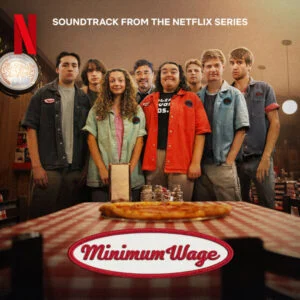
The landscape of modern television comedy often relies on a precise alchemy of sharp writing and authentic soundscapes. Today, Netflix adds a new flavor to its catalog with the premiere of Minimum Wage, a coming-of-age series that blends the high-stress environment of the service industry with the unpredictable chaos of adolescence. To anchor the show’s sonic identity, Netflix Music has officially released a four-track soundtrack EP, offering a glimpse into the creative musical heart of the series.
Featuring contributions from show stars and seasoned composers alike, the EP serves as both a promotional tool and an immersive companion to the viewing experience. As the series hits the platform, the soundtrack is now available across all major digital music services, including Amazon.
The Core Narrative: A Slice of Life and a Slice of Pie
Minimum Wage is the brainchild of creators Jeremy Garelick and Will Phelps. Drawing inspiration from their earlier American High Shorts project of the same name, the series expands on the frantic, relatable struggles of teenagers tasked with maintaining a local pizzeria.
The premise is deceptively simple yet laden with comedic potential: a group of teens must navigate the precarious balance of academic pressure, a demanding and often manic boss, and the harsh realities of the minimum wage economy. The cast is a blend of rising talent and familiar faces, featuring performances by Aidan Micho, Grace Reiter, Hyde Healy, Ryan Micho, and Luke Burke, alongside comedic veteran Randall Park.
The show captures a quintessential "slice of life" energy, where the workplace acts as a crucible for friendship, romance, and the inevitable misadventures of youth. By focusing on the juxtaposition of menial labor and the grand drama of high school, Garelick and Phelps have crafted a narrative that resonates with the current cultural climate, where economic anxieties are increasingly central to the Gen-Z experience.
The Soundtrack: An Auditory Companion
Music in comedy series often performs a dual function: it sets the tone for the comedic beats and provides an emotional anchor for the characters’ growth. The Minimum Wage EP leans into this by featuring a mix of thematic compositions and character-driven performances.
The four-track release is structured as follows:
- "Minimum Wage Theme Song" – Ben Kaplan & Ragan McKenna (1:46): The quintessential sonic logo for the show, establishing the high-energy, slightly frantic tone of the series.
- "LDR Blues" – Tommy Armstrong (3:08): A melodic departure that hints at the romantic entanglements of the characters.
- "Hyde and Julia" – Julia DiCesare (2:22): A spotlight track that leans into the interpersonal dynamics of the ensemble cast.
- "Ballad of Cowboy Luke" – Tommy Armstrong (3:11): A whimsical addition that likely underscores the unique personality of Luke’s character arc.
By integrating cast members Tommy Armstrong and Julia DiCesare into the recording process, the production team has successfully bridged the gap between the character on screen and the performer in the studio, lending a layer of authenticity to the musical world of the pizzeria.
Chronology of Development: From Short Form to Streaming Giant
The journey of Minimum Wage is a case study in the modern media development pipeline. It did not originate as a traditional television pitch but rather as a series of American High Shorts. These short-form digital clips were designed to be punchy, viral-ready, and hyper-focused on character-driven humor.
The success of these shorts caught the attention of Netflix, which has increasingly looked toward proven digital concepts to fill its comedy slate. The transition from short-form content to a full-length series required a significant expansion of the narrative world. Garelick and Phelps had to flesh out the backstories of the pizza-slinging teens, introduce a more complex antagonistic force in the form of a manic boss, and integrate the established ensemble cast, including the inclusion of Randall Park, whose presence adds a level of industry prestige and comedic gravitas.
The musical development followed a similar trajectory. While the shorts relied on stock music or brief audio cues, the transition to a full series necessitated a cohesive musical identity. The commission of a bespoke theme song by Ben Kaplan and Ragan McKenna signals the show’s shift from a digital experiment to a flagship Netflix property.
Supporting Data: The Economic Context of the Series
While Minimum Wage is a comedy, its title and subject matter invite a discussion on the economic realities of its subject matter. According to current labor statistics, the service industry remains the primary employer of the teenage demographic. The series, by focusing on the friction between a low-wage job and the expensive desires of youth, touches upon the broader societal conversation regarding cost-of-living adjustments and the value of labor.
Data from the Bureau of Labor Statistics consistently shows that while service sector wages have seen incremental growth, the purchasing power of entry-level workers remains a point of contention in the current political discourse. Minimum Wage leverages this tension, not through didacticism, but through the absurdity of the characters’ reactions to their circumstances. By centering the story in a pizzeria—a staple of the American workforce—the show provides a grounded setting that allows the audience to instantly recognize the stakes, regardless of their own age or background.
Official Responses and Creative Vision
The creative team has been vocal about their intent to make the show feel "lived-in." Jeremy Garelick has noted in promotional materials that the goal was to avoid the polished, overly sanitized look of traditional sitcoms. Instead, he and Phelps pushed for a style that feels raw and immediate.
"We wanted the show to feel like it was being captured in the moment," one production source indicated. "The music plays a huge part in that. It’s not just background noise; it’s the heartbeat of the restaurant. Whether it’s the frustration of a long shift or the thrill of a Friday night rush, the songs needed to reflect the pace of the kitchen."
The inclusion of cast-performed tracks also highlights a collaborative approach to the series’ production. Encouraging actors to contribute to the music allows for a deeper exploration of their characters. When Tommy Armstrong sings "Ballad of Cowboy Luke," he is not just performing a song; he is providing a narrative commentary on his character’s development throughout the season.
Implications: The Future of Short-Form Adaptation
The release of Minimum Wage and its accompanying soundtrack highlights a growing trend in the streaming industry: the "Short-to-Series" pipeline. As platforms look to minimize risk, they are increasingly relying on intellectual property that has already demonstrated an audience engagement on platforms like YouTube, TikTok, or Instagram.
If Minimum Wage proves successful, it could signal a shift in how Netflix approaches new comedy development. Rather than traditional pilots, we may see more "proof of concept" shorts being funded, analyzed for social media engagement, and then expanded into full-season orders.
Furthermore, the integration of music into this process is vital. In an era where a show’s popularity is often tracked via its "social footprint," having a distinct, shareable soundtrack can significantly increase the longevity of a show. When users create their own content using the Minimum Wage theme song or the character tracks, they are effectively acting as marketers for the series, extending its reach far beyond the Netflix interface.
Conclusion: A New Standard for Workplace Comedy
Minimum Wage arrives at a time when audiences are craving stories that are both grounded in reality and escapist in their delivery. By combining the high-energy, relatable stress of the service industry with a thoughtfully curated soundtrack, Netflix has positioned the series to be more than just a passing distraction.
Whether it is the rhythmic pulse of the theme song or the character-driven ballads that populate the EP, the music of Minimum Wage provides an essential layer to the viewing experience. As viewers begin their journey with this group of teens and their manic boss, they will find that the rhythm of the show—much like the rhythm of a busy Friday night shift—is infectious, exhausting, and ultimately, deeply memorable.
The series is available for streaming starting today, exclusively on Netflix. Listeners are encouraged to check out the official EP on Amazon and other major digital platforms to immerse themselves fully in the world of the pizzeria. As the show makes its mark on the streaming landscape, one thing is clear: even at minimum wage, the work can produce something truly extraordinary.
