
Mish Mash Monday – The Star Wars Summer Odyssey (Please Send Help To These Films!)
As the summer movie season kicks off, the entertainment industry finds itself caught in a high-stakes tug-of-war between legacy IP, blockbuster anxieties, and the enduring magic of a well-crafted spec script. Leading the charge at the box office this weekend is Lucasfilm’s long-awaited big-screen transition for The Mandalorian and Grogu, while Christopher Nolan’s upcoming epic, The Odyssey, looms on the horizon as the season’s grand finale.
Both films have generated intense online discourse—though for radically different reasons. While audiences debate whether The Mandalorian and Grogu tells a story worth paying for, the skepticism surrounding The Odyssey targets its visual appeal and narrative premise. Meanwhile, away from the multi-hundred-million-dollar fray, Sam Raimi’s latest thriller Send Help offers a masterclass in screenwriting mechanics, reminding Hollywood of the raw power of high-concept spec scripts.
Main Facts: The Summer Slate’s Polarizing Giants
The summer 2026 box office window is bookended by two distinct cultural behemoths: Lucasfilm’s Disney-backed The Mandalorian and Grogu and Warner Bros./Universal-backed The Odyssey, directed by cinematic auteur Christopher Nolan.
- The Mandalorian and Grogu: Directed by Jon Favreau and set to test the theatrical viability of Disney’s premier streaming franchise, the film is facing unprecedented early warning signs. Industry insiders note an alarming lack of positive early social media reception following its premiere screenings, raising red flags for a franchise accustomed to guaranteed multi-billion-dollar hauls.
- The Odyssey: Christopher Nolan’s adaptation of Homer’s ancient Greek epic tackles free, public-domain intellectual property that has historically eluded major filmmakers. Despite mixed reactions to the initial trailers—which critics have described as underwhelming—analysts expect the film to perform strongly, driven by Nolan’s box office clout and the sheer scope of the source material.
Chronology: A Troubled Timeline for Lucasfilm and Disney
To understand the current panic surrounding The Mandalorian and Grogu, one must examine the shifting sands of corporate leadership at Disney and Lucasfilm over the past decade.
- 2015: Disney and Lucasfilm launch Star Wars: The Force Awakens under producer Kathleen Kennedy. The film grosses over $2 billion globally, cementing a lucrative era for the franchise. However, it also initiates a slow-burn fatigue among core fans regarding the franchise’s creative direction.
- January 15, 2026: In a major shakeup, veteran creator and Star Wars lore master Dave Filoni assumes the top creative post at Lucas Arts, signaling a structural pivot toward deep-canon storytelling.
- March 18, 2026: Josh D’Amaro steps in as the new CEO of Disney (parent company of Lucasfilm), inheriting an organizational structure he did not personally design or approve.
- Present Day: The Mandalorian and Grogu premieres to an icy critical silence on social media, placing immense pressure on Filoni’s new administration and casting a shadow over the future of the galaxy far, far away.
Supporting Data: The Warning Signs and Box Office Metrics
When analyzing the health of a blockbuster franchise, industry professionals look closely at early metrics, screening reactions, and historical comparisons.
- *The "Holy Sht" Metric:* In the modern era of curated social media embargo lifts, studio-vetted reviewers typically flood platforms with hyperbolic praise. For The Mandalorian and Grogu, industry trackers noted a near-total absence of enthusiastic initial responses. For context, 2015’s critically panned Fantastic Four* managed to pull in roughly 50 positive early-reaction tweets following its premiere.
- The Chicago Bulls Analogy: Industry analysts have drawn parallels between Lucasfilm’s current trajectory and the post-Michael Jordan era of the Chicago Bulls. Under owner Jerry Reinsdorf—whose philosophy prioritized packed seats over competitive excellence—the team transitioned from championship dominance to long-term irrelevance. Similarly, the transition from Kathleen Kennedy (who maintained the franchise at a steady, profitable baseline despite creative missteps) to Dave Filoni risks plunging the IP into a creative and financial freefall.
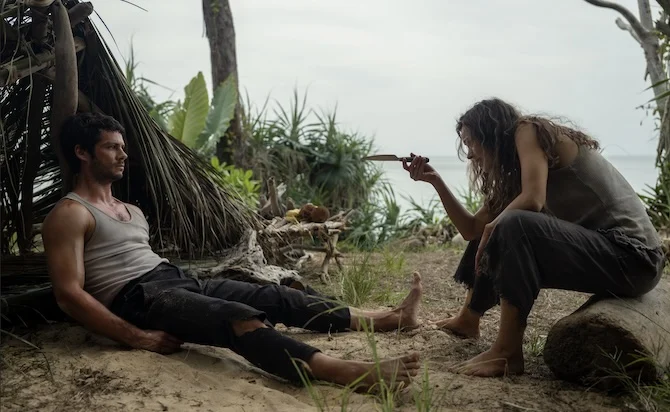
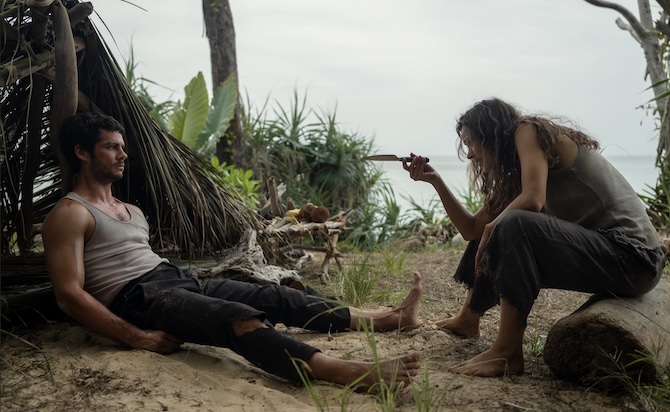
- Spec Script Mechanics: On the writing front, films like Send Help highlight the structural advantages of lean, high-concept storytelling. By focusing on a confined, two-person dynamic on a deserted island, the script bypasses the laborious world-building of dense mythologies like Dune or The Brutalist, proving that page-turning momentum remains king.
Official Responses and Industry Reactions
As the discourse heats up, stakeholders across Hollywood are responding to the shifting tides of audience expectations and corporate restructuring.
Dave Filoni, stepping into his new role as the chief architect of Lucasfilm’s future, has defended the studio’s path forward in recent interview cycles, emphasizing a unified game plan for the next phase of Star Wars. However, insiders suggest that Disney CEO Josh D’Amaro is keeping a close eye on the performance of The Mandalorian and Grogu. Because D’Amaro did not appoint Filoni, a catastrophic box office underperformance could trigger another sweeping executive reorganization at Lucasfilm.
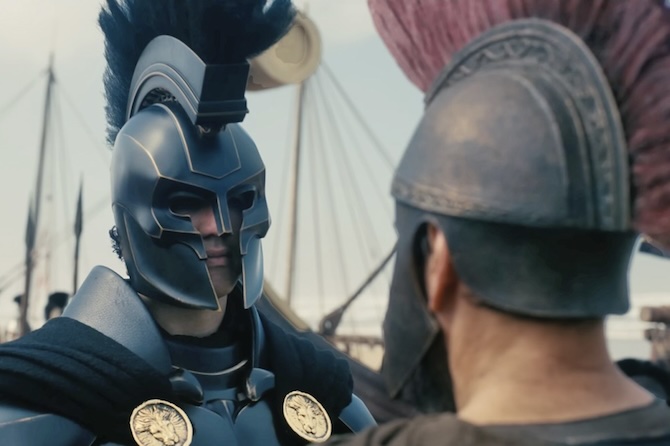
Meanwhile, Christopher Nolan’s team remains confident in The Odyssey. Skeptics have pointed out that Homer’s epic is fundamentally a post-adventure story—focusing on Odysseus’s arduous journey to sleep in his own bed rather than embarking on an outbound hero’s journey—which historically presents psychological hurdles for mainstream cinematic pacing. Yet, defenders of the project emphasize that Nolan is likely withholding the film’s set-pieces, which include the Lotus Eaters, seductive sirens, the witch Circe, terrifying sea monsters Scylla and Charybdis, and one of literary history’s most satisfying revenge climaxes. Dismissals surrounding casting choices—such as a Black Helen of Troy and Elliot Page as Achilles—are widely viewed by box office forecasters as internet noise that will fail to dent the film’s commercial prospects.
Implications: What This Means for the Future of Hollywood
The intersecting narratives of The Mandalorian and Grogu, The Odyssey, and Sam Raimi’s Send Help carry massive implications for the future of screenwriting, franchise management, and studio risk assessment.
1. The Dangers of Lore Over Craft in Franchise Filmmaking
The transition of power at Lucasfilm highlights a central debate in modern entertainment: Does deep knowledge of an intellectual property outweigh fundamental screenwriting and filmmaking craftsmanship? While Kathleen Kennedy faced criticism for her lack of connection to foundational Star Wars lore, she possessed a seasoned producer’s instinct for commercial viability. Conversely, Dave Filoni’s encyclopedic mastery of Star Wars canon risks prioritizing fan service and internal mythology over strong narrative structure, sluglines, and compelling character arcs. If The Mandalorian and Grogu fails to perform, it may force major studios to reevaluate whether "lore keepers" are truly equipped to helm massive theatrical features.
2. The Triumph of the Spec-Friendly Concept
On the independent and mid-budget side, the reception of Sam Raimi’s Send Help—adapted from a spec script found by producer Zainab Azizi—reinforces the enduring value of clean, readable screenwriting. Despite encountering logical hurdles and tightrope acts in its narrative execution (such as the protagonist focusing on a knife while entirely ignoring readily available tools like rock-hammers), the script succeeds because it nails its core psychological chemistry and ironic setup: a tyrannical CEO and a dismissed accountant stranded on an island where power dynamics are violently inverted. It serves as a reminder to writers that while a screenplay does not need to be flawless, its central emotional and conceptual engine must be indestructible.
3. Audiences Demand Event Cinema with Purpose
As Nolan prepares to unleash The Odyssey, the box office will test whether audiences are willing to embrace unconventional narrative structures disguised as blockbusters. By tackling a story where the primary conflict is merely getting home, Nolan is betting that peerless direction, practical spectacle, and mythological depth can overcome the inherent lethargy of a post-adventure narrative.
As the summer box office unfurls its banner this weekend, the industry watches with bated breath. Whether audiences embrace the return of a galaxy far, far away or flock to the shores of ancient Greece, one thing is certain: Hollywood’s old playbooks are being rewritten in real-time.
