
Return to the Labyrinth: Guillermo del Toro Reimagines His Masterpiece for a New Era
Main Facts
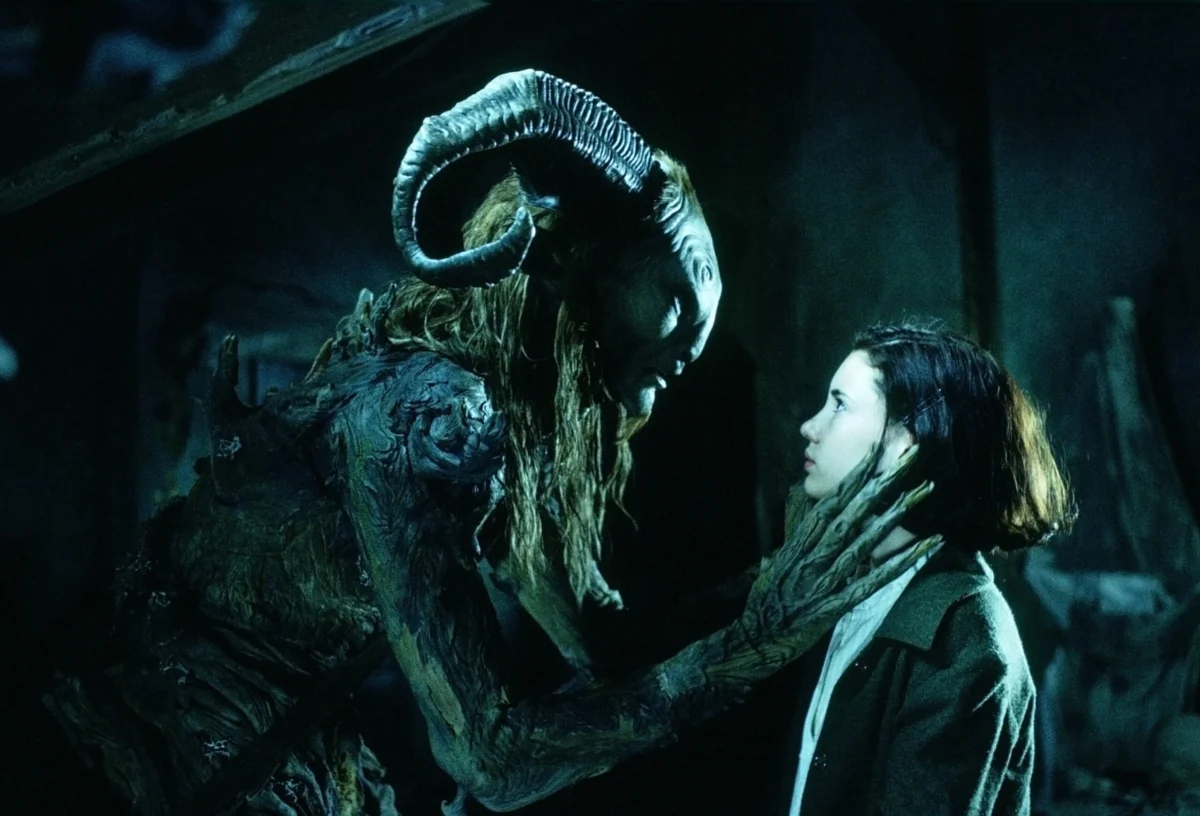
Two decades after it first enchanted and horrified audiences around the globe, Guillermo del Toro’s dark fairy-tale masterwork Pan’s Labyrinth is returning to the big screen. Set to open in North American theaters on October 9—fittingly, del Toro’s birthday—the film is not merely being re-released; it has been entirely re-envisioned. Del Toro, working alongside a trusted inner circle of longtime artistic collaborators, has spearheaded a comprehensive 3D conversion paired with a brand-new color grade and an immersive Dolby Atmos sound mix.
Originally released in 2006, Pan’s Labyrinth remains an unclassifiable triumph. It weaves together the stark, brutal realities of post-Spanish Civil War history with the intricate, perilous mythology of a young girl’s mythical quest. Starring Ivana Baquero as the young Ofelia, the film earned widespread critical acclaim and Academy Award success for its potent alchemy of beauty and brutality, anchored by lush, vivid imagery.
While purists might instinctively balk at tinkering with a modern classic, del Toro’s new iteration is designed to honor the original artistic intent while leveraging two decades of technological evolution. Rather than flattening or modernizing the film into slick, over-polished contemporary aesthetics, the director and his technical teams have labored to preserve the distinct analog grit, grain, and emotional weight of the 2006 original. The result is a theatrical experience that breathes new dimensional life into a modern cinematic milestone, offering audiences a chance to experience the acclaimed dark fantasy with unprecedented depth, scale, and sonic fidelity.
Chronology and Evolution of the Project
The genesis of the Pan’s Labyrinth 3D restoration began quietly, born out of a desire to revisit the film’s rich visual and aural landscape for its twenty-year milestone. Guillermo del Toro initiated the process by reaching out to his key technical partners—sound designer Scott Gershin, SDFX Studios executive Aaron Parry, and Company 3 CEO and colorist Stefan Sonnenfeld—all of whom previously worked with the auteur across various stages of his illustrious career.

The timeline of the restoration spanned several months of meticulous, non-destructive refinement.
- Phase One: Sound and Spatial Re-engineering. Sound designer Scott Gershin was initially approached by del Toro simply to modernize the film’s theatrical audio mix. However, upon discovering that the director was simultaneously spearheading a full 3D visual conversion, Gershin realized the sonic landscape needed to radically expand. Working from original stems that felt increasingly dated by modern standards, Gershin oversaw a comprehensive Dolby Atmos pass, layering in period-accurate foley and background elements.
- Phase Two: Dimensional Re-framing. Aaron Parry and SDFX Studios tackled the complex 3D conversion. Having previously collaborated with del Toro on Pacific Rim, Parry understood the director’s specific visual grammar. The team utilized modern dimensional tools to separate the gritty reality of post-war Spain from the lush, terrifying fantasy world of the Labyrinth, all while fiercely protecting the original film stock’s organic grain.
- Phase Three: Digital Fine-Tuning and Color Grading. Stefan Sonnenfeld stepped in at Company 3 to execute a new color grade and gently "massage" visual elements that had frustrated del Toro for twenty years. Utilizing contemporary digital tools, the team corrected lingering visual effects limitations and awkward composite hotspots from the 2006 production without stripping the picture of its historical texture.
Supporting Data and Technical Craftsmanship
Bringing a twenty-year-old masterpiece into the modern technical arena required a delicate balance of preservation and enhancement. The department heads charged with the restoration were hyper-aware of the risks inherent in altering a widely beloved cinematic artifact.
"If you’re restoring a Model T, you get Model T parts," sound designer Scott Gershin explained to IndieWire, emphasizing the philosophy of period fidelity. Gershin noted that the digital audio technology of 2006 possessed a distinct sonic footprint. "From a sonic standpoint, we wanted the film to be the film you thought you heard 20 years ago. We didn’t want to add much."
To achieve this, Gershin enriched the soundscape with subtle, period-accurate auditory details. Cars idling in the opening sequences, for instance, were given a rougher, more rusted acoustic quality that reflected the historical setting. Foley work was intentionally kept raw rather than pristine, ensuring the audio universe retained its gritty, earthly texture.

For SDFX Studios’ Aaron Parry, the primary challenge of the 3D conversion was avoiding the trap of slick, contemporary commercial aesthetics. "Quite often, when a film gets updated to 3D, they make it smoother, or modernize it so it looks great on an 8K TV," Parry noted. Del Toro insisted that the physical texture and emulsion grain of the original motion picture film remain untouched. "He wanted to really say, this is the film, but playing it in 3D is going to add so many more layers of fear and anxiety and mystery."
Stefan Sonnenfeld echoed this sentiment regarding the color timing and visual cleanup. While avoiding any heavy-handed attempts to contemporize the picture, Sonnenfeld utilized everyday modern digital tools to correct historical limitations. "Guillermo had a few hotspots in the film that he never really got to address," Sonnenfeld said. "Part of that had to do with technology, in terms of crude visual effects, and part of it had to do with the tools that were available at the time. We massaged some of those scenes with the tools we have now."
Official Responses and Creative Collaborations
The collaborative atmosphere surrounding the creation of the Pan’s Labyrinth restoration highlights the immense respect and affection Guillermo del Toro commands among his technical crew. Beyond the technical triumphs of the 4K transfer, Dolby Atmos mix, and 3D depth mapping, the creative partners emphasized that the true reward of the project was simply reuniting with the Academy Award-winning filmmaker.
Stefan Sonnenfeld offered a glowing assessment of working alongside the director: "Guillermo is one of the most kind, generous, intellectual, enjoyable people that ever sits in my room. That’s what’s important to me these days. I really want to spend time with somebody I care about who appreciates filmmaking, who appreciates the art and empowers all of us to do what we do."

Aaron Parry highlighted how del Toro’s unique conceptual vision naturally suited the dimensional format. While 3D is historically associated with high-octane Hollywood action blockbusters, del Toro recognized its potential for intimate psychological drama and dark fantasy. "A lot of people think of 3D as something you put on an action movie," Parry observed. "But fantasy and drama play so well with a dimensional approach. Pan’s Labyrinth made a lot of sense, because you’ve got the real world and the fantasy world, and we can use 3D to separate those story points and tell the story in a new and elevated way."
Implications for Film Preservation and Theatrical Re-releases
The upcoming October 9 theatrical rollout of the Pan’s Labyrinth 4K 3D restoration carries significant implications for modern film preservation and distribution strategies. In an era where classic cinema is increasingly relegated to home streaming algorithms or flat digital transfers, del Toro’s project offers a compelling blueprint for how legacy titles can be returned to theatrical spaces with renewed vigor.
By treating the restoration not as an archival museum piece locked behind glass, but as a living canvas capable of utilizing modern auditory and dimensional tools, del Toro challenges traditional industry paradigms regarding how older films should be handled. The project proves that technological advancements—such as Dolby Atmos soundstages and non-destructive 3D depth-mapping—do not have to serve as commercial gimmicks. Instead, when supervised directly by the original auteur, these tools can function as precision instruments designed to pull audiences deeper into the emotional and psychological architecture of a narrative.
As Pan’s Labyrinth prepares to terrify and transfix a new generation of moviegoers on the big screen, it reaffirms both the timeless durability of del Toro’s dark fairy tale and the profound value of artist-driven technical restoration.
