
The Architecture of Delusion: A Review of Lance Oppenheim’s Primetime (2026)
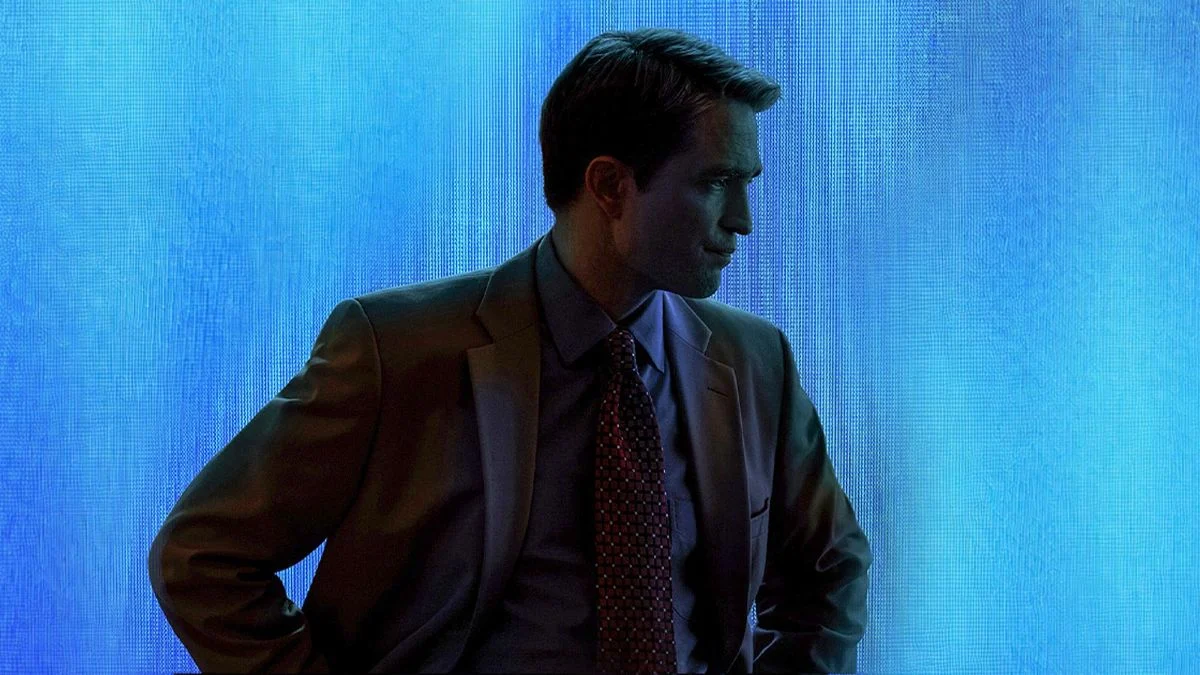
In the landscape of modern prestige cinema, few films manage to capture the corrosive intersection of ego, voyeurism, and the early digital age as effectively as Lance Oppenheim’s Primetime (2026). Adapted from Luke Dittrich’s explosive 2009 investigative article, Tonight on Dateline: This Man Will Die, the film serves as a brutal autopsy of the reality television era. Specifically, it dissects the meteoric rise and moral collapse of the hit investigative series To Catch a Predator.
Directed by Oppenheim with a screenplay by Ajon Singh, Primetime is not merely a historical retelling; it is a claustrophobic character study that posits a chilling question: when a crusader begins to believe his own myth, at what point does the justice he seeks become a mask for his own moral bankruptcy?
Main Facts: The Anatomy of a Scandal
Primetime assembles a powerhouse ensemble cast to bring this era of sensationalist journalism to life. Robert Pattinson headlines the film as Chris Hansen, the face of a crusade that promised safety but delivered spectacle. He is joined by Merritt Wever, Skyler Gisondo, Phoebe Bridgers, Matthew Maher, and Alex Winter.
The film operates on the premise that the public-facing image of To Catch a Predator—a show supposedly dedicated to protecting children from online threats—was, in reality, a high-stakes passion project fueled by the unchecked ego of a man losing his grip on reality. By peeling back the layers of production, Oppenheim reveals a workplace culture characterized by toxicity, institutionalized misogyny, and an almost pathological commitment to performative righteousness. The result is a film that is as visually vibrant as it is thematically grim.
Chronology: A Descent into the Analog Abyss
The narrative structure of Primetime is meticulously paced, mirroring the slow-burn disintegration of its central subjects. The film opens in the early 2000s, utilizing a visual language that feels ripped from the infancy of the modern internet. Oppenheim’s commitment to period accuracy is total; he utilizes analog screen cuts, archaic web interfaces, and the iconic, jarring chime of an AOL login to ground the audience in a world on the precipice of a digital revolution.
The Rise of the Crusade
The first act establishes the show’s momentum. We see Hansen not as a journalist, but as a performer. Pattinson’s portrayal is a masterclass in controlled mania. He treats his interviews as monologues, practicing inflections and gestures with a predatory focus. The film posits that Hansen’s belief in his own morality is his greatest delusion. He isn’t just catching predators; he is "casting" them, creating a theatrical environment where the outcome is always predetermined.
The Friction of Reality
As the narrative progresses, the focus shifts to the peripheral players. Merritt Wever’s character, the engine of the production, provides the film’s most poignant social commentary. As a woman in a hyper-masculine, ego-driven environment, her struggle to maintain a moral compass while being undervalued by her superiors highlights the systemic rot of the era. Her arc serves as a barometer for the audience’s own discomfort: how much complicity is required to keep the lights on?
The climax of the film revolves around the tragic arc of Bill Conradt (Alex Winter), the assistant district attorney whose entanglement with the show becomes the catalyst for its eventual downfall. Winter’s performance is nuanced, presenting a man who is painfully aware of his own hypocrisy—a direct contrast to the blinding self-assurance of Hansen. The tension builds with an almost inevitable, tragic momentum, leading to the infamous events that marked the end of the show’s tenure.
Supporting Data: The Performative Screen
The brilliance of Primetime lies in its visual experimentation. In an era where many Hollywood productions favor a desaturated, "gritty" color palette that often feels lackluster, Oppenheim embraces a saturated, neon-soaked aesthetic that feels both nostalgic and haunting.
The Foil of Innocence
Skyler Gisondo, playing "Decoy Dan," represents the thematic inverse of Hansen. Where Hansen is the predator of the narrative—a man who consumes the lives of others to feed his ego—Dan is the sacrificial lamb. He is the "bait" who finds himself physically and psychologically overwhelmed by the reality of the darkness he is tasked to lure out. Gisondo’s performance captures the gradual erosion of youthful naivety, turning the "hero" of the show into a disillusioned pawn. The irony, as the film masterfully illustrates, is that Dan is the only one in the room who seems to be struggling with the ethics of his work, while the men in charge have long since abandoned such considerations.
Official Responses and Thematic Implications
While the film is a work of fiction based on real-world reporting, its implications reach far beyond the screen. Primetime serves as a scathing critique of the "True Crime" industrial complex that dominates modern media. By framing the show as a series of personal delusions rather than a public service, the film challenges the viewer to look at the media they consume through a lens of skepticism.
The "hypocrisy of the hero" is the film’s central pillar. Pattinson’s Hansen is not a cartoon villain; he is a man who truly believes in the purity of his mission. This is what makes his character so terrifying. Because he believes he is on a righteous path, he feels justified in sacrificing his personal connections, his ethics, and the safety of those around him. The film posits that his mission—the "show"—eventually replaces his humanity. He is a priest whose god is his own image, and as the film demonstrates, that god is a demanding, hollow master.
The Cost of Spectacle
Oppenheim makes a profound point regarding the nature of spectacle. In the world of Primetime, ethics are secondary to the "clip-able" moment. The show’s production team is shown as being perpetually ready to sacrifice morality for viewership. This serves as an indictment of the broader media landscape of the 2000s, a period where the barrier between news and entertainment was systematically dismantled.
The film concludes not with a tidy resolution, but with an acknowledgement of the vacuum left behind. The tragedy isn’t just that the show failed; it’s that it succeeded so well, and in doing so, destroyed everyone involved.
Conclusion: A Masterclass in Tension
Primetime (2026) is a challenging, necessary, and deeply uncomfortable film. It succeeds because it refuses to give the audience an easy out. It forces us to reconcile with the fact that we, the viewers, were the fuel for the fire that consumed these lives.
With a rating of 8.3/10, the film stands as a triumph of character-driven storytelling. Lance Oppenheim has crafted a period piece that feels shockingly contemporary, proving that the sins of the past are never truly behind us—they are simply waiting for the next "primetime" slot to be televised. Whether you are a fan of character studies or a student of media history, Primetime is an essential viewing experience that will leave you questioning the nature of justice, the fragility of morality, and the high cost of playing the hero in a world that craves nothing more than a spectacle.
