
The Genre-Bending Dilemma: Why the DGA Shut the Door on ‘You Can See Everything’
SPOILER ALERT: This article contains major spoilers for “You Can See Everything,” now playing in theaters.
In the high-stakes theater of Hollywood’s awards season, few institutions hold as much predictive power as the Directors Guild of America (DGA). For decades, the DGA’s top prize—Outstanding Directorial Achievement in Theatrical Feature Film—has served as the ultimate harbinger of Academy Award success. Since 1949, the guild’s winner has gone on to secure the Oscar for Best Director in all but a handful of instances. This year, however, one of the most critically lauded and commercially successful films of the season, You Can See Everything, will be barred from that prestigious race.
In a move that highlights the widening chasm between traditional industry definitions and modern, hybrid cinematic storytelling, the DGA has confirmed that the A24 documentary, directed by Nathan Fielder and Lance Oppenheim, is ineligible for its flagship feature film award. The ruling effectively forces the film into a singular lane: the documentary category.
A Rigid Rulebook vs. An Experimental Vision
The decision, confirmed to Variety by a DGA representative, stems from the guild’s own internal governance. The DGA rulebook is explicit regarding its eligibility criteria for the top feature film prize: “Re-releases, animated films and documentaries are not eligible.”
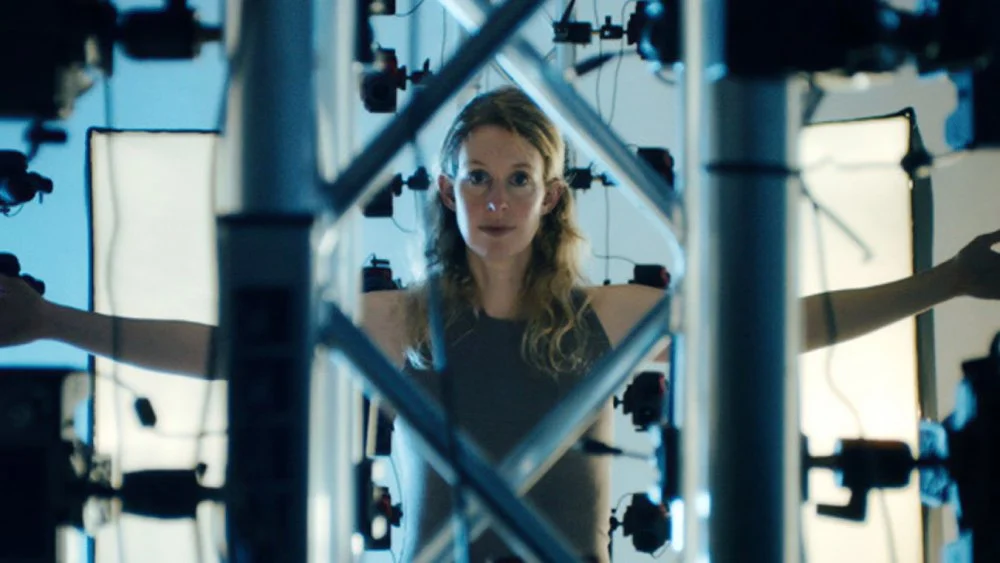
For A24 and a coalition of awards strategists, this black-and-white phrasing presented an existential hurdle. You Can See Everything, a 174-minute exploration of the rise and fall of Theranos founder Elizabeth Holmes, refuses to adhere to the conventions of the “talking head” documentary. By blending candid footage with highly stylized, staged reenactments and an unconventional structural narrative, Fielder and Oppenheim have created a work that deliberately blurs the boundary between nonfiction and narrative drama.
Studio executives had long hoped that the film’s unique DNA would warrant an exception. Their argument was rooted in the film’s artistic execution: if the craft on display—cinematography, production design, and performances—mirrors that of a traditional narrative feature, why should it be pigeonholed?
The studio’s push for a broader classification gained significant, albeit controversial, momentum when they opted to position Amanda Seyfried for Oscar consideration in the Supporting Actress category. Seyfried, who famously portrayed Holmes in Hulu’s limited series The Dropout, appears in You Can See Everything in a capacity that challenges traditional documentary participation. By pushing Seyfried as a contender, A24 was effectively signaling that the film was a piece of narrative cinema, not merely a journalistic record.
The Chronology of a Classification Conflict
The friction between A24 and the DGA did not happen overnight; it was the culmination of a months-long campaign to redefine the limits of the documentary genre.
- October 16: You Can See Everything premieres in theaters to immediate critical acclaim. Critics are polarized yet mesmerized, with many questioning whether to label it a “documentary,” “reality-narrative hybrid,” or a “post-truth epic.”
- Late October: Early box office returns indicate that audiences are treating the film as a major theatrical event, further emboldening the studio to treat it as a “Best Picture” contender rather than a niche documentary entry.
- November: A24 officially updates its awards site, laying out an ambitious submission strategy. They list the film not only for Best Documentary Feature but for Best Picture, Director, Supporting Actress (Seyfried), Supporting Actor (Christopher Abbott), and several craft categories including cinematography and original score.
- Early December: As voting blocs begin to form, the DGA clarifies its stance. Despite high-level lobbying from strategists who argued the film’s "unusual construction" necessitates a new category, the guild holds firm.
- Present Day: The DGA confirms that while the film is eligible for the documentary award, the “Theatrical Feature Film” prize remains off-limits.
The Implications: A Blow to Precursor Momentum
The exclusion of You Can See Everything from the DGA’s main race is a significant blow to the film’s overall awards narrative. In the industry, "precursor momentum" is the currency of the season. When a film is snubbed or excluded from a major guild award, it creates a perception of “otherness” that can make it difficult for voters to justify a Best Picture nomination.
History suggests that the DGA is a bellwether for the Oscars. By losing this opportunity to be validated by their peers as a “feature film,” Fielder and Oppenheim face an uphill battle. While the film could still win the DGA’s documentary prize, that victory would likely remain siloed.
However, the film’s prospects at the Academy Awards remain a different beast. The Academy of Motion Picture Arts and Sciences has a slightly more fluid approach to categorization. A24 is still pushing hard to have the film recognized in the Best Picture category—a feat that, should it happen, would be historic. To date, a purely nonfiction film has never been nominated for Best Picture, though the line between the two categories has never been more porous.
The Wider Industry Debate
The DGA’s decision has sparked a broader conversation within the industry about how we categorize content in an era of "post-documentary" filmmaking. As streaming services and independent studios lean into hybrid formats, the old guard—the guilds and the Academy—is finding it increasingly difficult to maintain rigid silos.
Representatives from A24 remain in active, ongoing conversations with other major bodies, including BAFTA, SAG-AFTRA, and the Golden Globes. The studio’s goal is to ensure that You Can See Everything is treated with the same prestige as any other major studio drama. They are essentially asking the industry to judge the work by its artistic merit rather than its production method.
“The DGA sees it differently,” a source close to the guild stated, noting that for the purposes of labor and awards, the guild classifies films based on their underlying production and submission. If it was produced as a documentary, it is a documentary, regardless of its artistic flourishes.
The Path Forward: What’s at Stake
Despite the DGA setback, the film’s awards campaign is far from over. The list of submissions on A24’s site is an aggressive statement of intent:
- Best Picture: Nathan Fielder, Lance Oppenheim, Tatiana Bears, Maggie Ambrose, and Jack Davis.
- Best Director: Fielder and Oppenheim.
- Supporting Acting: Amanda Seyfried and Christopher Abbott.
- Craft Categories: Production Design (Alex DiGerlando and Rebecca Meis), Cinematography (David Bolen), Costume Design (Katina Danabassis), Film Editing (Adam Locke-Norton), Makeup and Hairstyling (Stephanie Pasicov and Kerrie Smith), Sound (Paul Hsu and Richard Carlos), and Original Score (Ari Balouzian).
This comprehensive list highlights that, in the eyes of the studio, the film is a total piece of cinema. Whether the voters of the Academy agree will be the defining drama of this awards season.
The 79th annual DGA Awards will announce their nominations in January, and while You Can See Everything will be absent from the marquee category, its presence in the documentary race will be the one to watch. Will it be a consolation prize, or will it be the platform from which the film launches a historic, rule-breaking campaign for the 99th Academy Awards?
For now, the industry remains in a state of flux, watching to see if the traditional definitions of film can hold under the pressure of a new, experimental generation of storytellers. A24 has declined to provide further comment, leaving the film to speak for itself—a tactic that has, so far, proven to be their most effective strategy.
