
The Ghost in the Machine: Decoding the Final Mystery of HBO’s Lanterns Season Finale
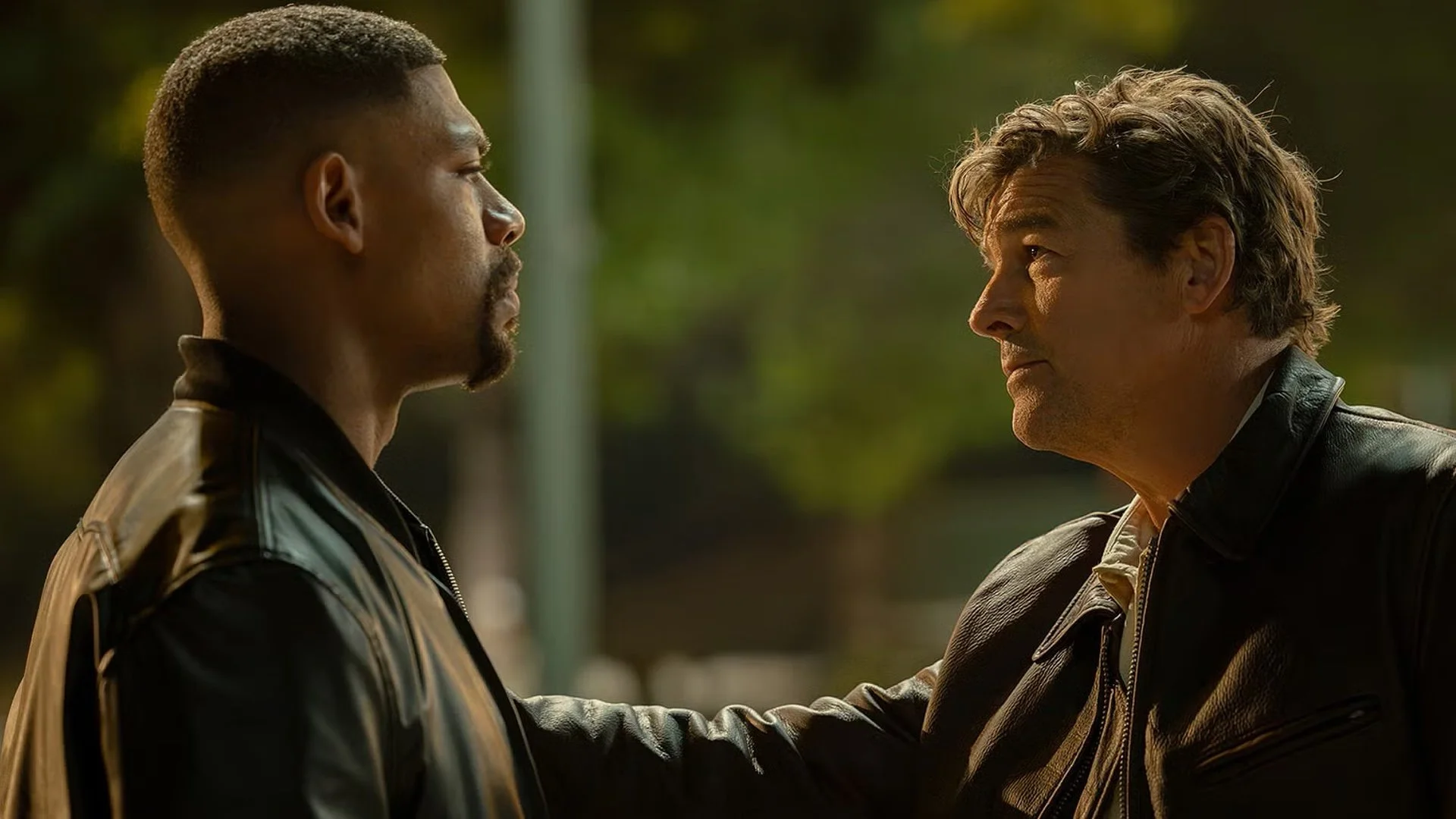
The conclusion of the inaugural season of HBO’s Lanterns—titled "Dirt and Stars"—offered audiences a masterclass in serialized storytelling. It delivered an emotionally resonant goodbye between the legendary Hal Jordan (Kyle Chandler) and his successor, John Stewart (Aaron Pierre). However, as the dust settles on the season’s final frame, eagle-eyed fans have identified a subtle, lingering anomaly in the script that threatens to upend everything viewers thought they knew about Hal Jordan’s definitive end.
While the plot appears to have closed the book on the veteran Green Lantern, the final interaction between John Stewart and the "Halogram"—a sentient, constructed echo of the younger Jordan—contains a linguistic slip that suggests Hal may be more than just a memory.
The Chronology of a Final Farewell
To understand the weight of this mystery, one must look at the sequence of events leading to the season’s final moments. Throughout the premiere, the narrative established that the version of Hal Jordan interacting with John was a construct: a digital or light-based representation of a younger, less jaded version of the pilot. This entity was designed to serve as a guide, operating on a limited databank of the real Jordan’s psyche.
As the season finale unfolds, the truth of Jordan’s demise is laid bare. John Stewart uncovers the harrowing reality: Hal was murdered by Sheriff Kerry, who acted in a desperate, panicked state after Hal identified her son, Noah, as a sleeper-agent Manhunter.
Armed with this revelation and a sense of profound loss, John makes a pivotal decision: he will reboot Jordan’s decommissioned ring using the volatile power source engineered by Sinestro. Before he departs for the stars, the Halogram appears one last time. In a poignant exchange, John repeats the final words Hal spoke before his death—words the construct had not previously heard. The Halogram, softening, responds with a loaded, intimate farewell: "I love you too, junior."
With a wink that feels both cinematic and conspiratorial, the construct vanishes. It was intended as a final goodbye, but for the audience, it triggered an immediate investigation into the semantics of that specific nickname.
The Significance of "Junior"
In the established lore of the show, the nickname "Junior" was not a term of endearment that the younger, construct-based Hal would have known. It was a moniker birthed from the real Hal Jordan’s specific history with John Stewart—a jab born after Hal met John’s parents, Bernadette and John Sr.
The real Hal utilized the name specifically to needle his successor, knowing full well that John—a man chosen by the Guardians to surpass him—would find the diminutive nickname deeply annoying. It was a friction-point in their mentor-mentee dynamic, a piece of character history that was strictly "post-development."
The Halogram, however, was explicitly framed as a younger, pre-cynical version of the man. According to the show’s internal logic, this construct possessed neither the memories nor the experiences that led to the coining of the nickname. Throughout the preceding episodes, the construct consistently referred to John as either "John" or "trainee." The sudden, unprompted usage of "Junior" in the final moments suggests a bridge has been gapped. Whether through a data-bleed from the real Hal’s consciousness or a lingering, sentient evolution of the construct itself, the Halogram displayed knowledge it should not have possessed.
Official Perspectives: The Showrunners’ Dilemma
The mystery of the "Junior" comment has prompted intense speculation regarding the potential for Hal Jordan’s resurrection. However, the series’ architects are maintaining a cautious, if not evasive, stance.
Damon Lindelof, co-creator of the series, addressed the possibility of Jordan’s return in a recent interview with Collider. Lindelof’s response highlights the delicate balance between satisfying fan expectations and maintaining narrative integrity.
"I definitely don’t want to speculate about the answer to that question," Lindelof remarked. He emphasized that the writers’ room was hyper-aware of the "schmuck-bait" trope—the act of killing a character only to pull a Princess Bride-style "mostly dead" reveal. "We felt like… the worst possible thing that we could do is show you a pilot where Hal Jordan was definitively dead, and then try to walk it back."
Lindelof went on to draw a compelling parallel to the film Ghost, noting that while he would never want to "degrade the emotional impact" of a character’s passing by bringing them back too quickly, he also acknowledged the inherent fluidity of the source material. "Knowing what the comics have done with Parallax and Hal, I think [he] has died at least three or four times over the course of the canon… where there’s a will, there’s a way."
Contrastingly, showrunner Chris Mundy offered a more definitive take on the narrative closure of the season. "It’s absolutely the end of the season and the end of [John and Hal’s] relationship," Mundy told Brandon Davis. "I think our intent was always just that, to close that off emotionally… I would never say never to anything, but it’s also like that closed the book on our story for this season."
Implications for Season 2 and Beyond
The discrepancy between Lindelof’s "never say never" and Mundy’s "closed book" creates a fascinating tension for the future of the franchise. The presence of the Manhunters and the involvement of Sinestro—a character whose moral ambiguity is a pillar of the DC mythos—provide a fertile ground for "impossible" returns.
If the writers choose to revisit Hal Jordan, the "Junior" moment serves as the perfect narrative hook. It implies that the technology used to create the Halogram may be more sophisticated—or more dangerous—than initially presented. If the construct can access, or perhaps even store, the consciousness of the original, then the Hal Jordan we saw at the end of the finale may not be a mere shadow, but a fragment of the man himself.
The Role of Kyle Chandler
It is impossible to discuss the impact of this death without acknowledging the performance of Kyle Chandler. Initially met with skepticism by a segment of the fandom, Chandler’s portrayal of an aging, war-weary Jordan served as the emotional anchor of the series. His ability to convey decades of cosmic trauma in a few scenes made his death in the premiere feel like a genuine loss to the viewer. This emotional investment is precisely why the "Junior" reveal feels so significant; fans are not merely mourning a character, they are mourning a performance they are not yet ready to let go of.
Conclusion: A Mystery Left to Burn
As we look toward the development of Season 2, the question remains: was the "Junior" comment merely an emotional flourish—a final wink to the audience—or is it the breadcrumb trail for a larger, more complex resurrection arc?
The history of the Green Lantern comics is defined by cycles of life and death, defined by the emerald light’s ability to transcend physical limitations. Whether the showrunners intend to lean into that comic-book trope or strictly adhere to the grounded, gritty emotional arc they established in Season 1 remains to be seen.
For now, the mystery of the Halogram stands as a testament to the show’s attention to detail. It reminds us that in the universe of Lanterns, even a ghost in the machine can hold onto a secret. As John Stewart ventures out to face the unknown, he carries the weight of a nickname that suggests his mentor might still be watching, in one form or another. The book on Season 1 may be closed, but the mystery of "Junior" ensures that the conversation regarding Hal Jordan’s legacy is far from over.
