
The Legacy of a Metal Icon: Remembering Chuck Varga, the Creative Force Behind GWAR
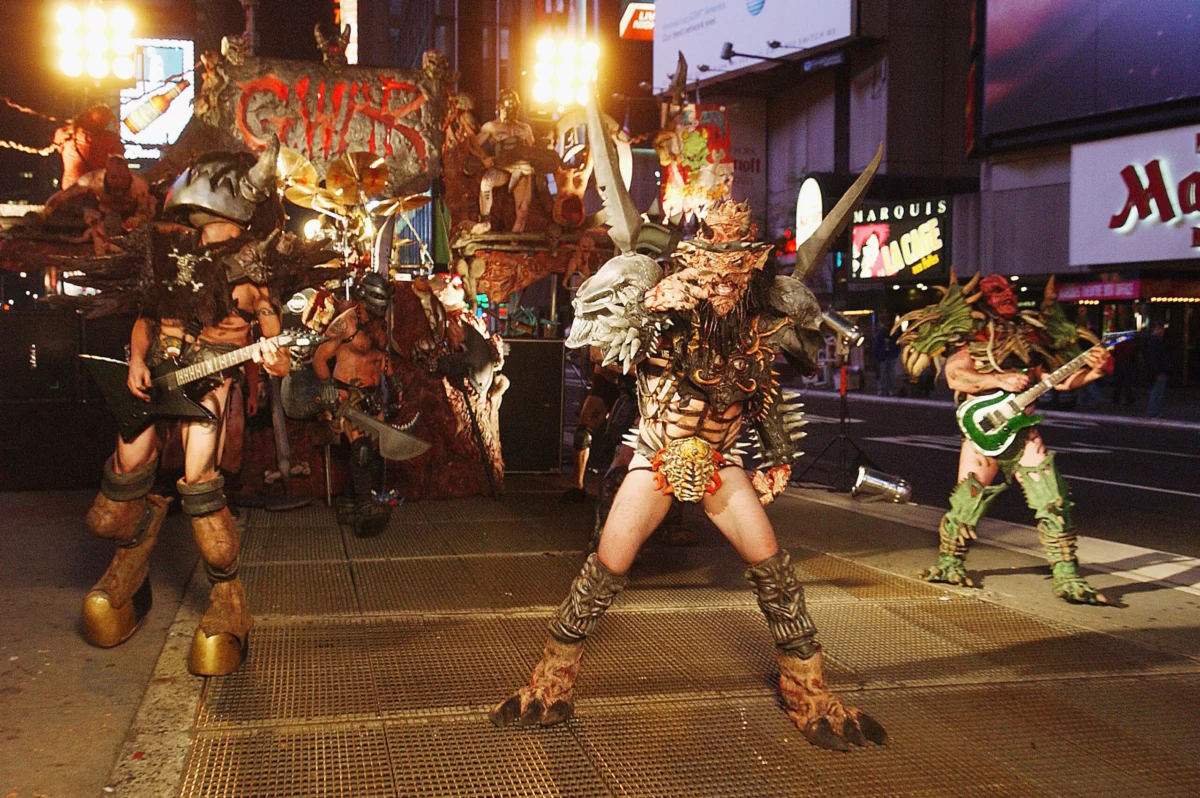
The heavy metal community is mourning the loss of a true visionary. Chuck Varga, a founding member and long-time vocalist of the iconic shock-rock ensemble GWAR, has passed away at the age of 68. Varga, who resided in Brooklyn, New York, had been bravely battling cancer for over a year. His passing marks the end of an era for a band that fundamentally redefined the intersection of extreme music, performance art, and theatrical absurdity.
His death was confirmed by GWAR bassist Casey Orr, who stated that Varga passed away peacefully with his wife, Bambi, by his side. The news has sent shockwaves through the metal underground, triggering an outpouring of tributes from peers, collaborators, and the legion of "Bohabs"—the dedicated fanbase that has followed the band’s intergalactic narrative for decades.
A Life Defined by Artistic Rebellion
Born in 1958, Chuck Varga was never destined for a conventional path. His journey into the cultural lexicon began not on a stage, but in the corridors of Virginia Commonwealth University (VCU) in Richmond. It was there that Varga’s path crossed with fellow student Hunter Jackson. The two shared a penchant for the avant-garde, the grotesque, and the cinematic.
Driven by a desire to push the boundaries of independent filmmaking, Varga and Jackson established "The Slave Pit," a gritty production space that would eventually become the creative epicenter for what would become GWAR. What started as a collective for student films quickly spiraled into something far more volatile. By merging heavy metal’s sonic intensity with the high-concept visual language of sci-fi, horror, and medieval Nordic mythology, they created an entity that was as much a traveling circus of carnage as it was a musical act.
The Rise of the Sexicutioner
While many members of GWAR adopted elaborate, nightmarish personas, Varga’s contribution as "The Sexicutioner" became a defining element of the band’s aesthetic. The character, steeped in the band’s signature blend of dark humor and violent imagery, allowed Varga to explore the boundaries of stage performance. His vocals provided a guttural, driving force for the band during its pivotal breakthrough years from 1986 to 1996.
Chronology of a Career
Varga’s career was marked by both consistency and evolution. His involvement with GWAR was not a single chapter, but a recurring theme that spanned nearly four decades.
- 1986–1996: The breakthrough decade. Varga was a primary vocalist and creative engine, helping to cement the band’s status as a must-see act, known for their elaborate, slime-drenched live spectacles.
- 1997: A pivotal shift. Varga stepped back from full-time duties with GWAR, relocating to New York City to pivot toward the film, television, and Broadway industries. This period marked his transition from a touring musician to a behind-the-scenes master of practical effects and set design.
- 2000–2002; 2014–2017; 2022: Despite his departure from the full-time roster, Varga’s ties to the "Slave Pit" remained ironclad. He returned for various stints, proving that the bond forged in the 80s was one of brotherhood rather than simple employment.
- 2023–2024: The final chapter. Following his cancer diagnosis in April 2023, Varga became the heart of a massive community effort. His bandmates and fans rallied behind him, launching a nationwide blood donation campaign that served as a testament to the loyalty he inspired.
The Slave Pit: A Creative Powerhouse
It is impossible to discuss Varga’s legacy without detailing the impact of The Slave Pit. The organization was not merely a band rehearsal space; it was a laboratory of the weird. Varga, alongside his cohort, pioneered the use of "Kiss-style" costumes—only magnified by orders of magnitude.
Where other bands focused on tight musicianship and stage presence, GWAR focused on world-building. They created a narrative universe that required specialized prop-making, animatronics, and chemical engineering (to ensure the "blood" sprayed on the audience was both safe and sufficiently messy). Varga was instrumental in the design of these elements. After leaving the band’s full-time touring roster, he took his expertise to the next level by founding Hyperreal Productions, a company dedicated to high-end costume and set design, which serviced a variety of clients in the entertainment industry.
Recognition and Cultural Impact
While GWAR was often dismissed by mainstream critics in their early years, their influence eventually became impossible to ignore. In 1993, the band received a Grammy nomination for their long-form music video Phallus in Wonderland. Though they lost the award to Annie Lennox, the nomination served as a shot across the bow of the music industry: GWAR was a legitimate cultural force.
Three years later, in 1996, the band received another Grammy nod in the "Best Metal Performance" category for their single "S.F.W." (an acronym for "So F***ing What"). Again, they narrowly missed the win, this time to industrial giants Nine Inch Nails. These moments were not just about accolades; they were about validation for a group of artists who had turned their DIY ethos into a national, and eventually global, phenomenon.

Official Responses and Tributes
The statement provided by Casey Orr encapsulates the profound respect Varga garnered from his peers. "He was one of a kind," Orr said. "As an artist, as a performer; as a scholar and a gentleman. I’m better for having known him and the world is lesser for his leaving."
Orr’s comments touched on the mythology of the band itself, referencing deceased bandmates like Dave Brockie and others. "He is most likely being welcomed into Valhalla right now by Brockie and Smooty and all who went before. Raise your glass and tell his tales. Legends never die. Hail Varga! Hail Sexicutioner!"
The sentiment is echoed across social media platforms, where fans have been sharing stories of the blood donation drive held in his honor last year. The campaign, which saw donors receiving a shirt designed by Varga himself, was a poignant example of how the GWAR community—often viewed as chaotic and antisocial—operates as a tight-knit, supportive family during times of crisis.
Implications for the Legacy of GWAR
The passing of Chuck Varga is a stark reminder of the mortality of the pioneers of the 80s and 90s metal scenes. As original members of these influential bands continue to pass, the question of how to preserve their legacy becomes increasingly pressing.
For GWAR, the "Slave Pit" remains a vital entity. Unlike bands that rely on a single frontman or a fixed lineup, GWAR has always functioned more like a theater troupe, where the characters—and the mythology—are the star. However, the loss of a founding architect like Varga, who held the keys to the original vision, is a profound blow.
Varga’s life serves as a blueprint for the modern independent artist. He showed that one could be uncompromisingly grotesque and avant-garde while simultaneously mastering the technical craft of set design and production. He moved seamlessly between the grimy clubs of Richmond, the global stage of the Grammy Awards, and the professional studios of New York.
As the industry reflects on his contributions, it is clear that Varga’s influence extends far beyond his recorded vocals. He was a builder of worlds. Whether through the costumes that defined the GWAR visual language or the production company he nurtured later in life, he was an artist who refused to let his creativity be stifled by conventional labels.
Conclusion
Chuck Varga’s death is a profound loss, not only for the metal community but for the broader arts and entertainment world. He was a bridge between the raw, DIY energy of the 1980s underground and the professional, high-concept world-building that dominates modern pop culture.
As his bandmates, family, and fans celebrate his life, they do so with the knowledge that he was a man who lived on his own terms. He was a scholar, a gentleman, and, as the Sexicutioner, a force of nature. While he may have moved on from the physical stage, the legacy he built—within the Slave Pit and in the minds of the fans he inspired—remains as permanent as the ink in the history books of rock and roll.
"Legends never die," as Casey Orr noted. In the case of Chuck Varga, that legend is as loud, as visceral, and as enduring as a GWAR show. Hail Varga.
