
Zach Cregger’s ‘Resident Evil’ Shatters Box Office Records with a Massive $108 Million Global Debut
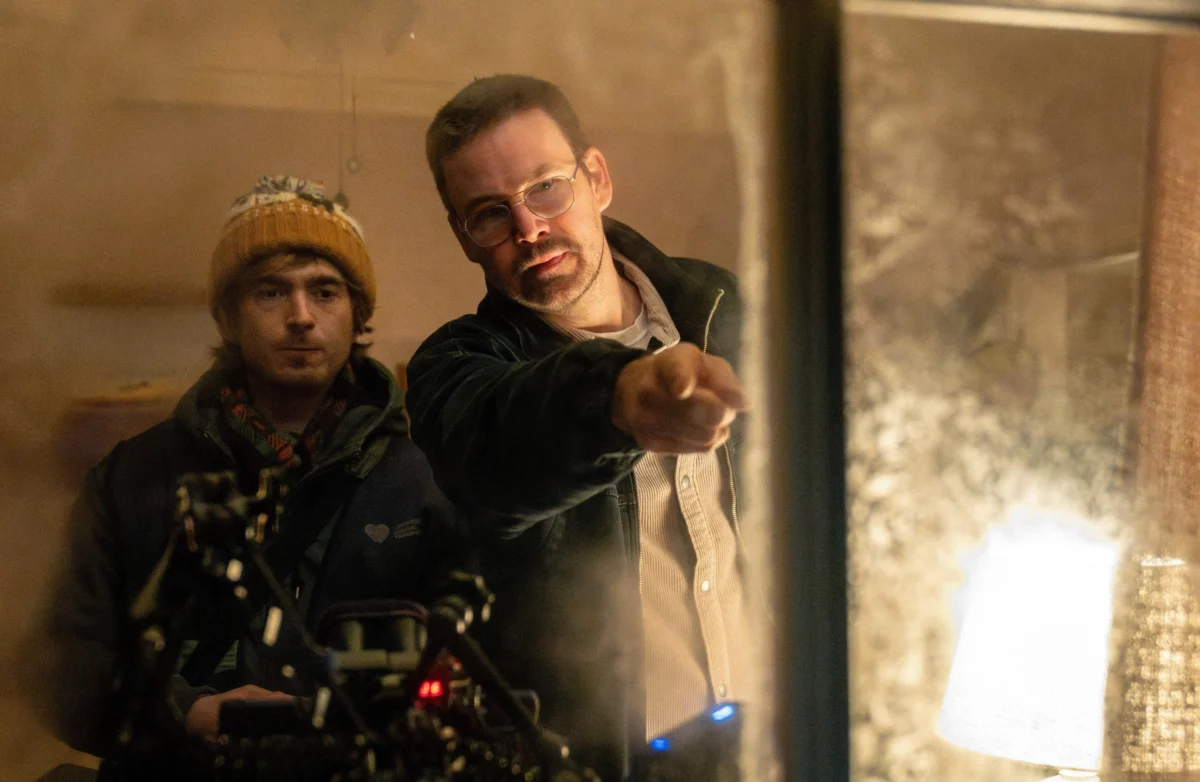
LOS ANGELES — In what is rapidly shaping up to be the definitive cinematic comeback story of the decade, Zach Cregger’s audacious reimagining of the long-running video game franchise Resident Evil has conquered the global box office. The film pulled off a stunning $108.3 million worldwide opening weekend, instantly eclipsing the entire theatrical lifetime gross of the 2002 original film.
Cregger, whose meteoric rise through the horror and thriller genres has caught Hollywood off guard, has once again proven that original vision and sharp genre sensibilities can still translate into blockbuster gold. The picture’s domestic footprint accounted for $60 million of the opening haul, while international markets chipped in an impressive $48.3 million against a production budget of $75 million.
For Sony Pictures, TriStar Pictures, Constantin Film, and Davis Film, the gamble has paid off tenfold, instantly breathing new life into a dormant intellectual property and cementing Cregger’s status as one of the most bankable and powerful writer-directors in the modern studio system.
Main Facts
- Global Domination: Zach Cregger’s Resident Evil reboot pulled in a massive $108.3 million worldwide during its opening weekend ($60 million domestic, $48.3 million international).
- Beating History: The opening weekend alone surpassed the entire global theatrical run of the original 2002 Resident Evil adaptation, which concluded its run just under $103 million.
- Budget and Profitability: Carrying a $75 million production price tag, the film is on track for rapid profitability, turning the corner on its financial investment in record time.
- Industry Standing: Cregger’s stock continues to surge; Vulture recently ranked him the 17th most powerful director in Hollywood, a position he is expected to climb following this weekend’s returns.
- Franchise Revival: The film effectively resurrects a cinematic universe that had flatlined following the commercial failure of 2021’s Resident Evil: Welcome to Raccoon City and Netflix’s cancellation of its live-action series in 2022.
Chronology of a Masterstroke: How Cregger Built an Empire
To understand the cultural and financial seismic shift of this weekend’s box office numbers, one must examine the precise timeline of Zach Cregger’s ascent.
Just a few short years ago, Cregger was primarily known for his comedy work as part of the sketch troupe The Whitest Kids U’ Know. That narrative fractured overnight in September 2022 with the sleeper hit Barbarian. Produced on a microscopic budget of just $4.5 million by contemporary horror standards, the film became a word-of-mouth phenomenon, ultimately netting $46.2 million globally.
It was during the golden window between the breakout success of Barbarian and the release of his next masterwork, Weapons, that studio executives at TriStar, Constantin, and Davis Film made what now looks like a stroke of visionary genius. They hired Cregger to steer the sinking Resident Evil ship. At the time, Cregger possessed immense creative promise, but his "quote"—industry parlance for a director’s asking price and leverage—was a fraction of what it is today.
By the time Weapons arrived in theaters, Cregger had transformed into a certified juggernaut. Weapons stomped through the box office, grossing $270 million against a $38 million budget and earning critical acclaim, including an Academy Award win for Amy Madigan’s unforgettable, gonzo performance as Aunt Gladys. (A prequel exploring Gladys’s origin is already deep in development).

Having secured Cregger right before his price tag skyrocketed, the studios handed him the keys to the Umbrella Corporation. The result is a film that marries high-concept cinematic dread with the pulse-pounding survival horror that fans of Capcom’s foundational video game franchise have craved for decades.
Supporting Data and Historical Box Office Context
When looking at the raw financial metrics, Cregger’s Resident Evil towers over its cinematic predecessor from two decades ago. In 2002, Paul W.S. Anderson’s original Resident Evil, starring Milla Jovovich, finished its theatrical run with a global gross of roughly $103 million. While inflation adjusters indicate that the 2002 film’s cumulative gross would technically outpace Cregger’s opening weekend in 2026 dollars, the comparison underscores a vital industry reality: opening weekend dominance in the modern streaming era is exceedingly difficult to secure for non-superhero properties.
Furthermore, the reboot’s $108.3 million global launch highlights a dramatic reversal of fortune for the cinematic brand. The IP was critically gasping for air following a string of diminishing returns:
- 2021: Resident Evil: Welcome to Raccoon City stumbled at the box office, grossing only $42 million against a $25 million production budget. Because theaters retain roughly half of all ticket sales, the film failed to turn a theatrical profit.
- 2022: Netflix attempted to pivot the property to the small screen with a live-action Resident Evil television series, which was swiftly axed after a single season due to lukewarm critical reception and low completion rates.
By contrast, Cregger’s $75 million investment has yielded an international sensation, proving that audiences do not necessarily suffer from franchise fatigue—rather, they suffer from a lack of genuine directorial vision.
Official Responses and Industry Reaction
Major studio executives and box office analysts have spent the weekend unpacking the unexpected scale of the film’s success.
"Zach Cregger is operating on a completely different frequency than almost anyone else working in studio filmmaking right now," noted one rival studio distribution chief who spoke on the condition of anonymity. "He understands tone, he understands audience pacing, and most importantly, he knows how to deliver a visceral theatrical experience that makes staying home feel like a compromise."
While formal studio post-mortems from Sony and TriStar are expected later in the week, insider sources indicate that conversations regarding a direct sequel are already underway. The swift embrace by both hardcore gamers and general horror audiences has eliminated any doubt about the franchise’s viability moving forward.

Cregger himself has remained characteristically understated about his newfound cinematic royalty status, though industry insiders joke that his creative capital is now limitless. As one veteran producer put it following the weekend actuals: "If Zach walked into a boardroom tomorrow and pitched a three-hour, black-and-white art-house drama starring Austin Abrams as an exhausted CPA during tax season, a major financier would write the check on the spot."
Implications for the Future of Hollywood IP Adaptation
The seismic triumph of Cregger’s Resident Evil sends shockwaves through the entertainment industry, carrying several major implications for how intellectual properties are handled moving forward:
1. The Death of the "Director-For-Hire" Formula
For years, major studios treated video game adaptations and legacy sequels as assembly-line products, hiring safe, interchangeable television directors to execute pre-approved storyboards. Cregger’s success proves that studios achieve exponentially better financial and cultural results when they hand the reins to singular, idiosyncratic auteurs who possess a distinct visual voice.
2. A Blueprint for Video Game Adaptations
Following the successes of The Last of Us and The Super Mario Bros. Movie, Hollywood has grown increasingly careful with gaming IP. However, Resident Evil proves that R-rated, uncompromising horror can still dominate global markets if executed with stylistic brilliance rather than generic action tropes.
3. The Ascent of the Auteur-Blockbuster Director
With Barbarian, Weapons, and now Resident Evil under his belt, Zach Cregger joins an elite, vanishingly small club of modern filmmakers—names like Christopher Nolan, Denis Villeneuve, and Ryan Coogler—who can reliably greenlight an expensive studio picture purely on the strength of their own name recognition.
As the box office dust settles on a historic weekend, one thing is abundantly clear: the zombie apocalypse has never looked so lucrative, and Zach Cregger’s reign over Hollywood’s dark side has only just begun.
