The Ultimate Hunt: How the ‘Predator’ Franchise Evolved from 1980s Action Classic to Hollywood’s Ultimate Blank Canvas
Main Facts: The Enduring Legacy of the Galaxy’s Most Elusive Hunter
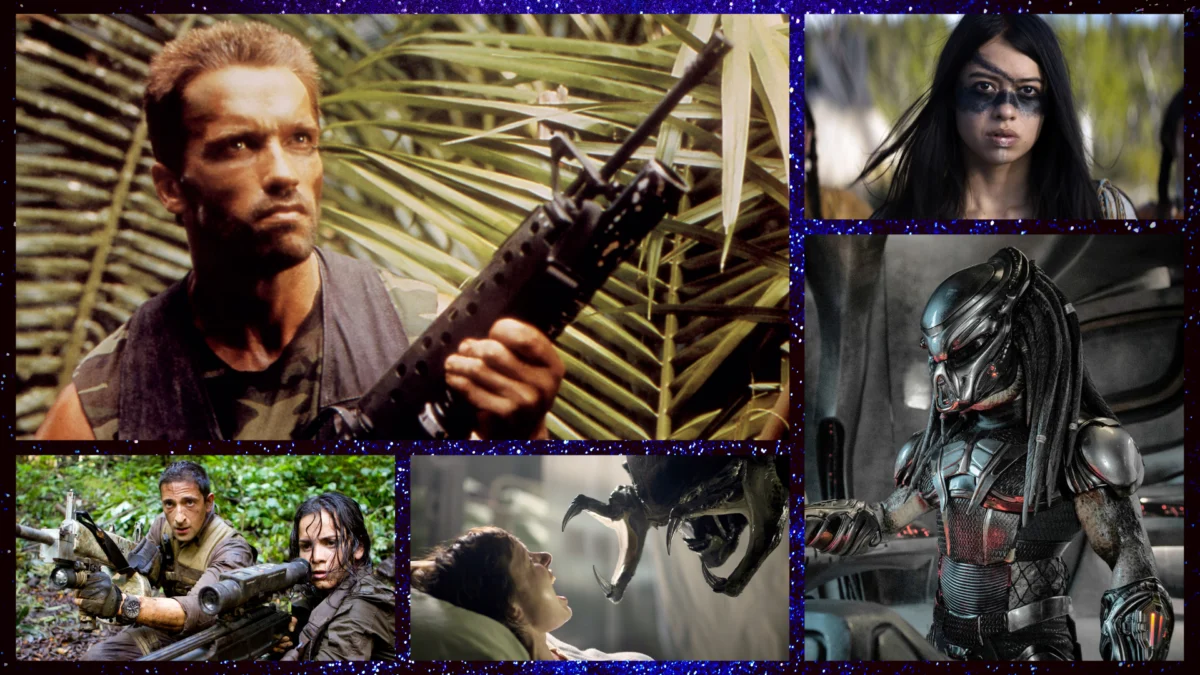
When Arnold Schwarzenegger steps out of the dense jungle foliage in John McTiernan’s 1987 action masterpiece Predator, he delivers a line that sets the ideological baseline for an entire cinematic universe: "We’re a rescue team, not assassins." Little did audiences—or the characters on screen—know that this gritty, high-octane rescue mission in the fictional Central American republic of Val Verde would mutate into one of modern sci-fi’s most resilient, adaptable, and blood-pumping multi-media franchises.
What began as a muscular, testosterone-fueled 1980s shoot-’em-up quickly subverted expectations. Schwarzenegger’s Maj. Alan "Dutch" Schaefer and his elite squad of commandos expect to fight human insurgents, only to find themselves stalked by an extraterrestrial big-game hunter. Equipped with plasma-casting intergalactic weaponry, active-camouflage cloaking technology, vocal mimicry, and a code of honor rooted in the thrill of the hunt, the Predator immediately etched itself into cinematic folklore.
Yet, the true genius of the franchise has never rested solely on a single iconic monster. As the series expanded across nearly four decades, spawning nine theatrical and streaming films—including cross-overs, prequels, and animated anthologies—it evolved from a straightforward man-versus-monster showdown into a fascinating Hollywood experiment. Unlike the dense, Campbell-esque mythologies of Star Wars, the tightly bound continuity of the Marvel Cinematic Universe, or the heavy-handed environmentalism of Avatar, the Predator franchise thrives precisely because it possesses no rigid canon holding it back. It is, by all accounts, the ultimateblankcanvas.
Chronology: Tracing the Evolution of the Hunt
The timeline of the Predator universe is as sprawling as it is erratic, jumping across centuries, planets, and cinematic styles. To understand how the franchise reached its current slate—highlighted by recent entries like Dan Trachtenberg’s critically acclaimed 2022 prequel Prey and the theatrical release Predator: Badlands—we must trace the historical chronology of the intellectual property.
1. The Golden Era of Practical Effects (1987–1990)
Predator (1987): Directed by John McTiernan, this original classic established the template. It pitted Schwarzenegger’s cunning and improvisational grit against a practical creature suit designed by Stan Winston and famously inhabited (initially) by a young Jean-Claude Van Damme before production changes brought in the towering Kevin Peter Hall.
Predator 2 (1990): Directed by Stephen Hopkins and starring Danny Glover, this urban sequel traded the humid jungles of Val Verde for a sweltering, dystopian Los Angeles experiencing a gang war. While initially underwhelmed by critics, the film brilliantly expanded the franchise’s lore by introducing trophy rooms containing a Xenomorph skull, planting the seeds for future crossovers.
2. The Dark Horse Comics Era and Interstellar Crossovers (2004–2007)
Following a successful run in Dark Horse comic books, the cinematic worlds of Fox’s two premier sci-fi monsters finally collided.
Alien vs. Predator (2004): Directed by Paul W.S. Anderson, this PG-13 arena battle took a team of scientists deep beneath the Antarctic ice. While divisive among purists, it was a commercial success.
Aliens vs. Predator: Requiem (2007): Directed by the Brothers Strause, this R-rated sequel brought the battle to a small Colorado town. Plagued by notoriously dark lighting and a lacklustre script, it remains a low point for both franchises critically.
3. The Reboots and Standalone Sequels (2010–2018)
Predators (2010): Produced by Robert Rodriguez and directed by Nimród Antal, this back-to-basics spiritual sequel stranded a diverse group of elite killers (played by Adrien Brody, Alice Braga, and others) on an alien game-preserve planet.
The Predator (2018): Directed by original cast member Shane Black, this high-budget, comedic, and chaotic entry attempted to inject franchise lore with genetically modified "Ultimate Predators," resulting in a polarizing box-office run.
4. The Modern Renaissance (2022–Present)
Prey (2022): Directed by Dan Trachtenberg and starring Amber Midthunder, this Hulu-released prequel shifted the timeline back to the Great Plains of 1719, following a Comanche warrior proving her worth against a more primitive, brutal iteration of the alien hunter. It became a critical darling and revitalized the brand.
Predator: Killer of Killers (2025): Continuing the push into alternative mediums, this animated anthology further diversified how stories within this universe are told.
Predator: Badlands (2025): The latest theatrical offering, which earned a strong "B+" from IndieWire’s chief film critic David Ehrlich, proving that the property still has plenty of gas left in the tank on the big screen.
Supporting Data: Box Office, Critical Reception, and Cultural Footprint
When evaluating the Predator franchise against its science-fiction peers, industry analysts often point to a curious paradox: while it rarely matches the gargantuan box-office grosses of Disney’s Marvel juggernauts or James Cameron’s Avatar films, its cultural longevity is virtually unimassable.
Historically, the Predator films have lived in the shadow of their stablemate, the Alien franchise. Ridley Scott’s xenomorphs generally command higher box-office returns and enjoy a more prestigious critical reputation. Yet, Predator boasts a unique resilience.
According to box office tracking data over the decades:
The Original Hit: 1987’s Predator grossed roughly $98 million worldwide against a modest $15 million budget, cementing its status as an immediate financial success.
The Crossover Peak: 2004’s Alien vs. Predator remains one of the highest-grossing entries in either franchise globally, pulling in over $172 million, proving that audiences were hungry for monster mashups long before cinematic universes became the Hollywood norm.
The Streaming Triumph: 2022’s Prey broke streaming records for Hulu upon its release, proving that pivoting away from traditional theatrical models toward prestige streaming can yield monumental critical redemption.
Official Responses and Industry Commentary: The "Blank Canvas" Theory
The secret sauce of the Predator IP has frequently been a topic of discussion among film critics and industry insiders. Writing for IndieWire, critic Christian Zilko offered a brilliant breakdown of why the franchise continues to endure despite lacking a grand overarching mythology:
"The franchise lacks the Campbell-esque mythology of ‘Star Wars,’ the mainstream appeal of Marvel, the environmental consciousness of ‘Avatar’… the list could go on. Its entire value proposition seems to rely on the fact that it was first to market with a catchy name and that it boasts a semi-recognizable creature to trot out in new scenarios every few years. All of which, to be clear, is complimentary."
This perspective reframes what makes a successful modern intellectual property. Rather than being weighed down by heavy continuity—where every single sequel must meticulously reference an encyclopedia of prior lore—Predator operates as an anthology framework. You can drop the creature into 1719 Comanche territory (Prey), a futuristic alien game preserve (Predators), or a neon-lit Los Angeles street (Predator 2), and the core concept remains intact: man against beast, survival of the fittest.
Directors and creators have repeatedly praised this creative freedom. Dan Trachtenberg noted during the press rollout for Prey that the lack of rigid studio constraints allowed him to treat the project more like a Western or an Indigenous survival drama than a standard sci-fi sequel. This flexibility is precisely why actors and filmmakers continue to line up to take their shot at the franchise.
Implications: What the Future Holds for the Ultimate Extraterrestrial Hunter
As the Predator universe expands into its fourth decade, the implications for Hollywood studio filmmaking are profound. In an era dominated by risk-averse, highly serialized intellectual properties that demand homework from their audiences (such as multi-season streaming shows and interconnected cinematic universes), Predator offers a refreshing counter-programming model.
By treating its properties as cinematic sandboxes rather than sacred texts, 20th Century Studios and Disney have unlocked a sustainable formula. They can pivot effortlessly between low-budget streaming experiments, high-concept theatrical releases, animated anthologies, and historical period pieces without alienating the core fanbase.
Whether you are revisiting the sweat-drenched, machismo-laden trenches of the 1987 original, or marveling at the stripped-down, visceral survival tactics of Amber Midthunder’s Naru in Prey, the Predator universe proves that fear is universal, the thrill of the hunt never gets old, and sometimes, the best storytelling tool a studio can have is a blank canvas and a terrifying alien with a plasma caster.