
The Future of Finishing: Why the Inaugural Post Atlanta Conference is a Watershed Moment for the Industry
For over a decade, Georgia has reigned as a titan of global film and television production. From the sprawling backlots of Trilith Studios to the urban landscapes of downtown Atlanta, the state’s tax incentives have turned the region into a magnet for high-budget blockbusters and prestige television. Yet, for all the cameras rolling in the Peach State, a significant portion of the “finishing” work—the vital post-production process—has historically migrated to hubs like Los Angeles, New York, or London.
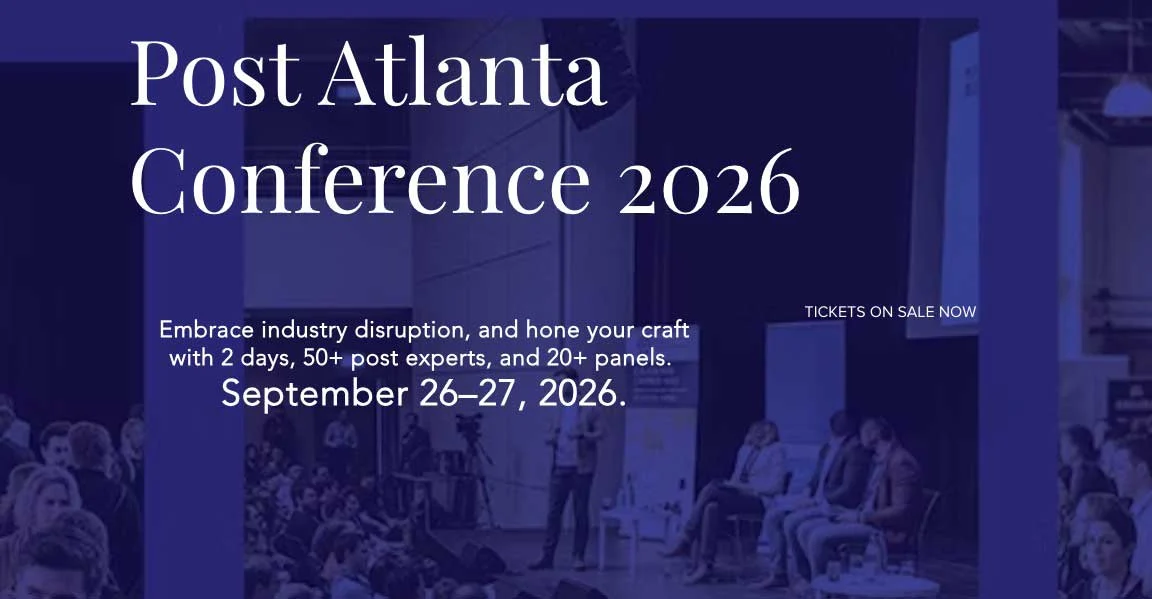
That dynamic is poised for a structural shift. This September 26–27, 2026, the Plaza Theatre on Ponce will host the inaugural Post Atlanta Conference, an event designed to bridge the gap between Georgia’s prolific production output and its burgeoning post-production ecosystem. With over 50 industry professionals, 20+ panels, and a focus on the craft of editing, color grading, VFX, and sound design, this conference is not merely a local meetup; it is a declaration of Atlanta’s maturity as a full-service creative capital.
The Evolution of a Production Powerhouse
To understand the necessity of the Post Atlanta Conference, one must look at the historical trajectory of the Georgia film industry. The Georgia Film Tax Credit, which offers up to 30% in tax incentives for qualified productions, successfully turned the state into the "Hollywood of the South." However, the infrastructure initially focused heavily on physical production: grip and electric, construction, set design, and logistics.
While the talent pool for editors, sound engineers, and visual effects artists has grown in tandem with the physical production industry, there has been a glaring lack of a dedicated, centralized forum for these specialists to congregate, share knowledge, and foster a cohesive professional community. The Post Atlanta Conference aims to rectify this by providing a dedicated space for the artisans who spend their hours in the "dark rooms" of the industry. By creating a physical hub for this community, the organizers are signaling that Atlanta is no longer just a place to shoot; it is a place to finish.
A Speaker Lineup of Industry Heavyweights
The organizers of the Post Atlanta Conference have set a high bar for their inaugural year, securing a roster of speakers that reflects the caliber of work currently coming out of the Georgia market.
Drew Sawyer: The Visionary
Drew Sawyer, founder of Moonshine Post, serves as a cornerstone of the conference’s identity. A veteran producer with a resume that includes stints at industry titans like Netflix, AMC, Warner Bros., and IFC, Sawyer’s involvement is particularly symbolic. He built Moonshine Post as a full-service post house specifically to capitalize on the local talent pool. His participation in the conference underscores a deliberate, calculated bet on Atlanta’s potential to retain high-end post-production work that would otherwise be exported.
Deanna Nowell, A.C.E.: Bringing the Marvel Standard
Representing the upper echelon of television and streaming editing, Deanna Nowell, A.C.E., brings a wealth of experience that spans the most recognizable brands in entertainment. Her work on Marvel’s Ironheart for Disney+, NBC’s Grand Crew, and Netflix’s Beauty in Black illustrates the diverse skill set required to navigate the current streaming landscape. Nowell’s presence is a testament to the fact that top-tier editors are increasingly viewing Atlanta as a viable, long-term home for their careers.
Kristina Kromer: The Versatile Journeyman
Rounding out the headline speakers is Kristina Kromer, an editor whose career traverses the distinct worlds of long-form narrative film, television, and high-stakes advertising. Having worked with industry stalwarts like Paramount and Warner Bros., Kromer’s perspective is invaluable. Her ability to translate the frantic, high-speed pace of advertising into the narrative-heavy world of long-form storytelling provides a unique case study for attendees looking to diversify their portfolios.
The Practical Philosophy: Beyond the Keynote
Unlike many industry trade shows that prioritize fluff and high-level marketing, the Post Atlanta Conference is positioning itself as a "practical" event. The organizers have explicitly stated that the programming is designed to provide actionable value—the kind of knowledge that an editor or colorist can take back to their workstation on a Monday morning.
The format is broken down into three core pillars:
- Panels: Broad, high-level discussions regarding the state of the industry, workflow optimization, and the impact of artificial intelligence on post-production.
- Workshops: Deep-dives into specific software, hardware, and creative techniques.
- Networking: Facilitated sessions designed to connect freelancers with studio heads and post-supervisors, addressing the perennial problem of talent discovery in a decentralized gig economy.
By including students, freelancers, and seasoned veterans in the same room, the conference aims to democratize access to information, ensuring that the "next generation" of Georgia-based talent has a clear path to mentorship.
Contextualizing the Shift: A New Era for Georgia
The timing of this conference is not accidental. For years, the industry mantra in Georgia was "shoot local, finish elsewhere." This was often due to a lack of high-end, color-accurate screening rooms, high-speed data infrastructure for remote collaboration, or simply a lack of networking that linked local editors with the producers flying in from Los Angeles.
However, the "finishing pipeline" is changing. With the rise of remote-first workflows and the increasing comfort of major studios in trusting decentralized post-production teams, Georgia is perfectly positioned to capture a larger share of the post-production dollar. The Post Atlanta Conference is the physical embodiment of this transition. It acts as a bridge, connecting the massive production infrastructure that already exists with the creative talent required to shepherd a project from raw dailies to final color and sound mix.
Lessons from the Past
There is, however, a healthy sense of pragmatism surrounding the launch of this event. Industry observers may recall the 2013 Southeast Creative Summit, an ambitious event that sought to establish a recurring professional hub in Atlanta. Despite its success and the enthusiasm it generated, the summit struggled to maintain momentum, ultimately becoming a "one-and-done" affair.
The organizers of the Post Atlanta Conference appear acutely aware of this history. By focusing on the specific, niche, and highly technical needs of the post-production sector—rather than attempting a broad, "catch-all" creative festival—they are building a foundation that is likely more sustainable. They are speaking to a specific demographic: the colorists, the VFX artists, the sound designers, and the editors. By hyper-focusing on the finishing process, the conference ensures that every attendee finds something relevant to their specific craft.
Implications for the Future
The implications of a successful Post Atlanta Conference are far-reaching. If this inaugural event succeeds, it will likely serve as a catalyst for further investment in the state’s post-production infrastructure. It creates a feedback loop: more conferences lead to more networking, more networking leads to more collaboration, and more collaboration leads to higher-quality work being finished within state lines.
For the freelance editor working in their home studio, this event offers a chance to integrate into a professional network that is currently fragmented. For the major production house, it offers a recruiting ground for the next wave of creative talent. For the state of Georgia, it represents the final piece of the puzzle in becoming a self-sustaining media ecosystem.
Conclusion: Registration and Logistics
As the date approaches, the excitement surrounding the conference is palpable. With registration still open, the organizers are pushing for a strong showing to set the tone for future iterations. While some may view the conference as a two-day event, its ambition suggests it is meant to be the start of a permanent, recurring institution in the Southern film calendar.
For those in the industry, the Post Atlanta Conference is more than just a place to learn about new plugins or editing techniques; it is a chance to define what "post-production in Georgia" looks like for the next decade. Whether you are a veteran editor with a resume full of major streaming hits or a student just breaking into the industry, the Plaza Theatre this September is the place to be.
The industry is watching. If the caliber of speakers and the clear, practical vision of the organizers are any indication, the Post Atlanta Conference is poised to become the definitive gathering for the people who make the magic happen after the director yells "cut."
