
The New Frontier: NASA and SpaceX Prepare for Record-Breaking Crew-13 Mission
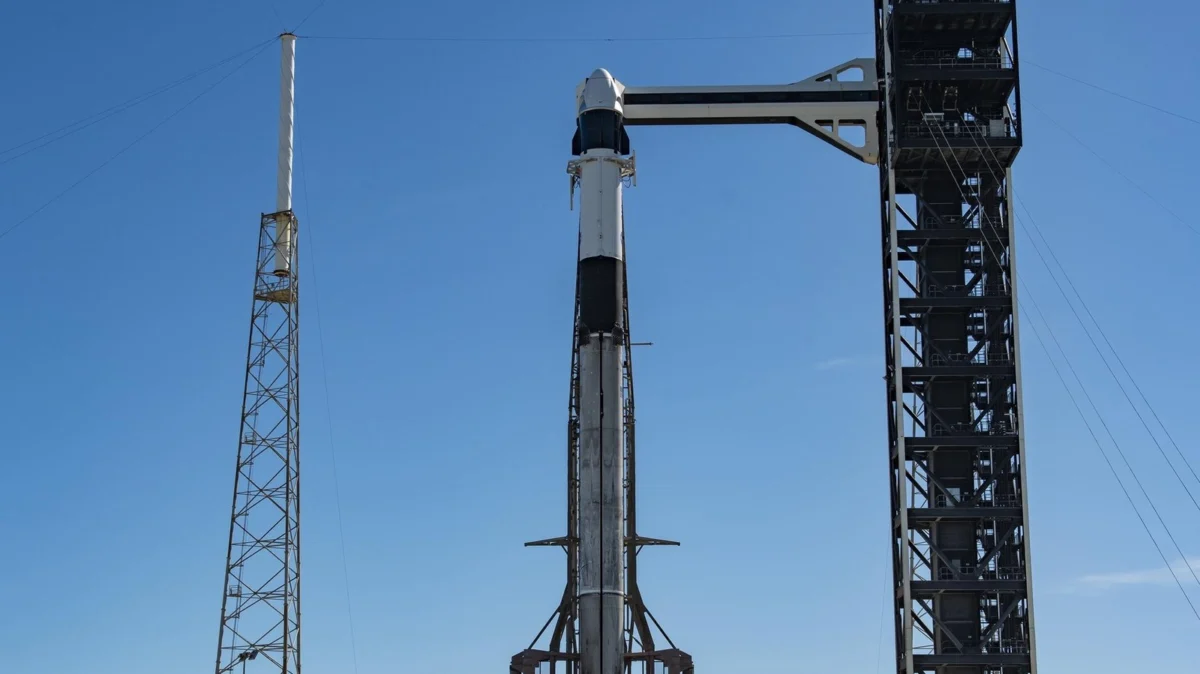
As the sun rises over Florida’s Space Coast, the aerospace community turns its collective gaze toward the Cape Canaveral Space Force Station. Today, October 1, marks a pivotal moment in contemporary spaceflight as NASA and SpaceX prepare to launch the Crew-13 mission. Carrying a diverse quartet of explorers, the mission represents more than just a routine rotation of the International Space Station (ISS) crew; it is a technical milestone and a critical stepping stone toward the long-term human exploration of the lunar surface and beyond.
Main Facts: The Mission at a Glance
The Crew-13 mission, launching aboard a battle-tested Falcon 9 rocket and the Dragon spacecraft, is scheduled for liftoff at 11:10 AM ET. The crew consists of four seasoned and rising professionals representing two different nations and two space agencies:
- Jessica Watkins (NASA): Serving as spacecraft commander, Watkins is a distinguished geologist. Having previously contributed to the Curiosity rover’s mission on Mars, she brings a wealth of planetary science expertise to the ISS.
- Luke Delaney (NASA): A research pilot hailing from NASA’s Langley Research Center, Delaney will serve as the mission pilot. This flight marks his inaugural journey into the vacuum of space.
- Joshua Kutryk (CSA): Representing the Canadian Space Agency, Kutryk is a veteran of high-stakes flight environments, embarking on his first spaceflight to conduct a series of international experiments.
- Sergey Teteryatnikov (Roscosmos): The mission’s international partner, the Russian cosmonaut, is also making his maiden voyage to the orbiting laboratory.
The mission is not merely a transport service. Once the Crew-13 Dragon capsule docks with the ISS, the team will transition into a busy schedule of scientific research, technology demonstrations, and station maintenance. Perhaps most notably, NASA has indicated that this specific transit—from the moment of liftoff to the final latching of the docking port—is projected to take just seven hours and 50 minutes. This will establish a new record for the fastest transit to the ISS by a U.S. spacecraft, showcasing the growing efficiency of commercial crew logistics.
Chronology: The Road to the Launchpad
The preparation for Crew-13 has been an exhaustive process involving months of rigorous training, safety reviews, and hardware integration.
- Pre-Flight Integration: Over the past six months, the crew has undergone centrifuge training, simulated emergency egress drills, and systems integration training at SpaceX’s headquarters in Hawthorne, California, and NASA’s Johnson Space Center in Houston.
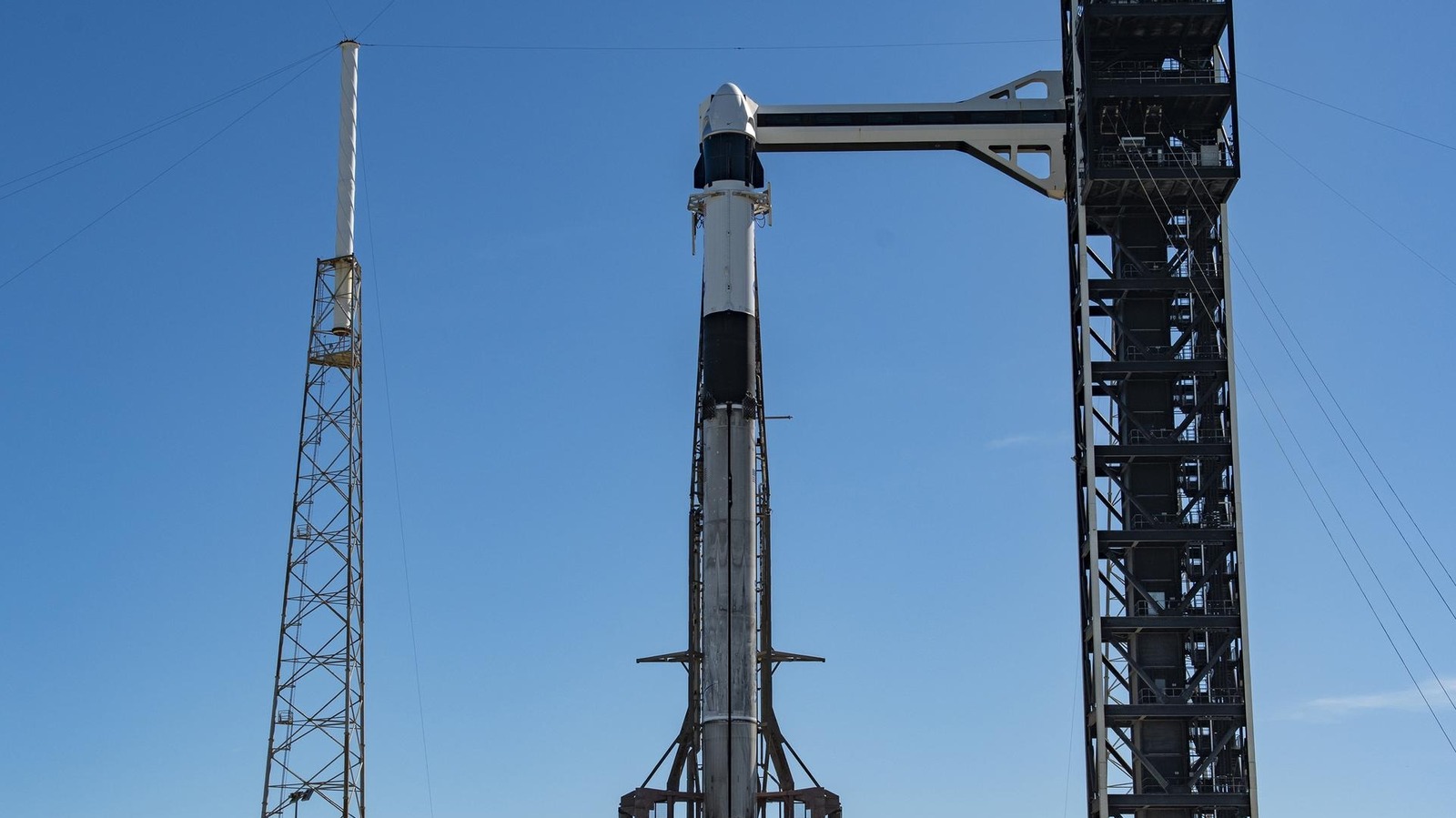
- The Rollout: The Falcon 9 rocket, topped with the Dragon capsule, arrived at the launchpad earlier this week, undergoing final static fire tests to ensure the integrity of its nine Merlin engines.
- Final Countdown: Starting at 9:20 AM ET today, NASA will initiate a comprehensive, multi-platform livestream covering the final fueling sequence and the boarding process. Recognizing the global interest in space exploration, NASA has expanded its distribution footprint, streaming the event across its official YouTube channel, NASA+, X (formerly Twitter), Amazon Prime Video, Discovery+, and Netflix.
Supporting Data: Why Crew-13 Matters
While the general public may view ISS rotations as routine, the technical reality is far more complex. The Crew-13 mission arrives at a time when the station is aging, requiring more frequent maintenance and oversight. The crew will be tasked with relieving the outgoing SpaceX Crew-12 team, whose tenure was punctuated by a notable emergency in June. During that incident, an air leak in the Russian segment of the ISS forced astronauts to shelter in place within their capsule—a stark reminder of the inherent dangers of life in low-Earth orbit.
The scientific payload for this mission is extensive. Crew-13 is expected to conduct experiments ranging from fluid dynamics and plant biology to the testing of new life-support technologies. These studies are designed with one primary objective: preparing humanity for the harsh, unpredictable environments of the Moon and Mars. By testing how humans and hardware react to long-term exposure to microgravity, the crew is providing the foundational data necessary for the success of future deep-space missions.
Official Responses and Perspectives
NASA leadership has consistently framed the Crew-13 mission as a testament to the power of public-private partnerships. "The synergy between SpaceX’s rapid innovation cycle and NASA’s decades of deep-space operational experience is the blueprint for our future," a NASA spokesperson noted during the pre-launch press briefing.
For the crew members themselves, the mission represents a blend of high-level professional duty and the realization of a lifelong dream. Jessica Watkins, in her role as commander, emphasized the collaborative spirit required for the mission. "We are not just individuals flying a ship; we are representatives of a global scientific effort. The work we do on the station impacts the very future of how we will survive on other worlds."
The inclusion of international partners like the Canadian Space Agency and Roscosmos underscores the station’s role as a beacon of diplomatic cooperation. Despite geopolitical tensions on the ground, the ISS remains one of the few places where nations continue to work in concert for the advancement of human knowledge.
Implications: A Bridge to the Moon and Mars
The broader context of the Crew-13 mission is defined by NASA’s ambitious Artemis program. While the agency has faced delays—most notably pushing the goal for a human return to the lunar surface to 2028—the momentum remains strong.
The successful completion of the Artemis II mission in April—a crucial lunar flyby—proved that the agency’s heavy-lift capabilities and life-support systems are maturing. The next major hurdles involve the development and testing of lunar landers. SpaceX and Blue Origin are currently in the process of refining their respective lander designs, with rigorous testing slated for the Artemis III mission in 2027.
The Crew-13 mission acts as a vital "bridge" in this timeline. By maintaining a constant, capable human presence on the ISS, NASA ensures that it does not lose its edge in long-duration spaceflight. Every hour logged by Watkins, Delaney, Kutryk, and Teteryatnikov is an hour of data that will refine the systems that will eventually sustain life on the lunar south pole.
The Future of Commercial Spaceflight
Furthermore, the record-breaking transit time of the Crew-13 Dragon capsule highlights the maturity of the commercial space sector. When the Commercial Crew Program began, the goal was to eliminate reliance on foreign launch providers. Today, that goal has been surpassed; the program is now a driver of innovation, forcing a competitive environment that lowers costs and increases the frequency of scientific output.
As we look toward the next decade, the lessons learned from this mission—how to optimize launch windows, how to conduct fast-track docking, and how to maintain complex life-support systems—will be the "lessons learned" chapters in the textbooks of the next generation of space explorers.
Conclusion
Today’s launch is more than a spectacle of fire and engineering; it is an act of human endurance. As the Crew-13 mission lifts off from the Cape, it carries with it the hopes of an agency striving to reclaim its position on the frontier of the solar system. While the Moon and Mars may still be years away, the path to reaching them is being paved, one crew rotation at a time, 250 miles above the Earth.
For those watching from the ground, the sight of the Falcon 9 climbing into the Florida sky is a reminder that the spirit of exploration remains the defining characteristic of the human story. We are a species that does not stay put; we are a species that seeks to understand, to adapt, and to eventually, to inhabit the stars. The crew of the ISS, now including the four members of Crew-13, stands at the vanguard of that journey.
