
The Ghost of Silicon Valley: Andrew Garfield and the Strategic Gamble of ‘Artificial’
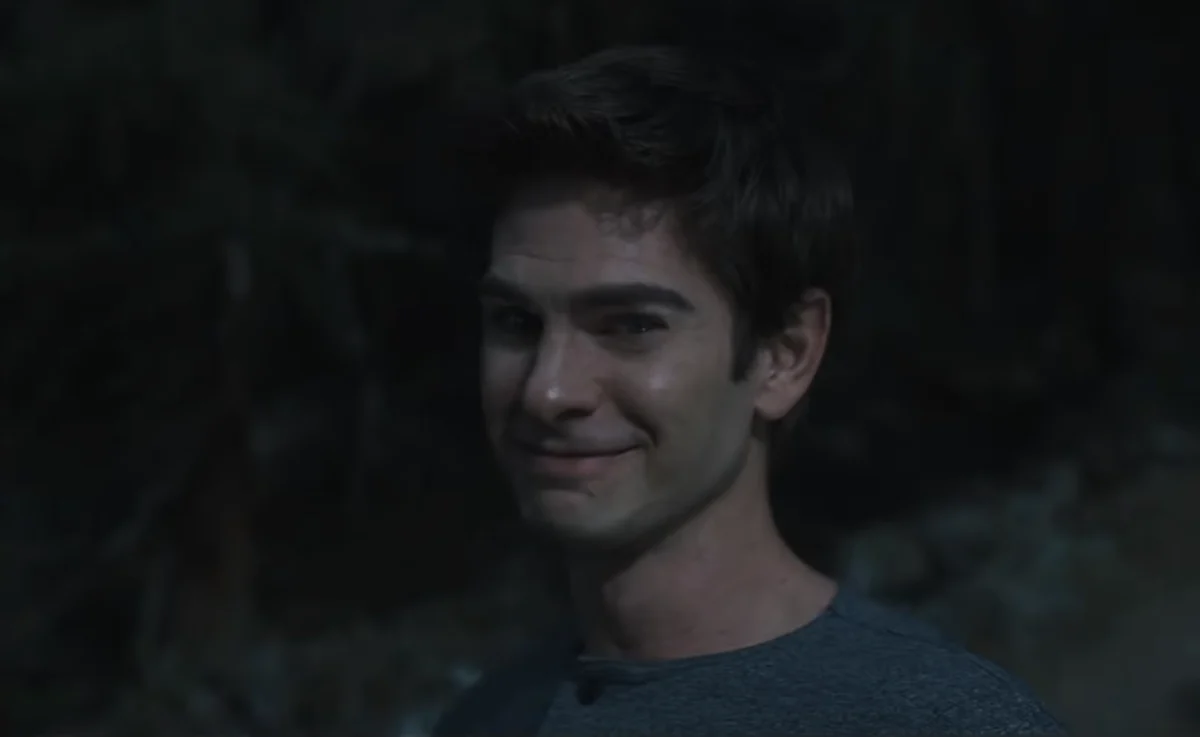
Sixteen years after he portrayed the disillusioned co-founder Eduardo Saverin in David Fincher’s The Social Network, Andrew Garfield is returning to the high-stakes, high-tension world of Silicon Valley tech giants. Yet, in Luca Guadagnino’s gripping new drama Artificial, which held its world premiere at the New York Film Festival (NYFF), Garfield finds himself on the other side of the boardroom table. This time, he is not the one pushed out; he is the architect of the chaos.
Stepping into the shoes of Sam Altman, the CEO who was abruptly ousted from OpenAI only to orchestrate a dramatic return just five days later, Garfield is anchoring a film that is already positioning itself as a titan of the upcoming awards season. In a strategic maneuver that has surprised industry pundits, Variety has confirmed that the production will campaign Garfield in the Best Supporting Actor category, while his co-star Yura Borisov—who portrays OpenAI co-founder and former chief scientist Ilya Sutskever—will lead the charge in the Best Actor category.
It is a curious reversal of roles: the film’s most recognizable face is seeking recognition in the supporting race, hoping for a different outcome than his previous brushes with Oscar gold.
A Chronology of Innovation and Ousting
Artificial is a sprawling, decades-spanning odyssey that charts the volatile rise of artificial intelligence. The film meticulously tracks the parallel paths of Sam Altman (Garfield) and Ilya Sutskever (Borisov), two intellectual titans from disparate backgrounds who find common ground in the "sunny glow" of Obama-era optimism.
The narrative trajectory is framed by three distinct eras of technological idealism and cynicism. The first act captures the birth of a dream, where the promise of changing the world for the better bonds the two men in a shared, almost messianic, fervor. As the film transitions through the Trump and Biden years, the narrative tone darkens. The "enormous—and increasingly dangerous—capabilities" of their proprietary technology begin to manifest, mirroring the real-world anxieties surrounding AGI (Artificial General Intelligence).
The climax of the film centers on the infamous November 2023 boardroom coup. By focusing the emotional weight on the man who "pulled the trigger" (Altman) rather than the man who "took the bullet" (Sutskever), Guadagnino crafts a character study that is as much about the fragility of human ego as it is about the rise of the machine.
The Strategic Awards Gamble
The decision to place Garfield in the supporting category is a calculated risk. While Garfield is undeniably the film’s top-billed star, history provides ample precedent for this maneuver. Meryl Streep’s supporting campaign for Into the Woods and Catherine Zeta-Jones’ win for Chicago serve as the blueprint for "category fraud" that often succeeds when the performance, while central, serves as a catalyst for the film’s wider ensemble.
Garfield, a two-time Best Actor nominee for Hacksaw Ridge (2016) and Tick, Tick… Boom! (2021), is clearly hungry for a win. However, the Best Actor field is already suffocatingly crowded. With emerging heavyweights like Pedro Pascal, whose performance as a cellist in Behemoth! is already generating significant buzz, the decision to pivot Garfield to supporting allows him to navigate a path with potentially less direct competition.
Yura Borisov, meanwhile, is coming off his own breakthrough. Two years removed from his acclaimed performance as the reluctant henchman Igor in Sean Baker’s Best Picture winner Anora, Borisov is being positioned as the emotional moral compass of Artificial. His campaign for Lead Actor acknowledges the heavy lifting he does in portraying the internal conflict of a scientist watching his creation spiral beyond his control.
A Cast of Oscar Pedigree
The supporting categories are equally stacked. Oscar winner Mark Rylance, who portrays AI pioneer Geoffrey Hinton, will join Garfield in the supporting actor race. Rylance, whose transformative powers were cemented in Bridge of Spies, provides the gravitas required for a character whose real-life warnings about AI have become the stuff of modern legend.

Monica Barbaro, who plays the pivotal role of former OpenAI CTO Mira Murati, is vying for Supporting Actress. Barbaro is building momentum following her nomination for playing Joan Baez in the Bob Dylan biopic A Complete Unknown. The depth of the ensemble extends further, featuring Cooper Hoffman as Greg Brockman, Ike Barinholtz in a transformative turn as Elon Musk, and a supporting cast that includes Jason Schwartzman, Chris O’Dowd, Billie Lourd, and Zosia Mamet.
Behind the Lens: The Guadagnino Aesthetic
Luca Guadagnino has made Artificial his fifth appearance at the New York Film Festival, cementing his status as a festival darling. Following the stylistic triumphs of Call Me by Your Name, Bones and All, Queer, and last year’s opening-night selection After the Hunt, Guadagnino has once again assembled his "dream team" of collaborators.
Cinematographer Malik Hassan Sayeed, known for his seminal work on Spike Lee’s Clockers and Beyoncé’s Lemonade, brings a gritty, kinetic visual language to the pristine, sterile world of Silicon Valley. The film’s sonic landscape is composed by Blur frontman Damon Albarn, whose work on the original score and songs promises to be a focal point of the film’s campaign for Best Original Song.
The production design by Stefano Baisi and costume work by J.W. Anderson—both of whom were instrumental in the aesthetic success of Challengers—create a world that feels both hyper-modern and terrifyingly grounded. Casting director Jessica Ronane continues her tenure with the director, assembling a cast that balances A-list star power with indie-circuit credibility.
Implications for the Academy
As the film moves from the New York Film Festival to the BFI London Film Festival, the industry is watching closely. Guadagnino is eager to replicate the Oscar success of Call Me by Your Name, which earned four nominations and took home the trophy for Adapted Screenplay. With a production team that includes Oscar nominees Jennifer Fox (Michael Clayton) and David Heyman (Gravity, Barbie, Once Upon a Time in Hollywood), the infrastructure for a massive campaign is already in place.
The implication for the Academy is clear: Artificial is a direct attempt to capture the zeitgeist. By tackling the most significant technological shift of the 21st century, the film positions itself as an "important" piece of cinema, the kind the Academy historically gravitates toward.
However, the film’s success will hinge on whether audiences accept the narrative perspective of Sam Altman. By focusing the lens on the CEO rather than the researchers or the ethical critics, the film risks being viewed as a glorification of corporate maneuvering. If the Academy views the film as a cautionary tale rather than a hagiography, Garfield’s path to the podium may finally be cleared.
Conclusion
The convergence of Garfield’s star power, Guadagnino’s directorial flair, and the burning relevance of the subject matter makes Artificial the most discussed project of the season. As the ballots are eventually cast, the question will remain: did Garfield and his team make the right call by moving him to the supporting race? Or will the ghost of The Social Network continue to haunt his search for the ultimate validation of his peers?
For now, the film stands as a testament to the volatility of the tech world—a world where, much like in the cutthroat environment of the Academy Awards, a five-day absence can change everything. Whether through the lens of a camera or the glow of a server rack, the search for truth in Artificial is set to dominate the conversation through the winter months, potentially culminating in a triumphant return to the Dolby Theatre for everyone involved.
