
Box Office Report: Political Thriller ‘The Assassin(s)’ Faces Stiff Competition from Animated Hit ‘Chiikawa’
Main Facts: A Weekend of Split Dominance
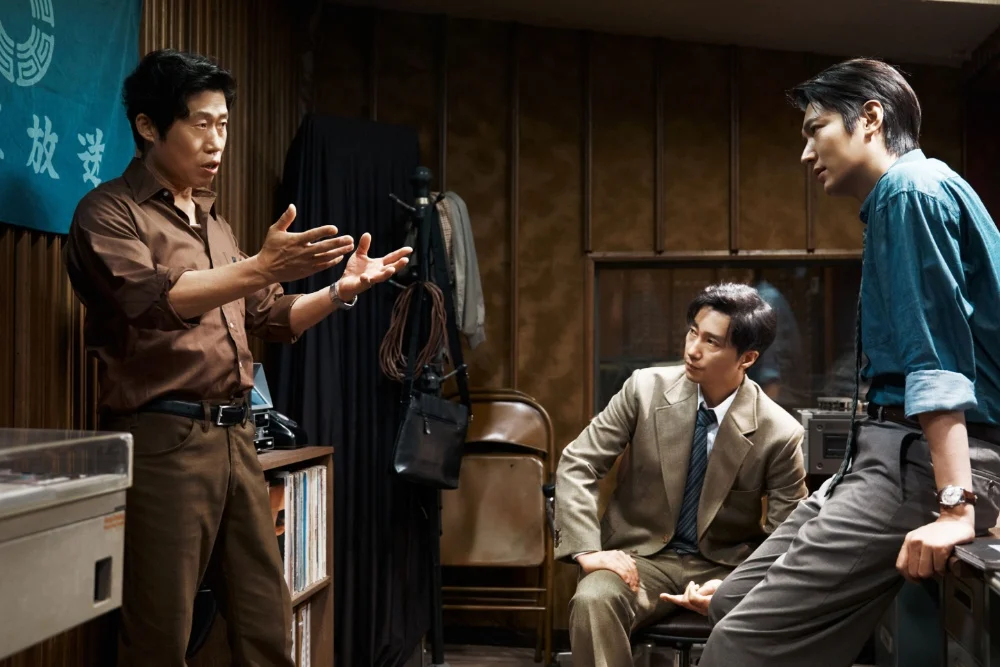
The South Korean theatrical market witnessed a fascinating split in audience preference during the weekend of October 2–4, as the box office crown was divided between raw admission volume and financial performance. Director Hur Jin-ho’s high-stakes political thriller, The Assassin(s), maintained its iron grip on the number one spot in terms of sheer ticket sales, drawing in 412,012 moviegoers across 1,129 screens.
However, the weekend’s financial victor was the Japanese animated feature Chiikawa the Movie: The Secret of the Mermaid Island. Despite trailing slightly in admissions with 405,978 tickets sold, Chiikawa leveraged higher average ticket prices to secure $3.2 million in gross revenue, compared to the $3 million generated by The Assassin(s). While the political drama accounted for 23.89% of the market, the animated sensation captured a slightly larger slice of the pie at 25.31%.
This divergence highlights a shift in consumer behavior, where family-oriented, franchise-driven animation continues to command a premium, while domestic dramas—particularly those tackling sensitive historical subject matter—remain the backbone of the Korean theatrical ecosystem.
Chronology: A Season of High-Stakes Releases
The current theatrical landscape is the culmination of a robust September rollout that has seen a mixture of political intrigue, gambling-themed crime dramas, and high-concept fantasy.
Late September Launch
The Assassin(s) and Tazza: The Song of Beelzebub both premiered on September 23, setting the stage for a competitive autumn season. Since its launch, The Assassin(s) has become a cultural touchstone, amassing $16.3 million from over 2.2 million admissions. Meanwhile, Tazza, the fourth installment in the beloved franchise, has proven its staying power, earning $10.2 million to date.
The Rise of the Animated Contender
Chiikawa the Movie made its wide release on September 30, following a series of strategic festival previews. The film, directed by Kei Oikawa and adapted from the popular manga by Nagano, has rapidly built momentum. Counting its nationwide previews, the film has already grossed $4.7 million, proving that the appeal of the "Chiikawa" brand extends well beyond its print origins.
Mid-Week Bows and Continued Runs
The week also saw the mid-week premiere of the action-fantasy Reawakened Man on September 30, and the debut of Digger on October 3. As these new titles vied for attention, established blockbusters like the long-running The Odyssey neared a historic milestone, teetering on the edge of 12 million total admissions in its ninth week of release.
Supporting Data: Detailed Performance Breakdown
According to data provided by KOBIS, the Korean Film Council’s tracking service, the overall market collective gross reached $12.6 million for the weekend. While this represents a notable contraction from the previous weekend’s holiday high of $19.6 million, the variety of genres currently in play suggests a healthy, diversified market.
Top 10 Weekend Highlights (Oct 2–4)
- The Assassin(s): $3 million (412,012 admissions)
- Chiikawa the Movie: $3.2 million (405,978 admissions)
- Tazza: The Song of Beelzebub: $2.2 million (299,915 admissions)
- The Odyssey: $1.2 million (123,059 admissions)
- Reawakened Man: $885,217 (115,894 admissions)
- Possible Love: $482,385 (60,534 admissions)
- Obsession: $283,437 (33,886 admissions)
- The Intern: $265,015 (33,491 admissions)
- Digger: $222,627 (27,580 admissions)
- Avengers: Endgame Encore: $242,747 (25,777 admissions)
Official Responses and Political Context
The Assassin(s) is not merely a box office success; it is currently at the center of a brewing political storm. The film dramatizes the August 15, 1974, assassination attempt on President Park Chung-hee, an event that resulted in the tragic death of First Lady Yuk Young-soo.
The narrative, which features stars Yu Hae-jin, Park Hae-il, and Lee Min-ho as investigators probing irregularities in the official inquiry, has invited intense scrutiny. Political analysts and critics have noted that the film’s release comes at a time of heightened sensitivity regarding historical narratives in South Korea. The directors and producers have remained largely focused on the film’s artistic merit, though the discourse surrounding the film’s "official inquiry" plot point has sparked debate across various media platforms, effectively turning the movie into a lightning rod for national conversation.
Implications: The State of the Korean Film Industry
The current box office results offer several key insights into the future of South Korean cinema:
1. The Resilience of Historical Dramas
Despite the political controversy, the strong performance of The Assassin(s) confirms that South Korean audiences retain a deep, abiding interest in historical political thrillers. When directed by a visionary like Hur Jin-ho and backed by a star-studded cast, these films can serve as major cultural events that transcend the screen.
2. The Power of Franchise and Adaptation
The success of Tazza: The Song of Beelzebub—now in its second week—and the strong opening of the webtoon-adapted Reawakened Man demonstrate that the industry is leaning heavily into established intellectual property (IP). Producers are increasingly looking toward successful webtoons and existing franchises to mitigate risk and guarantee a built-in audience base.
3. The "Chiikawa" Effect
The performance of Chiikawa the Movie signals a growing market for high-quality, character-driven animation that appeals to both children and adults. By out-grossing the nation’s top political thriller, the film proves that even in a market dominated by live-action local dramas, there is significant room for international animated features if the brand equity is strong enough.
4. A Maturing Market
With The Odyssey nearing 12 million admissions after two months in theaters, it is clear that the "long tail" phenomenon is still very much alive in Korea. Films that resonate with the public are granted extended windows of success, providing a stable revenue stream for exhibitors.
Conclusion
As the industry moves into the latter half of October, the competition remains fierce. While the total market gross dipped this weekend, the diversity of the current top ten—ranging from auteur-driven international submissions like Possible Love to high-octane action in Reawakened Man—suggests that the Korean film industry is successfully navigating a complex post-holiday landscape. The ongoing success of The Assassin(s), despite its controversial nature, will remain the primary metric for market health as the film enters its third week of wide release.
