
From Tax Write-Off to Box-Office Rebel: How ‘Coyote vs. Acme’ Defied the Odds to Cross $100 Million
By Entertainment Desk
Published: September 26, 2026
In one of the most improbable turnarounds in modern Hollywood history, the hybrid live-action and animated comedy Coyote vs. Acme has officially crossed the $100 million global box-office milestone.
Once written off as a corporate casualty—left for dead by Warner Bros. in a controversial move to secure a tax write-off—the film has proven its mettle on the big screen. According to data provided by Rentrak, the movie has pulled in $54.7 million internationally alongside a stellar $44.3 million domestically as of Sunday.
This unexpected commercial victory arrives courtesy of Ketchup Entertainment, which bravely scooped up the distribution rights for $50 million. By strategically offloading select international territories to mitigate financial risk, Ketchup has turned a rejected corporate orphan into a profitable independent player. As the film prepares to make its digital debut on September 28 at 9:00 p.m. PT (and midnight ET on September 29), industry analysts are looking back at the winding, chaotic road that brought Wile E. Coyote from the trash heap to theatrical triumph.
The Main Facts: A Landmark Reversal of Fortune
The ascent of Coyote vs. Acme over the nine-figure mark is more than just a win for a cartoon canine; it represents a stunning rebuke of Hollywood’s contemporary risk-averse accounting practices.
- The Box Office Milestone: The film sits comfortably above $100 million globally, fueled by a remarkably resilient $44.3 million domestic haul and $54.7 million from foreign markets.
- The Rescue Mission: Ketchup Entertainment acquired the worldwide distribution rights for $50 million after Warner Bros. shelved the finished project.
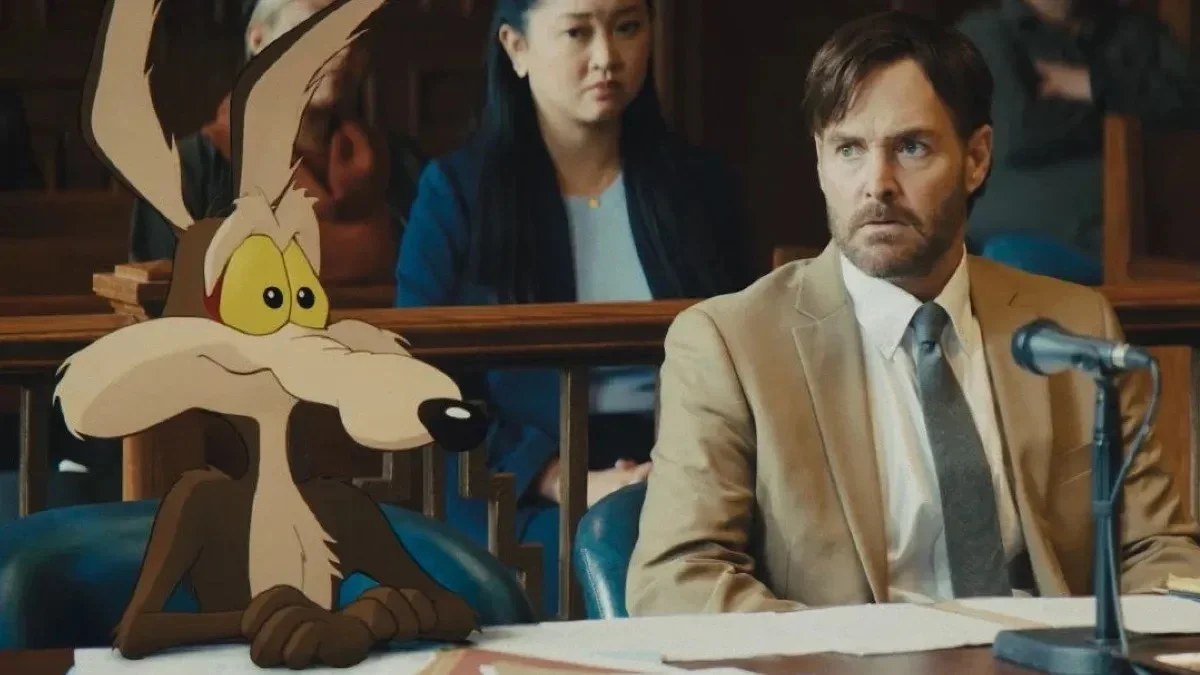
- The Premise: Directed by Dave Green and starring Will Forte, Lana Condor, and John Cena, the film follows the perpetually unfortunate Wile E. Coyote as he hires a down-on-his-luck human personal injury lawyer to sue the Acme Corporation for its defective products.
- The Digital Transition: Following its theatrical run, the film is set for an imminent PVOD release on September 28, maximizing its revenue streams just as word-of-mouth hits a fever pitch.
Chronology: The Journey from Shelf to Screen
To understand how Coyote vs. Acme achieved the impossible, one must retrace a timeline marked by corporate cold feet, internet outrage, and a scrappy independent rescue.
Phase 1: Production and the Shelving (2022–2023)
Produced with a substantial budget of approximately $70 million, Coyote vs. Acme was completed under the leadership of Warner Bros. Discovery. However, following the corporate merger that brought David Zaslav to the helm, the studio engaged in aggressive cost-cutting measures. Seeking to replicate the tax write-down strategy it previously deployed against the unreleased Batgirl and Scoob! Holiday Haunt, Warner Bros. announced in late 2023 that Coyote vs. Acme would be permanently shelved, effectively locking the completed film away from the public forever.
Phase 2: The Public Backlash and the Sale (Early–Mid 2024)
The decision sparked immediate, fierce blowback from the creative community. Directors, writers, and fans openly criticized the studio for destroying art for accounting purposes. Under immense public pressure and facing a potential revolt from filmmakers who refused to work with a studio known for burying completed movies, Warner Bros. reversed its stance just enough to allow the filmmakers to shop the project to rival studios. Months of negotiations followed before Ketchup Entertainment stepped up with a $50 million acquisition offer in 2025.

Phase 3: The Theatrical Rollout and Hedging (Late 2025–2026)
Ketchup Entertainment crafted a calculated distribution strategy. To de-risk the $50 million price tag, the indie distributor sold off various foreign territories to local partners. The gamble paid off: audiences drawn to the high-concept premise and the novelty of a "rescued" film turned out in droves. By late September 2026, the film officially breached the $100 million threshold, proving that the IP still held massive generational appeal.
Supporting Data: Contextualizing the Box Office
The success of Coyote vs. Acme becomes even more striking when viewed against the backdrop of Warner Bros.’ broader box-office performance over the past two years.
While Warner Bros. enjoyed a stellar 2025 fueled by heavy-hitting releases like Sinners and Weapons, 2026 has proven to be a sobering reality check. The studio has suffered a string of high-profile underperformers and outright theatrical duds:
- The Bride! grossed a paltry $23.9 million worldwide against a bloated $90 million production budget.
- Supergirl brought in $126.4 million globally, a disappointing return for an $180 million superhero tentpole.
- The End of Oak Street managed $120.6 million against an $85 million budget, failing to capture mainstream attention.
- Practical Magic 2 pulled in $76.8 million in its first two weeks, but its steep production costs mean it will struggle to crawl into the black.
The struggles have been so pronounced that Variety recently reported that independent powerhouse A24 actually outgrossed Warner Bros. domestically over the summer. Driven largely by the massive viral and financial success of Backrooms, A24 captured 5.5 percent of the domestic market share ($237 million total), easily outpacing Warner Bros.’ 5 percent ($165 million).
Had Warner Bros. retained Coyote vs. Acme, the $100+ million grosser could have injected much-needed momentum—and badly needed profit—into their lagging 2026 ledger. Instead, that financial win belongs to Ketchup Entertainment.
Official Responses and Industry Reactions
The decision to shelf—and subsequently sell—Coyote vs. Acme has invited a torrent of commentary from industry insiders, executives, and artists alike.
Initially, Warner Bros. executives defended the shelving by arguing that the film was simply too offbeat to succeed in a crowded theatrical marketplace. Studio insiders maintained that a live-action/animation hybrid centered on legal proceedings for Looney Tunes gags was a niche concept that lacked four-quadrant box-office viability.
However, creators and independent distributors vehemently disagreed. Director Dave Green and the film’s cast championed the project’s unique blend of physical comedy and heartfelt courtroom drama. When Ketchup Entertainment CEO Gareth West closed the deal to rescue the film, he expressed absolute confidence in its commercial appeal:

"Audiences are starving for originality and joy at the box office. Wile E. Coyote is an icon, and this film honors that legacy while doing something entirely fresh."
As the film crossed the $100 million mark, Hollywood trade analysts chimed in, noting that the narrative surrounding tax write-offs has permanently shifted. The success of Coyote vs. Acme serves as a warning sign to major studios: shelving completed films to save on taxes may rob them of lucrative revenue streams if the secondary market values what the major studios discard.
Implications: A New Era for Shelved Projects
The triumph of Coyote vs. Acme carries profound implications for the future of Hollywood financing, intellectual property management, and corporate accountability.
-
The Death of the "Write-Off" Safety Net?
Following the public relations disasters of Batgirl and Coyote vs. Acme, major studios will think twice before locking completed films in a vault for tax purposes. If independent distributors like Ketchup Entertainment can turn discarded assets into $100-million-plus hits, shareholders may begin demanding to know why management chose to destroy potential profits for short-term tax relief. -
The Rise of Indie Rescues:
Mid-sized and independent distributors now possess a clear blueprint for acquiring distressed studio assets at a discount. By taking calculated risks on completed blockbusters and hedging bets through foreign sales, indie players can punch well above their weight class. -
Valuing Creative Risk:
Coyote vs. Acme proved that offbeat, high-concept ideas can find an enthusiastic audience if given the chance to breathe. By leaning into its bizarre premise—a cartoon coyote suing a megacorporation—the film tapped into an audience craving self-aware, clever entertainment rather than generic IP recycling.
As Coyote vs. Acme prepares to hit digital platforms on September 28, Wile E. Coyote’s eternal battle against the Acme Corporation has finally ended in a definitive win. For Warner Bros., it is a stinging reminder of the riches left on the cutting room floor; for the rest of the industry, it is a masterclass in how a rejected underdog can beat the system.
