
The Blood & Ink Horror Script Contest Kicks Off: Inside the First Review of Eric Levin’s Killer-Mold Spec, The Mold
Main Facts: The Blood & Ink Horror Script Contest Launches
The independent screenwriting community has officially entered the crucible. The Blood & Ink Horror Script Contest—a high-stakes, exclusive screenwriting competition that required hopefuls to earn their entry solely through the strength of an approved, high-concept pitch—has officially transitioned from development to evaluation.
Curated and judged by industry reviewer Carson Reeves of ScriptShadow, the contest accepted just under 100 entries following a rigorous vetting process. Writers were then granted a half-year window to flesh out their outlines into fully realized 85-page horror scripts.
The judging period has begun, with Reeves releasing his evaluation of the very first submission: an 85-page horror-comedy titled The Mold, written by Eric Levin.
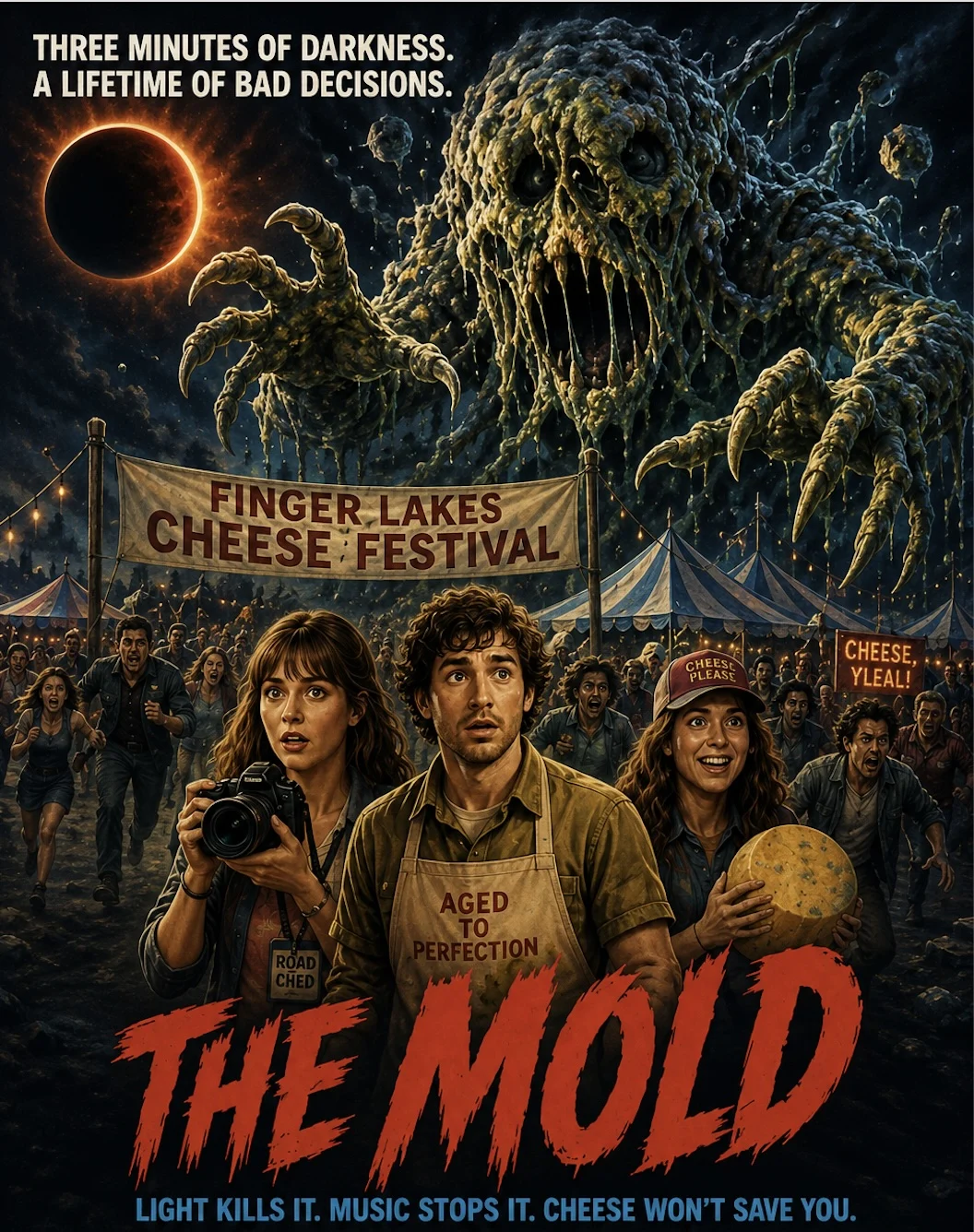
Set against the picturesque backdrop of an upstate New York food festival, The Mold follows a food journalism intern and her cheesemonger-in-training ex-boyfriend as they fight for survival against an extraterrestrial space mold unleashed during a solar eclipse.
While the concept boasts a high-concept, retro-monster-movie charm, the review highlights the structural and character-driven hurdles that screenwriters face when transitioning from a brilliant first act to a demanding second half.
Chronology: From Concept Approval to the First Critique
The Lead-Up and Submission Phase
The path to the Blood & Ink competition was anything but standard. Unlike "open-door" contests where anyone can submit a finished draft for a fee, Blood & Ink demanded a rigorous pre-approval phase. Writers had to pitch concepts that survived an initial filtering process—either directly or through secondary community voting channels—before being handed a six-month writing deadline.
With the deadline closing at 11:59 PM on a Tuesday, Reeves confirmed the roadmap for the contest moving forward:
- Reading Phase: Reeves will personally read all submitted scripts.
- Top 10 Reveal: Over a concentrated two-week period (estimated optimistically in one month, realistically in two), he will review the Top 10 scripts in reverse order, starting from number 10 and working upward.
- Spotlight Reviews: Select entries may receive standalone reviews prior to the official Top 10 rollout. If those early entries rank among the best, they will be republished during the official countdown fortnight.
The Plot of The Mold
Kicking off the review series, Eric Levin’s The Mold was selected because its logline immediately stood out for its quirky, genre-blending premise.
The story centers on Bri, a twenty-something journalism intern trying to secure a full-time writing gig at her publication. Her assignment takes her and her ex-boyfriend, Mac—an apprentice cheesemonger—to upstate New York for the local Finger Lakes Cheese Festival. To assist with industry jargon and background color, Mac tags along, hoping to rekindle their relationship.
Upon arrival, they meet Lyla, a local cheese-farm worker excited by the big-city journalists, as well as Jason, Bri’s problematic ex-boyfriend.
Simultaneously, an alien meteorite crashes into a nearby farm, releasing a virulent, sentient space mold. The organism possesses one glaring weakness: exposure to light instantly kills it. Disaster strikes during the festival when a lunar eclipse casts the town into shadow, giving the extraterrestrial mold a three-minute window of uninhibited slaughter.
As the narrative escalates, the mold aggregates into a sentient alien creature. Survival tactics devolve into the absurd: Mac discovers he can stave off fatal attacks by singing to the mold monster, while Bri is beamed aboard an alien mothership to converse with a whimsical, planet-destroying extraterrestrial pilot.
Supporting Data: Narrative Breakdown of The Mold
| Category | Details |
|---|---|
| Title | The Mold |
| Writer | Eric Levin |
| Page Count | 85 Pages |
| Genre | Horror / Comedy |
| Setting | Upstate New York (Finger Lakes Cheese Festival) |
| Core Conflict | An alien meteorite crashes during a lunar eclipse, unleashing a light-sensitive killer mold that evolves into a sentient monster. |
| Main Characters | Bri (Intern/Journalist-in-training), Mac (Cheesemonger apprentice/ex-boyfriend), Lyla (Local farm worker), Jason (Bad-boy ex). |
| Review Rating | [x] wasn't for me (Out of a 5-tier scale ranging from "What the hell did I just read?" to "Genius") |
Official Responses and Expert Analysis
Carson Reeves’ evaluation of The Mold offers a masterclass in screenwriting mechanics, isolating where Levin succeeded and where the script ultimately lost momentum.
What Worked: Old-School Charm and "Doggy Bag" Details
Reeves praised the script’s adherence to old-school monster-movie sensibilities, noting that horror-comedy hybrids with unique setups possess enduring cinematic appeal.
- The Cheese-World Immersion: Reeves coined the concept of "doggy bag" moments—elements that allow an audience to absorb tangible knowledge about a niche subject. The script’s deep dive into artisanal cheesemaking during the first act provided genuine educational value and a distinct Sideways-esque flavor, substituting wine for curd.
- Show, Don’t Tell: Rather than leaning on clunky exposition, Levin successfully demonstrated the mold’s weakness visually. When the organism attempts to spread through shadows and hits a patch of sunlight, it instantly disintegrates, establishing the rule organically for the reader.
What Didn’t Work: Second-Half Fatigue and Missed Opportunities
Despite a strong opening thirty pages, the script suffered from a severe drop in quality and focus as it progressed.
- Loss of Specificity: Once the mold took center stage, the rich world-building regarding cheese vanished, reducing the narrative to a generic "people running away from mold" formula.
- Unimaginative Action Sequences: The kills lacked variety. Every encounter followed a monotonous template: mold approaches, victim attempts flight, victim fails, mold overcomes. Reeves noted the glaring absence of creative, memorable set-pieces.
- Character Flaws and Weak Dynamics: The emotional core faltered because character flaws were stated rather than dramatized. The proposed love triangle between Bri, Mac, and Lyla missed a prime narrative opportunity. Had Bri watched Mac and Lyla forge genuine chemistry, the jealousy and stakes would have organically driven the emotional narrative. Instead, subplots involving the ill-defined ex-boyfriend Jason added unnecessary confusion.
- Tone Clashes: The alien pilot introduced in the second half felt tonally disconnected from the rest of the film, presenting a wacky, jarring presence that broke the immersion.
Implications: Lessons for Spec Screenwriters
The critique of The Mold serves broader lessons for the independent screenwriting community participating in the Blood & Ink contest:
- Protect the Setup’s Payoff: If a screenplay spends its first 30 pages hyping a specific thematic element—such as artisanal cheese—that element must factor into the climax. Reeves suggested that cheese types holding back the mold could have served as a brilliant, organic weapon to defeat the creature.
- Maximize Minor Character Impact: To make an audience feel the stakes of a horror film, minor characters must be established before their demise. A grocery store scene featuring an abrasive customer who dies seconds after walking into the mold zone was highlighted as a missed opportunity. Building up his unlikability beforehand would have transformed a throwaway death into an emotionally resonant, satisfying cinematic moment.
- Avoid First-Act Burnout: Many writers expend all their creative energy on opening setups, leaving the second half undercooked. Maintaining narrative momentum, tightening character arcs, and preserving thematic consistency through the final page remain the ultimate tests of a spec script’s viability.
As the Blood & Ink Horror Script Contest presses forward, writers across the cohort are watching closely, eager to see how subsequent entries handle these critical structural demands.
Trivia Alert & Contest Announcement
To engage the screenwriting community during the contest rollout, Reeves issued a trivia challenge: What is the most famous spec script ever sold that had a strong focus on cheese?
Participants who email the correct answer to [email protected] with the subject line "TRIVIA" stand a chance to win heavily discounted script notes valued at $199.
